Tag: geological data

  • Kazakhstan Completes Digitisation of 4.8 Million Geological Materials

    Kazakhstan Completes Digitisation of 4.8 Million Geological Materials

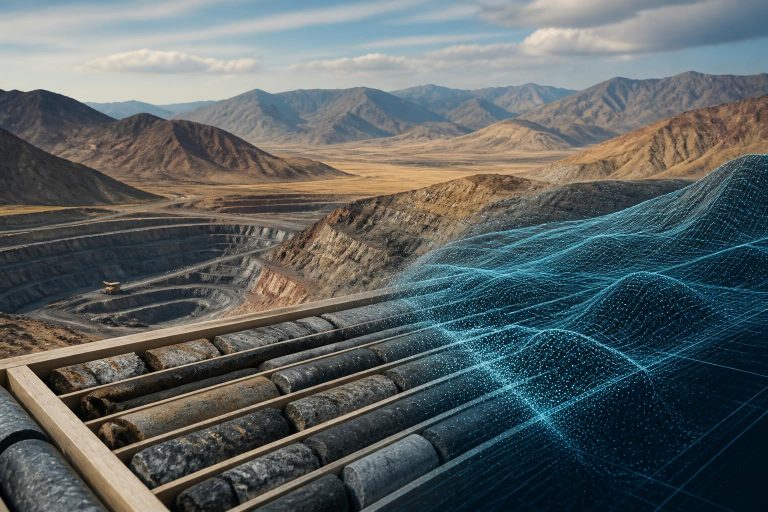
    Kazakhstan’s Committee of Geology has successfully completed the digitisation of priority geological information, converting a total of 4,818,836 units into digital format, which represents 100% of the planned volume. This extensive archive includes 4,304,239 pages of geological reports and 355,000 maps, diagrams, and drawings. The creation of a unified digital data array is expected to significantly enhance the search for geological information while reducing the risk of losing paper archives.

    The next phase of this initiative will involve the implementation of artificial intelligence (AI) technologies to facilitate document recognition, analyse large datasets, and identify interconnections within the geological information. This advancement aims to further streamline the integration of these materials with the Unified Platform for Subsoil Users, thereby simplifying access for investors and subsoil users to crucial geological data. The digitisation effort not only modernises Kazakhstan’s geological information management but also positions the country as a more attractive destination for investment in the mining sector.

    As the mining industry increasingly relies on data-driven decision-making, Kazakhstan’s move to digitise its geological archives is a significant step forward. By making vital geological information more accessible, the country is not only safeguarding its resources but also enhancing its appeal to both domestic and international investors looking to explore and develop its mineral wealth.


  • Kazakhstan Advances National Geological Digitalisation Programme

    Kazakhstan Advances National Geological Digitalisation Programme

    Kazakhstan continues the implementation of a national programme aimed at accelerating the digitalisation and systematisation of geological information, in line with the instruction of the Head of State. The initiative is designed to increase the level of geological exploration of the country’s territory, enhance investment attractiveness, and ensure open access to geological data.

    The scanning and digitisation of geological materials form the foundation for the introduction of modern digital and analytical tools, including artificial intelligence-based solutions. The programme is expected to significantly improve transparency and accessibility of geological information for government bodies, investors, and the professional community.

    To date, 66,180 secondary geological reports have been structured, with access to their first volumes available through the Unified Subsoil Use Portal. This enables users to review the general sections of materials online and free of charge, without the need to visit physical geological archives. Work on digitising secondary reports began in the early 2000s.

    Overall, nearly 4.7 million units of geological information have been digitised, representing 97.5% of the total volume of primary geological data. Of this amount, 2,728,620 units were digitised in 2023–2024, and 1,969,216 units in 2025.

    The total volume of priority primary geological information stored in geological archives amounts to approximately 5 million units. These materials are currently held in paper format, graphic appendices, magnetic tapes, and cartridges.

    The full cycle of geological data digitisation is scheduled for completion by the end of 2026, ensuring 100% coverage of archival materials.

  • Kazakhstan Advances Geological Data Digitization, Aiming for 86% Completion by 2025

    Kazakhstan Advances Geological Data Digitization, Aiming for 86% Completion by 2025

    Kazakhstan is making major strides in the digitization of its primary geological data as part of a nationwide initiative to enhance subsoil management. According to the Ministry of Industry and Construction, 60% of sector-specific geological information has already been digitized.

    In 2024 alone, approximately 1.906 million geodata units—representing 42% of the remaining volume—were processed. Combined with results from 2023, a total of 2.7 million records have been converted so far. These include over 2.47 million paper documents and graphical materials, 75,000 magnetic tapes, and around 50,000 cartridges.

    Looking ahead to 2025, Kazakhstan plans to digitize an additional 1.2 million units, pushing the digitization level to 86%. This progress brings the country closer to establishing a comprehensive and modern digital geological database.

    One of the key benefits of this digital transformation is its potential to attract foreign investment. By offering fast and convenient access to detailed geological data, Kazakhstan positions itself as a more transparent and investor-friendly destination in the natural resources sector.

  • Kazakhstan Updates Rules for Geological Data Management

    Kazakhstan Updates Rules for Geological Data Management

    Kazakhstan has introduced revised regulations for the management, storage, and provision of geological information under state ownership. The updated rules designate a state-owned enterprise as the operator for storing geological data, which includes primary and secondary information presented in reports.

    Public access is granted to the general section of secondary data, excluding classified or confidential materials. Users can request copies through the National Data Bank, with delivery promised within five working days following payment for the copying service.

  • Polymetal did not find enough gold in the Shekara area

    Polymetal did not find enough gold in the Shekara area

    The mineral exploration activities in the Shekara area of the Kostanay region in Kazakhstan have yielded disappointing results, according to a written response from Polymetal, a gold mining company registered with the Ministry of Finance and Economy of Kazakhstan. The company has determined that the area does not contain economically viable reserves for large-scale development. As a result, the contract territory is being returned to the state, and the accumulated geological data will be transferred to the state geological fund.

    Polymetal had been conducting work in the Shekara area, as mentioned in their earlier press service statements. However, it appears that a decision to halt these activities has been made in recent months. The exploration work in the area began several years ago, with Kazgeology conducting aerogeophysical surveys at the request of Polymetal to assess the potential for gold-silver and copper deposits. A joint venture named “Shekara” was established, with the national geology company holding a 25% stake. Polymetal’s subsidiary, the Kostanay company “Varvarinskoye,” also held shares in the project.

    In March 2021, the national company transferred the mining rights in Shekara to the joint venture. Geological exploration for gold, copper, and polymetallic ores covered an area of 213 square kilometers. The state invested 602 million tenge from 2017 to 2019 for geological exploration, and an additional 21 million tenge was spent from 2018 to 2021, according to Kazgeology’s report.

    It is worth noting that Polymetal is now focusing on assessing reserves in the promising Bakys area in the North Kazakhstan region. The company recently increased its stake to 75% in this gold-copper project, with “Kazgeology” holding the remaining share. Polymetal is evaluating the reserves and plans to consider production in the area after placing them on the state balance sheet. The company’s CEO, Vitaliy Nesis, mentioned the possibility of buying out the junior partner’s stake in the project in a recent interview.

    Active geological exploration in Kazakhstan is crucial for Polymetal, as their Komarovsky gold deposit in the Kostanay region is expected to be depleted by 2028. The ore extracted from Komarovsky is processed at Polymetal’s Varvarinskoye hub, which will continue operating at its current volume. The company is preparing to exploit a new deposit to sustain production as mining operations decline at Komarovsky.

    Furthermore, Polymetal is collaborating with a junior partner in the Northern Balkhash region to search for copper and polymetallic deposits. These projects in Central Kazakhstan aim to establish another processing center and involve exploration in various areas.

    Overall, Polymetal’s exploration efforts in Kazakhstan are focused on identifying new deposits to ensure continuous production and maintain their presence in the region’s mining industry.
    Meanwhile, on the tender page of LLC “TD Polymetal” on the website b2b-center.ru, it is indicated that in 2021, the company solicited proposals for tunnelling works on five licensed areas in Northern Balkhash for the requirements of TOO “Zhana Mys.” It is noteworthy that the latter was among the subsoil users who recently surrendered their license. As per the subsoil users register published in June, this company held nine licenses issued by the Ministry of Industry. Its sole founder is K.M. Dosmukametov, presumably referring to Kanat Dosmukametov, the CEO of “Polymetal Eurasia.”

    As it is known, Polymetal’s primary mining project in Kazakhstan is currently the Kyzyl project in the Abai region, which encompasses the development of the Bakyrchik deposit. It can be considered the largest gold mine in the country in terms of reserves. According to the company’s website, at the time of assessment, its reserves amounted to 9.8 million ounces in gold equivalent, exceeding 304 tons according to inbusiness.kz estimates. In comparison, the once largest Vasilkovskoye deposit in the Akmola region, known as Kaztsink, experienced a decline in reserves and resources from approximately 370 tons to 74-86 tons over the years, as reported by our publication. It is highly likely that with the complete depletion of Vasilkovskoye in the coming years, Polymetal will surpass it as the leading gold miner in the country.

    As previously reported, due to the National Bank’s priority purchase of domestically refined gold, Polymetal refrains from selling the gold it produces abroad, except for a small quantity of refractory gold in high-carbon concentrate from Kyzyl. The low-carbon concentrate from the project is transported to the company’s autoclave plant in Amursk and then returned to Kazakhstan in a processed form. Recently, Polymetal has encountered logistical challenges in delivering gold-bearing raw materials from Kyzyl to the Far Eastern ports.

    “The delivery of concentrate to the Far Eastern ports is currently facing difficulties. Russian railways are not approving applications for transporting concentrate there via covered wagons. There are no transportation issues to Amursk. Hence, we are compelled to transport the concentrate by rail to Amursk and then deliver it to the ports by road for further shipment to China. While we had a one-time experience of shipping concentrate from Kyzyl to the ports by road, it is more efficient to transport it by rail,” confirmed the company.

    Polymetal also provided comments regarding CEO Vitaliy Nesis’s recent statement to Bloomberg regarding the possibility of relisting the gold miner’s shares in London after selling its Russian division. Previously, the company’s CEO stated in a comment to inbusiness.kz that they planned to work closely over the next two years to enhance the liquidity of their shares on the AIX exchange in Astana. This decision came after the re-registration in the Ministry of Finance and Economy of the Republic of Kazakhstan, subsequent to their departure from the Jersey jurisdiction.

    “Unlocking potential on AIX and returning to LSE are not contradictory. AIX will continue to serve as the primary trading platform, while LSE can provide additional liquidity, but only after the sale of Russian assets,” clarified Polymetal.