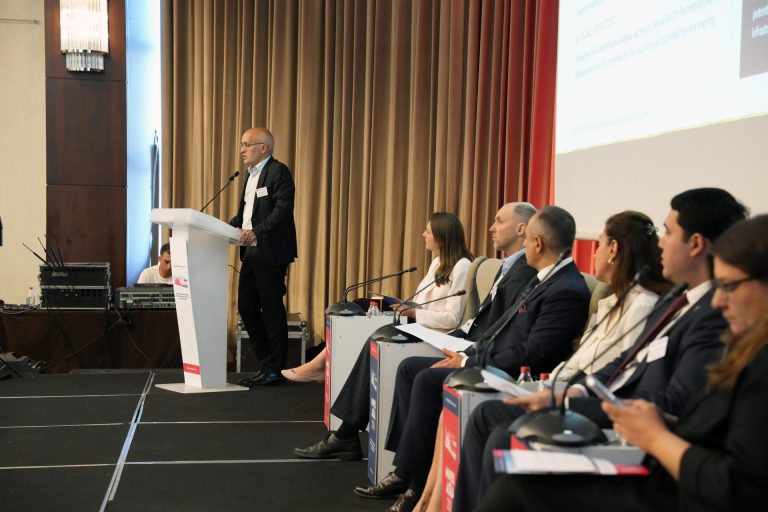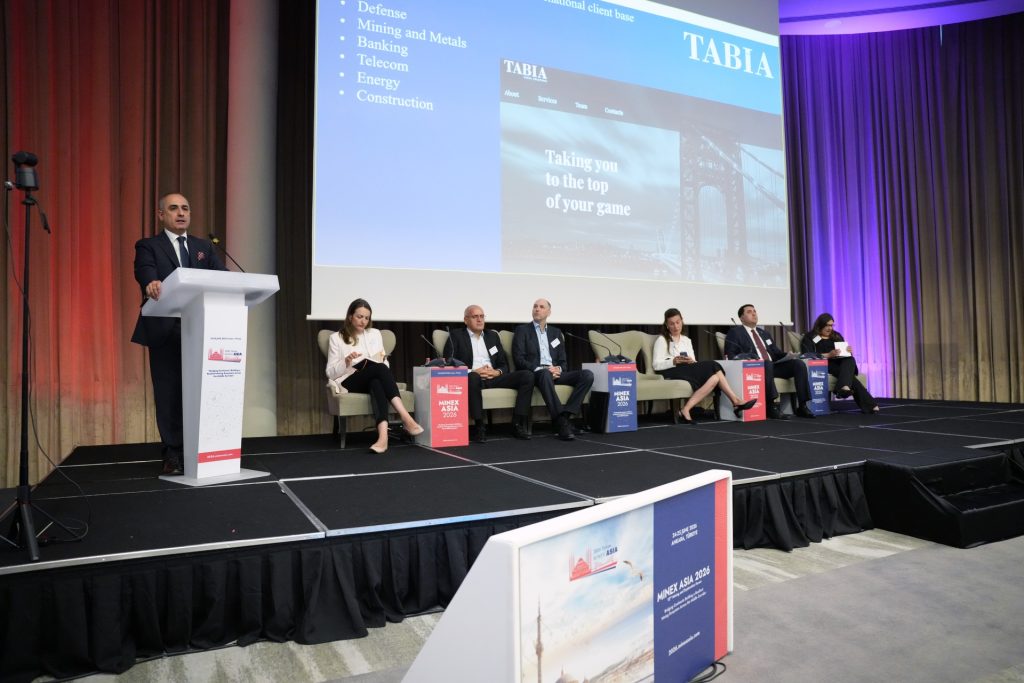
At the recent Minex Forum, Geghamyan reflected on Armenia’s evolving role in the global mining sector, marking his second appearance at the event. He expressed gratitude to the organisers and speakers, particularly highlighting the previous day’s panel focused on financing. Geghamyan articulated a new narrative for Armenia, traditionally seen as a minor player in the mining industry, primarily known for molybdenum, copper, zinc, and lead production. He asserted that this outdated perception fails to capture Armenia’s current significance, which encompasses broader themes of economic security, industrial policy, and strategic connectivity within the shifting global supply chain.
Geghamyan introduced his affiliations with Dabia, a corporate law firm with a strong international client base, and the International Chamber of Mines of Armenia (ICMA). He noted a significant achievement of his firm: the establishment of the first-ever US-Armenia joint venture in the mining sector, focused on a gold and antimony mine, which is progressing towards full-scale development. This venture reflects a growing interest from the US in smaller mining jurisdictions like Armenia, particularly following recent geopolitical shifts.
He emphasised Armenia’s strategic geographic position at the crossroads of Europe, the South Caucasus, Central Asia, and the Middle East, which is integral to the emerging Middle Corridor trade route. Despite its small size, Armenia boasts a rich mineral endowment, with the Kajaran copper-molybdenum deposit being a flagship asset. Geghamyan highlighted that mining accounted for approximately 28% of Armenia’s national exports in 2024, yet the country faces a pivotal decision on whether to expand into downstream processing.
The discussion shifted to Armenia’s strategic partnership with the United States, formalised in 2025, which has led to increased diplomatic engagement and a focus on critical minerals. Geghamyan detailed the TRIPP project, aimed at enhancing connectivity between Central Asia and Europe, and framed it as a vital component of Armenia’s economic strategy. He expressed optimism about the current government’s stability, suggesting that it would bolster Armenia’s regional connectivity ambitions.
Geghamyan candidly addressed Armenia’s needs from international partners, highlighting the importance of developing processing facilities and modernising geological reporting standards to attract foreign investment. He concluded with an ambitious vision for Armenia, aspiring to be recognised not only for its critical mineral exports but also for its reliability and trustworthiness as a partner in the global mining landscape.