Tag: economic security

  • EU Reaches Provisional Deal to Strengthen Foreign Investment Screening Rules

    EU Reaches Provisional Deal to Strengthen Foreign Investment Screening Rules

    The Council of the European Union and representatives of the European Parliament have reached a provisional political agreement to revise the EU’s foreign direct investment (FDI) screening regulation, reinforcing the bloc’s ability to identify and mitigate security and public-order risks linked to foreign investments.

    The updated framework builds on the existing FDI screening system introduced in 2020 and responds to growing geopolitical, technological and supply-chain vulnerabilities. Under the agreement, all EU member states will be required to operate national screening mechanisms with a common minimum scope, ensuring that sensitive investments are assessed consistently across the bloc. Foreign investments made through EU-based subsidiaries will also fall within scope.

    The revised rules target a clearly defined set of sensitive sectors, including dual-use and military items, artificial intelligence, quantum technologies, semiconductors, critical raw materials, energy, transport and digital infrastructure, as well as key elements of electoral and financial market infrastructure. The aim is to harmonise approaches, reduce fragmentation between national regimes and lower administrative burdens for investors, while safeguarding cross-border security interests.

    While cooperation between member states and the European Commission will be strengthened, final decisions on whether to approve, condition or block an investment will remain the exclusive responsibility of the host member state. Where comments or opinions are issued by other member states or the Commission, the host country will be required to explain how these were taken into account.

    Operational improvements include plans for a shared EU database to prevent circumvention of screening rules, an optional single electronic filing portal for investors if requested by at least nine member states, and clearer risk assessment criteria.

    Denmark’s Minister for Industry, Business and Financial Affairs Morten Bødskov said the agreement strikes a balance between security and openness, focusing on the most sensitive technologies and infrastructure while keeping Europe attractive to global investors.

    The provisional deal now requires formal endorsement by both the Council and the European Parliament. Once adopted, the revised regulation will apply 18 months after its entry into force.

  • EU Unveils Multi-Billion-Euro Plan to Curb Dependence on China for Rare Earths Amid Rising Geopolitical Tensions

    EU Unveils Multi-Billion-Euro Plan to Curb Dependence on China for Rare Earths Amid Rising Geopolitical Tensions

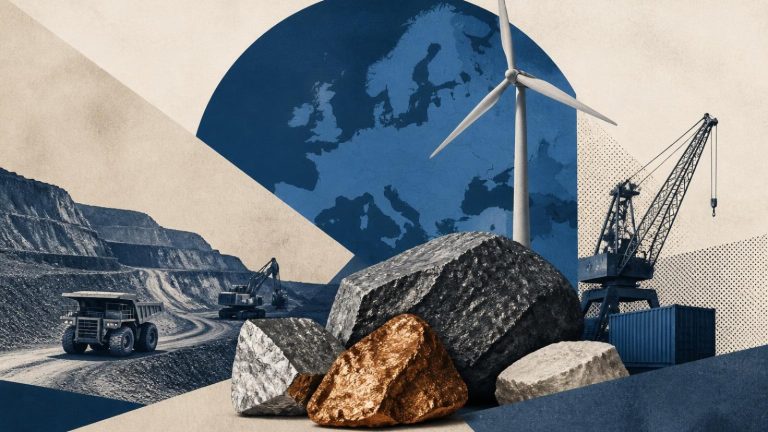
    The European Union on Wednesday announced a sweeping multi-billion-euro initiative to reduce the bloc’s reliance on China for rare earths and other critical materials, as Beijing’s dominance and recent export restrictions continue to threaten European industry. China — the world’s largest producer of rare earths — unsettled global markets in October when it imposed new limits on rare earth exports used in electric vehicles, electronics, and defence technologies. Although Beijing later suspended the curbs for one year, the episode underscored the EU’s vulnerability.

    EU industry chief Stéphane Séjourné said the new measures respond to a “new global geopolitical reality,” describing China’s grip on the market as a raw-materials “racket.” The European Commission plans to mobilise nearly €3 billion to support strategic mining, refining and recycling projects across Europe and in partner countries, aiming to diversify supply and strengthen domestic production capacity.

    A key feature of the plan is the creation of a European Centre for Critical Raw Materials, modelled on Japan’s state-run metals agency. The centre will act as the EU’s supply hub, tasked with monitoring material needs, coordinating joint purchasing for member states, and managing stockpiles and emergency deliveries to industry.

    Brussels is also moving to restrict exports of permanent-magnet scrap and waste — materials that contain rare earths — beginning next year, in an effort to boost recycling and retain valuable feedstock within the EU. Targeted curbs on aluminium waste exports are also planned, with copper potentially to follow.

    The policy push comes just two years after the bloc adopted the Critical Raw Materials Act, but officials say the geopolitical landscape has changed rapidly. The EU now finds itself squeezed between China’s tightening resource controls and an increasingly assertive United States under President Donald Trump, which is aggressively pursuing bilateral deals to secure its own critical mineral supplies.

    A new survey from the EU Chamber of Commerce in China found 60% of member companies expect supply disruptions due to Chinese restrictions, while 13% warn they may have to slow or halt production altogether.

    The Commission also updated its economic security strategy, acknowledging that supply chains are being weaponised globally. EU trade chief Maroš Šefčovič said the bloc must respond to a world in which “strategic choke points are turning economic dependency into political pressure.”

    The revised doctrine calls for more assertive use of existing tools — including foreign investment screening, export controls and supplier diversification — and for developing new measures where needed.

    “Europe will continue to champion open trade and global investment, but our openness must be backed by security,” Šefčovič said, emphasising a stronger EU capacity for economic intelligence and coordinated action across member states.