Website: Europe.com

  • Northstone Resources Secures A$2.37 Million to Advance Gold and Copper Projects in Serbia

    Northstone Resources Secures A$2.37 Million to Advance Gold and Copper Projects in Serbia

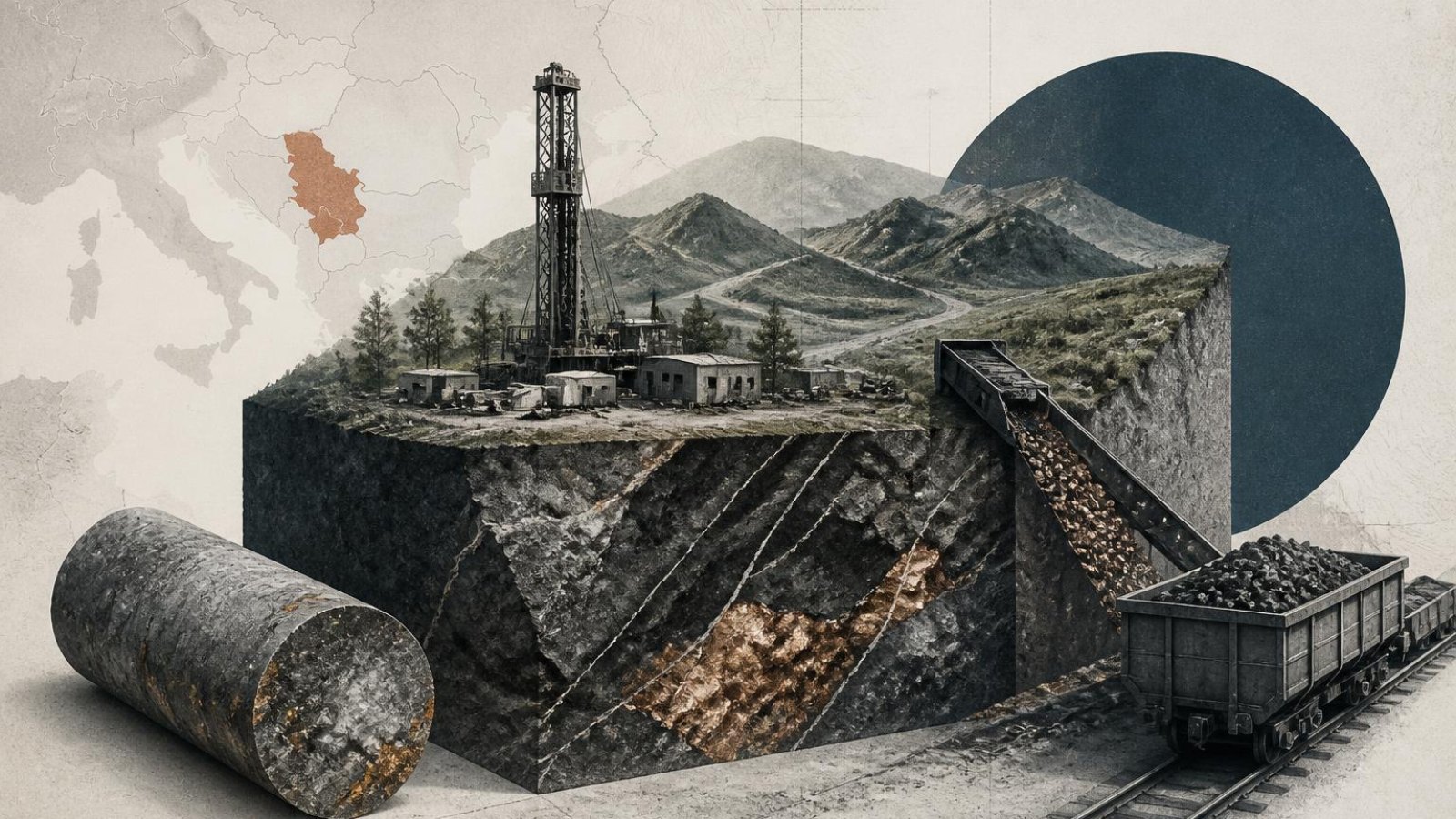
    Northstone Resources (ASX: NRL) has successfully raised A$2.37 million through an oversubscribed placement, aimed at advancing its gold and copper projects in Serbia. The company plans to issue 263,444,444 new shares at a price of A$0.009 each, which represents a 10% discount compared to the last traded price of A$0.010 on 30 October. The share issue is expected to be finalised on 11 November.

    The fundraising effort saw significant participation from the company’s directors and management, who collectively committed A$240,000. Notably, A$135,000 of this amount will require shareholder approval, with contributions from directors Glenn Whiddon, Ian Shackleton, and James Pearse. Additionally, participants in the placement will receive one free attaching option for every two shares subscribed, amounting to approximately 131.7 million options in the NRLO class, which can be exercised at A$0.02, expiring on 20 January 2030. GBA Capital acted as the lead manager for the placement, earning a 6% fee along with 26.3 million broker options on similar terms.

    The proceeds from this capital raise are earmarked for several key initiatives, including funding the maiden JORC Mineral Resource Estimate at the flagship Tlamino Gold–Silver Project, which is targeted for completion in the December quarter of 2026. Following this, the company plans to conduct a scoping study and further drilling activities, both step-out and greenfield, to enhance its resource base. Additionally, funds will be allocated for field exploration at the Timok East Copper Project, covering the costs associated with the capital raise and supporting ongoing working capital needs.

    Chief Executive Max Piirto expressed optimism about the future, highlighting record drilling results outside the 2021 estimate and infill results that confirm continuity in the resource. He anticipates a busy period ahead, with a series of important updates expected, including final infill assay results, initial greenfield results, the resource estimate, and an updated scoping study.

    This capital raise marks a significant step for Northstone Resources as it seeks to bolster its position in the Serbian mining sector, particularly within the promising Timok belt, known for its rich mineral deposits. Investors and stakeholders are keenly awaiting the upcoming developments as the company embarks on this ambitious growth trajectory.


  • Insights from the MINEX Europe Forum on Rebuilding Europe’s Mining Industry

    Insights from the MINEX Europe Forum on Rebuilding Europe’s Mining Industry

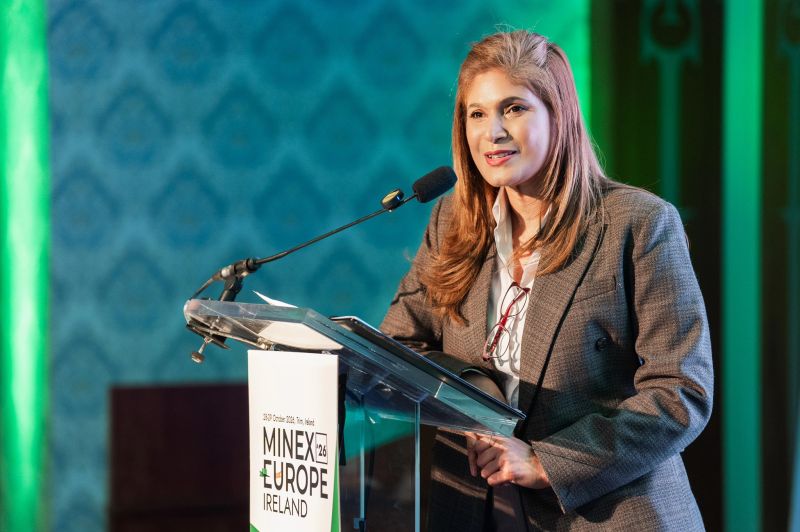
    At the 10th MINEX Europe Forum in Trim, Co. Meath, the question hanging over the programme was whether the Critical Raw Materials Act has changed anything real, or mainly the paperwork. Kruthika Bala, Managing Director of Resources Now, who works on geopolitical risk, energy security and critical minerals, handled it from two sides. She moderated the opening session, Beyond Legislation: Can Europe Rebuild Its Mining Industry?, and then gave the opening address for the next one, What Strategic Status Is Really Worth, moderated by James Watson.

    Her contribution was practical rather than rhetorical. She set aside the question of whether strategic designation is good policy and asked what it is worth to a project, and to whom. Her answer was that it depends on the constraint the project actually faces. The CRMA has strengthened regulatory predictability, and permitting certainty can shorten development timelines and improve financing conditions. But a project exposed to merchant commodity prices, carrying structurally high operating costs or lacking contracted demand has a different problem, and a designation does not solve it. Those cases need commercial responses, not regulatory ones.

    That fits a view we have argued for some time: permitting is not Europe’s only bottleneck, and financing, offtake and state co-investment often decide whether a project is built. Bala’s framework gives that view sharper edges.

    Who pays for security

    Her second point concerned the distribution of costs and benefits. Diversifying supply is meant to strengthen Europe’s industrial base, and the gains can reach downstream manufacturers. The costs and the qualification risks, she argued, may fall disproportionately on midstream processors and intermediate producers, who must accept new feedstock, new suppliers and new customer approval cycles. Whether the benefit can support investment then depends on the terms of offtake, pricing and risk sharing. A supply chain can be more secure in aggregate while the businesses in its middle become less viable.

    This echoes a concern that ran through the Forum. Europe’s gap in refining and processing capacity is at least as pressing as its gap in mining, and a policy that rewards extraction without protecting the processing stage risks leaving the weakest link where it is.

    The greenfield bias

    Her third point was the most uncomfortable. Industrial policy tends to favour new projects, while commercially exposed existing processing facilities receive less attention. Europe, she argued, should assess the strategic value of existing capacity alongside new investment, weighing prospective operating economics, replacement costs and credible alternatives. She was careful to add that preserving every facility would be neither commercially sustainable nor necessarily desirable. The argument is not for a blanket rescue, but for a test applied consistently to old and new capacity alike.

    Additionality

    Her final point concerned public money. When public capital is used to improve a project’s bankability, she said, the central questions are what investment would have occurred anyway, what residual risk the sponsors still carry, and how much security benefit the state secures relative to its exposure. Her conclusion was a distinction that is easy to blur in practice: a project can be financeable with public support without that intervention being justified. As more state banks, funds and offtake arrangements enter European capital structures, that test will matter more than the headline size of any package.

    Why it matters for the second wave

    With a second cohort of applicants for strategic status awaiting assessment, the questions Bala raised are practical. Which constraint does designation relieve for each project, who absorbs the cost of diversification, and what would have happened without public capital? None has a single answer, and none is a reason to doubt the CRMA’s ambition. They are the questions a lender, an offtaker or a finance ministry will ask before committing money, and the Forum is the place to put them in the same room.

    Our thanks to Kruthika Bala for moderating and for setting the terms of the second session so clearly, and to Bernd Schäfer, Åsa Edfelt, Patrick F. N. Anderson, Pól Ó Seasnáin, Oliver Richards, Han Ilhan and James Watson for their contributions to the opening session. We also thank fellow presenters Keit Pentus-Rosimannus, Sean Xun, Kasperi Karhapää, Joaquín Merino-Márquez and Joe David.

  • Europe Strengthens Ties with Central Asia for Critical Minerals Development

    Europe Strengthens Ties with Central Asia for Critical Minerals Development

    European institutions and government-backed companies are intensifying their efforts to forge closer ties with Central Asia regarding critical minerals, as regional producers seek foreign capital and advanced technology to enhance domestic processing capabilities. An OECD report published on 29 October highlights the significant yet largely untapped potential of critical minerals in Central Asia. The report emphasizes that attracting investment will necessitate improved geological information, clearer legislative frameworks, stronger environmental oversight, and enhanced transparency. It also points out challenges such as state dominance, inconsistent community consultation, and legacy waste that hinder progress in the region.

    The findings come at a time when European industries are actively seeking alternatives to concentrated mineral supply chains, while countries like Kazakhstan and Uzbekistan are keen on retaining more processing and manufacturing activities within their borders. Recent discussions at a mining forum in Tashkent focused on European investment, technology transfer, and the establishment of transport links that would connect Central Asia with Western markets.

    Commercial interest in the region is on the rise, with commodity trader Traxys opening an office in Tashkent earlier this year to explore sourcing opportunities across Uzbekistan, Kazakhstan, Tajikistan, and Kyrgyzstan. In terms of investment frameworks, a memorandum of understanding was signed in October between the German government-owned SEFE and Kazakh Invest to create a joint investment platform aimed at critical minerals and metallurgy projects in Kazakhstan. This platform is designed to bolster local processing and link prospective projects with European markets, although specific project details, investment amounts, or development timelines have yet to be disclosed.

    Furthermore, Kazakh and EU officials convened on 21 October to discuss advancing proposed projects through the European Commission’s Global Gateway Investment Hub, although no new mineral financing was announced during this meeting. In Uzbekistan, the state-owned Technological Metals Complex (TMK) signed a preliminary term sheet with Société Générale on 16 October for potential pre-export financing, following a previous agreement aimed at arranging €50 million ($80 million) for production capacity and exports. TMK, which specializes in tungsten and molybdenum products, is also looking for European partners to participate in additional processing and manufacturing initiatives.

    The European Union has established critical raw materials partnerships with Kazakhstan in 2022 and Uzbekistan in 2024, and the latest agreements indicate progress towards implementation, although most remain at a preliminary stage without committed project-level funding. As the demand for critical minerals continues to grow, the collaboration between Europe and Central Asia could play a pivotal role in shaping the future of the mining industry in the region.


  • Irish Mining Sector Faces Community Concerns Amid Exploration Boom

    Irish Mining Sector Faces Community Concerns Amid Exploration Boom

    The Irish mining industry is on the brink of a renaissance, with a surge in prospecting licenses and significant government investment aimed at revitalising exploration projects. As the European Union’s demand for minerals escalates, the Irish government is injecting millions of euros into the sector through the Ireland Strategic Investment Fund (ISIF). This renewed interest in mining has prompted industry leaders to call for a more proactive approach in addressing community concerns, particularly in light of the sector’s historical legacy of environmental issues.

    During a recent MINEX Europe Forum in Trim, Co Meath, Sean Finlay, chairman of Geoscience Ireland, highlighted the optimism surrounding the Irish minerals sector, noting that the number of prospecting licenses has risen to 231, reversing a previous decline. However, Aileen Doran, a geologist and sustainability consultant, cautioned that many community members feel their concerns are often overlooked. She emphasised the importance of acknowledging the negative impacts of past mining operations, which have left a legacy of contamination in areas like Silvermines, Co Tipperary, and the Tynagh lead and zinc mine in Co Galway.

    New ventures are emerging as companies prepare to reopen previously closed operations. Shanoon Resources is set to reopen the Galmoy mine, while NorthMin Corporation is exploring fresh deposits at Tynagh. Additionally, Gyproc has commenced work on an open cast mine at the site of a previous collapse, and Boliden is looking to expand its operations. The Irish Minerals Fund, backed by €30 million in public money, is facilitating these developments.

    Despite the excitement surrounding the sector’s potential, community anxiety persists. A recent conference hosted by An Taisce revealed concerns from local groups regarding the condition of existing facilities and the anticipated impacts of new mining operations. Paul Quirk, co-managing partner of the Irish Minerals Fund, acknowledged the critical role that metals and mining play in various industries, from renewable energy to advanced manufacturing. However, he also recognised the need for the mining industry to engage more effectively with communities, addressing their concerns rather than dismissing them.

    As the mining sector in Ireland looks to the future, it faces the dual challenge of harnessing its potential while ensuring that community voices are heard and respected. The industry’s ability to navigate this delicate balance will be crucial as it seeks to contribute to Ireland’s economic growth and the EU’s goal of reducing dependence on imported minerals, particularly from China.


  • MINEX Europe Forum 2026: Trust, Data and Public Capital Decide What Gets Mined

    MINEX Europe Forum 2026: Trust, Data and Public Capital Decide What Gets Mined

    The 10th MINEX Europe Forum closed in Trim, Ireland, on 30 October. Over three days, from the pre-forum workshops to the final session, mining companies, investors, geological surveys and policy makers asked one question. Europe has the geology, the data and a policy framework for critical raw materials. Why does so little of it reach production?

    For the closing session, we invited the moderators of the earlier sessions to share the takeaways from the three-day agenda. Han Ilhan of Catalis Strategies chaired the discussion. Five themes stood out.

    1. Ireland shows what a geological survey can do

    Han Ilhan called Ireland’s approach to its geological survey a business model for other jurisdictions. He linked it to friend-shoring. In Central Asia, only 20 to 30 per cent of each country is explored. State-owned enterprises there are looking for exploration partners. A survey-led partnership, on the Irish or USGS model, gives Europe and the US early access to the critical minerals they need.

    The Irish numbers back this up. Aiden Lavelle of Northmin Corporation noted that Ireland ranks among the top EU countries for exploration budgets. With Sweden, Finland and Spain, it accounts for 75 per cent of all exploration drilling in Europe. Galmoy has a new permitted mine, and a mining licence has been granted at Shrule. Companies in the Geoscience Ireland network report a turnover of 1.12 billion, 38 per cent of it international.

    Hannah McGillycuddy of SLR Consulting pointed to the quality of the public data. Tellus and Geological Survey Ireland datasets enter the public domain quickly, in usable formats. Irish companies often take this for granted. Not every country offers it.

    2. Who pays for early-stage exploration?

    Han Ilhan put a direct proposition. Governments, not the mining industry, classified these minerals as critical, because their manufacturers are exposed to a dominant supplier in China. If the minerals are critical to the national economy, public capital should help fund exploration.

    Tony Hand of TH Consulting and Training agreed, perhaps as matching funds for private money. He noted that greenfield risk capital is a smaller pot than it was. Cannabis and then crypto drew money away from exploration companies.

    Sean Finlay, Chair of Geoscience Ireland, said the new Irish Minerals Fund is keen to invest. Its 30 million is not a limit. Hannah McGillycuddy added a European angle. The TEN-E regulation already funds strategic energy links such as Greenlink. If Europe is serious about the Critical Raw Materials Act, she argued, it should fund its strategic projects too.

    3. Strategic status is not permitting

    Chris Stockey of Satarla raised a common misconception. Strategic project status is granted in Brussels. Permitting sits with municipal and regional authorities. The two do not connect automatically, yet the industry expects them to.

    He argued that the delay is rarely in the permitting itself. It is in the work before it, and that comes down to trust. Drawing on Irish social science research, he described trust as three perceptions: competence, integrity and benevolence. Irish stakeholders believe the sector can do the job. Their doubts concern integrity and benevolence. Most forum presentations, he noted, addressed competence.

    Two practical steps came out of Sean Finlay’s session, put forward by the Irish Minerals Industry Group. Reactivate the government’s Minerals Advisory Group, which has fallen into disuse. And introduce concurrent permitting, a point Sean stressed throughout the Forum, to avoid timelines such as the 18 years cited for one project in a later session. Tony Hand put the journey from exploration site to mine at up to 20 years.

    4. The industry needs a new global mining initiative

    Han Ilhan recalled the Global Mining Initiative of about 25 years ago, which produced the ICMM. Companies now handle community relations well at project level. At industry level, he said, little has been done since. He proposed a new global outreach programme, covering key mining jurisdictions as well as host communities, and suggested the ICMM lead it. Sean Finlay agreed that the ICMM needs to become active again.

    5. AI, skills and the copper problem

    Tony Hand linked technology to metals. Data centres, electric vehicles and the charging networks behind them all need copper. Yet the mining sector moves slowly while AI advances quickly. AI can also be bent to tell any story. Without open data and trust, he warned, stakeholders will doubt what mining companies say.

    He also asked why industry complains about graduate skills without working with universities on course design. Han Ilhan agreed and went further. Industry should give academia financial support, not warm words.

    What next

    Aiden Lavelle’s summary was optimistic for Ireland: the people, the knowledge and the supply chain are in place, and the expertise can now be exported. The wider message is sharper. Data, public capital and permitting reform matter. So does trust, and trust rests on integrity and benevolence as much as on technical competence.

    Boliden Tara Mines site visit

    On 30 October, a group of delegates went underground at Boliden Tara Mines, close to the town of Navan. The operation covers a footprint of 5 km by 1.7 km, across six mining areas. It has processed more than 108 million tonnes of zinc ore, using longhole open stoping and drift and slash methods.

    Sean Finlay called Tara the friendly elephant in the Irish room, a project that has been going for nearly 50 years. Seeing it at first hand was a fitting end to the programme. Our thanks to Boliden Tara Mines for welcoming the group.

    Thank you to all speakers, moderators, sponsors and partners, in particular our knowledge partners Geoscience Ireland and Irish Association for Economic Geology, and to every delegate who joined us in Trim.

    The Forum materials are being prepared and will be available around 23 November. Those who could not attend can purchase access. To receive the order link, please write to secretariat@minexforum.com.
  • Ekometall Secures €342,793 Grant for AI-Driven Mining Intelligence Project in Austria

    Ekometall Secures €342,793 Grant for AI-Driven Mining Intelligence Project in Austria

    Ekometall Inc., through its subsidiary Ekometall Exploration GmbH, has been awarded a non-repayable research grant of €342,793 by the Austrian Research Promotion Agency (FFG) to support the AMIPA (AI-Driven Mining Intelligence Platform for Austria) project. This initiative, backed by the Austrian government under the Rohstoffe 2025 funding call, aims to unlock historical mining archives by developing AI-supported methods to convert Austria’s extensive geological records into a structured, georeferenced digital resource.

    The AMIPA project will span 30 months and is set to validate AI methodologies for processing centuries of mining documents, maps, and records. The project will be conducted in collaboration with technology partner GexplOre, a French geosciences company known for its expertise in mineral exploration services. The funding covers 60% of the project’s total budget of €571,322, highlighting the government’s commitment to advancing technological innovation in the mining sector.

    Ekometall’s Managing Director & CEO, Ryan Finlay, expressed that receiving this grant is a significant endorsement from the Austrian government, reinforcing the importance of their work with historical archives. The project not only aims to digitize historical data but also includes a dedicated workstream focused on identifying historical mine waste and tailings sites. This aspect supports Austria’s objectives for secondary raw materials, potentially revealing valuable resources from the country’s mining legacy.

    Austria boasts over five centuries of mining history, yet much of its geological knowledge remains trapped in scanned reports and handwritten records. The AMIPA project seeks to address this gap by developing a methodology that processes these sources at scale, integrating them with modern geochemical, geophysical, and remote-sensing data on a GIS-based platform. Each result will be traceable to its original source document, ensuring transparency and reliability.

    The program will unfold in three phases: digital data acquisition and structuring, AI model and decision-support development, and scientific validation. The final phase will involve field verification by Ekometall geologists, LiDAR-based assessments of historical tailings sites, and external peer review, ensuring that the project’s outcomes are scientifically robust.

    Ekometall is positioned as a critical minerals exploration company, focusing on unlocking Austria’s precious and base metal potential. With a land position exceeding 10,000 km², the company combines local expertise with modern exploration methods, establishing itself as a key player in accessing the critical raw materials essential for Europe’s energy transition and industrial future. For further details, visit ekometallgroup.com.


  • EU Advances Critical Raw Materials Act to Enhance Strategic Autonomy

    EU Advances Critical Raw Materials Act to Enhance Strategic Autonomy

    The European Parliament has taken a significant step towards securing the continent’s supply of critical raw materials (CRMs) by voting on amendments to the Critical Raw Materials Act (CRMA). This legislation aims to bolster the EU’s strategic autonomy by ensuring a sustainable and circular supply of essential materials necessary for various industries, including clean energy, digital technology, and defence. The proposed changes focus on expediting the entire value chain from extraction and processing to recycling and substitution, thereby diversifying supply chains across the EU.

    One of the key initiatives proposed by Members of the European Parliament (MEPs) is the establishment of a dedicated European critical raw materials centre. This self-standing agency would be equipped with a €2 billion fund, as outlined in the EU’s long-term budget for 2028-2034. The centre would serve multiple functions, including market intelligence, resilience planning, and stakeholder engagement, all aimed at enhancing the EU’s capacity to manage its critical raw materials effectively.

    To further secure supply, MEPs have suggested implementing a conditional export control clause. This would allow the European Commission to restrict the export of recyclable materials, ensuring that valuable resources remain within the EU. Additionally, the Commission would oversee the identification of large companies in strategic sectors that utilise CRMs, imposing resilience obligations on them to mitigate vulnerabilities in their supply chains.

    The amendments also call for price-stabilisation mechanisms, such as contracts for difference (CfDs), to provide revenue certainty for developers involved in extraction and recycling projects. Moreover, the EU’s existing joint-purchasing mechanism would be expanded to facilitate coordinated stockpiling of critical raw materials among member states and businesses.

    Highlighting the geopolitical significance of CRMs, lead MEP Mohammed Chahim emphasised that control over these materials equates to control over industrial futures and energy transitions. He urged for a proactive approach to ensure that Europe does not become vulnerable to external pressures regarding its supply chains. The report, which received overwhelming support with 470 votes in favour, is now set to enter negotiations with member states to finalise the law.

    The CRMA, initially adopted in December 2023, laid the groundwork for an EU-wide strategy to guarantee access to raw materials crucial for various transitions. The recent amendments stem from the RESourceEU Action Plan, reflecting the EU’s commitment to securing its critical raw material needs in an increasingly competitive global landscape.


  • Spain Supports Emerita Resources’ New Exploration Projects in the Iberian Pyrite Belt

    Spain Supports Emerita Resources’ New Exploration Projects in the Iberian Pyrite Belt

    Spain’s Ministry for Ecological Transition (MITECO) has announced its support for two new exploration projects by Emerita Resources in the Iberian Pyrite Belt, located in Andalusia. This funding is part of the 2026-2030 National Mining Exploration Program (PNEM), which aims to bolster mining exploration activities across the country. The total public funding awarded to Emerita amounts to just over €304,000, contributing to a combined investment of approximately €748,000 for both projects.

    The larger of the two projects is situated in Huelva province, specifically the Ontario project near La Romanera. This initiative will involve around 4,400 metres of new drilling aimed at assessing areas with significant mineral potential. MITECO is set to contribute €250,000 towards eligible expenditures of €670,800 for this project, highlighting the government’s commitment to advancing mining exploration in the region.

    In contrast, the Nuevo Tintillo project located in Seville is smaller in scale. It will incorporate new drilling alongside an advanced analysis of over 4,300 metres of historical borehole data. The planned subsidy for this project is €54,235.25, against a total investment of €77,490. This dual approach not only aims to uncover new mineral resources but also seeks to leverage existing data for more informed exploration strategies.

    Emerita Resources, which has its headquarters in Seville and an administrative office in Toronto, has welcomed the grant resolutions. The company views this funding as a vital support mechanism for its ongoing exploration efforts in the Iberian Pyrite Belt and its commitment to technological innovation in mining practices. Furthermore, the results from these exploration activities will be shared with the Geological and Mining Institute of Spain (IGME) as part of a collaborative relationship fostered under the PNEM.

    This initiative underscores Spain’s strategic focus on enhancing its mining sector, particularly in regions with rich mineral deposits like the Iberian Pyrite Belt. By investing in exploration projects, the government aims to stimulate economic growth and create job opportunities while ensuring sustainable practices in the mining industry.


  • EMILI Lithium Secures Long-Term Mining Concession for Beauvoir Deposit Until 2075

    EMILI Lithium Secures Long-Term Mining Concession for Beauvoir Deposit Until 2075

    EMILI Lithium has successfully secured a mining concession for the Beauvoir deposit, one of the largest hard-rock lithium deposits globally, valid until May 23, 2075. This concession, granted by the French government to Imerys Beauvoir, a subsidiary of EMILI Lithium, encompasses lithium, tin, tantalum, and niobium extraction across several municipalities in the Allier and Puy-de-Dôme departments. The project has been recognised as a Project of Major National Interest by France and a Strategic Project by the European Union, reflecting its significance in securing lithium supplies for the burgeoning electric vehicle battery industry and bolstering European industrial sovereignty.

    The concession marks a pivotal moment, being the first granted in mainland France in over 40 years, and it comes at a time when global demand for lithium is surging due to its critical role in electric vehicle production and energy storage solutions. EMILI aims to leverage the size and quality of the Beauvoir deposit to establish a sustainable and competitive local solution that integrates well with regional development, with production expected to commence in the early 2030s.

    French Minister of the Economy, Roland Lescure, welcomed the concession, highlighting its potential to secure the supply chain for lithium and facilitate the production of batteries for approximately 700,000 electric vehicles annually. The project is also designed to address environmental and social challenges, aiming to create an exemplary industrial model within the European electric vehicle battery value chain.

    The concession comes with a set of specifications that ensure robust monitoring of mining operations and their environmental and social impacts, including annual reporting of key indicators to local stakeholders. However, the concession does not yet authorise the commencement of mining operations, as EMILI must still secure additional permits and financing to move forward.

    The EMILI project, which focuses on the extraction of lithium-bearing mica, aims to produce 34,000 tonnes of lithium hydroxide annually, thereby diversifying European supply sources and reducing reliance on international supply chains. The project is supported by the French state, which holds a minority stake through La Banque des Territoires, underscoring its strategic importance to France and the European Union’s energy transition goals.


  • Military Metals Secures Four-Year Extension for Trojarova Antimony-Gold Exploration License in Slovakia

    Military Metals Secures Four-Year Extension for Trojarova Antimony-Gold Exploration License in Slovakia

    Military Metals Corp. has successfully reinstated and extended its exploration license for the Trojárová Antimony-Gold Project in Slovakia for an additional four years, expiring on October 18, 2030. This decision follows a legal battle against the cancellation of the license by the Ministry of the Environment of the Slovak Republic earlier this year. The company had appealed the cancellation and, on October 2, 2026, received a favourable ruling that reinstated the license, allowing them to continue exploration activities.

    The Trojárová Project is significant, hosting an inferred mineral resource of 6.5 million tonnes grading 1.02% antimony and 1.06 g/t gold, which translates to approximately 67,000 tonnes of antimony and 222,000 ounces of gold. This resource is crucial for addressing Europe’s supply chain vulnerabilities, as the continent heavily relies on external sources for antimony, a critical raw material.

    Military Metals is committed to responsible development in Slovakia, with plans to enhance community engagement and scientific cooperation. The company aims to establish a local advisory board to facilitate dialogue with stakeholders and ensure environmental priorities are addressed throughout the development process. Executive Chairman Thomas Hüser emphasised the importance of building trust through open communication and practical action, while CEO Scott Eldridge highlighted the milestone this reinstatement represents for the company.

    The company has initiated discussions with Slovakia’s Ministry of Economy regarding the transition from exploration to full mining and production authorisation, focusing on the necessary technical, environmental, and administrative requirements. Additionally, Military Metals plans to improve local wastewater management and adopt modern mining technologies that prioritise environmental sustainability.

    Military Metals aims to position the Trojárová Project as a model for responsible mineral exploration in Europe, aligning with the objectives of the European Critical Raw Materials Act. The company’s commitment to responsible practices and local partnerships underscores its ambition to unlock the potential of this significant antimony resource for European and allied markets.