Canadian private equity firm Kinterra Capital has acquired the rights to a planned €1.63 billion precursor cathode active material plant near Opole in Poland, rescuing a project that had been thrown into doubt after its previous developer, US firm Ascend Elements, filed for bankruptcy in April 2026.
The planned facility, scheduled for completion in 2031, will produce pCAM — a key component in the lithium-ion batteries used in electric vehicles, smartphones and other consumer electronics. The deal, finalised in May, includes intellectual property rights for lithium-ion battery processing, lithium recovery and pCAM production, as well as rights to a Polish government subsidy of 1.22 billion zloty (€285 million) — one of the largest state grants ever awarded in Poland, backed by an EU programme supporting the transition to a net-zero economy. Kinterra also signed a conditional agreement to purchase the land plot for the factory.
Ascend Elements had announced the project in May 2025, citing Poland’s strategic position as Europe’s largest lithium-ion battery producer and its importance in reducing European dependence on Asian suppliers. The company subsequently cited “insurmountable” financial challenges in launching US bankruptcy proceedings, casting doubt over the future of the grant and the facility.
Kinterra Capital, which manages approximately $1.5 billion in assets focused on critical minerals and infrastructure, said the project offered the strategic location, infrastructure access, public administration support and industrial base it requires. “This project has the key advantages we are looking for,” said Graeme Weeks, Kinterra’s global head of project execution. Laura Fernandez, a Kinterra partner, said the investment “addresses the most important challenges facing European industry today,” citing supply chain security and European independence from Asian suppliers.
Poland is home to Europe’s largest EV battery plant, operated by LG Energy Solution in Wrocław, which accounted for approximately half of Europe’s EV battery production capacity in 2024. However, Poland’s position faces a potential challenge from forthcoming EU regulations incorporating battery carbon footprint requirements — measures that could penalise Poland given that coal still accounts for around half of its electricity production.
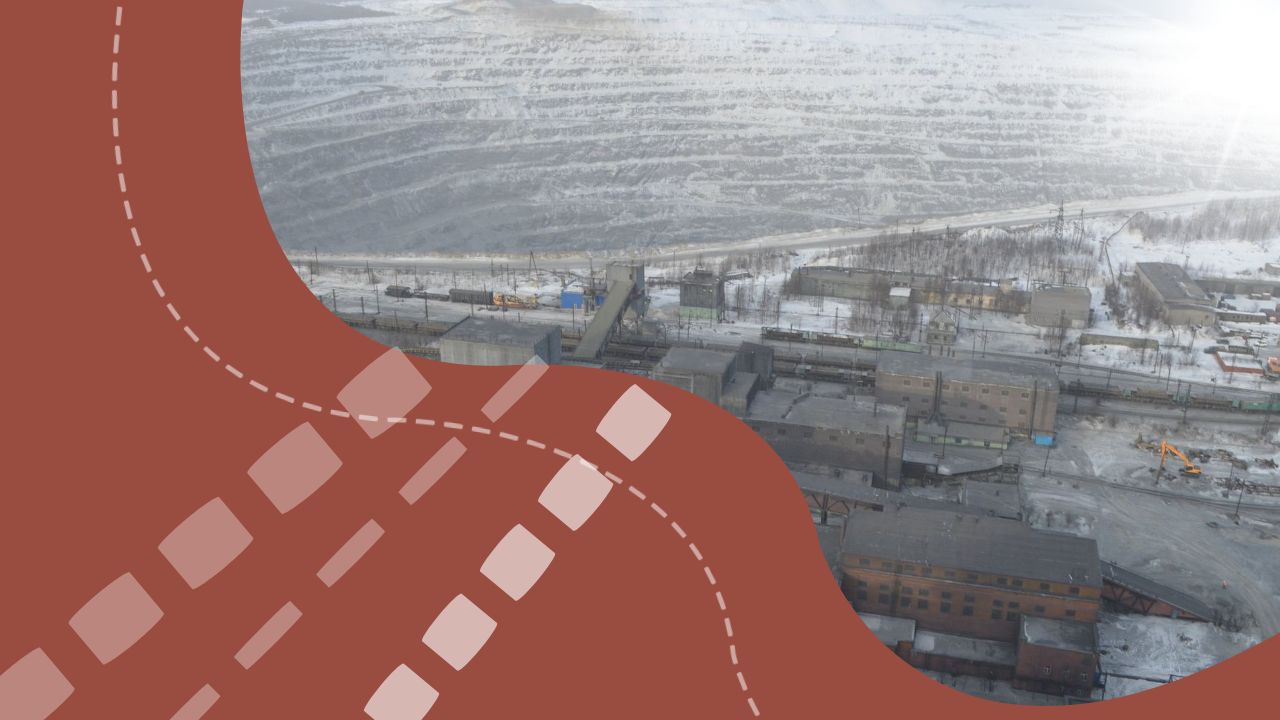
Industry association European Aluminium has called on the European Union to introduce a targeted indirect ban on Russian aluminium in the bloc’s next sanctions package, warning that a significant loophole allows Russian primary metal to enter the EU market via third-country processing — undermining existing direct import sanctions and sustaining Russian export revenues.
The association’s #NoSecondPassport campaign argues that Russian primary aluminium can be sold to producers in third countries, processed into semi-finished or finished products, and then exported to the EU as goods originating from the processing country rather than Russia. European Aluminium says this circumvention places unfair competitive pressure on European producers that have already moved away from Russian supply, while generating almost $10 billion in export revenue for Russia last year.
Turkey is highlighted as the clearest example of the loophole in practice. Russia supplied approximately 20% of Turkey’s primary aluminium imports in 2025, making it Turkey’s second-largest supplier. The association also flags the Gulf supply crisis as a compounding risk: Turkey relied on Gulf countries for around 42% of its aluminium ingot imports in 2025, and the association warns that regional instability or further upward price pressure could push Turkey and other third countries to increase their reliance on discounted Russian supply.
European Aluminium is calling for the indirect ban to be backed by stronger enforcement mechanisms, including mandatory reporting of the first and second largest country of smelt and the last country of cast, enabling customs authorities to trace the upstream origin of aluminium entering the EU. The package would also include targeted customs checks on high-risk third-country imports, ongoing monitoring of import flows from countries known to import large volumes of Russian aluminium, and specific scrutiny of billets, extrusions and other semi-finished products.
The association frames the issue as a strategic autonomy concern, arguing that weakening Europe’s aluminium industrial base at a moment when the sector is increasingly tied to defence, clean energy and broader industrial resilience carries risks that extend well beyond commercial competition.
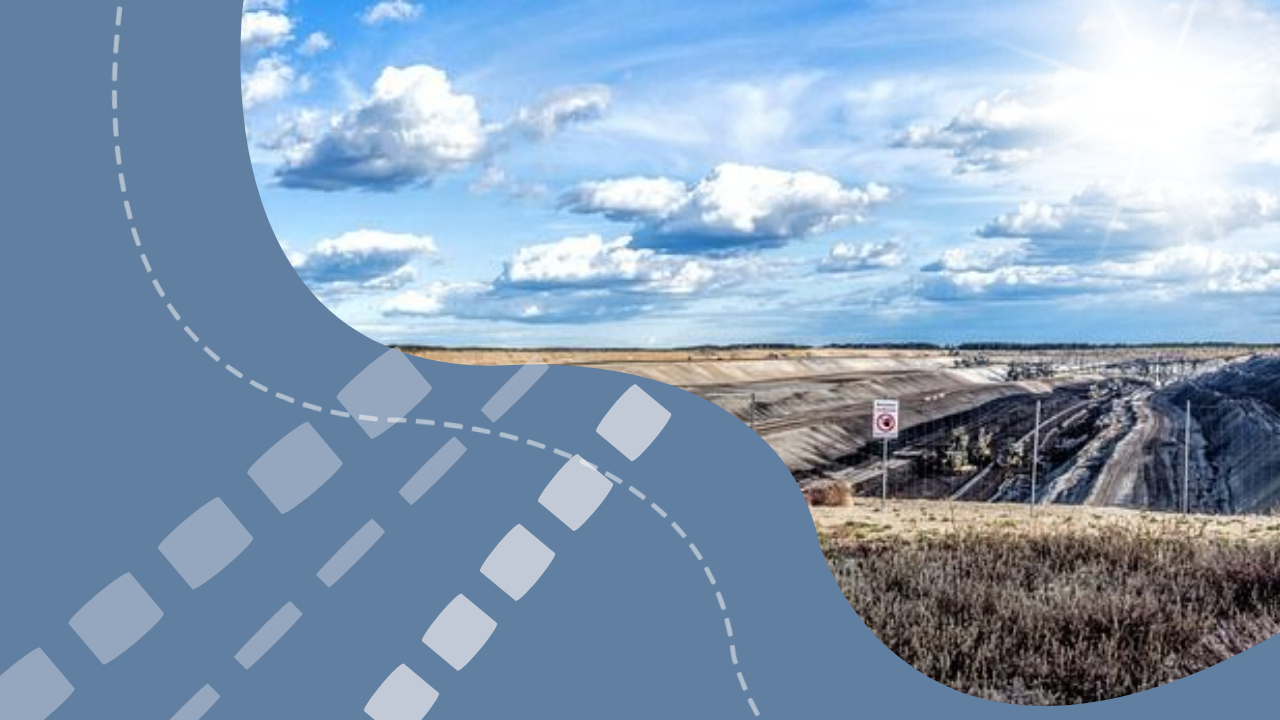
Energy Transition Minerals has secured the final regional approval needed to take over the Penouta tin, tantalum and niobium mine in Galicia, Spain, moving a step closer to making it the European Union’s only domestic primary source of two critical raw materials that Europe currently imports almost entirely from overseas.
The Xunta de Galicia has authorised the transfer of the Section C mining concession at the Penouta mine in Viana do Bolo, Ourense, to ETM’s Spanish subsidiary, formally recognising the company as the incoming holder of mining rights. The approval is the final regional step in ETM’s rescue of the project from the insolvency of previous operator Strategic Minerals Spain, which collapsed in 2024 and halted production.
The strategic significance is considerable. Europe mines almost none of the metals Penouta produces. Over 80% of the world’s niobium comes from Brazil, most tantalum is mined in the DRC and Rwanda, and critical minerals processing is dominated by China. Tantalum prices have reached multi-decade highs this year following supply disruption in central Africa. Both tantalum and niobium are designated critical raw materials by the EU, the US and Australia, with applications across semiconductors, capacitors, high-performance aerospace and defence alloys, and energy transition technologies.
Penouta retains its open-pit mine, a processing plant tailored to its ore type and supporting infrastructure representing a historical investment of approximately €28 million. The site covers 282 hectares and holds certified measured and indicated resources of more than 76 million tonnes under NI 43-101 standards. Mineral resources in the area were exploited from the early 20th century through the 1980s, with exploration reactivated in 2011 by Strategic Minerals Spain.
ETM has signed a memorandum of understanding with commodity trader Traxys for offtake of concentrate from the mine. Managing director Daniel Mamadou said the company intends to reactivate Penouta responsibly, retaining experienced local staff, prioritising local hiring and working closely with the Viana do Bolo municipal council. “Europe has spent years talking about reducing its dependence on a handful of distant suppliers for the metals its industries cannot do without. Penouta is one of the few places on the continent where that ambition can actually be met — and met soon,” he said.
The Penouta news comes the same week that Greenland formally rejected ETM’s application to renew the exploration licence for its Kvanefjeld rare earth project, after the Greenland government gave the company 48 hours to respond to technical assessments and refused a one-week extension.
The European Union and China have agreed to enter three months of formal trade consultations aimed at averting a trade war over the bloc’s annual €360 billion import-export imbalance, in their first joint statement on the relationship in seven years.
EU Trade Commissioner Maroš Šefčovič met Chinese Commerce Minister Wang Wentao in Brussels on Monday, with both sides agreeing to open the consultations after weeks of threats and recriminations from Beijing over the prospect of EU measures to curb the flow of Chinese goods and components into Europe. “The EU and China as key trade partners, agree that the main objective of the TIC is to strengthen dialogue at ministerial level on trade and investment policies with the view to stabilise and make our bilateral relationship more balanced,” the two sides said in a joint statement, with the next meeting scheduled for October in Beijing.
The talks come amid growing alarm in Brussels over what is now widely described as China Shock 2.0 — a threat to European industry and jobs extending well beyond electric vehicles and green technology. Eurostat reported on 15 June that Chinese exports to the EU now exceed imports from the bloc by approximately €1 billion per day. “We simply cannot afford to continue in the unsustainable growth of the trade deficit from the European perspective,” Šefčovič said. “We just didn’t want to wait too long. What is very important for us is engagement, it’s dialogue. But it has to bring tangible results, and we believe that we can achieve them by October.”
Industry groups including the European Chambers of Commerce in China have warned that the scale of exports flowing into Europe risks “cannibalising” EU factories that remain heavily dependent on Chinese components.
The consultations will cover four areas: rebalancing of trade and investment, export controls including those on rare earths, intellectual property rights, and World Trade Organization reforms. The two sides have also agreed to a joint monitoring mechanism extending beyond headline Eurostat and Chinese customs (GACC) figures, designed to identify sudden surges in exports or imports and trigger political discussions should either side move into an “amber or red” danger zone, according to Šefčovič.
The European Commission has reportedly been mapping import and export data in fine detail over the past year, suggesting the three-month window will focus primarily on political dialogue rather than technical groundwork. The EU has adopted a cautious approach following the failure of its 2024 tariffs to meaningfully curb EV imports, with sources indicating quotas on hybrids and chemicals could be considered in the autumn.
The Swedish government has granted Leading Edge Materials a 25-year mining lease for its Norra Kärr project in southern Sweden, clearing the way for what the company describes as Europe’s first heavy rare earth mine and sending its shares up nearly 28% on the announcement.
The exploitation concession followed a formal recommendation from Sweden’s mining inspectorate endorsing development, with the government citing the project’s strategic importance to both Sweden and the EU. A prior study by the Geological Survey of Sweden confirmed Norra Kärr as one of Europe’s richest rare earth deposits, with a particularly high proportion of heavy rare earths — terbium, dysprosium and yttrium — all essential inputs for permanent magnets used in electric vehicles, wind turbines and defence applications. With no rare earth production currently occurring anywhere in the EU, the government concluded that supplying these critical materials clearly outweighs competing land-use considerations.
CEO Kurt Budge said the decision affirms Norra Kärr as a strategically important heavy rare earth deposit in a Tier 1 jurisdiction, adding that the project has “the capacity to supply all of Europe’s annual dysprosium requirements alongside meaningful terbium and yttrium production” — offering what he called a realistic solution as Europe seeks to reduce dependence on Chinese imports.
A 2021 preliminary economic assessment outlined a potential 26-year mine life producing an average of 5,340 tonnes per year of mixed rare earth oxides, based on material representing approximately 30% of the project’s inferred resource of 110 million tonnes grading 0.5% total rare earth oxides. The project’s key differentiator is its unusually high ratio of heavy to light rare earths — 2.5 to 1, compared with an average of 38.5 to 1 among peer projects — meaning for every kilogram of neodymium-praseodymium produced, Norra Kärr is expected to yield 0.4 kilograms of dysprosium-terbium. Based on the older, lower rare earth price assumptions used in the 2021 study, the project carried a post-tax net present value of $762 million, an internal rate of return of 26.3% and average annual EBITDA of $206 million — figures likely to improve substantially given current heavy rare earth pricing.
With the mining lease secured, Leading Edge will advance an updated pre-feasibility study and begin discussions with potential offtake partners and financiers. The company will simultaneously pursue environmental permitting, pledging development to the highest environmental standards in close dialogue with the local community, including those who remain sceptical of the project. Norra Kärr previously had its mining concession revoked in 2016 over environmental concerns three years after initial issuance; Leading Edge has since reduced the project’s footprint by 65% to address those concerns.
Greenland’s government has formally rejected Energy Transition Minerals’ application to renew its exploration licence for the Kvanefjeld rare earth project, also known as Kuannersuit, dealing a potentially decisive blow to one of the world’s largest undeveloped rare earth deposits after a five-year regulatory impasse triggered by the island’s 2021 uranium mining ban.
“Further exploration in the area is not deemed likely to lead to the discovery of deposits that can be exploited in accordance with the Uranium Act,” the government said in a statement. The decision follows a 2021 ban on uranium mining enacted by the then-ruling Inuit Ataqatigiit party — which effectively halted Kvanefjeld’s development because uranium occurs as a byproduct of the rare earth deposit — and a draft decision signalled to ETM in April indicating the government intended to recommend rejection.
ETM, a unit of Australia’s Energy Transition Minerals, criticised both the decision and the process leading to it. The company said Greenland’s Ministry of Mineral Resources held its application for nine months before giving it 48 hours to respond to technical geological assessments and refusing a requested one-week extension. “The compressed timeframe meant the decision did not take account of ETM’s recent exploration results, which identified new mineralised zones across the wider licence area,” the company said. ETM also noted the contradiction between the rejection and Greenland’s stated positioning as open for mining investment. “Greenland has positioned itself as open for business. This decision creates a different impression,” it said.
Greenland’s Minister of Mineral Resources and Foreign Affairs Mute Egede, who was prime minister when the uranium ban was enacted in 2021, said the decision was based on legislation passed by parliament and reflected the long-standing position of communities in South Greenland. “We remain committed to the course Greenland has chosen,” he said.
The rejection ends ETM’s current licence path at Kvanefjeld, though the company has indicated it will continue pursuing legal options and dialogue. ETM is separately in dispute with Chinese shareholder Shenghe Resources after terminating a 2018 joint development agreement for the project in April.
Savannah Resources has resumed work at its Barroso lithium project in northern Portugal after the government declared the project of national and European significance and succeeded in lifting a court-ordered suspension that had halted operations for three weeks.
Work was suspended on 9 June after the Mirandela Administrative and Fiscal Court granted a precautionary injunction filed by the Barroso Assembly of Common Land Holders, following a second administrative easement that gave Savannah access to community and private land for geotechnical work. In its response to the court, the Portuguese government argued that the suspension could cause serious harm to the public interest, delay a project of recognised national and European strategic importance, and jeopardise the energy transition. The suspension was lifted on Monday and Savannah said it will reinitiate fieldwork and complete the planned work programme.
There is no legal right of appeal against the lifting of the injunction, though opponents may attempt further legal action.
The Barroso deposit in northern Portugal hosts resources exceeding 39 million tonnes of spodumene, making it Europe’s largest lithium deposit. Potential extensions of 35 million to 62 million tonnes could push total resources above 100 million tonnes and more than double the projected mine lifespan to over 50 years. The project is one of 47 designated as strategic under the EU’s Critical Raw Materials Act.
The project has faced nearly a decade of sustained community opposition and numerous legal challenges. A final investment decision is expected by the end of 2026, with construction planned for 2027 and first production targeted for 2028.
Savannah Resources is pursuing a secondary listing on either Euronext in Lisbon or the Australian Securities Exchange to tap growing investor appetite for battery materials outside the UK market, as the London-listed company advances its Barroso lithium project in northern Portugal toward a feasibility study completion this summer and construction start in 2027.
CEO Emanuel Proença said the company has seen growing interest from investors who typically access markets through Euronext, where no major lithium spodumene plays are currently listed. “There are no big lithium spodumene plays on Euronext, so that is kind of a new offering,” he said. The ASX remains an established venue for lithium stocks and is also under consideration. The secondary listing would support Savannah’s broader financing strategy, which also includes offtake-related finance alongside the existing offtake agreement with AMG Lithium BV — the company’s largest shareholder.
Barroso, which received EU strategic project status in 2025, has the potential to become one of Europe’s largest lithium operations, with planned annual output sufficient to supply battery packs for approximately half a million electric vehicles. Production is targeted to begin in late 2028 following a construction phase starting in 2027.
Savannah is currently negotiating additional offtake agreements beyond the AMG Lithium deal, including with parties in China. Proença noted that initial production volumes would exceed what European markets can absorb in the near term, making broader offtake arrangements necessary. The company has a market capitalisation of approximately £160 million ($210 million).
Lithium prices have rebounded more than 150% over the past year, supported by the emergence of large-scale battery storage as a demand driver alongside electric vehicles, prompting mine restarts in Australia and renewed financing interest across the sector.
Goldsky Resources has closed its acquisition of Agnico Eagle’s 55% interest in the Barsele gold project in northern Sweden, becoming the sole owner of a 2.15 million ounce resource and immediately planning what the company describes as one of the largest drilling campaigns ever undertaken across the licence.
As agreed when the transaction was announced in January, Agnico received $20 million in cash, approximately 75.51 million Goldsky shares valued at C$2.64 each, and a 2% net smelter return royalty. Royalty obligations to Orex Minerals were also transferred to Goldsky as part of the deal. Agnico has emerged as an approximately 32% shareholder in Goldsky, holding nearly 83 million shares and holding an investor rights agreement for top-up participation.
Goldsky CEO Russell Bradford described the closing as marking “an exciting new chapter” for the company. The Barsele project, located in Västerbottens Län approximately 600 kilometres north of Stockholm, has been explored by Agnico for a decade, with the majority of the existing 2.15 million ounce resource sitting in the inferred category — leaving significant potential for resource growth through systematic drilling. The company has budgeted $25 million for a 2026 drilling programme at the property.
Goldsky shares were 2.5% higher by midday Thursday at C$3.25, giving the company a market capitalisation of approximately C$598 million ($421.7 million). In addition to Barsele, the Toronto-based junior holds the Paubäcken and Storjuktan projects in Sweden’s historically defined Gold Line belt, as well as three projects in Finland including the Rajapalot property in Lapland.
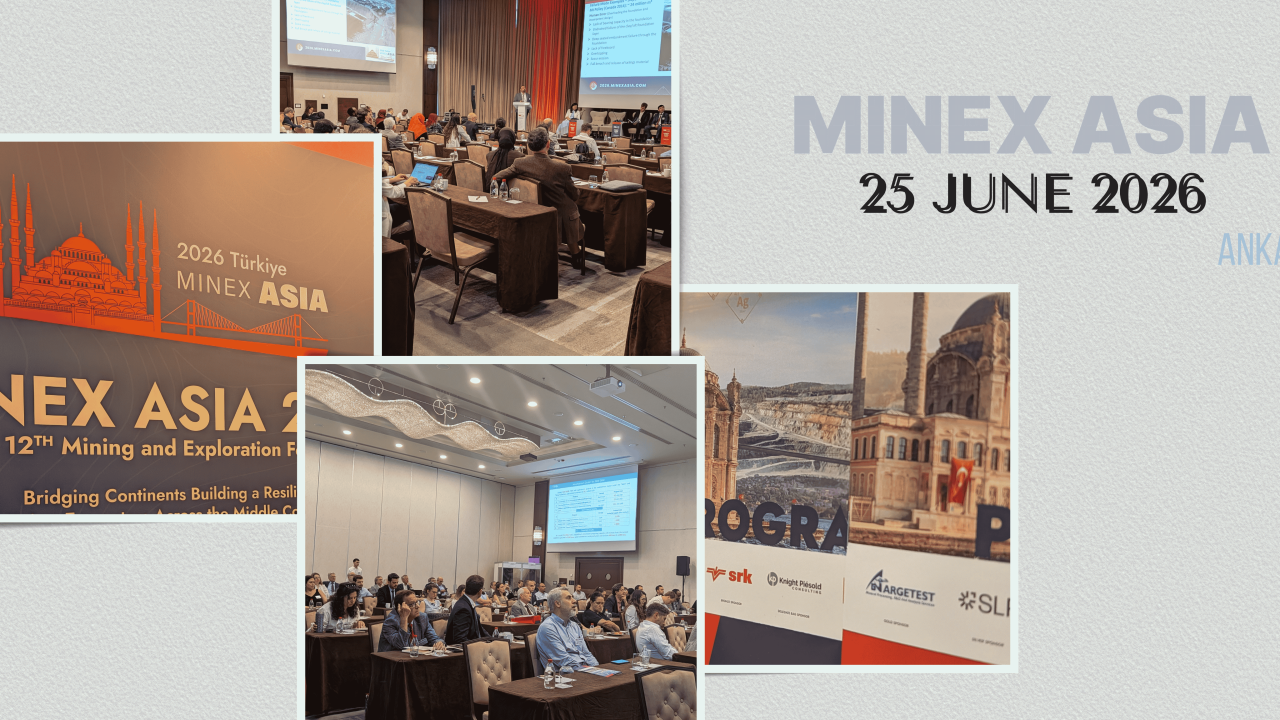
If Day 1 asked “why does geological wealth not automatically translate into investment?” then Day 2 answered with brutal clarity: because you cannot move critical minerals to global markets without the infrastructure to process them. And that infrastructure — refining, separation, conversion — is the question that defined every session on 25 June.
The day opened with a deliberate strategic reframing. Nevzat Başlar from MAPEG (Ministry of Energy and Natural Resources) did not call his presentation “Türkiye’s Mining Vision” or “Turkey’s Mineral Wealth.” He titled it: “Bridging Between Reserves and Refining: Türkiye’s Strategic Role in the Global Critical Minerals Race.”
The phrasing was intentional. Türkiye is not positioning itself as a reserve. It positions itself as a bridge. Not a source country, but an industrial anchor — capable of converting Central Asian ore into finished products for Western supply chains. The argument was structural: Türkiye sits at the point where Central Asian geology meets European demand. But proximity is worthless without processing. The strategic imperative is to develop midstream processing capacity — that transformative layer where raw material from Uzbekistan and Kazakhstan becomes inputs for EV motors, wind turbines, and defence electronics before they reach Western manufacturers.
This was not background framing. It was the foundation for everything that followed.
The morning: supply chain positioning and financial instruments
Sebnem Alp from UKEF followed with a presentation on trade financing. Her argument moved beyond the project-finance logic that had dominated Day 1’s financing panel. Trade finance operates on a different timeline and risk profile: shorter tenors (12–24 months versus 5–7 years), repeatable commodity flows, and off-balance-sheet structures that allow regional banks and development institutions to recycle capital efficiently. The subtext was clear: if the Middle Corridor is going to move tonnes of processed materials, you don’t finance it with mega-loans to mega-projects. You finance it with working capital lines and commodity flows between nodes.
Timur Khikmatullaev – Uzbekistan’s Technological Metals Complex
Timur Khikmatullaev from Uzbekistan’s Technological Metals Complex presented “Unlocking Uzbekistan’s Critical Raw Materials” — but the word “unlocking” carried weight. Uzbekistan is moving from bilateral Chinese partnerships toward Western supply chain integration. The Complex’s presence as a forum partner signalled that Tashkent now sees Western offtake arrangements and technology partnerships as genuinely competitive with Chinese state finance. Speed, he argued, is no longer China’s monopoly if Western institutions and private capital move with coordinated intent.
Dr Tomas Hrstka
Dr Tomas Hrstka from SGS brought the assurance layer. His presentation — “Unlocking the Tethyan Belt: The Strategic Role of Advanced Mineralogy and New Technologies in Accelerating Projects, Reducing Development Risks and Optimising Performance” — positioned testing and certification not as compliance overhead but as a competitive accelerator. Advanced mineralogy data at the front end of a project reduces capex uncertainty, speeds permitting, and attracts first-loss capital from Western investors who demand CRIRSCO/JORC compliance. The technical infrastructure arrives before the mining infrastructure.
Artyom Geghamyan from Armenia presented the regional closure to the morning’s supply chain vision: “Armenia at the Intersection of Critical Minerals, Connectivity and Peace.” The title embedded a geopolitical argument: Armenia’s post-conflict position, its mineral endowment, and its location along the Middle Corridor create a window. Armenia could become a processing node or remain a source of raw exports. The choice is Armenia’s, but the structural logic is the same as Türkiye’s — geography plus processing capacity equals supply chain criticality.
The morning’s closing speaker was Veda Duman Kantarcıoğlu from the Nuclear Engineers Society — and her presentation reframed what “mining” actually means in a rare earth element context. “Developing National Competencies for Nuclear-Industrial Partnerships for Mining Applications” made explicit what was implicit in Beylikova: rare earth processing generates radioactive byproducts. Processing REE is not standard industrial mining — it is quasi-nuclear operation. It requires workforce training aligned with nuclear safety protocols, regulatory partnerships with nuclear authorities, and infrastructure designed to international IAEA standards. Veda’s presence in the session signalled that Türkiye’s Akkuyu nuclear facility and its nuclear regulatory ecosystem are not separate from the mining story. They are central to it.
Midday: ESG as competitive advantage, not compliance burden
Session 6, moderated by Zhanar Faizuldayeva of SLR Consulting, was titled “Responsible Mining: Driving Sustainability, Trust, and Global Standards in Eurasia.” The framing was not defensive. The session positioned ESG as a competitive filter, not a compliance burden. Projects with robust environmental and social governance attract Western capital faster, command better offtake terms, retain social licence, and move through permitting more quickly.
Tunç Berkman from TBS Investment made the opening case: “Mining’s Greatest Resource is No Longer Underground — It is Public Trust.” The line was powerful. Geological wealth is abundant; public confidence is finite. Companies that build it win capital and speed. Companies that destroy it lose both.
The session acknowledged that standardisation creates competitive advantage. A zone of ESG compliance across Eurasian projects, certified and transparent, becomes immediately bankable to Western development finance institutions without additional diligence. Standards reduce friction in capital flows.
The technical constraints no one can sidestep
Session 7, “Tailings Management, Structural Resilience and Resource Stewardship,” moderated again by Zhanar Faizuldayeva, brought the conversation to the engineering reality that has stopped more mining projects than geology ever has: what happens to the waste?
The panel assembled the specialists: Sam Safavian (SLR) on risk-based safety reviews; Alistair White (Knight Piesold) on resilience-based design; Iain Pickard (Strategia Worldwide) presenting Tailings Protect — an integrated real-time monitoring and risk management solution; and Azamat Abdulayev (SRK Kazakhstan) closing with water management as competitive advantage in a region facing acute water stress.
The core argument was unambiguous: modern tailings management is not bolt-on infrastructure. It is central design. Dry stacking, filtered tailings, managed impoundments with real-time monitoring add 10–15% to capex and require operational discipline across the project lifecycle. For the Middle Corridor, the implication was sharp: you cannot replicate the Chinese model of rapid development with lower environmental standards and hope to export to Western markets. Your tailings will be audited. Your water management will be certified. The cost is structural and non-negotiable.
The afternoon: value chain integration and processing momentum
Session 8, “From Ore to Application: Operational Technology and Value-Chain Integration,” moderated by Ivan Livinskiy of SRK Kazakhstan, moved to the point where most Central Asian minerals still stop: processing.
Umid Salokhutdinov from Future Metals Technopark presented the technopark model as Uzbekistan’s answer to a specific problem: you can mine tungsten, but unless you process it into tungsten carbide or high-temperature alloys, you compete with Chinese raw material exports on price and lose. The Technopark is infrastructure for midstream processing — company A mines ore in deposit X, company B processes it at the park, company C manufactures final products, company D integrates them into systems. Profit margins compound at each step.
Emre Ahmet Kantarci from ExxonMobil brought the multinational perspective. ExxonMobil’s interest in the Middle Corridor is not primarily mining. It is securing feedstock for advanced materials manufacturing — batteries, wind turbine components, defence electronics. The multinational majors are thinking vertically integrated supply chains, not purchasing tonnes of raw ore at commodity prices.
Burak Köse from ARGETEST closed the session with the data infrastructure argument: none of this works without laboratory certification at every step. ARGETEST’s expansion into Tashkent and three additional Central Asian countries reflects the reality that processing hubs cannot operate without local laboratory capacity.
The closing: tensions clarified but not resolved
Session 9’s closing panel — “Bridging the Supply Gap: Türkiye and the Middle Corridor as New Frontier for Critical Mineral Security” — brought together Céleste Laporte (OECD), Zhanar Faizuldayeva (SLR), and Ivan Livinskiy (SRK Kazakhstan) under Han İlhan’s moderation.
The panellists did not paper over the central unresolved tension. Supply chain positioning along the Middle Corridor: agreed. Industrial anchor capacity: conceptually clear. But the speed remains fundamentally mismatched. Western capital moves at 3–5 years for permitting, 2–3 for financing, 4–5 for construction. Chinese capital moves in 18–24 months. The region has choice — geology is real and governance is improving — but on a timeline that doesn’t match the energy transition’s hunger for supply.
The other unresolved tension: processing. Every speaker on Day 2 acknowledged that value creation happens downstream, not in extraction. But processing requires different capital intensity, different workforce training, different infrastructure. Mining companies extract ore. Manufacturing companies process it. The Middle Corridor does not yet have enough of the latter to absorb the former’s output at rates that would shift global supply chains.
The day’s through-line
By evening, when delegates moved to the Göksu Restaurant for the Day 2 networking dinner, the conversation had shifted but not concluded.
Day 1 asked “why isn’t geological wealth flowing into investment?” Day 2 answered: because the supply chains do not yet exist — not because they cannot, but because they require simultaneous moves across geology, governance, processing infrastructure, workforce development, ESG certification, water management, and political will at sovereign scale.
Başlar’s frame — “Bridging Reserves and Refining” — was the day’s synthesis. The Middle Corridor has reserves. It has refining capacity in development. It has governance improving. What it doesn’t yet have is the decision — at sovereign scale, backed by capital commitment — that processing capacity is the strategic priority, not extraction speed alone.
Kazakhstan is partly there. Uzbekistan is accelerating. The region — with combined geological endowments that dwarf most of the world — remains at the inflection point. The institutions are assembling. The case is being made. The question is whether speed matches opportunity, and whether political will can keep pace with geological advantage.
Day 2 sharpened the question. It did not answer it.