Website: Europe.com

  • Poland’s Coal Sector Loses PLN 300-400 Per Tonne as Output Falls to 42.8 Million Tonnes and Taxpayer Subsidy Reaches PLN 450,000 Per Job

    Poland’s Coal Sector Loses PLN 300-400 Per Tonne as Output Falls to 42.8 Million Tonnes and Taxpayer Subsidy Reaches PLN 450,000 Per Job

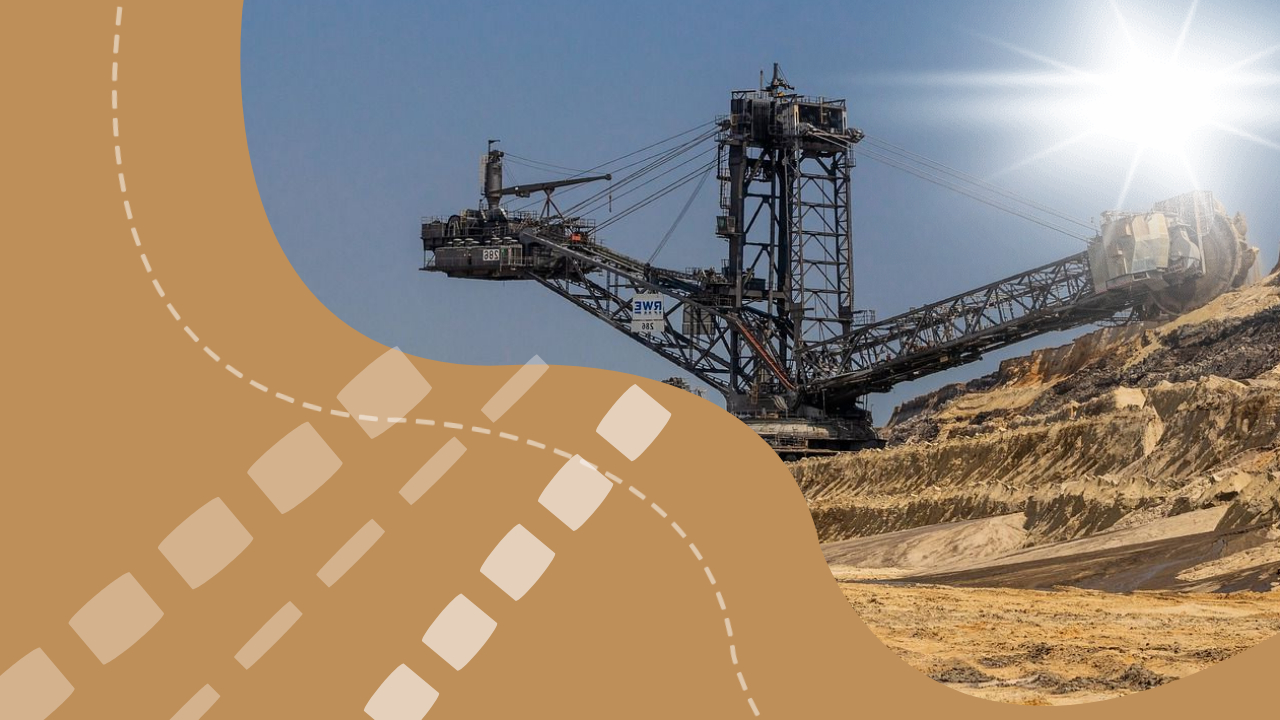
    Poland’s hard coal mining sector is generating losses of between PLN 300 and PLN 400 per tonne extracted, with average extraction costs running at approximately PLN 800 per tonne against a market value that does not exceed $100 — a structural deficit so deep that maintaining a single job in the loss-making segment of the industry costs Polish taxpayers approximately PLN 450,000 per year.

    Production has been on a consistent downward trajectory. Hard coal output fell to 42.8 million tonnes in 2025, 1.2 million tonnes below 2024 levels and a sharp decline from 52.8 million tonnes in 2022. Sales volumes of 43.2 million tonnes exceeded production in 2025, drawing down existing inventories. Domestic consumption of thermal hard coal stood at 37.8 million tonnes last year, with imports falling 26% to 3 million tonnes as domestic output remained sufficient to cover most needs.

    Despite the economic losses and declining output, coal remains indispensable to Poland’s electricity system. It accounted for more than 52% of electricity generation in 2025 — a share that fell by only 3 percentage points year-on-year. Renewable energy’s share of the energy mix grew by 0.7 percentage points to 31.4%, according to a report by Forum Energii, but the pace of transition remains insufficient to displace coal as the primary generation source in the near term.

    The paradox facing Polish energy policy is stark: the sector is economically unviable at current coal prices, yet without it the country would face immediate electricity supply deficits. The cost of maintaining jobs in loss-making mines exceeds what it would cost simply to pay miners their salaries without requiring them to extract coal — yet abrupt closure would threaten grid stability in a country still more than half dependent on thermal coal for power generation.

  • Euro Manganese Converts $23.5 Million Orion Debt to Royalty at Czech Chvaletice Project to Simplify Capital Structure

    Euro Manganese Converts $23.5 Million Orion Debt to Royalty at Czech Chvaletice Project to Simplify Capital Structure

    Euro Manganese has amended its financing facility with Orion Resource Partners, converting US$23.5 million in outstanding debt and accrued interest into a royalty structure on the Chvaletice Manganese Project in the Czech Republic — a move designed to simplify the company’s capital structure and provide greater flexibility as it advances the project through permitting, financing and market conditions.

    Under the revised agreement, the outstanding loan and accrued interest will automatically convert into a royalty once a fundraising condition is met by a date acceptable to Orion, fully discharging the company’s repayment obligation. The revised structure removes time-based milestones contained in previous versions of the agreement. Following conversion, the royalty will range from 2.29% to 2.46% of project revenues, calculated quarterly on a sliding scale linked to achieved prices for the project’s high-purity manganese products.

    CEO Martina Blahova said the restructuring was a constructive outcome. “By converting the existing facility into a royalty, we are simplifying our capital structure, improving financing flexibility and positioning the company to advance the Chvaletice Manganese Project through its next stage of development,” she said. Chairman Rick Anthon described the revised arrangement as reflecting the strength of the company’s relationship with Orion, providing a clearer and simpler capital structure heading into the next development phase.

    Orion retains offtake rights covering 20% to 22.5% of the project’s high-purity manganese production for ten years from first delivery, with offtake terms matched to commercial terms achieved by the company to meet bankability requirements. The original Orion funding package, announced in November 2023, was structured as US$100 million split into two US$50 million components.

    The Chvaletice project aims to reprocess historic mine tailings to produce high-purity electrolytic manganese metal and high-purity manganese sulphate monohydrate — battery materials in growing demand for EV cathode manufacturing.

  • DPM Metals Closes Ada Tepe Gold Mine for Rehabilitation as Chelopech Delivers Strong H1 Results and Major Porphyry Discovery Advances

    DPM Metals Closes Ada Tepe Gold Mine for Rehabilitation as Chelopech Delivers Strong H1 Results and Major Porphyry Discovery Advances

    Canadian mining company DPM Metals is closing its Ada Tepe gold mine in Bulgaria for rehabilitation on 15 July, following a final production blast at the site in mid-April. The mine produced 23,000 ounces of gold in the first half of 2026 before ceasing operations. DPM said that after rehabilitation, 95% of Ada Tepe’s land use will be returned to the Natura 2000 EU nature protection network.

    The closure marks the end of Ada Tepe’s operating life, while DPM’s other Bulgarian asset, the Chelopech gold-copper mine, continues to perform in line with expectations. Chelopech delivered 75,000 ounces of gold and 15 million pounds of copper in the six months through June, including 43,000 ounces of gold and 8 million pounds of copper in the second quarter alone. The mine is on track to achieve its full-year production guidance and had its operating life extended by ten years to 2036 in February based on updated mineral reserve estimates.

    Chelopech is also the focus of significant exploration activity. In June, DPM announced the discovery of high-grade gold-copper porphyry mineralisation at the Brevene South Porphyry target adjacent to the mine, with a standout drill hole returning 713 metres grading 1.31 grams per tonne gold and 1.16% copper — results that analysts described as distinguishing the BSP as a potentially very high-grade porphyry system. In May, the company also identified new high-grade intercepts at the Wedge Zone Deep target within the Chelopech mine licence area.

  • Europe’s Critical Materials Problem Is Not Too Much Regulation — It Is Too Little Orchestrated Demand

    Europe’s Critical Materials Problem Is Not Too Much Regulation — It Is Too Little Orchestrated Demand

    Whenever Europe falls behind in a strategic technology, the diagnosis defaults to the same cause: excessive regulation and insufficient risk appetite. Regulation can and should be simplified. But that is not the binding constraint holding back European critical materials supply chains. The real problem is the failure to turn world-class science into industrial scale — and the specific mechanism missing is aggregated, committed demand that turns potential buyers into anchor customers.

    Writing in the context of the EIT RawMaterials Summit 2026, Victor Mulas identifies a structural gap that is both precise and actionable. Europe produces serious research, capable entrepreneurs, promising companies and sophisticated industrial buyers. What it lacks is the coordination infrastructure that converts those ingredients into industries.

    What Japan does differently

    The contrast with Japan is instructive. Several European players in critical materials recycling are reaching commercial scale — HyProMag has opened a magnet-recycling plant in Germany, and Carester’s CareMag is building one of Europe’s first large-scale rare earth recycling and refining facilities in France. But each company assembled the missing commercial piece on its own: Carester through a ten-year Stellantis offtake agreement and Japanese state and industrial backing; HyProMag through individual industrial buyer relationships. The science was not the binding constraint. Bankable demand was — and in Europe, a company still secures it deal by deal.

    Japan, through JOGMEC and METI, does more of the orchestrating that Europe leaves to private initiative: equity, loans and guarantees the private sector will not provide alone, strategic stockpiles, recycling targets, and consortia that align buyers, researchers and processing capacity before projects need to stand on their own. The technology gap between Europe and Japan is small. The commercialisation gap is considerably larger.

    Lessons from Warp Speed and NASA

    The constraint for European startups is rarely the science. It is reaching scale at the speed the challenge demands. Neither Europe nor Japan can match American scale-up capital — but what both can do is manufacture scale on the demand side by committing to buy a solution before it exists. When NASA needed cargo delivered to the International Space Station, it did not build the vehicle itself; it part-funded development and bought delivery as a service. That combination drew in private capital and built the commercial launch industry that now leads the world. Operation Warp Speed applied the same logic to vaccines.

    Europe is beginning to build this instrument through the Raw Materials Mechanism, and proposals for a JOGMEC-style Critical Raw Materials Centre point in the same direction. But current tools remain too close to voluntary matchmaking. What is needed are two more forceful applications: EU-aggregated pre-purchase, pooling member states behind a clearly specified solution that does not yet exist; and the coordinated buying power of Europe’s large global companies, whose balance sheets and demand volumes can call a market into being.

    Guaranteed demand will not immediately make European critical materials supply cheaper than China’s. But that gap should not be treated as an inefficient subsidy. It should be treated as a strategic autonomy premium — the price of resilience against geopolitical shocks, export controls and supply disruption. Paid upfront, it buys the volume and time to drive costs down to competitive levels, through procurement rather than deregulation.

    Cluster or fall behind

    Europe has the ingredients: research, talent, corporations and procurement budgets. What it lacks is the connective infrastructure that turns them into industries — aggregated demand, patient capital to bridge the gap from pilot to plant, and institutions accountable for carrying named ventures to a first commercial contract. Europe funds many clusters and hubs; what it rarely runs is a programme with accountability for specific commercial outcomes. Without it, results come too slowly and at too small a scale.

    The opportunity grows with connection to like-minded economies facing the same vulnerabilities — Japan, South Korea, the UK, Canada and Australia. Linking European innovators to these ecosystems can open access to buyers, capital and expertise that no single region can reach alone. The technologies that will define strategic autonomy in this decade are already in European laboratories. The science is there, and so is the ambition. What is needed is the orchestration to turn them into industrial outcomes.
  • Ann Mettler on Europe’s toxic complacency, cleantech challenge & energy security crisis (RM#12)

    Ann Mettler on Europe’s toxic complacency, cleantech challenge & energy security crisis (RM#12)


    Ann Mettler on Europe’s toxic complacency, cleantech failure & energy security crisis [RAW MATTERS GRANDE FINALE, RM#12 – Ann Mettler, Julia Poliscanova, Peter Tom Jones]

    We end Season 1 of the Raw Matters podcast with a big bang. We close with a conversation that goes straight to the heart of Europe’s competitiveness and energy‑security challenge.

    After a season of deep dives into critical minerals, geopolitics and industrial strategy, we end with someone who has shaped Europe’s thinking at the highest levels: Ann Mettler, President of Catalyse Europe, former VP at Breakthrough Energy (with Bill Gates), and one of Europe’s sharpest voices on industrial strategy and clean tech.

    Hosts Peter Tom Jones and Julia Poliscanova open with the uncomfortable question: How did Europe manage to deepen its fossil‑fuel dependencies while simultaneously creating new ones for the clean‑energy transition?

    This paradox sets the tone for a conversation about Europe’s “toxic complacency” – a theme Ann has highlighted repeatedly (cf. Quote by Sir Richard Shirreff), and one that now defines the continent’s strategic vulnerability.

    We explore Ann’s professional journey, then dive into the big issues:

    👉 The staggering cost of Europe’s fossil‑fuel exposure, from Ukraine to the Hormuz crisis.
    👉 Whether the Draghi report’s diagnosis of Europe’s competitiveness gap is being acted upon.
    👉 Why Europe’s energy security – in fuels, technologies and critical minerals – remains fragile.

    From there, we zoom into cleantech: the battleground where Europe’s future will be decided. Ann explains why Europe cannot rely on cheap imported batteries – the general‑purpose technology of the electrification age, essential not only for EVs but also for stationary storage and defence (drones, humanoid robots). “We cannot and should not rely on China for critical infrastructure.”

    We discuss which technologies Europe must fight to keep, which ones to onshore, and which ones to strategically let go. And which Asian partners Europe should work with and why technology alliances matter.

    We close with the policy angle. Ann deliberately avoids commenting on specific policy files (CRMA, IAA, Circular Economy Act…). Instead, she exposes the systemic problem: silo‑based policymaking in the EU and the lack of people in Brussels who genuinely understand how industry works, how technology functions or how investments are made. Echoing Salvatore Pinizzotto, she calls for real synchronisation in policymaking and genuine “ecosystem building”, overcoming the endemic “professional optimism” in the Brussels bubble.

    This GRANDE FINALE is a wake‑up call. Unless Europe confronts its toxic complacency, it will continue drifting into deeper dependency at the very moment it needs strategic autonomy the most.

  • Stop dawdling: Central Asia’s critical minerals revolution is here (Amir Abidov, RM#11)

    Stop dawdling: Central Asia’s critical minerals revolution is here (Amir Abidov, RM#11)

    🎙️ “Stop dawdling: Central Asia’s critical minerals revolution is here” (Raw Matters podcast Episode #11, with Amir Abidov)

    Uzbekistan and Kazakhstan are ready to do CRM business with the EU but will not wait forever. Europe must decide quickly. Get on the bus or get left behind.

    Some hard talk by Amir Abidov (UzTMK) in the Raw Matters podcast (Episode #11), hosted by Peter Tom Jones and Julia Poliscanova.

    After months of posts, debates, MoU’s and Julia’s jokes about my “Central Asia obsession”, we finally bring Uzbekistan and Kazakhstan into the centre of Europe’s critical minerals narrative – where they belong.

    For this episode we welcomed Amir Abidov, Deputy Chairman of TMK (Uzbekistan Technological Metals Complex), the massive state-led CRM company in Uzbekistan (population: 39 million). Getting Amir into the studio was a journey in itself, involving last-minute travel across Europe, a stop at Neo Performance Materials Silmet in Estonia, excessive heat, and a shared determination to make sure Central Asia speaks for itself in the EU CRM debate.

    We open with the big picture: both Uzbekistan and #Kazakhstan have signed Strategic Partnerships with the EU. Both are rich in critical minerals. Both are moving fast. And both are ready to do business with Europe – now. The question is whether Europe can keep up.

    With Amir, we explore Uzbekistan’s resource potential. We compare UZ and KZ – two neighbours with different strategies, different industrial legacies, and a different energy basis.

    A key theme is the Green Resource Curse and how Uzbekistan can overcome it. Or better: how it is already taking massive strides in overcoming it. Amir explains how Uzbekistan is building real midstream and downstream cleantech capacity rather than just exporting raw materials.

    We then confront the geopolitical reality: Can Europe offer a credible, respectful, win‑win collaboration model – or will it miss the bus? We compare the Chinese, US and EU approaches, discuss the CRMA, and outline what Uzbekistan actually expects from Europe: technology transfer, expertise and offtake. We also touch on the role of bottom‑up collaboration with research centres (such as SOLVOMET R&T Centre (KU Leuven)’s collaboration on rare-earth SX with UzTMK) as a complement to top‑down EU policy. In the ideal world both strategies support each other.

    This episode is a wake‑up call for all Europeans. We need to recalibrate our position in the world, be more humble and react faster. Europe must decide whether it wants to be on the bus, or watch it drive away.

  • Cornwall Is the Engine Room of Britain’s Critical Minerals Future — But Only If Westminster Commits the Capital to Match the Ambition

    Cornwall Is the Engine Room of Britain’s Critical Minerals Future — But Only If Westminster Commits the Capital to Match the Ambition

    The United Kingdom has set an aggressive benchmark: secure at least 10% of its critical mineral needs through domestic production by 2035. Achieving that target is a mathematical impossibility without unlocking the geological wealth of the South West. Cornwall is no longer simply a landscape of industrial heritage — it is the strategic engine room of the nation’s technological and economic future.

    The region holds world-class concentrations of tech-critical metals that map directly onto the materials the modern clean energy economy requires. Cornish Lithium and Imerys British Lithium are actively targeting the production of tens of thousands of tonnes of battery-grade lithium carbonate annually from hard-rock deposits and geothermal brines. The UK’s own strategy includes a standalone goal of producing 50,000 tonnes of domestic lithium per year by 2035 — sufficient to sustain a meaningful electric vehicle manufacturing ecosystem. The planned reopening of South Crofty by Cornish Metals, backed by $210 million in bond financing and a letter of interest from the US Export-Import Bank, positions the region as a primary domestic supplier of tin, the metal that binds virtually all modern electronics and green infrastructure.

    The geopolitical driver behind this Cornish renaissance is what strategists have taken to calling securonomics. China controls the dominant share of the global critical mineral supply chain, giving it leverage over Western manufacturing that has been demonstrated repeatedly through export controls and pricing policy. The UK’s updated Critical Minerals Strategy mandates that no more than 60% of any single critical mineral come from a single foreign partner by 2035. A domestically anchored Cornish supply chain directly insulates British automotive, aerospace and advanced manufacturing sectors from weaponised supply shocks, and aligns with the US-UK Critical Minerals Memorandum of Understanding which emphasises collaborative, secure supply chains among allied nations.

    Cornwall’s environmental credentials add a further competitive advantage. Unlike virgin mining projects in ecologically sensitive regions elsewhere, Cornwall’s ancient mining heritage provides pre-existing, adaptable infrastructure. Modern operators are pioneering a low-carbon co-located model, combining lithium extraction with geothermal power generation to achieve an ultra-low carbon footprint. This makes Cornish minerals particularly attractive to ESG-conscious automakers seeking verifiable sustainability credentials for their battery supply chains. The Camborne School of Mines at the University of Exeter provides the academic and technical depth to support next-generation sustainable extraction technologies at the regional level.

    The barriers are substantial. Scaling up requires capital that competes with the vast subsidy programmes deployed under the US Inflation Reduction Act and the EU’s Critical Raw Materials Act. While initial backing from the National Wealth Fund has helped de-risk midstream processing projects, the funding environment remains insufficient to match the pace of investment mobilised by international competitors. Without more aggressive public capital deployment and sustained regulatory support, the geological potential of Cornwall risks remaining precisely that — potential.

    Britain’s road to industrial independence and technological sovereignty does not bypass the South West. It begins there.

  • Critical Metals Launches Strategic Review to Sell or Spin Off Non-Core Assets and Focus Capital on Greenland’s Tanbreez Rare Earth Project

    Critical Metals Launches Strategic Review to Sell or Spin Off Non-Core Assets and Focus Capital on Greenland’s Tanbreez Rare Earth Project

    Critical Metals Corp has launched a strategic review of its portfolio with the intention of selling, spinning off or partnering non-core assets, directing capital and resources toward its flagship Tanbreez rare earth project in southern Greenland — one of the largest undeveloped heavy rare earth deposits outside China.

    The company has hired Clear Street as financial adviser and White & Case LLP as legal adviser to evaluate options including asset sales, joint ventures, strategic partnerships, alliances and business separations. Critical Metals cautioned there is no assurance the process will result in a transaction.

    Chairman Tony Sage said the review is designed to position Critical Metals as “a premier pure-play Western source of heavy rare earths and other critical minerals essential to defence, energy, and advanced technology supply chains.”

    Critical Metals became the sole owner of Tanbreez in April following an $835 million deal to absorb European Lithium. The project at Killavaat Alannguat in southern Greenland carries a preliminary economic assessment valuing it at approximately $3 billion based on a 4.7 billion-tonne resource across two deposits. The company has secured offtake agreements covering approximately 75% of future production and has lined up up to $120 million in financing from the US Export-Import Bank. First ore production is targeted for the fourth quarter of 2028 or the first quarter of 2029.

  • KGHM Eyes Morocco, Argentina, Canada and US Acquisitions as Overseas Assets Already Generating Half of Core Profit

    KGHM Eyes Morocco, Argentina, Canada and US Acquisitions as Overseas Assets Already Generating Half of Core Profit

    Polish state-controlled copper and silver producer KGHM is actively exploring acquisition opportunities across Morocco, Argentina, Canada and the United States as part of its new Strategy 2055+ plan, CEO Remigiusz Paszkiewicz confirmed, with the company’s existing overseas operations already accounting for approximately 48% of core profit in 2025.

    “Over the next five to ten years we are focusing on raw material diversification, seeking access to critical metals, developing and building new revenue sources that strengthen our resilience to copper and silver market fluctuations,” Paszkiewicz said.

    The international profit contribution is driven by KGHM’s 55%-owned Sierra Gorda copper mine in Chile and the Robinson mine in Nevada. The company’s development pipeline includes the Victoria and Ajax projects in Canada and the Sierra Gorda Oxides project in Chile, providing a foundation for further Americas expansion.

    KGHM also plans to expand the global reach of its contracting subsidiary DMC Mining Services to secure new mining contracts internationally, adding a services revenue stream alongside its producing and development asset base.

    The international push complements KGHM’s domestic ambitions, which include building a new “KGHM 2.0” mine in Poland and committing more than 32 billion zlotys in investment through 2030 targeting 730,000 tonnes of annual copper output.

  • Uzbekistan’s Technological Metals Complex Meets Astera Minerals and RJLL Drilling to Advance Critical Minerals Exploration Partnership

    Uzbekistan’s Technological Metals Complex Meets Astera Minerals and RJLL Drilling to Advance Critical Minerals Exploration Partnership

    Uzbekistan’s Technological Metals Complex has held meetings with representatives of Canadian drilling company RJLL Drilling and consulting firm Astera Minerals to discuss cooperation in geological exploration and the introduction of advanced technologies, according to the company’s press service.

    RJLL Drilling specialises in deep, surface and underground diamond core drilling, with an annual drilling volume exceeding 600,000 metres across various climatic conditions. Astera Minerals is a consulting company focused on international project management in geology, mining, and the extraction and processing of critical minerals including rare and rare earth metals, and facilitates the attraction of global investors for mining initiatives in Central Asia and other regions.

    The Technological Metals Complex expressed readiness to cooperate with British and Canadian partners on geological diamond core drilling and reverse circulation drilling, and outlined plans for joint geophysical surveys and geochemical rock analysis.

    The meeting reflects UzTMK’s continuing effort to broaden its Western technology and investment partnerships as Uzbekistan positions its critical minerals sector as an alternative to Chinese-dominated supply chains.