
Washington brought more than 100 companies and a processing-first pitch to the C5+1 ministerial. Whether the Uzbek deals reach financial close is the real test.
What was announced
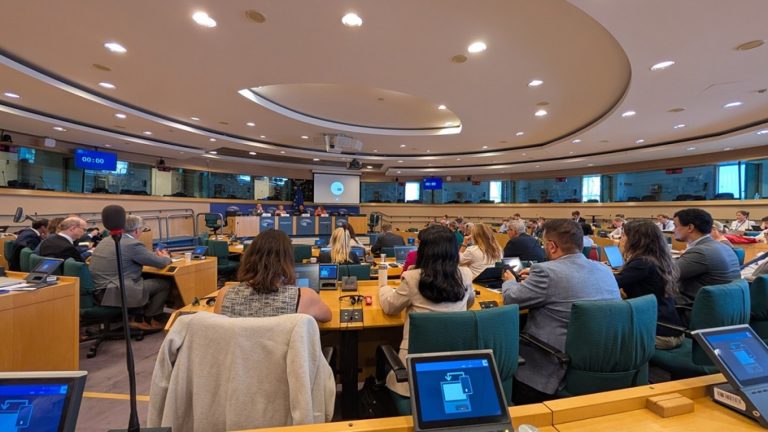
US Secretary of State Marco Rubio used the 19 October C5+1 ministerial in Samarkand to press Washington’s case for a larger role in Central Asia’s mineral sector. He met the foreign ministers of all five republics and arrived with a business delegation of more than 100 US companies – a sign that the United States wants closed deals rather than another communiqué. Uzbekistan reported agreements potentially worth $12bn across several sectors, though the sector split has not been published. President Shavkat Mirziyoyev welcomed the outcome and said an action plan would be drawn up to implement it.
The resource base and the processing question
The region hosts significant tungsten, uranium, rare earth and copper resources, and the C5+1’s Critical Minerals Dialogue ran alongside the main track. The open questions are commercial rather than geological: which projects are bankable, who funds exploration and supplies geological data, and how much processing stays in the region. The republics want value-added output rather than raw-ore exports, a position Uzbekistan has stated openly, although regional water scarcity may limit how much processing capacity can be built. Analysts argue that ministers should settle on a short list of flagship projects with named partners and timelines, backed by transparent licensing and investor protections.
Where each country stands
Uzbekistan emerged as the principal beneficiary, and its officials acknowledged that the investment climate must become more transparent and predictable to attract foreign capital. Kazakhstan left without specific agreements but welcomed the renewed momentum. Kazinform noted Astana’s appreciation of Washington’s non-zero-sum approach, which allows partnerships with both American and Chinese models of development. Its priority is repeal of the Jackson-Vanik trade restrictions: the administration supports repeal, but Congress has not acted. Turkmenistan restated its intention to integrate into emerging regional trade systems, including trans-Caspian trade, and called for more educational exchanges with the US.
Finance, access and logistics
US Development Finance Corporation and Export-Import Bank funding are Washington’s main tools for closing deals. Export routing remains a constraint. The Trans-Caspian (Middle Corridor) route offers an alternative to Russian transit, but port capacity, rail interoperability, customs delays and stacked tariffs limit throughput.
Implementation risk
Kazakh commentary noted that the headline figures are contracts and planned transactions, not completed investment, and the joint statement carries no binding financial commitments. A US-Uzbek business council is intended to track which announcements reach financial close.
The competitive context
Washington has said it will not require the republics to abandon ties with Moscow or Beijing. Kazakhstan sits in both the US-led Pax Silica and the Chinese-led WAICO groupings. China remains entrenched: on the same day as the Samarkand meetings, Premier Li Qiang was in Dushanbe discussing priority projects, including artificial intelligence, with Tajikistan, where trade reached about $2.5bn in the first eight months of 2026.
What to watch
Three things will show whether Samarkand was a turning point or a headline: the content of Uzbekistan’s implementation plan, Congressional action on Jackson-Vanik, and a possible Rubio visit to Kazakhstan after the December G20.