Tag: Western Tethyan Belt

  • Bindi Metals to Launch Maiden Drilling at Serbia’s Ravni Gold Project in May Targeting High-Grade Surface Mineralisation

    Bindi Metals to Launch Maiden Drilling at Serbia’s Ravni Gold Project in May Targeting High-Grade Surface Mineralisation

    Australian mining company Bindi Metals will commence its first drilling programme at the Ravni high-grade gold project in Serbia’s southwestern Raska mining district in May, after securing land access across priority drilling locations, the company confirmed in an ASX filing on Wednesday.

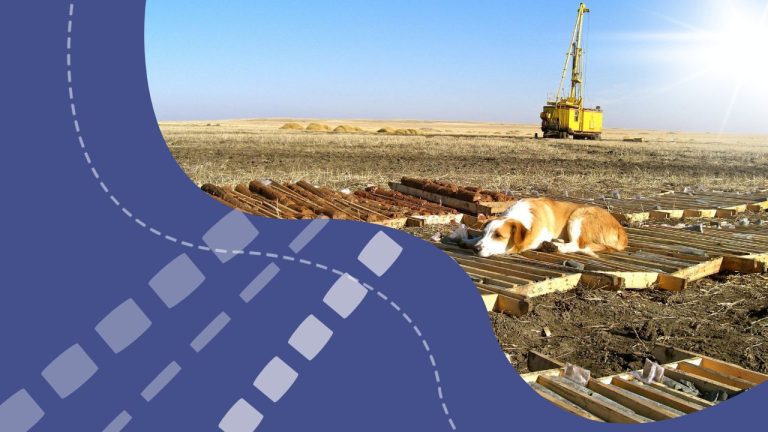
    The maiden diamond drilling programme has been designed to test multiple high-priority targets across the Drenjak and Rujak prospects as well as several scout drilling locations. At Drenjak, the programme will focus on high-grade surface mineralisation, while Rujak will be tested for broad mineralised zones. Serbian contractor Reflex Drilling has been engaged to carry out the work.

    Ravni covers 30 square kilometres of tenure within the Western Tethyan Magmatic Belt — a prolific geological corridor that hosts numerous significant gold, copper and base metal deposits, including the Rogozna project in Serbia and the Vares deposit in Bosnia and Herzegovina. Bindi Metals began exploration at Ravni in November following a binding agreement with Belgrade-based Red Creek to acquire up to an 80% interest in the project.

    Beyond Ravni, Bindi Metals holds two further Serbian assets acquired from Apollo Minerals in 2024 — the Lisa antimony-gold project and the Mutnica antimony-copper project — giving the company a multi-commodity exploration portfolio across one of Europe’s most active mining jurisdictions.

  • Middle Island Resources Begins Exploration at Bobija Polymetallic Project in Serbia

    Middle Island Resources Begins Exploration at Bobija Polymetallic Project in Serbia

    Australian copper and gold explorer Middle Island Resources announced on Wednesday that it has commenced exploration activities at the Bobija polymetallic project in western Serbia, which is prospective for gold, silver, copper, lead, and zinc.

    “The Bobija deposit and surrounding region remains inadequately explored and offers potential for the delineation of significant polymetallic mineralisation through a systematic exploration program. Furthermore, the full extent of the gold mineralisation is yet to be fully quantified, with gold potentially representing a major component,” the company stated.

    Earlier this month, Middle Island signed a binding share sale and purchase agreement to acquire local peer Konstantin Resources, whose Serbian portfolio includes the Bobija, Priboj, and Timok projects. Together, these projects cover 620 square kilometres and are prospective for gold and copper.

    The Bobija project itself comprises six mineral licences across 208 square kilometres. Historic work in the area included exploratory underground development and multiple drilling campaigns during the 1960s and 1980s by the former Yugoslav government, focused on barium, lead, zinc, and silver. Recent limited rock chip sampling by Konstantin Resources returned promising results, including assays of up to 5.24 grams per tonne of gold, 120 g/t of silver, 4.66% zinc, and 4.36% lead.

    Middle Island will seek shareholder approval for the acquisition of Konstantin Resources at a meeting scheduled for late October. The projects are located within the Western Tethyan Belt, a globally significant mineral province hosting major deposits such as Zijin Mining’s Čukaru Peki and Dundee Precious Metals’ Čoka Rakita in Serbia, as well as Rio Tinto’s Jadar project and Dundee’s Vareš project in Bosnia and Herzegovina.