Tag: Uzbekistan

  • Uzbekistan Aims to Boost Critical Mineral Production with $2.6 Billion Investment

    Uzbekistan Aims to Boost Critical Mineral Production with $2.6 Billion Investment

    President Shavkat Mirziyoyev of Uzbekistan has unveiled an ambitious plan to expand the country’s critical mineral resources and produce high-value-added products. During a presentation on March 7, the president emphasized the untapped potential of Uzbekistan’s mineral wealth, which includes deposits of over 30 metals such as tungsten, molybdenum, magnesium, lithium, germanium, graphite, vanadium, and titanium.

    Historically, this sector has been underdeveloped due to a lack of investment in mineral exploration, waste processing, and value-added production. However, recent organizational reforms have laid the groundwork for significant progress. Over the next three years, Uzbekistan plans to implement 76 projects focused on 28 rare minerals, with a total investment of $2.6 billion. These projects aim to enhance the country’s resource base through increased funding for geological exploration and scientific research.

    A key focus of the initiative is the application of modern technologies to extract valuable raw materials directly from ore, improve mineral purity, and produce high-value-added goods. For example, the enrichment of tungsten concentrate from the Ingichka deposit is expected to double its added value. Currently, 18 similar projects have been developed.

    To strengthen the resource-processing-science-production chain, the government has proposed establishing technoparks in the Tashkent and Samarkand regions, which are rich in molybdenumand tungsten. President Mirziyoyev also emphasized the importance of technology transfer, the establishment of modern laboratories, and the creation of training centers to build a robust foundation for Uzbekistan’s participation in the global critical minerals market.

    The president highlighted that, in the era of the Fourth Industrial Revolution, Uzbekistan must secure a strong position in this competitive market.

  • Navoiyuran Reports Record Revenue and Profit Growth in 2023

    Navoiyuran Reports Record Revenue and Profit Growth in 2023

    In 2023, Navoiyuran, Uzbekistan’s leading uranium producer, achieved a remarkable 92.7% increase in revenue, reaching 11.6 trillion UZS. The company’s gross profit from product sales and operating profit more than doubled, hitting 8.67 trillion UZS and 6.15 trillion UZS, respectively. This significant growth underscores Navoiyuran’s strong performance in the global uranium market.

    The company’s retained earnings stood at 6.16 trillion UZS, while its net profit surged from 2.64 trillion UZS in 2022 to 5.31 trillion UZS in 2023, marking a twofold increase. However, total expenses also rose sharply, growing 2.6 times to exceed 2.53 trillion UZS. The primary driver of this increase was a more than threefold jump in other operating expenses, which climbed from 0.65 trillion UZSto 2.14 trillion UZS.

    Earlier in January, Navoiyuran reported a doubling of output in monetary terms, from 6.7 trillion UZSto 13.7 trillion UZS. The company also solidified its position as one of Uzbekistan’s top three taxpayers, contributing 4.6 trillion UZS to the state budget in 2023.

    Navoiyuran, which ranks sixth globally in uranium production, accounts for 7% of the world’s uranium output, producing over 3,800 tons annually. In 2023, Uzbekistan’s uranium concentrate production increased by 11%, reaching 6.7 trillion UZS  in eight projects in 2024, including $50 million in foreign investments.

  • Uzbekistan Boosts Rare Metal Exploration and Production with $2.6 Billion Investment

    Uzbekistan Boosts Rare Metal Exploration and Production with $2.6 Billion Investment

    Uzbekistan has announced a major push into the exploration and production of rare metals, unveiling 76 new industry projects worth a combined $2.6 billion. The initiative, detailed on the official website of the country’s president, highlights Uzbekistan’s ambition to become a key player in the global race for strategically important resources.

    President Shavkat Mirziyoyev recently reviewed a report from the Ministry of Mining and Geology, which revealed that Uzbekistan has identified deposits of over 30 rare metals, including lithium, tungsten, molybdenum, germanium, and vanadium. Over the next three years, the government plans to significantly increase funding for geological exploration and scientific research to enhance the extraction of these valuable resources.

    A key focus will be on improving the extraction of rare metals from ore deposits and industrial waste, as well as developing high-value-added production. One example is the processing of waste from the Ingichka tungsten mine, which began producing concentrates in mid-2024. Additionally, 18 similar projects aimed at recovering rare metals from industrial byproducts are already in the pipeline.

    To support these efforts, Uzbekistan will establish technoparks in the Samarkand and Tashkent regions, areas rich in tungsten and molybdenum reserves. The country also plans to build new laboratories, training centers, and leverage international expertise to advance enrichment technologies.

  • Uzbekistan’s Hidden Mining Giant Steps onto the Global Stage at PDAC 2025

    Uzbekistan’s Hidden Mining Giant Steps onto the Global Stage at PDAC 2025

    One of the most intriguing newcomers at PDAC this year is UzTMK, a mining and metallurgical powerhouse from Uzbekistan that many have yet to hear about—despite its origins dating back to 1956.

    As an integrated producer of critical materials, UzTMK is gaining attention from the U.S. and European nations looking to secure their supply chains for industries such as automotive, renewable energy, infrastructure, healthcare, aerospace, and defense.

    During a TSX-hosted presentation, UzTMK shared its ambitious vision: expanding its existing infrastructure to create Central Asia’s largest diversified cluster for mining and processing rare earth elements, tungsten, and other strategic materials.

    With $200 million in funding, the company is poised to:
    ✅ Establish the largest R&D and Analytical Center for critical raw materials in Central Asia
    ✅ Expand mineral exploration programs
    ✅ Construct a state-of-the-art metallurgical plant using low-energy powder and nanotechnology

    Already under construction, the new facility is set to launch by 2028, with UzTMK’s market valuation projected to hit $2 billion.

    Meanwhile, Ukraine’s Critical Raw Materials deal, expected to be signed this Friday in Washington, could unlock the largest geological exploration program in decades—but with security and infrastructure challenges, it could take 15–20 years before production begins. In contrast, Uzbekistan’s strategic investment and tech partnerships could deliver production in just three years.

    UzTMK’s vision for Central Asia’s largest critical raw materials hub will be showcased at the MINEX Central Asia Mining and Exploration Forum in 2025, offering attendees a firsthand look at its mining operations and metallurgical facilities.

    Stay informed on the latest mining developments across 30 nations in Central Asia, the Caspian region, Mongolia, the Caucasus, and Europe—sign up for the Eurasian Mining Digest at www.minexforum.com.

  • AGMK Receives ESG Rating of 3 from Sustainable Fitch

    AGMK Receives ESG Rating of 3 from Sustainable Fitch

    Sustainable Fitch has assigned JSC Almalyk Mining and Metallurgical Complex (AGMK) an ESG Entity Rating of 3 with an entity score of 56, highlighting both strengths and challenges in the company’s sustainability practices.

    The rating acknowledges AGMK’s sustainable development strategy, governance framework, and environmental policies, despite the inherent ecological impact of its mining and metallurgical operations. The assessment also considers the company’s alignment with global taxonomies, contribution to UN Sustainable Development Goals (SDGs), and integration of ESG principles into business operations.

    As one of Uzbekistan’s largest non-ferrous metals producers, AGMK exports copper, silver, and gold to over 17 countries. Its vertically integrated production covers exploration, mining, processing, and finished product creation. While essential for various industries, these activities result in high energy consumption, greenhouse gas emissions, and significant water and waste usage.

    On the environmental front, AGMK benefits from strong policies and a clean record of major incidents over the past three years, though Scope 3 emissions remain undisclosed. Socially, the company reports low employee turnover, but serious workplace accidents and limited gender diversity remain concerns. Governance-wise, AGMK is strengthened by an independent internal audit function, effective risk management, and a low CEO pay ratio in 2023, although independent directors are a minority on its board.

    Despite challenges, the rating reflects AGMK’s continued commitment to sustainability and corporate responsibility.

  • Uzbekistan to Ban New Polluting Factories in Major Cities

    Uzbekistan to Ban New Polluting Factories in Major Cities

    Uzbekistan will prohibit the construction of new industrial facilities that negatively impact the environment in Tashkent and other major cities. The new regulations, outlined in a presidential decree, will take effect in May 2025, according to Gazeta.uz.

    Authorities will stop issuing environmental permits for hazardous industrial enterprises. The measure aims to improve air quality in Tashkent, Nukus, and regional centers.

    The ban specifically targets ferrous and non-ferrous metal production, cement, asbestos, slag and sludge processing, and waste incineration plants handling Class I and II hazardous materials. Additionally, any coal-burning facilitieswithout high-efficiency dust and gas filtration systems will be restricted.

    By autumn 2024, the government will review plans to relocate existing polluting industries outside major urban areas. This includes high-energy-consuming enterprises, with 168 industrial sites identified for potential relocation.

    Before moving these factories, the government must develop new infrastructure, including roads, water, gas, and electricity networks in designated areas.

    In 2023, Uzbekistan’s 7,000+ industrial enterprises generated 125.6 million tons of waste and released 800,000 tons of emissions, accounting for 43% of total pollution in the country.

  • NMMC Receives ESG Rating from Sustainable Fitch, Reinforcing Industry Leadership

    NMMC Receives ESG Rating from Sustainable Fitch, Reinforcing Industry Leadership

    Navoi Mining & Metallurgical Company (NMMC), the world’s fourth-largest gold producer, has received its first Environmental, Social, and Governance (ESG) rating from Sustainable Fitch. The company was assigned a rating of ‘3’ on a 1 to 5 scale (where 1 represents low risk and 5 represents high risk) and an overall ESG score of 51 out of 100.

    The rating reflects a detailed assessment of NMMC’s sustainability initiatives, corporate governance, environmental performance, and social responsibility programs. The company’s environmental and social performance received a ‘3’ rating, acknowledging strong policies on emissions and water management, absence of major environmental incidents, and a low gender pay gap. Meanwhile, its corporate governance scored a ‘2’, recognizing adherence to international financial reporting standards, systematic internal audits, and structured risk management.

    NMMC’s ESG rating is consistent with global mining industry peers, reflecting the sector’s inherent environmental challenges, including high energy and water consumption, greenhouse gas emissions, and industrial waste generation. Importantly, NMMC is the first company in Uzbekistan’s mining sector to receive a public ESG rating, highlighting its commitment to transparency and sustainability leadership.

    “Sustainability is a key pillar of our business strategy and crucial for long-term growth and investor confidence,” stated Eugene Antonov, First Deputy CEO and Head of Transformation at NMMC. He emphasized that the company’s ESG principles are central to its transformation program, aligning with Uzbekistan’s 2025 ‘Year of Environmental Protection and the Green Economy’ initiative and the national ‘Uzbekistan-2030’ strategy.

    Boris Samoylenko, Head of ESG at NMMC, reinforced that the rating validates NMMC’s ongoing sustainability efforts and serves as a benchmark for further improvements in line with global best practices.

  • Daugyztau Mine Modernises with State-of-the-Art Crushing & Conveyor System

    Daugyztau Mine Modernises with State-of-the-Art Crushing & Conveyor System

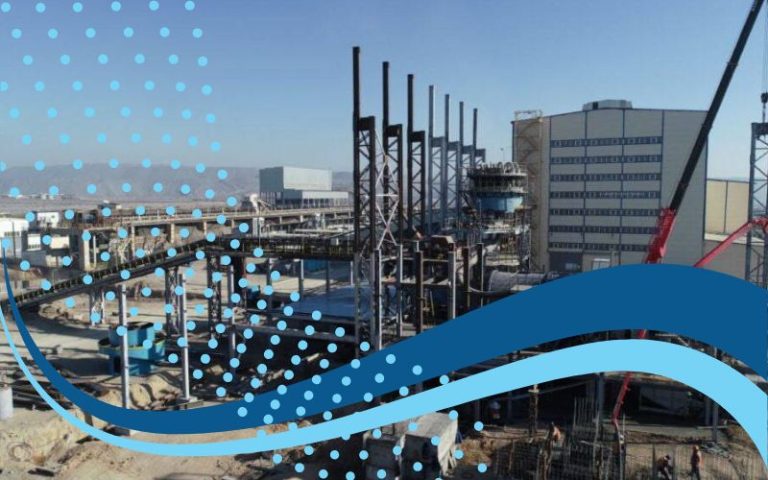
    Navoi Mining and Metallurgical Company (NMMC) has unveiled a groundbreaking 1,900-meter crusher and conveyor complex at its Daugyztau mine, marking a significant technological advancement in its operations.

    The innovative system delivers multiple operational benefits, including shortened rock mass transportation routes, reduced fuel consumption, and enhanced workforce efficiency. This upgrade comes at a crucial time, as the mine has seen its production capacity expand by 250% in recent years.

    Constructed using 5,000 tons of metal structures, this substantial infrastructure investment positions Daugyztau for improved operational performance and increased production output. The modern complex represents NMMC’s commitment to technological advancement and operational excellence in mining.

    The project underscores NMMC’s dedication to modernizing its mining operations through strategic infrastructure investments, paving the way for sustainable growth and improved efficiency at the Daugyztau site.

  • Uzbekistan’s Gold and Currency Reserves Increase in January 2025

    Uzbekistan’s Gold and Currency Reserves Increase in January 2025

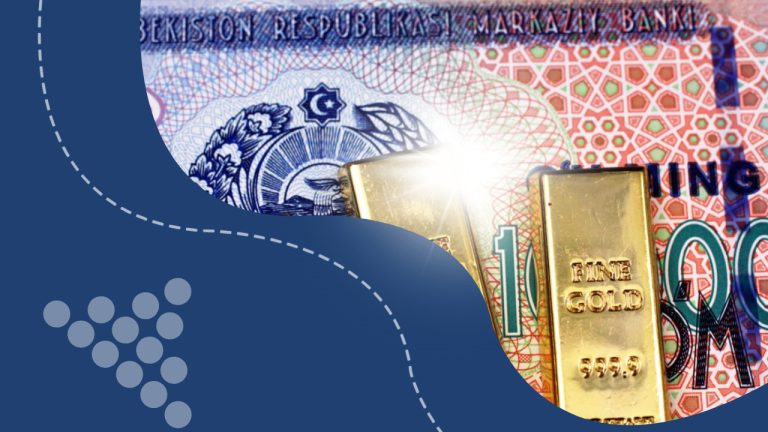
    In January 2025, Uzbekistan’s foreign exchange reserves experienced growth, as reported by the Central Bank. According to the data, the total value of assets in reserves reached $42.9 billion by February 1st, which is a $1.72 billion (4.17%) increase compared to the previous month. The value of gold rose by $3.02 billion, reaching $35.06 billion. This increase is attributed to the rise in global prices for the precious metal, with the price per troy ounce approaching $2900. Additionally, the physical volume of gold reserves also increased from 382.57 tons (12.3 million troy ounces) to 391.9 tons (12.6 million troy ounces). However, the country’s foreign currency reserves decreased by $1.29 billion, falling below $7.3 billion. Of these, $442.3 million are held in accounts with other central banks and the International Monetary Fund, while $6.75 billion are in foreign commercial banks.

  • NMMC Receives First-Ever ESG Rating, Reinforcing Sustainability Commitment

    NMMC Receives First-Ever ESG Rating, Reinforcing Sustainability Commitment

    Navoi Mining & Metallurgical Company (NMMC), the world’s fourth-largest gold producer, has received its debut ESG Entity rating from Sustainable Fitch, marking a significant milestone in its sustainability journey. The company was assigned an ESG rating of ‘3’ (on a scale from 1 to 5, where 1 represents low risk and 5 represents high risk) and an overall entity score of 51 out of 100.

    The rating was based on a comprehensive assessment of NMMC’s sustainability strategy, corporate governance, environmental impact, and social responsibility programs. The company’s environmental and social performancereceived a favorable ‘3’ rating, highlighting strong internal policies on emissions and water management, the absence of major environmental incidents, and a low gender pay gap. Additionally, corporate governance was rated at ‘2’, recognizing adherence to international financial reporting standards, systematic internal audits, and structured risk management.

    NMMC’s ESG rating aligns with global mining industry standards, acknowledging the sector’s inherent environmental challenges, such as high energy and water consumption, greenhouse gas emissions, and industrial waste generation. Notably, NMMC is the first company in Uzbekistan’s mining sector to receive a public ESG rating, reinforcing its industry leadership and commitment to international sustainability principles.

    The company’s ESG efforts are part of a large-scale transformation program, in line with Uzbekistan’s national strategy “Uzbekistan-2030”. With 2025 declared the “Year of Environmental Protection and the Green Economy”in Uzbekistan, NMMC aims to further enhance its sustainability practices and strengthen investor confidence.