Tag: USA

  • EU Struggles to Compete with US in Securing Critical Minerals

    EU Struggles to Compete with US in Securing Critical Minerals

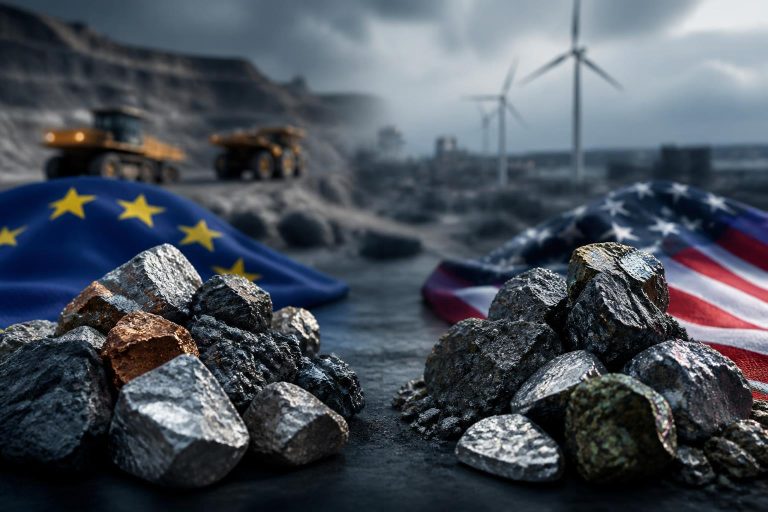
    The European Union is at risk of falling further behind the United States in the race to secure critical minerals essential for defence and green technologies, as warned by European officials and industry leaders. The US has made significant investments over the past two years to ensure access to rare earth metals and other materials where China currently dominates global production. Since 2022, Washington has announced approximately $40 billion in provisional funding for mineral projects and has taken equity stakes in various domestic mining companies. Additionally, the US government has actively lobbied for American firms to win mining tenders in countries such as the Democratic Republic of Congo and Kenya.

    In contrast, the EU has designated dozens of strategic mineral projects to benefit from expedited permitting rules, committing around €6 billion to these initiatives this year. However, industry representatives caution that the EU’s pace is too slow to effectively kick-start the sector. Bernd Schäfer, CEO of EIT RawMaterials, expressed admiration for the US approach, stating that while Americans act decisively, Europeans tend to hesitate and over-administrate, resulting in lost time.

    The US is also working to establish a coalition of countries to create supply chains that circumvent China, through a new initiative known as the Forum on Resource Geostrategic Engagement (Forge). However, this initiative has raised scepticism in Brussels, particularly due to the previous US administration’s unpredictable stance towards the EU. European officials assert that the EU must adopt a similar approach to the US by securing offtake agreements and utilising financial tools to develop its critical minerals supply chain ahead of a new strategy set to be unveiled this autumn.

    The EU’s current efforts have primarily focused on designating strategic projects in mining, processing, and recycling, which benefit from faster permitting but lack guaranteed public funding. In stark contrast, the Trump administration invested heavily in developing its supply chain, including acquiring stakes in rare earth producers both domestically and in Europe. For instance, the Pentagon made a $400 million equity investment in MP Materials, a US rare earths producer, and signed a long-term agreement to establish a minimum price for neodymium-praseodymium, a critical alloy used in technologies like electric vehicles and robotics.

    Concerns have been raised about the potential for the US to become a second China for Europe in terms of dependence on rare earth metals. Schäfer noted that regardless of the methods employed by the Trump administration, the US has secured more deals in 18 months than Europe has in the past decade. Furthermore, the US government’s investments in European critical minerals companies, such as USA Rare Earth’s acquisition of British firm Less Common Metals, have sparked worries among European stakeholders.

    The European Court of Auditors has also indicated that despite Brussels selecting 75 strategic projects for streamlined permitting and investment access, it is ‘unlikely’ that many will meet the bloc’s 2030 targets for developing domestic supplies. A mining executive involved in one of the projects described the EU’s efforts as ‘disappointing’ in terms of financial support, highlighting the complexity of obtaining permits. While being designated as a strategic project may serve as effective marketing, it does not significantly alter the operational landscape for these initiatives.

  • US Outpaces Europe in Critical Minerals Investment, Raising Supply Concerns

    US Outpaces Europe in Critical Minerals Investment, Raising Supply Concerns

    The United States is significantly outspending Europe in the race to secure critical minerals, according to a report from The Wall Street Journal. Over the past five years, Washington has committed approximately $46 billion to critical raw materials projects through various financial mechanisms, including grants, loans, and tax incentives. This figure is roughly eight times greater than the amount allocated by the European Union, as highlighted by an analysis from the French Institute of International Relations. This disparity in investment raises concerns that European manufacturers may remain overly reliant on Chinese supplies, which could jeopardise their competitiveness in the global market.

    The aggressive strategy adopted by the US has already begun to disrupt European efforts to establish independent supply chains for critical minerals. For instance, Pensana, a London-based rare earth developer, has shifted its plans for a processing plant from the UK to the US in order to take advantage of financing from the Export-Import Bank. Similarly, the Brazilian rare earth producer Serra Verde has secured US government-backed financing and has entered into a long-term agreement to sell its magnetic rare earth production, further illustrating the impact of US investment on international supply chains.

    In response to these developments, European industry leaders are expressing concerns about the potential for the US to dominate emerging non-Chinese supply chains. Pensana’s founder, Paul Atherley, described the situation as akin to ‘friendly fire’ among Western nations. In light of these challenges, the European Union is formulating its own response, which includes plans for a €3 billion financing hub, the establishment of strategic stockpiles, and partnerships with resource-rich countries such as Canada, Argentina, Norway, and South Africa. By 2030, the EU aims to ensure that no single country provides more than 65% of its strategic raw material needs, a goal that reflects the bloc’s commitment to diversifying its supply sources and reducing dependence on any one nation.


  • Uzbekistan and US Expand Critical Minerals Cooperation with $1 Billion Investment

    Uzbekistan and US Expand Critical Minerals Cooperation with $1 Billion Investment

    During his visit to the United States, President of Uzbekistan Shavkat Mirziyoyev reached agreements to establish a joint working group aimed at accelerating existing projects and developing new initiatives in the field of critical minerals, according to the presidential press service.

    A key partner will be Traxys, one of the world’s largest suppliers of raw materials. The parties signed an agreement for exploration and joint development of deposits, with a total investment volume estimated at $1 billion. The deal also includes the transfer of advanced technologies and expertise in mining, processing, and ensuring stable supplies of critical raw materials.

    Plans are also underway to establish a Competence Center at the University of Geological Sciences in Tashkent, in cooperation with the Colorado School of Mines, to train world-class specialists for Uzbekistan’s mining sector.

    In addition, McKinsey has developed a comprehensive strategy for Uzbekistan covering subsoil studies, expansion of the mineral resource base, and deep transformation of the mining industry. Go Green Partners will carry out exploration works at prospective sites.

    Several Uzbek-American project agreements were also signed, including:

    • a joint venture between Technopark LLC and FLSmidth to produce mineral processing equipment;

    • geological exploration on new sites with Cove Capital;

    • cooperation between Yangi Kon LLC and SLB on a drilling project in the Ustyurt oil and gas region.

  • Ukraine’s Rare Earths: A Strategic Contest Between the US and the EU

    Ukraine’s Rare Earths: A Strategic Contest Between the US and the EU

    As Ukraine grapples with the ongoing conflict with Russia, its vast mineral resources have become a focal point in the global geopolitical landscape. The U.S. and the European Union (EU) are both eyeing these valuable reserves, especially Ukraine’s rare earths, which could play a pivotal role in strengthening their strategic autonomy and reducing dependence on foreign powers such as China.
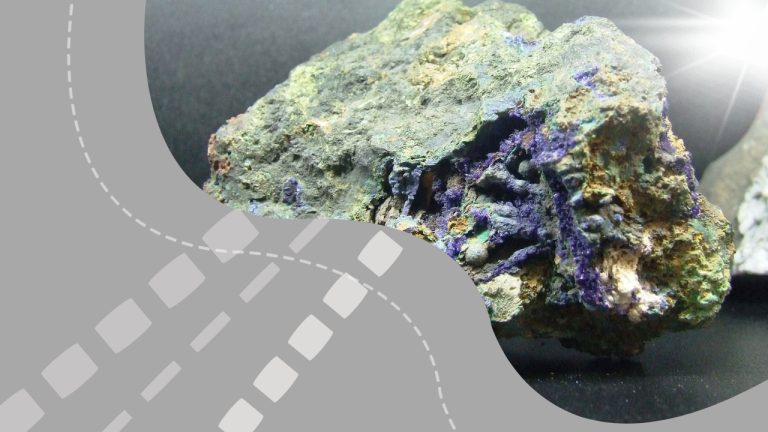
    The Trump administration in the United States has proposed a deal to Ukraine: in exchange for continued U.S. military support against Russia’s aggression, the U.S. would secure a significant portion of Ukraine’s rare earth reserves, estimated at $500 billion. Ukraine, a candidate for EU membership, is also at the center of European strategic plans, with a 2021 agreement aimed at better integrating critical raw materials into EU supply chains. The growing competition for these minerals highlights the EU’s concerns over its current reliance on China, which supplies 98% of the rare earths imported by the union.

    A Growing Geopolitical Challenge

    In a February 2025 interview, U.S. President Donald Trump outlined his vision for securing $500 billion in Ukrainian rare earths as compensation for ongoing U.S. military assistance. Just days earlier, Ukrainian President Volodymyr Zelenskyy expressed his willingness to negotiate mineral deals with the U.S. as part of a “victory plan” against Russia, which included critical minerals. The Ukrainian government also revealed that it was negotiating deals with several Western allies, including Britain, France, and Italy, to exploit Ukraine’s critical materials.

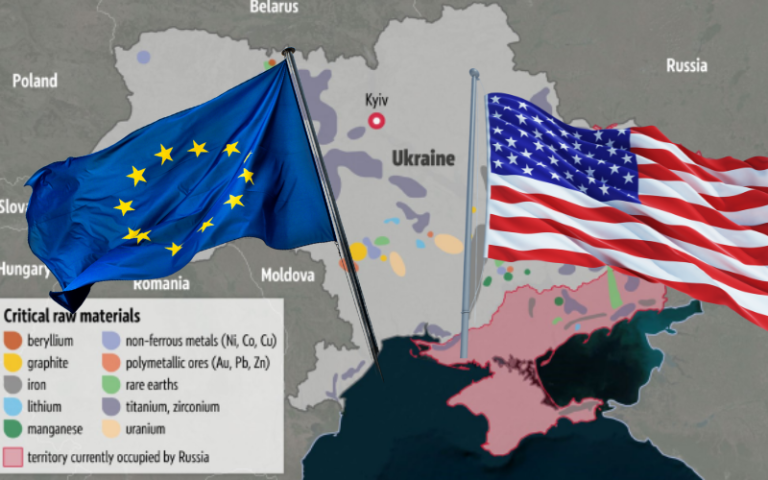
    However, the situation is complicated by Russia’s occupation of significant portions of Ukrainian territory. According to Ukrainian officials, 20% of the country’s minerals and half of its rare earth deposits are under Russian control, while Soviet-era mineral surveys are outdated and fail to account for the economic viability of mining.

    US-Ukraine Talks: A Stalled Deal

    Efforts to formalize a deal between Ukraine and the U.S. on rare earths hit a snag at the Munich Security Conference in February 2025, when Zelenskyy rejected a proposal to hand over 50% of Ukraine’s rare earth reserves in exchange for military support. While the Ukrainian president agreed to continue talks with the U.S., he emphasized the need for more comprehensive security guarantees. Former Ukrainian Foreign Minister Dmytro Kuleba also stated that the U.S. had no legal claim to Ukraine’s minerals, which were part of a broader strategic partnership with the EU signed in 2021.

    Tensions escalated further when Zelenskyy and Trump met at the White House on February 28, 2025. A public argument ensued, and Zelenskyy was reportedly asked to leave, signaling a breakdown in negotiations. By mid-March 2025, the White House announced it had abandoned the idea of a minerals deal, shifting its focus to long-term peace initiatives instead.

    The EU’s Strategic Interest in Ukrainian Rare Earths

    The EU, for its part, sees Ukraine’s mineral wealth as a critical element in its efforts to reduce dependency on China. The EU’s Critical Raw Materials Act, adopted after Russia’s invasion of Ukraine, aims to address the vulnerabilities exposed by the conflict, particularly in sectors like electric vehicles and renewable energy, where raw materials like nickel and lithium saw significant price increases.

    Ukraine holds some of Europe’s largest reserves of essential minerals, including lithium, graphite, titanium, and rare earths such as beryllium, gallium, and uranium. These materials are critical for the EU’s green transition and technological advancement. Ukraine’s minerals could potentially help diversify the EU’s supply chains and bolster its self-sufficiency in critical raw materials, reducing reliance on authoritarian regimes.

    In 2021, the EU and Ukraine signed a strategic partnership to foster greater cooperation on raw materials, with a focus on integrating Ukraine’s mining sector into Europe’s battery value chains. However, the Ukrainian mining sector remains underdeveloped, and significant investment is required to unlock its potential. The EU is also concerned with Ukraine’s need to align its mining regulations with European standards as part of its ongoing enlargement negotiations.

    Ukraine’s Growing Role in Global Mineral Supply

    Ukraine ranks among the top 10 global suppliers of mineral resources, with its mining sector contributing approximately 10% to the country’s GDP and 33% of exports before the war. Mining income has more than doubled since the conflict began, highlighting the sector’s strategic importance. Ukraine also benefits from a skilled workforce, relatively low labor costs, and well-developed infrastructure, making it an attractive destination for mining investments.

    Experts suggest that the development of Ukraine’s mining sector, backed by either U.S. or EU support, could play a crucial role in strengthening Ukraine’s economy and defense capabilities while also contributing to Western self-sufficiency and economic security. The prospect of accessing Ukrainian resources could help democratic countries reduce their dependence on non-democratic regimes, particularly in the energy and technology sectors.

    The Road Ahead: US vs. EU Influence

    As the global competition for Ukraine’s rare earths intensifies, both the U.S. and the EU have stakes in shaping the future of Ukraine’s mining sector. While Ukraine remains a candidate for EU membership, the question remains: which power stands to benefit the most from these valuable resources? Much will depend on how Ukraine navigates its relationships with both powers, as well as the investment strategies and regulatory frameworks that will shape its mineral sector in the years to come.

    The geopolitical competition over Ukraine’s rare earths underscores the growing importance of critical raw materials in global power dynamics. As Ukraine continues to recover from the war, its vast mineral reserves could become a key asset for the EU’s quest for strategic autonomy and greater independence from external sources.

  • Reducing Dependence on China: The Push for Domestic Critical Minerals Production

    Reducing Dependence on China: The Push for Domestic Critical Minerals Production

    In a recent Fox Business segment, Cove Capital Chairman and CEO Pini Althaus emphasized the growing urgency to reduce reliance on China for critical minerals—a dependence he described as “just not tenable anymore.” As geopolitical tensions escalate and supply chain vulnerabilities come into sharper focus, Althaus highlighted the importance of securing domestic sources of rare earth elements and other essential materials vital to modern industries, including technology, defense, and renewable energy.

    The discussion centered around two key developments: Ukraine’s mineral deal and Cove Capital’s joint venture in the Akbulak rare earth project. These initiatives underscore a broader global effort to diversify supply chains and reclaim control over resources that are indispensable to economic and national security.

    The Strategic Importance of Critical Minerals

    Critical minerals, such as neodymium, lithium, cobalt, and dysprosium, play an indispensable role in manufacturing everything from smartphones and electric vehicles to advanced military equipment like guided missiles and radar systems. However, China currently dominates the global market for these materials, controlling approximately 60% of mining operations and nearly 90% of processing capacity worldwide.

    This heavy reliance on China has raised alarms among U.S. policymakers and business leaders, particularly amid escalating trade disputes and concerns about Beijing’s influence over strategic industries. Althaus warned that depending on a single country for such crucial inputs poses significant risks, especially during times of geopolitical instability or conflict.

    “The world is waking up to the fact that we cannot continue outsourcing our critical mineral needs to China,” Althaus said during the interview. “It’s not just about economics—it’s about sovereignty and ensuring that we have access to the resources necessary to sustain our technological and industrial leadership.”

    Ukraine’s Mineral Deal: A Step Toward Diversification

    One promising development discussed in the segment was Ukraine’s recent agreement to explore and develop its vast mineral reserves. The Eastern European nation is believed to hold substantial deposits of titanium, uranium, and other critical minerals, which could help alleviate Europe’s—and by extension, the West’s—dependence on Chinese imports.

    Althaus praised the deal as a “game-changer” for regional supply chains, noting that it represents a proactive step toward building alternative sources of critical minerals outside of China’s orbit. By investing in Ukraine’s mining sector, Western nations can simultaneously support Kyiv’s economic recovery while advancing their own strategic interests.

    “This isn’t just about helping Ukraine rebuild—it’s about creating a more resilient and diversified global supply chain,” Althaus explained. “Every ton of critical minerals produced in Ukraine is one less ton we need to source from China.”

    Cove Capital’s Joint Venture in Akbulak

    Another focal point of the conversation was Cove Capital’s involvement in the Akbulak rare earth project, located in Kazakhstan. Through a joint venture with local partners, the company aims to extract and process rare earth elements from one of Central Asia’s most promising deposits. If successful, the project could provide a significant boost to non-Chinese supplies of these vital materials.

    Althaus described the Akbulak initiative as part of a larger mission to establish a reliable, ethical, and geopolitically stable source of critical minerals. He stressed the importance of adhering to high environmental and labor standards throughout the extraction process, contrasting this approach with some of the questionable practices associated with Chinese mining operations.

    “We’re not just focused on producing these minerals—we’re committed to doing so responsibly,” Althaus stated. “That means minimizing environmental impact, respecting workers’ rights, and fostering long-term partnerships with host countries.”

    Why Domestic Production Matters

    The push for greater self-sufficiency in critical minerals comes at a pivotal moment for the United States and its allies. With the Biden administration prioritizing clean energy technologies and Congress passing legislation like the Inflation Reduction Act—which includes incentives for domestic battery production—the demand for critical minerals is expected to surge in the coming years.

    However, without secure access to these resources, America’s transition to a green economy could face significant hurdles. Althaus pointed out that relying on foreign suppliers, particularly those tied to adversarial regimes, undermines efforts to achieve true energy independence.

    “If we want to lead the charge in renewable energy and advanced manufacturing, we need to take ownership of our supply chains,” he argued. “That starts with investing in domestic projects and forging alliances with trusted partners who share our values.”

  • US-Ukrainian Mineral Deal Emerges Amid Geopolitical and Infrastructure Uncertainties

    US-Ukrainian Mineral Deal Emerges Amid Geopolitical and Infrastructure Uncertainties

    Washington, Feb 25, 2025

    In a move that could redefine global access to essential minerals, President Trump has signaled his openness to a landmark agreement with Ukraine. During a recent address on “America Decides,” Trump proposed inviting Ukrainian President Volodymyr Zelenskyy to Washington later this week to sign a deal that would grant the United States access to Ukraine’s vast mineral reserves.

    According to the President’s remarks, Ukraine would benefit from a package reportedly valued at around $250 billion—in addition to significant military equipment and the capacity “to fight on.” This proposal follows a day after Russian President Vladimir Putin expressed his willingness to sell minerals from both Russia and territories occupied in Ukraine, with Trump even hinting that buying these resources from Putin “is not out of the question.”

    A Deal in Flux

    In an exclusive interview, Dr. Gracelin Baskaran, Director of the US Critical Minerals Security Program at the Center for Strategic and International Studies, provided insights into what is being described as “the first of its kind” agreement. Originally, President Trump had floated a proposal for a repayment of $500 billion for military assistance. However, as Dr. Baskaran explained, the negotiations evolved significantly, with figures being recalibrated to around $128 billion—a far cry from earlier, more dramatic figures.

    Central to the deal is the creation of a fund designed to capitalise on Ukraine’s mineral assets. Under the preliminary framework, 50% of the revenue generated would be funneled into this fund, earmarked to support initiatives such as Ukraine’s future reconstruction efforts. Yet, despite these ambitious plans, several key issues remain unresolved.

    Old Data, New Challenges

    Dr. Baskaran highlighted a major hurdle: the reliance on Soviet-era data that is between 30 to 60 years old. “We are basically making an agreement with very little modern data,” she noted, emphasising that much of the historical information does not account for today’s critical needs—such as minerals necessary for advanced semiconductors, high-tech equipment, and modern weaponry.

    In addition, the war in Ukraine has not only disrupted the mining operations but also decimated vital infrastructure. “You can mine all you want, but if you don’t have the means to move the materials—reliable transportation and energy infrastructure—you don’t have much,” she commented. With much of the infrastructure intentionally damaged during the conflict, the challenge of developing mines is compounded. On average, it takes 18 years to develop a mine, which then may operate for another 30 to 80 years, a timeline that far exceeds the four-year electoral cycle of U.S. presidents.

    Security Guarantees and Private Sector Concerns

    The absence of an explicit security guarantee in the current framework has raised concerns among private investors. While President Zelenskyy had hoped for a written assurance of long-term protection, the deal as it stands appears to rely on an implicit understanding—a stance that has left the private sector wary. “Those who would develop these resources need something in print,” Dr. Baskaran stressed, noting that without an explicit, long-term security guarantee, significant financial risks remain for investors.

    Adding another layer of complexity, Dr. Baskaran pointed out that with Putin already negotiating mineral sales from occupied regions, the private sector is cautious about the potential for additional disputed territories to be brought into play. This overlapping interest underscores the geopolitical tug-of-war over Ukraine’s mineral wealth—a contest not only between the United States and Russia, but also involving critical stakeholders from the private sector.

    Looking Ahead

    The Verkhovna Rada of Ukraine is expected to recommend on Wednesday that the deal be signed, as reported by the sources, who requested anonymity while discussing private deliberations. President Zelenskyy plans to travel to the US on 28 February 2025, to finalise the agreement, the sources mentioned.

    As discussions continue, the emerging mineral deal represents a bold attempt to secure critical resources that underpin both modern technology and military capability. However, the success of the agreement hinges on resolving long-standing issues: establishing accurate, up-to-date resource data, rebuilding essential infrastructure, and providing the long-term security guarantees that the private sector demands.

    While President Trump’s proposal and recent diplomatic overtures from global leaders like French President Emmanuel Macron suggest broad political support for a robust security framework for Ukraine, the road ahead remains fraught with uncertainties. As negotiations evolve, the coming weeks will be critical in determining whether this pioneering mineral deal can live up to its transformative promise.


  • Financial support for Poland from the EU could revive the Central European steel market

    Financial support for Poland from the EU could revive the Central European steel market

    Last year, the European Commission reached an agreement on a recovery and resilience plan worth approximately 60 billion euros with Poland’s previous government, led by the nationalist Law and Justice (PiS) party. However, access to these funds, part of the EU budget for 2021-2027, was initially blocked due to concerns about changes made to Poland’s legal system. Following the election of a new government led by pro-European Prime Minister Donald Tusk in December, the first installment of around €5 billion of previously blocked EU funding was received. Additionally, an additional €6.9 billion has been applied for, with potential reforms paving the way for access to more funds. This injection of funds could significantly benefit the region’s steel mills. Poland’s recovery and resilience plan aims to use its multibillion-dollar funding to enhance residential housing for improved energy efficiency. Moreover, the Offshore Wind Fund seeks to catalyze private investment in large-scale renewable energy projects. While these developments may take time to materialize, they offer hope for a market revival. However, economic pressure persists. Steel market participants in Poland and neighboring Czech Republic have reported weak demand, particularly from key sectors like construction and automotive, largely due to reduced exports to Germany. In 2023, the German economy contracted by 0.3%, with indicators like the Hamburg Commercial Bank (HCOB) German construction sector PMI and manufacturing PMI reflecting ongoing challenges, despite some improvement in recent months. Although the steel sector in Poland and the Czech Republic remains fragile, signs of greater economic stability are emerging. Inflation rates have decreased in both countries, potentially paving the way for lower interest rates across Europe, stimulating construction and retail activity. However, an impasse between cautious purchasing behavior from buyers and the need for factories to maintain prices due to higher raw material costs has been observed. Limited domestic supply, exacerbated by production issues at Liberty Steel plants, has contributed to recent price increases. Overall, suppressed demand is expected to persist in the European steel sector in the near term. Nevertheless, the potential EU funding for Poland, coupled with hopes of lower interest rates, has improved sentiment regarding the market outlook.

  • How much gold does the UK own compared to other countries?

    How much gold does the UK own compared to other countries?

    Several countries around the world are stockpiling gold as a strategic reserve. Here’s a rundown of some of the key players and the amount of gold they hold:

    1. USA: The United States leads the pack with a massive 8,133.46 tonnes of gold bullion, stored in various depositories across the country, including the famous Fort Knox.

    2. Germany: Coming in second, Germany holds 3,352.65 tonnes of gold. Concerns during the Cold War led Germany to spread its gold reserves globally, with a significant portion repatriated in recent years.

    3. Italy: Italy holds slightly more gold than France, with 2,451.84 tonnes stored in vaults in Rome and abroad, managed by the Banca d’Italia.

    4. France: France has stockpiled 2,436.97 tonnes of gold, acquired largely during the 1950s and 1960s. Most of its reserves are held in vaults under the Banque de France in Paris.

    5. Russia: Russia has been aggressively increasing its gold reserves, currently holding 2,332.74 tonnes. This move is seen as a strategic effort to reduce reliance on the US dollar.

    6. China: China boasts 2,235.39 tonnes of gold, making it the world’s largest gold producer and a significant importer as well. The country’s reserves have been steadily increasing over the years.

    7. Switzerland: Switzerland holds 1,040 tonnes of gold, with the majority stored at home. The country’s reputation for financial stability has made it a preferred location for storing gold.

    These countries, among others, view gold as a valuable asset for diversifying their reserves and protecting against economic uncertainty.

  • US, UK and partners working on 15 critical minerals projects

    US, UK and partners working on 15 critical minerals projects

    The United States, along with its partners, is actively engaged in 15 projects aimed at securing critical mineral supplies necessary for electric vehicles and the energy transition, as revealed by a senior US official on Thursday.

    The Minerals Security Partnership (MSP), established last year by 14 governments, is committed to ensuring sufficient access to minerals such as lithium and rare earths in order to meet zero-carbon objectives.

    “We are currently exploring 15 projects across five continents, encompassing various stages from extraction to processing,” stated Jose Fernandez, the US State Department’s Under Secretary for Economic Growth, Energy, and the Environment, during a briefing in London. “Our intention is to finalize some deals within the coming months.”

    While he refrained from divulging specific company details, Fernandez did mention that at least one of the projects is located in Britain.

    The MSP, co-hosted by Britain, will convene next week during the London Metal Exchange (LME) Week, a prominent industry gathering.

    Fernandez emphasized that the MSP’s goal is to facilitate collaborations among private companies and provide assistance with financing, including support from trade banks such as the US government’s Export-Import Bank (EXIM).

    The remaining MSP members consist of the European Union, Canada, Australia, France, Germany, Italy, Sweden, Finland, Norway, Japan, India, and South Korea.

    Regarding critical minerals mined or processed in Britain, Fernandez expressed confidence that the United States would reach an agreement enabling them to qualify for US clean vehicle tax incentives.

    On Monday, Fernandez expressed optimism about reaching a similar agreement with the European Union, and Washington had already signed a minerals agreement with Japan in March.

    “These discussions are intense, and they are ongoing. We fully expect them to culminate in an agreement,” Fernandez affirmed.

    The US Inflation Reduction Act offers a $7,500 tax credit for electric vehicles purchased in the US, provided a percentage of critical battery minerals are sourced either domestically or from a free trade partner.

  • C5+1 Critical Minerals Dialogue with Central Asian countries

    C5+1 Critical Minerals Dialogue with Central Asian countries

    U.S. President Joe Biden met with the leaders of Kazakhstan, Kyrgyzstan, Tajikistan, Turkmenistan, and Uzbekistan at the United Nations General Assembly on 19 September 2023.

    Perhaps the most surprising point of discussion was the proposed launch of a C5+1 Critical Minerals Dialogue. Critical minerals like chromium, copper, and lithium are needed for manufacturing clean energy technology.

    Central Asian countries – especially Kazakhstan and Uzbekistan – have great potential to leverage their mineral resource bases for geopolitical gain, especially as the United States is eager to shed its dependence on China for minerals. China currently dominates the global critical minerals market, and it is the largest source of imports to the U.S. for 26 critical minerals. A C5+1 dialogue focused just on mineral wealth stands to be mutually beneficial for all participants.

    “We are committed to deepening cooperation to develop the capacity to meet growing global clean energy demands, including by potentially providing the world with safe, secure, and sustainable nuclear fuel supplies.  Our attention to energy security in the region includes building diverse, resilient, and secure critical minerals supply chains; developing new technologies for the extraction and processing of raw materials; and adding value through regional industrial cooperation to reduce strategic dependencies and meet our respective economic, energy security, and climate goals.  Demand for critical minerals, which are essential for clean energy and other technologies, will expand significantly in the coming decades.  To further develop Central Asia’s vast mineral wealth and advance critical minerals security, we will launch a C5+1 Critical Minerals Dialogue.  It will provide a forum in which the C5+1 can share information about critical minerals challenges and opportunities, promote connections between government officials and private sector industry, catalyze investment, and collaborate on critical minerals supply chains.”

    However, it’s not a done deal yet. Biden noted only that “we are also discussing the potential for a new critical minerals dialogue.” Given the importance China also attaches to the critical minerals sector, close cooperation with the United States may be politically difficult for Central Asian states.