Tag: US

  • EU Risks Falling Behind US in Securing Critical Minerals for Defence and Green Technologies

    EU Risks Falling Behind US in Securing Critical Minerals for Defence and Green Technologies

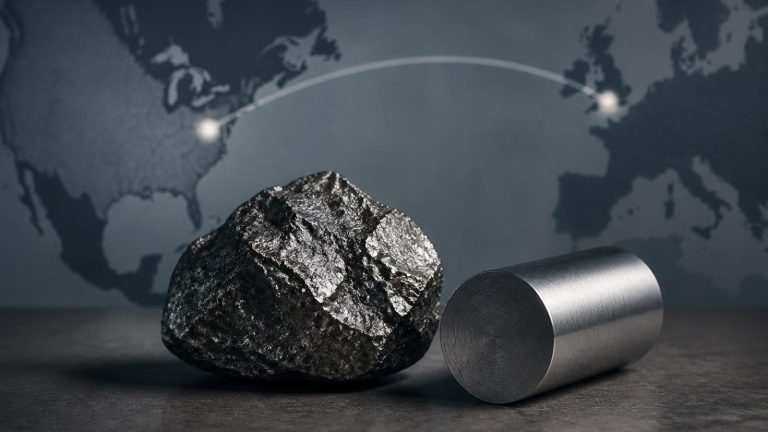
    The European Union (EU) is facing significant challenges in its efforts to secure critical minerals essential for defence and green technologies, with concerns that it is lagging behind the United States in this crucial race. European officials and industry leaders have expressed alarm over the EU’s slow progress in developing a robust supply chain for rare earth metals and other vital materials, particularly as the US has ramped up its investments and strategic initiatives in recent years.

    Since 2022, the US has committed approximately $40 billion (€34.22 billion) to mineral projects, actively taking equity stakes in domestic mining companies and lobbying for American firms to secure mining tenders in resource-rich countries such as the Democratic Republic of Congo and Kenya. This aggressive approach has positioned the US as a formidable player in the global minerals market, particularly in areas where China currently holds a dominant position.

    In contrast, the EU has earmarked around €6 billion for minerals projects this year and has initiated several strategic projects aimed at expediting permitting processes. However, industry experts argue that these efforts are insufficient and too slow to make a meaningful impact. Bernd Schäfer, CEO of EIT RawMaterials, highlighted the need for the EU to adopt a more decisive and proactive stance, stating that while the US swiftly implements ideas, Europe tends to hesitate and over-regulate, resulting in lost time.

    The US is also working to establish a coalition of nations to create supply chains that circumvent reliance on China, through initiatives like the Forum on Resource Geostrategic Engagement (Forge). However, this has raised scepticism within Brussels, particularly given the historically antagonistic relationship between the US and the EU under the Trump administration. European officials stress the importance of not being misled by US negotiations and emphasise the need for the EU to adopt similar strategies to secure critical minerals, including swift financial investments and offtake agreements.

    Despite the EU’s focus on designating strategic projects in mining, processing, and recycling, these initiatives lack guaranteed public funding, which further complicates their viability. The Trump administration’s substantial investments in the US supply chain, including a notable $400 million equity investment in US rare earths producer MP Materials, have raised concerns that the EU could become overly dependent on the US for critical minerals, mirroring its current reliance on China.

    Experts have noted that the US has executed more deals in the past 18 months than Europe has in the last decade, raising alarms about the EU’s ability to meet its 2030 targets for domestic mineral supply development. The European Court of Auditors has warned that while 75 strategic projects have been identified, many are unlikely to deliver timely results. A mining executive involved in one of these projects described the EU’s financial support as disappointing and noted that the complexity of obtaining permits remains a significant barrier to progress.


  • EU to Offer US Critical Minerals Partnership to Counter China’s Dominance

    EU to Offer US Critical Minerals Partnership to Counter China’s Dominance

    The European Union is set to offer the United States a critical minerals partnership designed to curb China’s influence over global supply chains, according to people familiar with the matter.

    Brussels is preparing a memorandum of understanding to create a “Strategic Partnership Roadmap” within three months, which would guide joint efforts to source and refine essential materials for modern technologies—ranging from batteries to semiconductors—without heavy reliance on Beijing.

    The proposal includes initiatives such as joint mineral projects, price support mechanisms, and safeguards against market manipulation. It also encourages building reciprocal supply chains between the two economies while maintaining mutual respect for territorial integrity—a pointed reference after tensions rose when U.S. President Donald Trump signaled interest in purchasing Greenland, an autonomous territory of Denmark.

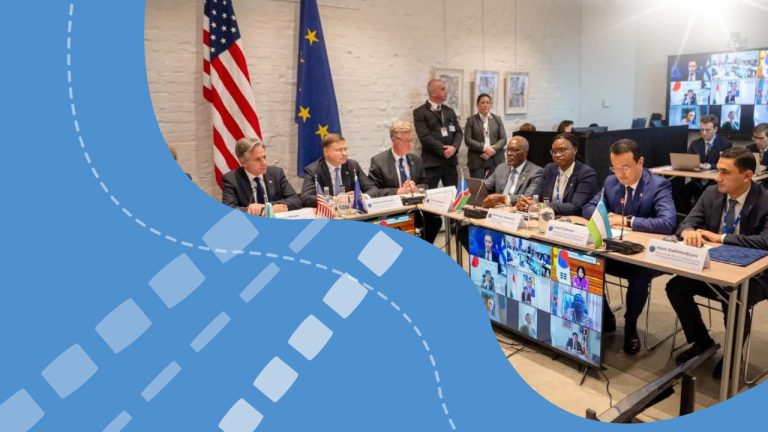
    The renewed cooperation effort comes ahead of a major U.S.-led meeting of foreign ministers and senior officials this week aimed at forming global alliances to reduce Chinese mineral dominance. Washington’s sense of urgency follows Beijing’s export restrictions on rare earth elements last year, temporarily eased under a deal between Trump and Chinese President Xi Jinping.

    Underlining its seriousness, the Trump administration this week launched a $12 billion national critical mineral stockpile. The EU’s draft mirrors this approach, suggesting both sides could coordinate stockpiling and rapid response measures to supply disruptions.

    Key pillars of the EU proposal include cooperation on securing supply chains, developing international premium markets, and sharing information to boost market transparency. It also envisions exemptions from mutual export restrictions, collaboration on innovation and research, and the creation of a joint EU-U.S. response group to manage potential shortages.

    Despite concerns over the pace of negotiations, EU officials called the talks “vital to diversify our supplies away from any single country,” indicating that the transatlantic allies are increasingly aligned in reshaping critical mineral dependencies.

  • Uzbekistan Eyes Kazakh Tungsten as Global Powers Compete for Strategic Metal

    Uzbekistan Eyes Kazakh Tungsten as Global Powers Compete for Strategic Metal

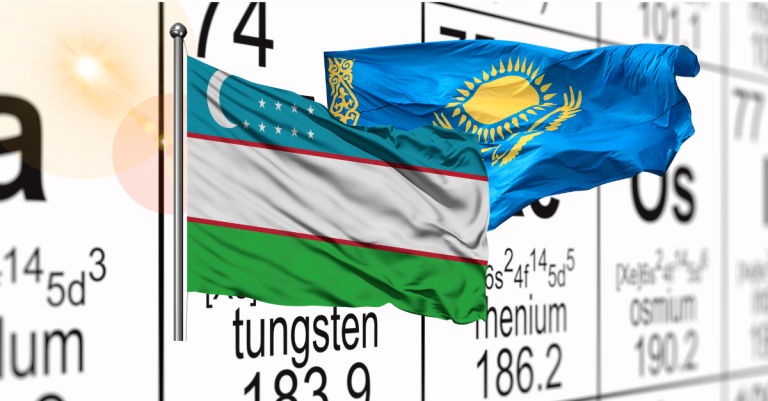
    Uzbekistan is plotting a tighter grip on critical minerals by seeking to purchase tungsten concentrate from Kazakhstan, as Uzbekistan’s government-led Uzbek Metal Processing Plant (TMK) prepares to ramp up production. Metin Alemder, TMK’s technical adviser, told inbusiness.kz at the China Mining summit in Tianjin that TMK is in talks with Kazakh colleagues to secure tungsten concentrate, signaling a strategic push to source raw materials locally for its expanding operations.

    Kazakhstan has been developing tungsten at the Boguty mine in the Almaty region near the Charyn Canyon. The project is led by Zhetyсу Wolfram LLC, in which Chinese-backed Jiaxin International Resources Investment Limited is a major shareholder. Boguty is regarded as one of the world’s larger tungsten deposits, with a mining licence valid through 2040. Early projections estimated an annual processing capacity of 3.3 million tonnes of ore to produce about 10,000 tonnes of 65% tungsten oxide concentrate, primarily destined for China. The site also contains molybdenum, bismuth, and beryllium, with plans to raise tungsten extraction to nearly 5 million tonnes of ore by 2027.

    Other Kazakh tungsten prospects include Aksoran at the SCO-Akmola border, as well as Northern Katpar and Verkhnee Kairakty in Karaganda. Notably, the last two are set to be developed via a joint venture in which Cove Capital (70%) partners with state mining firm Tau-Ken Samruk (30%) in a project budget of about $1.1 billion, with production expected to start in roughly 3.5 years. Cove Capital also has interests in Uzbekistan.

    Alemder notes that China already controls more than 80% of global tungsten production and leads fundamental research in this strategic metal, which Czech-like knowledge in Uzbekistan could help leverage. Tungsten is not a rare earth metal, but it remains a critical material due to its unique properties and supply concentration.

    TMK currently relies largely on local tungsten concentrates, with Uzbekistan able to produce tungsten using both hydrometallurgical and pyrometallurgical methods. The company’s plant in Chirchik is expanding capabilities, and a new hydrometallurgical workshop in Samarkand is slated to begin in 2027, targeting 5,000 tonnes of tungsten oxide annually. By 2030, production is expected to reach 15,000 tonnes per year, requiring growing external ore supplies. In the interim, the plant utilises residual tailings from an older deposit.

    In addition to tungsten, TMK is expanding molybdenum production from tailings from the Almalyk Mining and Metallurgical Complex and is developing tellurium and osmium. A sulfuric acid plant with a capacity of 500,000 tonnes annually is under construction, feeding consumables for the chemical sector, fertiliser production, and uranium mining via in-situ leaching, using sulfur supplied by Uzbekneftegaz and local gas-processing facilities.

  • China’s Mineral Export Curbs Could Shave Over $1 Billion from US GDP — Macquarie

    China’s Mineral Export Curbs Could Shave Over $1 Billion from US GDP — Macquarie

    China’s export restrictions on a handful of critical minerals could cost the United States more than $1 billion annually in GDP losses, according to new research by Macquarie Group.

    The analysis, led by chief economist Ric Deverell, modeled the potential impact of Beijing’s export controls on four rare earth elements — samarium, lutetium, terbium, and dysprosium — along with gallium, all of which appear on the US government’s updated list of 60 critical minerals, which now also includes copper and silver.

    While the direct trade exposure may appear limited, Macquarie’s study highlights how supply disruptions to these small but indispensable materials could ripple through the defense, semiconductor, and clean-tech sectors, amplifying the economic impact far beyond their raw import value.


    The Numbers Behind the Risk

    In 2024, the US mined $17.5 billion worth of minerals domestically but imported $65 billion, Macquarie reported. Although China accounted for just $2 billion, or 3% of total US mineral imports, the concentration of value-added processing and material specialization in China means even a limited export ban could have disproportionate effects.

    Macquarie found that the US was:

    • 100% import reliant on 12 critical minerals, and

    • over 50% dependent on imports for another 33.

    For rare earths, the dependency is especially acute. The US relies on imports for around 80% of its rare earth compounds and metals, and about 70% of that supply originates from China.

    While the nominal import value of these materials is small — around $170 million in 2024, with $120 million sourced from China — the knock-on effects of an export halt could dent US GDP by over $1 billion in a single year, Macquarie estimated.

    The report also flagged gallium — a key input in semiconductors, LEDs, and defense electronics — as another potential choke point.


    Strategic, Not Just Economic, Damage

    Beyond direct losses, Macquarie warned that the strategic cost of supply disruption would be significant. Rare earths and gallium underpin advanced manufacturing, defense systems, and energy technologies, sectors that are difficult to substitute or reshore quickly.

    “Even a temporary interruption in these supply chains would carry lasting industrial and strategic repercussions,” the report noted.


    Australia’s Emerging Role

    Macquarie analysts also pointed to Australia as a potential replacement source for US critical mineral imports currently coming from China.

    Australia, which recently signed a Critical Minerals Framework agreement with the US, holds over 15% of the world’s critical mineral reserves and already produces nearly half of the minerals on Washington’s critical list.

    Although Australian exports currently account for just 2% of US critical mineral imports, investment in the sector is accelerating. As of October 2024, more than $50 billion in new projects were in the pipeline, positioning Australia to play a much larger role in diversifying Western supply chains.

    “Over time, Australia could feasibly replace all Chinese-origin critical minerals in the US import mix,” Macquarie said.

  • Kazakhstan and the US Ink Critical Minerals Agreement

    Kazakhstan and the US Ink Critical Minerals Agreement

    A memorandum of understanding (MOU) on critical minerals was signed by Kazakhstan, the world’s leading uranium producer, and the United States government. The agreement was formalised by Yersayin Nagaspayev, Kazakhstan’s Minister of Industry and Construction, and U.S. Secretary of Commerce Howard Lutnick during a Washington meeting, as announced by the Press Office of the President of Kazakhstan on Thursday.

    The signing followed a meeting between Tokayev and U.S. administration officials, including Secretary of State Marco Rubio and Special Envoy for South and Central Asian Affairs Sergio Gor. In a separate statement, Tokayev highlighted the “excellent opportunities” for enhancing the strategic partnership between Kazakhstan and the U.S. through economic cooperation.

    Strategic Rare Earth Ventures

    The MOU signing marks another strategic move by the U.S. to secure future supplies of rare earth elements, aiming to reduce China’s dominance in this sector. Kazakhstan, largely unexplored, presents a promising opportunity. Earlier this year, the deputy chairman of Kazakhstan’s industry and construction ministry noted the nation’s “promising reserves” of rare earth minerals, suggesting it could become one of the world’s top 10 producers if forecasts are confirmed. This is supported by the discovery of the substantial Kuyrektykol deposit, which, if verified, would place Kazakhstan behind only China and Brazil in reserve size.

    According to official geologic data, Kazakhstan has over 980 solid mineral deposits. Since 2018, it has issued 2,906 exploration licenses and 111 production licenses, with only a dozen sites currently under exploration. Over the past five years, Kazakhstan has attracted about $1 billion in private investment into the mining sector.

    U.S. Investment and Tungsten Reserves

    U.S. investors are taking notice. In March, New York-based private equity firm Cove Capital formed a joint venture with JSC Qazgeology, Kazakhstan’s national geological exploration company, to advance the Akbulak Rare Earth Project in the Kostanay region. This project involves geological surveys, feasibility studies, and exploration work, with Akbulak hosting a historical resource of 380,000 tonnes of rare earth oxides, including neodymium and praseodymium.

    The Trump administration has been strengthening ties with Kazakhstan for some time. In September, the Commerce Department assisted Pittsburgh-based manufacturer Wabtec in securing a $4.2 billion locomotive order.

    Although Kazakhstan is not ranked by the U.S. Geological Survey among the top countries for recoverable tungsten deposits, it is estimated to have over 2 million tonnes of the mineral in reserve. China currently accounts for about 80% of global tungsten concentrate production, according to U.S. Geological Survey data.

  • President of Uzbekistan discusses critical minerals partnership with US firms

    President of Uzbekistan discusses critical minerals partnership with US firms

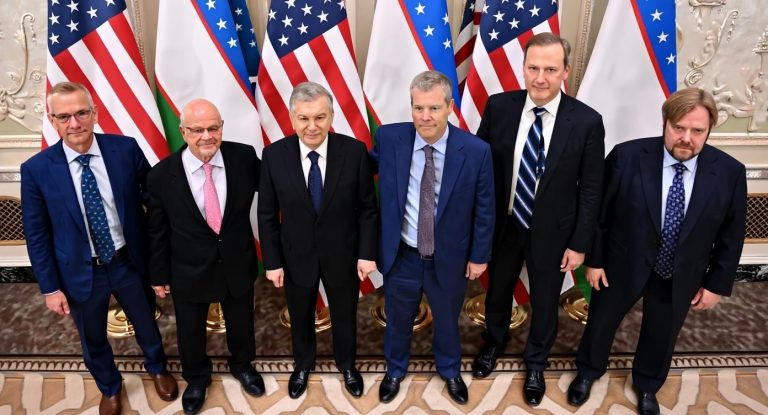
    On 22 September 2025, during his visit to New York, President Shavkat Mirziyoyev of Uzbekistan held a meeting with the heads of major American companies to advance cooperation in the field of critical minerals.

    The meeting focused on reviewing practical aspects of further expanding mutually beneficial cooperation between Uzbekistan and these leading US companies and organisations. The discussions centered on the development of a joint working group and the adoption of a “roadmap” to accelerate projects and prepare new proposals.

    Traxys, one of the world’s leading suppliers of critical raw materials and minerals, has a portfolio of promising projects worth $1 billion in the field of geological exploration and development of deposits. The company has agreed to introduce advanced technologies and expertise in the extraction, processing, and creation of sustainable supply chains of critical minerals.

    The Colorado School of Mines, a leading engineering university for training specialists in the mining industry, is working with Uzbekistan to create a Competence center at the University of Geological Sciences. FLSmidth, engaged in the development of technologies and equipment for the mining and processing industry, is actively involved in the development of the copper industry in Uzbekistan.

    McKinsey, a leading company in the field of management, consulting, and strategic development of enterprises in the mining industry, has developed a strategy with Uzbekistan for the development of the resource base, capacity expansion, and deep transformation of the country’s mining sector. Go Green Partners, specializing in investments in the extraction and processing of critical minerals for “green” energy, plans to conduct geological exploration in promising areas.

    The total capitalization of these companies exceeds $20 billion, demonstrating the significant potential for cooperation between Uzbekistan and these leading American companies. The meeting marked an important step forward in developing a strong partnership between the two nations, with the goal of accelerating projects and preparing new proposals in the sphere of critical minerals.

  • U.S. and Ukraine Earmark $150 Million for Minerals Deal

    U.S. and Ukraine Earmark $150 Million for Minerals Deal

    The United States and Ukraine have committed $150 million to establish a reconstruction investment fund designed to channel foreign capital into Ukraine’s natural resources sector.

    Announced on 17 September by Ukraine’s Economy Minister, Oleksii Sobolev, the fund will see Washington and Kyiv invest $75 million each, with the U.S. contribution provided through the International Development Finance Corporation (DFC). Ukraine will finance its share in two instalments, drawn from this year’s and next year’s budgets.

    “This is definitely enough to make the first proper large-scale investments,” Sobolev told journalists.

    The initiative forms part of a wider U.S.-Ukraine resources agreement, signed in April, granting Washington favourable access to projects in natural resources, infrastructure, and defence. The fund will operate on a project-by-project basis, with both parties contributing only once an investment is approved.

    DFC officials visited Ukraine earlier this month, inspecting potential starter projects such as titanium, zirconium, and hafnium deposits in Kirovohrad Oblast. Mateo Goldman, DFC’s Senior Vice President for Investments, said: “Our $75 million investment is a major step to activating the fund and opening the Ukrainian market to new investment opportunities.”

    The fund’s board is expected to finalise its structure by late November, including the appointment of an administrator and approval of investment guidelines.

    Prime Minister Yulia Svyrydenko described the initial funding as a demonstration of “trust and long-term commitment” from Washington, noting that reinvested profits over the next decade will bolster Ukraine’s economic recovery.

    With U.S. interest in Ukraine’s critical raw materials and gas reserves, Kyiv hopes the partnership will accelerate both energy security and post-war reconstruction.

  • Serbia to Retain Entire Gold Reserve on Home Soil, Snubbing Traditional Hubs

    Serbia to Retain Entire Gold Reserve on Home Soil, Snubbing Traditional Hubs

    Serbia’s central bank has revealed plans to relocate all of its gold reserves—valued at roughly £4.7 billion—back to its own territory, in a move aimed at safeguarding the stockpile during times of crisis.

    This would make Serbia the first country in Eastern Europe to entirely eschew established storage locations such as Switzerland, the United Kingdom, and the United States.

    “In bringing the gold back to Serbia, the National Bank sought to enhance both its accessibility and security during periods of instability,” the institution stated, noting that the repatriation effort had commenced in 2021 amid growing global uncertainty.

    Following the freezing of Russia’s foreign currency reserves in 2022, the rate of gold accumulation by central banks worldwide doubled, underscoring the political risk involved in holding reserves in US dollar and euro-denominated assets. Housing gold bars domestically reduces the threat of external interference.

    Between 2019 and the end of last year, Serbia acquired 17 tonnes of gold abroad and a further 19 tonnes from the local arm of Zijin Mining Group. This brought the total reserve to 50.5 tonnes, nearly all stored in Belgrade—except for five tonnes bought in 2024, which remain in Switzerland for now.

    Those final five tonnes will be brought back “as soon as possible,” according to Governor Jorgovanka Tabaković. Serbia’s neighbours hold differing proportions of their reserves domestically, ranging from 86% in Hungary to around 25% in Poland, as per data compiled by Bloomberg.

    The central bank said it had weighed the pros and cons before committing to full repatriation, admitting that while holding gold in global market hubs facilitates easier selling and lending, the risks outweighed those advantages.

    The Bank of England’s vault in London currently houses a significant portion of the world’s gold reserves—around £430 billion in value—cementing the UK’s position as the primary hub for precious metals trading. Similarly, the Federal Reserve in New York holds gold on behalf of nations including Germany and the Netherlands.

    Germany’s decision to bring gold back home over a decade ago sparked national debate and was driven by Cold War fears. Though the Soviet threat has since faded, the metal remained overseas until the repatriation effort was completed.

    Other countries, such as Poland and the Netherlands, have followed suit, while similar calls for domestic storage have echoed through Slovakia and Romania.

    The notion of storing gold within national borders has gained traction among rising populist movements, such as Germany’s Alternative für Deutschland, which regards it as a crucial safeguard against international political pressure.

  • Trump Warns Ukraine of “Big Problems” Over Minerals Deal, Zelensky Seeks Clarifications

    Trump Warns Ukraine of “Big Problems” Over Minerals Deal, Zelensky Seeks Clarifications

    US President Donald Trump has accused Ukrainian President Volodymyr Zelensky of attempting to back out of a rare earth minerals deal, warning of “big problems” if Kyiv refuses to sign. The agreement, expected to be finalized this week, has faced last-minute revisions, prompting concerns from Ukraine.

    Trump, speaking aboard Air Force One on Sunday, claimed Zelensky was seeking to renegotiate terms, possibly in exchange for NATO membership—a demand he dismissed as unrealistic. “If he’s looking to renegotiate the deal, he’s got big problems,” Trump said.

    However, Zelensky denied linking the deal to NATO, stating Tuesday that membership was “never part of this agreement.” He emphasized Ukraine’s readiness for an unconditional ceasefire but acknowledged that the US proposal had evolved significantly.

    A new draft, submitted by the US Treasury Department and reviewed by CNN, expands American control over Ukraine’s mineral resources, including oil, gas, and rare earth metals. It also proposes a joint investment fund managed mostly by US appointees, raising fears in Kyiv over sovereignty and repayment of past US aid.

    Zelensky confirmed that negotiations were ongoing but cautioned that the deal had been revised multiple times. “We are for cooperation with the United States,” he said, though Ukraine opposes clauses treating past aid as a “contribution” to the fund.

    Meanwhile, Trump has also pressured Russia, threatening secondary sanctions if Moscow obstructs a ceasefire. Finnish President Alexander Stubb, after meeting Trump, suggested April 20 as a deadline for peace talks.

  • Ukraine and US Work Toward “Acceptable” Economic Deal Amid Tensions

    Ukraine and US Work Toward “Acceptable” Economic Deal Amid Tensions

    Ukraine’s Foreign Minister, Andrii Sybiha, stated that officials are advancing discussions with the USon an economic agreement deemed “acceptable” by both sides. This comes shortly after former President Donald Trump accused Kyiv of attempting to renegotiate the deal.

    Sybiha confirmed that Ukrainian authorities are reviewing the latest draft of an infrastructure and natural resources agreement sent by the US last week. He emphasized that Kyiv is ready to support a deal ensuring security through a strong American business presence in Ukraine.

    “The process will continue,” Sybiha told reporters in Kyiv during a meeting with his Lithuanian counterpart. “We will work with our American colleagues to reach a mutually acceptable text.”

    Trump recently redirected his frustration toward Ukrainian President Volodymyr Zelenskiy, accusing him of demanding new terms for the agreement. This follows Trump’s earlier criticism of Russian President Vladimir Putin, highlighting the shifting geopolitical tensions.

    Meanwhile, concerns in Kyiv have grown over the draft deal, which could grant the US significant control over future infrastructure and mineral investments in Ukraine. Some officials worry this might hinder Ukraine’s EU membership bid or require repayment of US military and economic aid.

    Despite these fears, Sybiha stressed that the agreement could attract major American businesses, serving as a security guarantee. Ukrainian negotiators are carefully reviewing the draft and may request amendments before finalizing terms.

    As diplomatic efforts continue, Russia launched fresh strikes on Ukraine’s energy infrastructure, leaving thousands without power, while Ukrainian drones reportedly caused outages in Russia’s Belgorod region.