Tag: uranium mining

  • Stepnogorsk Sulfuric Acid Plant Plans Capacity Doubling to Meet Kazatomprom’s Needs

    Stepnogorsk Sulfuric Acid Plant Plans Capacity Doubling to Meet Kazatomprom’s Needs

    The Stepnogorsk Sulfuric Acid Plant (SSAP), 90.11% owned by Samruk-Kazyna’s subsidiary, with the remaining 9.89% belonging to Kazatomprom (another Samruk-Kazyna subsidiary), intends to double its capacity to 360,000 tons per year of sulfuric acid, required by Kazatomprom, and increase sulfur purchases from Tengizchevroil, the main supplier of the product to the plant. The implementation of the proposed activity – the construction of the second line of the sulfuric acid plant – will lead to an increase in the production capacity of the enterprise, producing technical sulfuric acid, from 180,000 tons to 360,000 tons per year, according to materials for public hearings on the project’s second phase, scheduled for April 30. As indicated on the plant’s website, the main sulfur supplier for the enterprise is the Tengiz oil field operator – Tengizchevroil, which stores sulfur in large volumes. Accordingly, with the launch of the second phase, the plant will double its sulfur purchases necessary for sulfuric acid production. The main product of the plant is technical sulfuric acid of the first grade according to GOST 2184-2013 with a concentration of 92.5–94%. The project also includes the possibility of obtaining acid with a concentration of 98.5% (without additional dilution). By-products of production include electrical and thermal energy. Construction and installation work is planned to be carried out around the clock in 2024-2025, and the launch of the second phase into operation is scheduled for 2026. The second phase will produce sulfuric acid around the clock for 345 days a year. The plant fully meets its own needs for thermal and electrical energy. According to materials for public hearings, the production of sulfuric acid from the second phase will provide the plant with about 30–40 MW of electricity through the generation of superheated steam. At the same time, the plant annually concludes a contract for the supply of electricity with Stepnogorskenergosbyt. The main equipment supplier will be the Italian company Desmet Ballestras.p.a., and the main technological equipment manufacturer will be the Kazakhstani company “Belkamit”. The second phase will be built within the boundaries of the existing plant, which will not cease its operation during production expansion. The sulfuric acid plant is located in the industrial zone of the city of Stepnogorsk in the Akmola region. The nearest settlements are Zavodskoye village – three km away – and the city of Stepnogorsk – 18 km away. The nearest railway stations are AltynTau – 10 km away and Ermantau – 130 km away. The plant has been operating at its full capacity since 2021 against the backdrop of sulfuric acid shortages in Kazakhstan, which is needed for uranium mining. In January, Kazatomprom announced an expected adjustment to its production plan for 2024 due to difficulties in sulfuric acid supplies, which is a key component in uranium mining. A plant for the production of 800,000 tons of sulfuric acid will be built by 2026 in the Turkestan region using the Italian Balestra technology, announced Nurlan Zhakupov, Chairman of the Management Board of Samruk-Kazyna. It is worth noting that Baurzhan Ibraev, Chairman of the Advisory Board of the British New Nuclear Watch Institute (NNWI) for Central Asia, who had been a member of the Board of Directors and Chief Production and Nuclear Fuel Cycle Director of Kazatomprom for several years, expressed his opinion to journalists at a seminar on atomic energy in December 2023 that increasing uranium production in Kazakhstan in the coming years, according to the plans announced by Kazatomprom and its affiliated joint ventures, will require about 3 million tons of sulfuric acid annually. “For acid, we will need – today we consume about 2.2 million tons. If we want to fulfill the announced plans, probably, we will need no less than 3 million tons. Unfortunately, Kazakhstan today does not produce so much… At one time, production capacities in Kazakhstan were around 3.6 million tons, but this does not mean that they produced so much. I don’t know how much everyone produces today, but I know that today Kazatomprom does not satisfy its acid needs,” he said. According to his estimates, Kazatomprom’s joint ventures purchased sulfuric acid at a price of $130 per ton. Expenditures on this key component, used in uranium mining by the method of underground in-situ leaching as a chemical reagent, accounted for about 30–40% of the total cost of uranium in Kazakhstan. However, even now, before the increase in production volumes by Kazatomprom, there is a sulfuric acid deficit in Kazakhstan, Ibraev noted. In contrast to this, uranium enterprises in Uzbekistan, according to him, receive sulfuric acid at $30 per ton.

  • Uzbekistan Mulls Collaboration with China Nuclear Uranium for Black Shale Uranium Mining

    Uzbekistan Mulls Collaboration with China Nuclear Uranium for Black Shale Uranium Mining

    In a bid to bolster its uranium mining capabilities, Uzbekistan is considering a partnership with China Nuclear Uranium Co. Ltd for the development of black shale uranium mines, according to reports from Trend. Discussions between representatives of China Nuclear Uranium and Jamal Fayzullaev, the director general of Navoiyuran State Enterprise, have centered around the potential production of black shale uranium at the Jantuar and Ma’danli deposits situated in the Navoi region.

    Geological surveys have been conducted at key sites, including the Ma’danli and Koscheka fields within the Auminzatau Mountains. Sampling and analysis activities at the Ma’danli field have provided insights into the feasibility of extracting uranium and other rare elements from the ore composition, laying the groundwork for potential development in the area.

    This prospective collaboration follows a memorandum of understanding signed in November 2023 between Navoiyuran and China National Nuclear Corporation, outlining mutual cooperation in uranium mining and processing endeavors in Uzbekistan. As part of this agreement, discussions have revolved around various investment initiatives within the uranium sector, signaling a growing partnership between the two entities.

    Jamal Fayzullaev, highlighting future plans, disclosed Navoiyuran’s ambitions to ramp up uranium production by 1.5 times while simultaneously reducing production costs by 20.1 percent. The enterprise aims to intensify geological prospecting activities, covering over 1 million meters of exploration area, alongside extensive drilling operations spanning 3.8 million meters for uranium production purposes in 2024.

  • Uzbekistan Explores Collaboration with China for Black Shale Uranium Mining

    Uzbekistan Explores Collaboration with China for Black Shale Uranium Mining

    Uzbekistan is considering collaboration with China Nuclear Uranium Co., as reported by Navoiyuran’s press service, to develop black shale uranium mines. Rustam Ergashev, head of the investment projects department at Navoiyuran, underscores the increasing significance of atomic energy, which currently fulfills 11% of global electricity demand.

    “This figure reaches 70% in France, 50% in Hungary, and 20% in the USA,” notes Ergashev. Nations like China, India, and countries across the Middle East, Africa, and South America are expanding their nuclear power programs in response to this trend.

    For Navoiyuran, a company focused solely on exports, this presents new opportunities for collaboration in the nuclear raw materials market. The visit of a delegation from China Nuclear Uranium Co. (CNUC), a subsidiary of the China National Nuclear Corporation (CNNC), signals a significant step toward enhancing collaboration in this field.

    “China Nuclear Uranium Co. is a prominent player in China’s nuclear energy sector, involved in uranium exploration, mining, and processing,” explains Ergashev. The company operates uranium mines domestically and engages in joint ventures in countries like Namibia and Kazakhstan.

    During the visit led by Yang Runsheng, the company’s chief engineer, experts from China Nuclear Uranium Co. explored black shale uranium mining fields in Uzbekistan, visiting the “Ma’danli” and “Koscheka” fields to study mining operations and technological samples for uranium and rare element extraction from ore compositions.

    The meeting between Chinese experts and Navoiyuran’s General Director, J. Fayzullaev, focused on developing technologies for black shale uranium mining and exploring prospects for future cooperation. Collaboration between Uzbekistan and China holds promise for advancing the nuclear energy sector in both countries.

    In July 2023, President Shavkat Mirziyoyev endorsed initiatives to boost uranium mining and processing in Uzbekistan, aiming to double production by 2030. In November 2023, Navoiyuran entered a strategic cooperation memorandum with China National Nuclear Corporation (CNNC) in the uranium sector.

    Since 2016, Uzbekistan has consistently held the position of the fifth-largest uranium producer worldwide, with uranium reserves exceeding 100,000 tons. The Navoi Mining and Metallurgical Combine (NMMC), Uzbekistan’s primary uranium mining company, predominantly exports uranium products, constituting 99.5% of its export portfolio.

    French President Macron’s visit to Uzbekistan in November 2023 signals France’s strategic interest in Central Asia and Europe, aiming to diversify energy sources and reduce dependence on China for critical minerals.

  • Kazakhstan plans to increase uranium production

    Kazakhstan plans to increase uranium production

    Uranium mining in Kazakhstan is carried out by NAC Kazatomprom, reports the Sputnik Kazakhstan website .
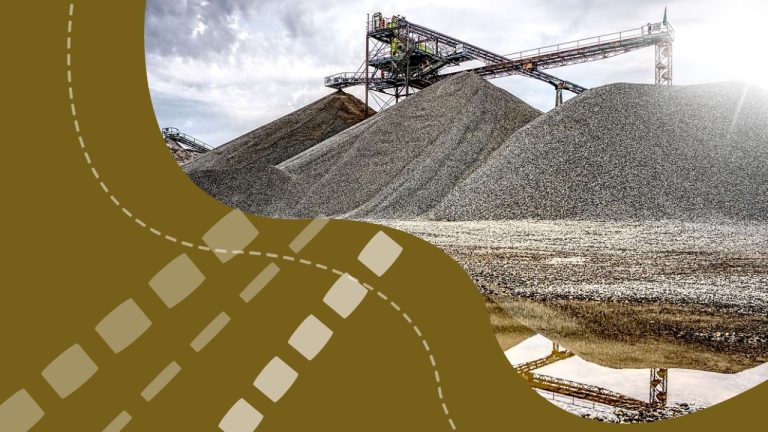
    Over the previous 7 years, the level of uranium production in the country has decreased annually by 20% due to market conditions, however, with an increase in buyers, the need for uranium mining also increases, so the level of production capacity will be increased.

    In particular, an agreement on the supply of finished products was signed with the UAE.

    The company also plans to reduce import dependence by starting the construction of a plant for the production of sulfuric acid, since sulfuric acid is an important component in uranium mining, and the quantity produced in Kazakhstan is not enough.

    In addition, it is planned to build an onshore processing complex in the Turkestan region and refining production of uranium oxide at the Ulba Metallurgical Plant.

    The cost of these projects is 130 billion tenge.

  • Orano is investing up to $500 million in uranium mining in Uzbekistan

    Orano is investing up to $500 million in uranium mining in Uzbekistan

    French company Orano has expressed its intention to invest up to $500 million in uranium mining and processing in Uzbekistan, as revealed by the Minister of Mining Industry and Geology, Bobir Islamov. He mentioned the existence of a strategic partnership agreement between Uzbekistan and Orano. Currently, the French company is conducting geological exploration, and by the end of this year, a preliminary technical and economic justification for the project will be prepared.

    Islamov explained that the strategic agreement includes the exploration of two additional sites in the Tamdyn district of the Navoi region. The final decision regarding these sites will depend on the results of the technical and economic analysis. However, Islamov expressed optimism about the progress of the project.

    The minister emphasized that current uranium production volumes have already secured markets. As the production of nuclear fuel increases, Uzbekistan will consider expanding its exports based on market conditions.

    “When it comes to uranium, our prices are tied to global prices. If the price rises, our delivery costs increase as well,” stated the minister.

    Islamov highlighted the growth in uranium exports to various destinations this year, underscoring the importance of diversifying supply sources. In 2022, Uzbekistan increased uranium exports to the European Union by 2.71 times, reaching 441 tons.

    During a visit to Samarkand, French President Emmanuel Macron announced that Orano, in collaboration with the local joint venture Nurlikum Mining, had initiated a pilot project for uranium mining. President Shavkat Mirziyoyev expressed his support for the expansion of geological exploration for uranium deposits with Orano.

    Prior to Macron’s visit, Bloomberg reported that his objective in visiting Uzbekistan and Kazakhstan was to discuss the expansion of uranium supplies, as France considers Central Asia as an alternative to Russian nuclear fuel.

    In November 2022, the State Committee of Geology, Navoi Mining, and Orano signed a tripartite agreement to expand uranium mining and processing. Uzbekistan aims to follow the French model in the “nuclear fuel value chain.” Orano has stated its readiness to invest “several hundred million euros.”

  • Uzbekistan and France intend to expand cooperation on uranium mining

    Uzbekistan and France intend to expand cooperation on uranium mining

    President of Uzbekistan Shavkat Mirziyoyev on Thursday, on the sidelines of the Uzbek-French business forum held in Samarkand, held a meeting with the chairman of the French company Orano, Claude Imoven, the press service of the Uzbek leader reports.

    “At the meeting, initiatives to expand cooperation in the field of geological exploration and uranium mining were supported,” the statement said.

    The meeting took place as part of the official visit of French President Emmanuel Macron to Uzbekistan.

    Since December 2019, a joint venture for the exploration and production of uranium in the Navoi region, Nurlikum Mining, created by Orano (51%) and the State Committee for Geology (49%) has been operating in Uzbekistan. The resource base of the enterprise includes three promising areas of “sandstone” type uranium – Northern and Southern Dzhengeldy and Yangikuduk.

    In November 2022, as part of Mirziyoyev’s visit to Paris, the State Committee for Geology of Uzbekistan, the state-owned enterprise Navoiyuran and Orano Mining signed a trilateral agreement to expand cooperation in the mining and processing of uranium. The new agreement laid the foundation for the development of new uranium mines in Uzbekistan.

    The document also provided for the implementation of a number of joint initiatives, including the launch of new joint geological exploration projects, as well as support for Navoiyuran in the process of its modernization and transformation.

    It was previously reported that Uzbekistan wants to double uranium production to 7.1 thousand tons by 2030.

    According to the State Committee for Geology, the country’s uranium mineral resource base is made up of 27 deposits in the Kyzylkum region, the forecast reserves are estimated at approximately 55 thousand tons.

    Uzbekistan ranks seventh in the world in terms of uranium reserves and fifth in terms of its production volumes.

  • Kazatomprom to end uranium production cuts in 2025

    Kazatomprom to end uranium production cuts in 2025

    “Kazatomprom remains committed to its market-centric strategy and its disciplined approach to production and sales, and we’re excited to witness the start of a long-awaited historical shift in the uranium market,” Dastan Kosherbayev, chief commercial officer of Kazatomprom, said in a statement.
    “As we are seeing a clear sign that the industry has entered into the new long-term contracting cycle, driven by the recognition of the restocking needs, Kazatomprom, with its best-class and lowest cost mines, is absolutely prepared to respond to these improving market conditions”.

    The spot price of uranium has more than doubled over the past three years, although it is still well down from a peak of $140 a pound touched in 2007.

    For seven years including 2023, the company has produced 20% less than its contracts with the Kazakh government allowed, with this year’s output seen at 20,500-21,500 tonnes.

    In 2024, Kazatomprom said it would stick to its plan to produce 10% below the contract maximum, or 25,000-25,500 tonnes, while with no restrictions in 2025, production is expected to grow to 30,500-31,500 tonnes, the company said.

    “…Our intention to return to a 100% level of Subsoil Use Contracts production volumes in 2025 is primarily driven by our strong contract-book and already growing sales portfolio against conservative 2023-2024 production scenario,” Kosherbayev said.

  • In the realm of the United Kingdom, the suspension of the liquidation process for Ganberg and Gexior companies has transpired

    In the realm of the United Kingdom, the suspension of the liquidation process for Ganberg and Gexior companies has transpired

    In terms of the project’s ownership, the state has consistently retained its stake as a “stable entity,” with a controlling interest of 51% held by “Kazatomprom.” However, the remaining portion of the company, SGHK, has experienced a change in ownership.

    The establishment of TOO “SP Budenovskoye” in 2015 marked its primary objective of exploring and extracting uranium from sections 6 and 7 of the Budenovskoye deposit, which currently resides in the Turkestan region. This partnership was officially registered in 2016, with two initial owners: 51% attributed to the national company “Kazatomprom” and 49% under the ownership of TOO “Stepnogorsk Mining and Chemical Plant” (SGHK).

    During the year 2016, SGHK found itself under the ownership of Singaporean enterprise Rosdale PTE Ltd, originating from the British Virgin Islands.

    In May of 2017, the government of Kazakhstan granted permission to Rosdale PTE Ltd to divest SGHK to two other legal entities. Ganberg UK Ltd acquired a majority share of 60%, while Gexior UK Ltd secured a minority share of 40%. Both of these structures were hastily formed just prior to the planned transaction on March 1, 2017, and were registered within the same jurisdiction, namely the United Kingdom. Notably, they shared a common parent structure by the name of Degevol UK Ltd, which was established a mere day before its subsidiaries, on February 28, 2017. Consequently, Vasily Anisimov and Yakov Klebanov emerged as the newfound co-owners of the uranium deposits.

    In the month of December 2022, yet another shift in ownership occurred for SGHK. This particular transaction stirred up a scandal within Kazakhstan’s information sphere, as SGHK was transferred to AO “Uranium One Group” and AO “YATC Logistic Center.” Both of these joint-stock companies are integral components of the state corporation known as “Rosatom.”

    It is worth mentioning that certain structures within “Rosatom,” such as “Rusatom Overseas,” which is responsible for promoting “Rosatom” projects beyond national borders, have been subjected to stringent Western sanctions. Furthermore, Alexey Likhachev, the head of “Rosatom,” finds himself under the weight of these sanctions as well. Given the vulnerable position of the Russian corporation, concerns have arisen within Kazakhstan.

    Currently, “Kazatomprom” holds the lion’s share in uranium extraction within Kazakhstan, accounting for 55%, while “Rosatom” holds a 21% stake as of the conclusion of 2022. With the commencement of production at SP “Budenovskoye,” it is anticipated that “Rosatom’s” share in the nation’s total production will increase by at least 10%, as stated by Abzal Narymbetov, the author of the Energy Analytics Telegram channel.

    Narymbetov further highlights that if “Rosatom” becomes the target of anti-Russian sanctions, it may prove challenging for “Kazatomprom” to market its own product. This, in Narymbetov’s view, constitutes the “main and most significant” risk arising from the change in ownership of the Budenovskoye deposit.

    Looking ahead, six months subsequent to the sale of SGHK, in June 2023, all three aforementioned companies – Ganberg UK Ltd, Gexior UK Ltd, and Degevol UK Ltd – initiated the process of deregistration, effectively dissolving themselves. However, in August, the liquidation proceedings were halted by the UK’s Companies House in response to a lodged protest.

    In an attempt to shed light on the initiator of the suspension and the rationale behind it, “Kursiv” reached out to Companies House. Regrettably, the registrar’s press service declined to provide any commentary on matters pertaining to specific companies, deeming such information to be confidential.

    The editorial team of “Kursiv” also made inquiries to Vasily Anisimov and Yakov Klebanov (via their respective companies based in Russian and Kazakhstani jurisdictions) regarding the fate of Ganberg UK Ltd, Gexior UK Ltd, and Degevol UK Ltd. However, no responses were received at the time of reporting.

    According to the information available on the Companies House website, there exists a multitude of reasons for filing objections, although an exhaustive list of these grounds is not provided.

    Oleg Degtyarev, the director of the esteemed British law firm Law Firm Ltd., elucidated on the matter, stating that “Examples of reasons for objecting to the removal of a company from the register include not being notified of the company’s decision, believing that the information in the company’s application is inaccurate, and intending to take legal action against the company. You must have evidence supporting your objection, such as invoices or bills showing that the company owes you money.”

    In the month of December 2022, yet another shift in ownership occurred for SGHK. This particular transaction stirred up a scandal within Kazakhstan’s information sphere, as SGHK was transferred to AO “Uranium One Group” and AO “YATC Logistic Center.” Both of these joint-stock companies are integral components of the state corporation known as “Rosatom.”

    It is worth mentioning that certain structures within “Rosatom,” such as “Rusatom Overseas,” which is responsible for promoting “Rosatom” projects beyond national borders, have been subjected to stringent Western sanctions. Furthermore, Alexey Likhachev, the head of “Rosatom,” finds himself under the weight of these sanctions as well. Given the vulnerable position of the Russian corporation, concerns have arisen within Kazakhstan.

    Currently, “Kazatomprom” holds the lion’s share in uranium extraction within Kazakhstan, accounting for 55%, while “Rosatom” holds a 21% stake as of the conclusion of 2022. With the commencement of production at SP “Budenovskoye,” it is anticipated that “Rosatom’s” share in the nation’s total production will increase by at least 10%, as stated by Abzal Narymbetov, the author of the Energy Analytics Telegram channel.

    Narymbetov further highlights that if “Rosatom” becomes the target of anti-Russian sanctions, it may prove challenging for “Kazatomprom” to market its own product. This, in Narymbetov’s view, constitutes the “main and most significant” risk arising from the change in ownership of the Budenovskoye deposit.

    Looking ahead, six months subsequent to the sale of SGHK, in June 2023, all three aforementioned companies – Ganberg UK Ltd, Gexior UK Ltd, and Degevol UK Ltd – initiated the process of deregistration, effectively dissolving themselves. However, in August, the liquidation proceedings were halted by the UK’s Companies House in response to a lodged protest.

    In an attempt to shed light on the initiator of the suspension and the rationale behind it, “Kursiv” reached out to Companies House. Regrettably, the registrar’s press service declined to provide any commentary on matters pertaining to specific companies, deeming such information to be confidential.

    The editorial team of “Kursiv” also made inquiries to Vasily Anisimov and Yakov Klebanov (via their respective companies based in Russian and Kazakhstani jurisdictions) regarding the fate of Ganberg UK Ltd, Gexior UK Ltd, and Degevol UK Ltd. However, no responses were received at the time of reporting.

    According to the information available on the Companies House website, there exists a multitude of reasons for filing objections, although an exhaustive list of these grounds is not provided.

    Oleg Degtyarev, the director of the esteemed British law firm Law Firm Ltd., elucidated on the matter, stating that “Examples of reasons for objecting to the removal of a company from the register include not being notified of the company’s decision, believing that the information in the company’s application is inaccurate, and intending to take legal action against the company. You must have evidence supporting your objection, such as invoices or bills showing that the company owes you money.”

    He noted that initiators of objections can be founders and employees of the company, as well as creditors. “This can also include British government agencies, such as HMRC (tax authority),” explained Degtyarev.

    When asked whether the suspension could be related to the sanctions status of certain structures and the head of “Rosatom,” my database does not provide specific information regarding the liquidation suspension of Ganberg and Gexior companies in the United Kingdom or their ownership of the Budenovskoye uranium deposit. It is advisable to consult reliable news sources or official statements for the latest information on this topic.

    Now that the liquidation process of the companies has been suspended, they must take steps to resolve the disputed issues before the deregistration process can resume.

    “This may involve negotiations with the objecting party, settling outstanding debts, or providing additional information to the registrar,” says Oleg Degtyarev.

    The party that raised objections also needs to be proactive. “They must confirm their actions or provide acceptable evidence of progress in resolving the unresolved issues,” the lawyer enumerates. “This evidence should be obtained at least two weeks before the expiration of the objection period.”

    The objection period has a lifespan of six months. It needs to be renewed, or else it will automatically expire.

  • Ukraine: first batch of uranium shipped to Canada

    Ukraine: first batch of uranium shipped to Canada

    Ukraine has shipped its first batch of uranium to Canada under an agreement signed between Energoatom and Cameco. The agreement presupposes the supply of all uranium extracted by Vostochniy Mining and Processing Works to Canada and its further conversion into natural uranium hexafluoride (UF6). Such a process is necessary to prepare uranium for its further…
  • Uzbekistan / Work Begins At Two Sites On Tackling Soviet Uranium Mining Legacy

    Uzbekistan / Work Begins At Two Sites On Tackling Soviet Uranium Mining Legacy

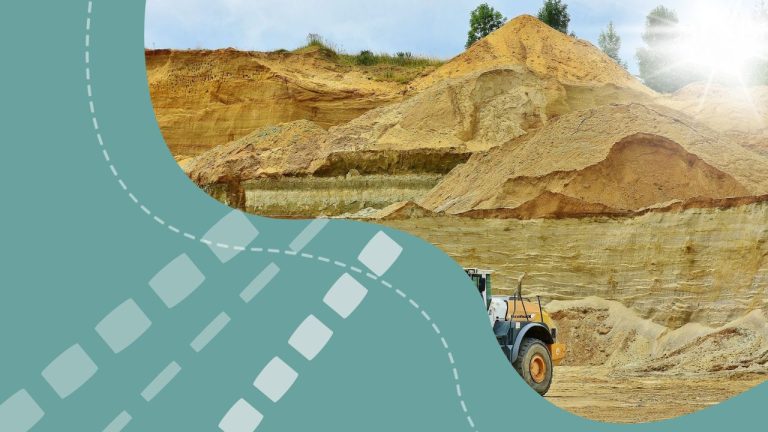
    Remediation efforts have commenced at two Soviet uranium mining sites in Uzbekistan, bolstered by a generous €9m ($9.6m) grant. This funding will support crucial activities such as closing mine openings, demolishing derelict facilities used for uranium ore processing, and re-cultivating waste rock areas. The grant originates from the environmental remediation account for Central Asia, established through the initiative of the European Union and managed by the esteemed European Bank for Reconstruction and Development (EBRD).

    The first site undergoing remediation, Yangiabad, is located approximately 75 km east of Uzbekistan’s capital, Tashkent. It spans across a mountainous terrain near the town of Yangiabad and encompasses seven mines. This uranium mining site operated for nearly four decades and covers an extensive area of 50 square kilometers, containing approximately 2.6 million cubic meters of radioactive waste. Once the remediation process is complete, this region, known locally as the Uzbek Alps, will be transformed into an environmentally safe area, fostering the growth of livelihoods and tourism.

    The second site, Charkesar-2 mine, is situated 140 km east of Tashkent and 60 km west of Namangan in the scenic Fergana Valley. This contaminated area, spanning approximately 25 hectares, includes five already remediated waste rock dumps and two abandoned mine shafts. The existing water diversion channels on the site are in a state of disrepair. The remediation work at Charkesar-2 will not only address the environmental concerns but also prevent the dispersal of toxic materials into the river system that serves the Fergana Valley, home to a population of over 15 million people.

    With this recent allocation of funding, the environmental remediation account has now supported the remediation of five out of seven high-priority sites in Central Asia. In addition to the two sites in Uzbekistan, three sites in the Kyrgyz Republic have also received funding. These remediation efforts play a vital role in safeguarding the environment and the well-being of communities in the region, ensuring a sustainable and prosperous future for Central Asia.

    The dedication and support of the European Union and the EBRD in addressing the uranium mining legacy in Uzbekistan exemplify the commitment to environmental responsibility and sustainable development. By remediating these sites, Uzbekistan takes significant strides towards protecting its natural resources, preserving the health of its citizens, and fostering a thriving and resilient economy. The positive impact of these remediation efforts will extend far beyond the borders of Uzbekistan, contributing to the overall well-being of Central Asia as a whole.