Tag: uranium mining

  • Ukraine Reviews PSA Tenders for Four Uranium Deposits Linked to BGV Group

    Ukraine Reviews PSA Tenders for Four Uranium Deposits Linked to BGV Group

    Ukraine’s interagency commission on production-sharing agreements (PSAs) is reviewing a request to launch competitive tenders for uranium development at four deposits in Mykolaiv and Kirovohrad oblasts, according to Nadra.Info.

    The initiative was submitted by Atomic Energy Systems of Ukraine LLC (AESU), part of businessman Hennadii Butkevych’s BGV Group Management. Butkevych is also a co-owner of the ATB retail chain. AESU is seeking to initiate PSA tenders for the Safonivska site, the Sadova area, the Severynske deposit and the Pidhaitsivske deposit.

    The application was formally submitted in late November 2025 and considered at a commission meeting on Dec. 15, 2025, the same day authorities opened applications for a PSA tender for the Dobra lithium deposit. However, as of January, no final decision had been taken.

    “But so far, they’re saying nothing. The ball is in their court, and it has been for a long time,” Butkevych said, commenting on the delay. He attributed the slow progress to a degree of state caution toward private-sector initiatives in uranium mining.

    The four subsoil plots are included on Ukraine’s list of strategically important deposits to be developed through competitive PSA mechanisms. The Pidhaitsivske and Severynske deposits are located in Kirovohrad Oblast’s Kropyvnytskyi district, while the Sadova area and Safonivska site are situated in Mykolaiv Oblast.

    BGV Group Management plans to develop the projects in partnership with foreign investors, although potential partners have not yet been disclosed. Butkevych has stated that, once permits are granted, uranium production could begin within 1.5 to 2 years.

    The review comes amid broader activity in Ukraine’s strategic minerals sector. On Jan. 12, the Cabinet of Ministers selected Dobra Lithium Holdings JV, LLC — backed by TechMet and The Rock Holdings — as the winner of the PSA tender for the Dobra lithium deposit in Kirovohrad Oblast.

    According to Butkevych, uranium development has also been discussed at the highest political level, including with President Volodymyr Zelenskyy.

  • Uzbekistan Targets Higher Coal and Uranium Output as New Projects Advance

    Uzbekistan Targets Higher Coal and Uranium Output as New Projects Advance

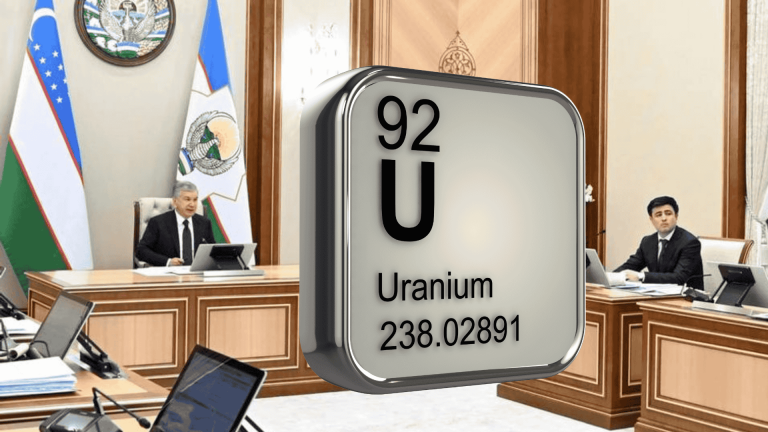
    President Shavkat Mirziyoyev has reviewed progress and future plans in Uzbekistan’s coal and uranium sectors, with officials outlining measures to expand production and improve efficiency.

    Coal output for the 2025–2026 autumn-winter season is expected to reach 10 million tonnes, 1.3 million tonnes more than the previous season. So far, 9 million tonnes have been produced, up 590 thousand tonnes year-on-year. Authorities have set a higher benchmark of 11 million tonnes for the following season.

    To meet these targets, the government plans to accelerate development of deposits in Tashkent and southern regions, expand selective mining, and привлечь additional excavators and outsourced equipment. Increased private sector participation is expected to add 2.5 million tonnes of coal production in 2026.

    Particular focus was placed on the Nishbosh deposit in Angren. The nearly $500 million project, with reserves of 233 million tonnes, is scheduled to begin production in 2026 at 1 million tonnes annually, with long-term capacity projected at 10 million tonnes per year. The development is expected to create 880 permanent jobs.

    Officials also presented a $5 billion initiative led by  to establish polymer production based on deep coal processing. The project aims to process 8–9 million tonnes of coal annually and produce 1.18 million tonnes of polymer products.

    In uranium, Uzbekistan produced 7 thousand tonnes last year, with identified reserves standing at 139 thousand tonnes. Development of the Arnasay, Western Kizilkok, Southern Jongeldi, and Eastern Agron deposits is set to begin this year. With rising production expected, authorities emphasized the need to expand processing capacity and ensure stable supplies of sulfuric acid and technical sulfur for uranium extraction.

    The President instructed officials to ensure timely implementation of projects, boost output and enhance economic returns across both sectors.

  • Uzbekistan to Launch Uranium Extraction at Four New Deposits

    Uzbekistan to Launch Uranium Extraction at Four New Deposits

    President Shavkat Mirziyoyev has reviewed the latest developments and future plans for Uzbekistan’s coal and uranium industries during a recent presentation, according to the presidential press service.

    Discussions centred on increasing coal output, strengthening competition within the sector, and improving the use of existing reserves. It was noted that during the 2025–2026 autumn-winter season, the country plans to extract 10 million tonnes of coal — 1.3 million tonnes more than last season. Production so far has reached 9 million tonnes, up by 590,000 tonnes year-on-year, with next season’s goal set at 11 million tonnes.

    Efforts will focus on faster development of deposits in the Tashkent and southern regions, expanding selective extraction, and engaging additional excavators and outsourced equipment. By supporting private entrepreneurs, authorities expect to produce an extra 2.5 million tonnes of coal in 2026.

    Particular attention was given to the “Nishbosh” coal deposit in Angren, where a nearly $500 million investment project is set to begin production this year. With reserves of about 233 million tonnes, the site is expected to yield 1 million tonnes of coal in its first year and reach an annual output of 10 million tonnes. The project will also create around 880 permanent jobs.

    Separately, state company Uzkimyosanoat unveiled a $5 billion initiative to establish a new polymer production facility based on the chemical processing of coal. The plant will be capable of converting 8–9 million tonnes of coal into 1.18 million tonnes of polymer products annually.

    In 2025, Uzbekistan produced 7,000 tonnes of uranium while confirmed reserves rose to 139,000 tonnes. This year, the government plans to start mining operations at four new deposits — ArnasayWestern KizilkukSouthern Jongeldi, and Eastern Agron. To accommodate rising output, additional uranium processing capacity will be developed, including stable supplies of sulphuric acid and technical sulphur.

  • Sweden Lifts Uranium Mining Ban to Boost Nuclear Energy Security

    Sweden Lifts Uranium Mining Ban to Boost Nuclear Energy Security

    Sweden will officially lift its uranium mining ban on January 1, 2026, marking a major policy reversal aimed at strengthening energy security and supporting its low-carbon transition strategy. The decision, driven by the center-right coalition government that came to power in 2022, is rooted in Sweden’s renewed commitment to nuclear power, which currently provides about 20% of the country’s electricity.

    Until now, uranium mined as a by-product was treated as waste, a policy the government said undermined energy independence at a time of rising global competition for nuclear fuel. With the ban lifted, companies will be able to apply for uranium exploration and mining permits under rules aligned with other mineral projects.

    Sweden’s uranium resources include the vast Viken deposit, considered one of the largest undeveloped uranium resources in the world, alongside other historically explored occurrences. The alum shale formations at Viken contain not only uranium but also vanadium, molybdenum, nickel, zinc, copper, potash, and phosphate, creating the potential for large-scale polymetallic mining.

    Open-pit and hybrid mining methods are being evaluated, with environmental safeguards such as dry-stack tailings and progressive reclamation central to future operations. Still, challenges remain, particularly the metallurgical complexity of processing fine-grained shale deposits. Advances in modern geophysics and processing, however, have improved prospects compared to earlier attempts.

    Officials and industry analysts say the move positions Sweden to play a key role in European energy security. Currently reliant on imports, Sweden’s uranium development could reduce dependence on suppliers such as Kazakhstan, Canada, and Australia while bolstering EU efforts under the Critical Raw Materials Act to secure strategic resources.

    The economic benefits could include regional job creation, skills development, and the establishment of value-added processing industries. Yet public acceptance, strict environmental oversight, and a lengthy regulatory process mean commercial production is still several years away.

    The policy shift reflects a broader global nuclear renaissance, with more than 60 new reactors under construction worldwide. Sweden’s uranium mining revival signals both a commitment to net-zero goals and a recognition of the strategic importance of critical minerals in today’s geopolitical landscape.

  • Astana and Amman to Establish Joint Venture for Uranium Development in Jordan

    Astana and Amman to Establish Joint Venture for Uranium Development in Jordan

    Tuesday, 27 August 2025

    Kazakhstan and Jordan have announced plans to create a joint venture for the development of uranium deposits in Jordan. The agreement was revealed by Nurlan Zhakupov, Chairman of the Board of the “Samruk-Kazyna” Sovereign Wealth Fund, during a press briefing on Wednesday.

    According to Zhakupov, the joint venture will be established between Kazatomprom, Kazakhstan’s national uranium company, and Jordan’s national uranium company. The agreement, signed during the visit of Jordan’s King Abdullah II, is a legally binding document that outlines the creation of the joint venture by the end of 2026.

    Scientific and Industrial Collaboration

    Under the agreement, both parties will conduct scientific research and pilot industrial work to assess the extractability and enrichability of uranium in Jordan. If the results are positive, the joint venture will be finalized by the end of 2026, with Kazatomprom holding a 70% stake and the Jordanian company owning the remaining 30%.

    Kazatomprom, the national operator for uranium exports and related products in Kazakhstan, operates under the management of the “Samruk-Kazyna” fund. The company is responsible for the export of uranium, rare metals, nuclear fuel for power plants, and specialized equipment.

    Previous Agreements and Future Prospects

    In February 2025, Kazatomprom and the Jordan Uranium Mining Company (JUMCO) signed a memorandum of cooperation to jointly study projects related to uranium exploration and mining in Jordan. The decision to collaborate was made during the fifth meeting of the Kazakh-Jordanian intergovernmental commission at the end of 2024.

    The establishment of this joint venture underscores the strategic cooperation between Kazakhstan and Jordan in the nuclear energy sector, with both countries aiming to leverage their resources for mutual economic benefit.

  • Uzbekistan Boosts Uranium and Rare Material Exports with Greener Mining Push

    Uzbekistan Boosts Uranium and Rare Material Exports with Greener Mining Push

    Uzbekistan is accelerating its efforts to become a key player in the global energy transition supply chain by expanding exports of uranium, copper, and rare earth elements. The Central Asian country is adopting cleaner mining methods and forging international partnerships to position itself as a reliable and responsible supplier of critical raw materials.

    A standout initiative is underway in the Navoi region, where a French-Uzbek-Japanese joint venture — involving France’s Orano and Uzbekistan’s state-owned Navoiyuran — is deploying in-situ leaching. This method offers an environmentally friendlier alternative to traditional open-pit mining and is expected to yield 10,000 tonnes of uranium.

    The move comes as global demand soars for strategic materials essential to renewable energy, electric vehicles, and other green technologies. Uzbek officials are aligning their practices with OECD standards and international environmental benchmarks to boost transparency and win the confidence of Western investors.

    By integrating greener extraction techniques and international oversight, Uzbekistan is not only increasing its export potential but also improving its standing in the global raw materials market. The country is actively seeking to deepen ties with European partners and attract foreign capital to scale up sustainable mining operations.

  • Kyrgyzstan and Russia Partner to Complete Min-Kush Uranium Site Cleanup by August

    Kyrgyzstan and Russia Partner to Complete Min-Kush Uranium Site Cleanup by August

    The reclamation efforts at the former uranium mining site in Min-Kush, located in Kyrgyzstan’s Naryn region, are on track for completion by August 2025. This updated timeline was announced during a meeting between Kyrgyzstan’s Minister of Emergency Situations, Boobek Azhikeev, and the Deputy Director General of Russia’s Rosatom State Corporation, Nikolai Spassky.

    According to a press release from the Ministry of Emergency Situations, the primary focus of the discussion was the finalization of the project aimed at rehabilitating the Min-Kush uranium site.

    Rosatom representatives informed Minister Azhikeev that all planned work at the location is scheduled to be finished in August. As a symbol of the region’s mining history and the strategic partnership between Kyrgyzstan and Russia, a memorial stele will be erected in Min-Kush.

    This significant environmental remediation project is being carried out under the framework of an interstate program dedicated to reclaiming territories impacted by uranium mining. It also aligns with an agreement established between the Cabinet of Ministers of Kyrgyzstan and the Government of Russia, which was signed in March 2024.

    During the meeting, the parties also discussed future steps concerning the rehabilitation of other sites in five additional settlements across Kyrgyzstan: Kadzhi-Sai, Kyzyl-Zhar No. 12, Kara-Tash (Too-Moyun), Sumsar, and Kan.

  • Orano and Navoiyuran Sign Agreement to Develop South Djenghildy Uranium Deposit in Uzbekistan

    Orano and Navoiyuran Sign Agreement to Develop South Djenghildy Uranium Deposit in Uzbekistan

    French nuclear giant Orano and Uzbek state-owned Navoiyuran have signed a groundbreaking agreement to advance the industrial development of the South Djenghildy uranium deposit in Uzbekistan. The partnership, facilitated through their joint venture Nurlikum Mining, aims to significantly boost uranium production, reaching up to 700 tons annually within a decade.

    The agreement integrates the South Djenghildy project into Navoiyuran’s existing industrial infrastructure, with the Uzbek company serving as the project operator. Notably, the deal introduces a new partner, Japanese corporation ITOCHU, which has acquired a minority stake in the joint venture. While specific ownership details remain undisclosed, the collaboration underscores a shared commitment to advancing the mining project.

    Orano highlighted that the partnership reflects the determination of all parties to expand the South Djenghildy project, leveraging certified resources to ensure stable uranium production for at least ten years. The project is part of a broader strategic framework agreement signed between Orano and Uzbekistan in 2022, which also includes plans for extensive geological exploration to potentially double the joint venture’s mineral resources.

    Xavier Saint-Martin Tillet, Senior Executive Vice President of Orano Mining, emphasized the project’s role in diversifying the group’s raw material sources. He noted that Orano is applying its geological and technical expertise to further develop the initiative.

    Navoiyuran, the fifth-largest uranium producer globally, specializes in uranium mining and processing, supplying uranium oxide to meet the growing global demand for clean energy. The partnership aligns with Uzbekistan’s ambitions to strengthen its position in the global uranium market.

    In related developments, KATCO, a joint venture between Orano Mining and Kazakhstan’s Kazatomprom, announced plans to launch a uranium processing complex at the Moyynkum deposit in Kazakhstan’s Turkistan region by mid-2025. The facility is expected to produce 2,045 tons of uranium annually, contributing to a total output of 4,000 tons per year.

  • Orano Launches Uranium Mining Project in Uzbekistan with Nurlikum Mining JV

    Orano Launches Uranium Mining Project in Uzbekistan with Nurlikum Mining JV

    French nuclear fuels company Orano announced on Wednesday that it will begin developing the South Djengeldi uranium mining project in Uzbekistan. This initiative is part of its Nurlikum Mining joint venture with Navoiyuran, Uzbekistan’s state-owned mining company. The project is expected to operate for over a decade, with peak production projected at 700 metric tons of uranium annually, according to Orano’s statement.

    In a significant development, Japan’s ITOCHU Corporation has acquired a minority stake in the joint venture. The partners plan to launch an exploration program aimed at at least doubling the joint venture’s mineral resources. This collaboration underscores the growing international interest in Uzbekistan’s uranium reserves and highlights the country’s strategic importance in the global nuclear energy sector.

    The South Djengeldi project marks a key step in Orano’s expansion efforts and strengthens its partnership with Uzbekistan, a country rich in uranium resources. The involvement of ITOCHU Corporation further enhances the project’s potential, bringing additional expertise and investment to the venture.

  • Kazatomprom and JUMCO Forge Uranium Mining Partnership in Jordan

    Kazatomprom and JUMCO Forge Uranium Mining Partnership in Jordan

    During an official visit by Kazakhstan’s President Kassym-Jomart Tokayev to Jordan, Kazakhstan’s national atomic company, Kazatomprom, and Jordan Uranium Mining Company (JUMCO) signed a memorandum of understanding to explore joint uranium mining projects. The agreement aims to assess the feasibility of uranium extraction in Jordan and strengthen Kazakhstan’s role in the global uranium industry.

    Kazatomprom CEO Meirzhan Yussupov emphasized that the partnership with JUMCO opens new opportunities for international cooperation and enhances Kazakhstan’s strategic expansion efforts. He noted that potential projects outside Kazakhstan would allow for knowledge exchange and contribute to sustainable development.

    The memorandum outlines plans to evaluate uranium deposits in Jordan, focusing on refining geological characteristics and implementing heap leaching mining technology. Environmental sustainability and economic viability will be key factors in determining the project’s future.

    JUMCO’s General Manager Mohammad Al-Shannag highlighted that the agreement will accelerate Jordan’s commercial uranium production, enabling technology sharing and market insights from Kazatomprom, the world’s leading uranium producer.

    Beyond mining, the partnership is expected to boost Jordan’s nuclear industry, create jobs, enhance infrastructure, and engage local contractors. For Kazakhstan, entry into a new market represents a strategic move to solidify its global influence and strengthen bilateral economic ties with Jordan.

    Both companies have committed to long-term cooperation based on safety, efficiency, and environmental responsibility. They plan to exchange expertise, adopt new technologies, and improve industry standards, laying the foundation for a sustainable uranium sector in both nations.

    Meanwhile, on December 6, 2024, international rating agency S&P Global assigned Kazatomprom a Corporate Sustainability Assessment (CSA) score of 48/100, with an overall ESG rating of 50/100, reflecting the company’s environmental, social, and governance performance.