Tag: Turkmenistan

  • Pipelines and Rare Elements: How Central Asia Became America’s New Geo-economic Frontier

    Pipelines and Rare Elements: How Central Asia Became America’s New Geo-economic Frontier

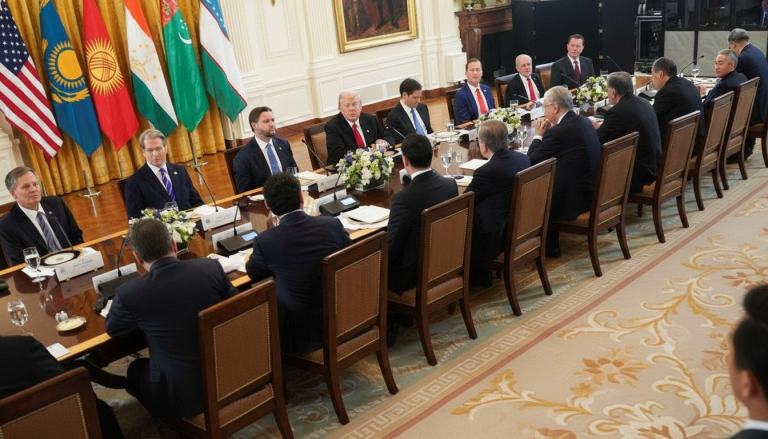
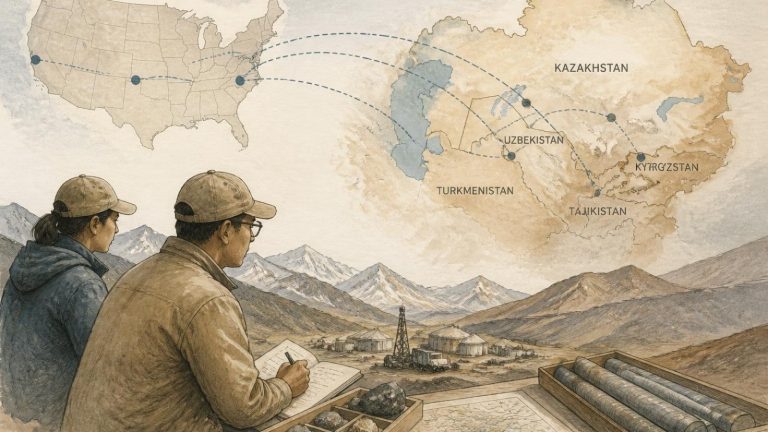
    The C5+1 summit held in Washington on November 6, 2025, marks a new chapter in U.S.–Central Asia relations, shifting the focus from energy pipelines to strategic mineral resources. Rare earth elements are now central to Washington’s strategy against China, which dominates mining and processing globally.

    Recent agreements—highlighted by substantial investments in Kazakhstan’s tungsten mines and commitments to Uzbekistan—illustrate a strategy that blends economic aims with national security, defense modernization, and leadership in green technologies. By partnering with Kazakhstan, Uzbekistan, and Turkmenistan, the U.S. seeks to counter China’s and Russia’s longstanding influence, establishing a “new resource-centered” framework for engagement. Rare earths are becoming tools of strategic power, supplanting traditional energy diplomacy and strengthening supply chains for renewable energy.

    This shift extends beyond resource access; mining investments are shaping political, economic, and diplomatic orientations across Central Asia, challenging China’s Belt and Road Initiative through economic means. The U.S. approach converts energy diplomacy into “mining diplomacy,” turning Central Asia into a global geo-economic crossroads.

    America’s renewed focus reflects a broader repositioning—building “strategic balancing” structures rather than pursuing mere economic or military dominance. The C5+1 format has become the central mechanism for promoting a model of regional integration that excludes Russia and China, offering a “third way” rooted in soft power, sustainable development, and technological partnerships.

    Strengthening transport routes like the Trans-Caspian corridor aims to liberate Central Asia from Russia’s logistical grip and curtail China’s influence over the Middle Corridor. Moscow and Beijing view these moves as containment strategies, intensifying geopolitical competition while granting Central Asian states greater autonomy through multilateral diplomacy.

    Ultimately, America’s strategy is about establishing a new Eurasian power architecture. Its success will depend on delivering sustainable investments and on Central Asian states maintaining independent balancing acts amid great-power competition.

  • Central Asia’s Green Energy Revolution: Unveiling Turkmenistan’s Potential

    Central Asia’s Green Energy Revolution: Unveiling Turkmenistan’s Potential

    Central Asia is experiencing a surge in green energy investments, with recent weeks marking a significant turning point in the region’s renewable energy landscape. ACWA Power, a prominent Saudi Arabian energy company, made headlines in early March by announcing plans to invest in two wind power plants in Uzbekistan’s Karakalpakstan and Bukhara regions, totaling over 1GW of power capacity. Following suit, Kazakhstan inked agreements for 1GW of wind power development in its Jetisu region, signaling a concerted effort towards sustainable energy initiatives.

    However, it’s the realm of critical raw materials that has garnered the most attention in Central Asia’s green energy transition. Kazakhstan, hailed as a lithium powerhouse, secured agreements worth $500 million from German stakeholders for lithium extraction, with keen interest also emanating from South Korea and China. These investments underscore the pivotal role of the extractives industry in facilitating the global shift towards renewable energy sources and energy storage solutions.

    While Kazakhstan takes center stage, neighboring Turkmenistan emerges as a potential powerhouse in the green energy ecosystem. Acknowledging its rich reserves not only in oil and gas but also in renewables, Turkmenistan is positioning itself as a key player in the transition towards sustainable energy. The recent Turkmen Investment Forum in Paris highlights the nation’s efforts to attract international attention and investment, signaling its readiness to follow Kazakhstan’s trajectory in resource development.

    Despite Turkmenistan’s vast potential, challenges persist, particularly regarding the lack of comprehensive data on reserves, posing risks to investors and hindering investment opportunities. However, Western Turkmenistan, notably the Karabogazgol Bay area, shows promising signs of abundant lithium deposits, along with substantial reserves of iron, copper, and rare earth metals. Geological formations in Southern Turkmenistan also hold significant potential for copper and rare earth materials, essential for electricity grids and digital technologies.

    Approach Recommendations – Stakeholder Map: To unlock Turkmenistan’s potential as a champion in renewable energy and digital materials, several policy recommendations are proposed:

    • Align regulatory frameworks for non-fuel mining with hydrocarbons mining to streamline permit procedures and encourage long-term leasing options.
    • Foster international collaboration with neighboring countries like Uzbekistan and Afghanistan to leverage shared geological formations for critical raw materials.
    • Establish financing mechanisms for sustainable development projects, such as green bonds, to attract investments aligned with economic, environmental, and societal goals.
    • Develop a transparent database of Turkmenistan’s mineral reserves accessible to investors and scientific explorers to enhance investment transparency and promote informed decision-making.
  • C5+1 Critical Minerals Dialogue with Central Asian countries

    C5+1 Critical Minerals Dialogue with Central Asian countries

    U.S. President Joe Biden met with the leaders of Kazakhstan, Kyrgyzstan, Tajikistan, Turkmenistan, and Uzbekistan at the United Nations General Assembly on 19 September 2023.

    Perhaps the most surprising point of discussion was the proposed launch of a C5+1 Critical Minerals Dialogue. Critical minerals like chromium, copper, and lithium are needed for manufacturing clean energy technology.

    Central Asian countries – especially Kazakhstan and Uzbekistan – have great potential to leverage their mineral resource bases for geopolitical gain, especially as the United States is eager to shed its dependence on China for minerals. China currently dominates the global critical minerals market, and it is the largest source of imports to the U.S. for 26 critical minerals. A C5+1 dialogue focused just on mineral wealth stands to be mutually beneficial for all participants.

    “We are committed to deepening cooperation to develop the capacity to meet growing global clean energy demands, including by potentially providing the world with safe, secure, and sustainable nuclear fuel supplies.  Our attention to energy security in the region includes building diverse, resilient, and secure critical minerals supply chains; developing new technologies for the extraction and processing of raw materials; and adding value through regional industrial cooperation to reduce strategic dependencies and meet our respective economic, energy security, and climate goals.  Demand for critical minerals, which are essential for clean energy and other technologies, will expand significantly in the coming decades.  To further develop Central Asia’s vast mineral wealth and advance critical minerals security, we will launch a C5+1 Critical Minerals Dialogue.  It will provide a forum in which the C5+1 can share information about critical minerals challenges and opportunities, promote connections between government officials and private sector industry, catalyze investment, and collaborate on critical minerals supply chains.”

    However, it’s not a done deal yet. Biden noted only that “we are also discussing the potential for a new critical minerals dialogue.” Given the importance China also attaches to the critical minerals sector, close cooperation with the United States may be politically difficult for Central Asian states.

  • The President of Turkmenistan demanded to increase the effectiveness of exploration work

    The President of Turkmenistan demanded to increase the effectiveness of exploration work

    President Serdar Berdimuhamedov demanded to increase the effectiveness of exploration work of the State Corporation “Turkmengeology”. Relevant instructions were given to the Deputy Prime Minister for the fuel and energy complex of Turkmenistan Batyr Amanov on Friday at a meeting of the Cabinet of Ministers, the Neutral Turkmenistan newspaper reports today.

    The head of state noted that ensuring stable productive activity in the oil and gas sector is directly related to the modernization of its infrastructure on an innovative basis, the introduction of modern resource-saving technologies into the industry.

    President Serdar Berdimuhamedov instructed to continue comprehensive work on the accelerated industrial development of new promising areas, as well as to increase the effectiveness of exploration work of the State Corporation “Turkmengeology”, having addressed a number of specific instructions in this regard.

  • Turkmen hydrogeologists completed drilling work by 120%

    Turkmen hydrogeologists completed drilling work by 120%

    According to the results of the first half of 2023, specialists of the Dashoguz hydrogeological expedition of the State Corporation “Turkmengeology” completed the drilling plan by 120%. This was reported by the online edition “Turkmenistan: Golden Age”.

    Specialists carry out work to search for underground aquifers, clarify reserves, study the structure, quality and chemical composition, analyze groundwater and carry out geoecological images.

    Water quality was studied in Agzybirlik, Ak Altyn, Täze Zaman, Gyzyl takyr, Ak bugdaý geneshliks of Akdepe etrap, Guwanç Atamedow of Boldumsaz etrap. The enterprise provided the Zähmet geneshlik of Akdepe etrap with drinking water. Work is being carried out in different directions along the Altyn Asyr Lake and in the territory adjacent to the reservoir.