Tag: titanium

  • Europe Faces Challenges in Reducing Reliance on Russian Titanium

    Europe Faces Challenges in Reducing Reliance on Russian Titanium

    In the wake of Western sanctions against Russia, European policymakers are grappling with the continent’s heavy dependence on Russian-produced titanium, a critical material for the aerospace industry.

    Despite banning or restricting imports of other Russian metals, Europe has yet to take similar action on titanium. This is largely due to the aerospace sector’s significant reliance on supplies from VSMPO-AVISMA, the world’s largest integrated titanium producer, which is based in Russia.

    The issue came to the fore earlier this year when Canada imposed sanctions on VSMPO-AVISMA, prompting a personal intervention by French President Emmanuel Macron to secure waivers for European aerospace firms like Airbus. This underscores Europe’s continued vulnerability to potential Russian retaliation through titanium export restrictions.

    Titanium’s Importance to Aerospace
    Titanium is highly prized in the aerospace industry for its unique properties – it is lightweight, incredibly strong, has a high melting point and is corrosion resistant. It is a crucial material used in aircraft engines, landing gear and fuselage.

    However, the supply of aerospace-grade titanium is limited, as only a handful of producers globally can meet the stringent purity and quality standards required. Prior to the 2022 Ukraine invasion, VSMPO-AVISMA was estimated to have supplied up to a third of the global aviation sector’s titanium needs.

    Europe’s Titanium Dependency
    Europe was the top destination for Russian titanium product exports in 2019, accounting for 45% of the total. Russian titanium, primarily in the form of wrought alloy for aviation, made up 16% of the EU’s imports that year.

    The problem for Europe is that it lacks domestic titanium sponge production, has limited ingot capacity, and virtually no recycling facilities. This leaves the continent heavily reliant on imports, swapping one dependency (Russia) for another (the United States).

    Transatlantic Recycling Loops
    Much of Europe’s titanium scrap is currently processed in the US, where it is used alongside imported Japanese sponge to produce aerospace-grade alloys. This “transatlantic loop” effectively locks Europe into an asymmetric relationship with US suppliers, discouraging investments in domestic recycling capacity.

    Potential Solutions
    Experts argue that Europe’s best short-term solution is to re-shore its scrap processing capabilities, reducing reliance on US suppliers. However, this will require navigating the interests of European aerospace firms and the leverage of their American counterparts.

    Longer-term, integrating Ukraine’s titanium sponge production into the European supply chain could help, but the timeline for this is uncertain. The EU’s Critical Raw Materials Act also sets ambitious targets for domestic extraction, processing and recycling of critical minerals like titanium by 2030 – goals that Europe is currently far from achieving.

    Ultimately, breaking free of Russia’s titanium grip and reducing Europe’s strategic dependencies will require a concerted, multi-pronged effort by policymakers and industry. The stakes are high, as the aerospace sector’s competitiveness and resilience hang in the balance.

  • Putin Suggests Limiting Exports of Uranium, Titanium, and Nickel in Response to Western Sanctions

    Putin Suggests Limiting Exports of Uranium, Titanium, and Nickel in Response to Western Sanctions

    On Wednesday, Russian President Vladimir Putin proposed that Moscow should consider imposing export restrictions on key commodities such as uranium, titanium, and nickel in response to Western sanctions. During a televised meeting with Prime Minister Mikhail Mishustin, Putin stated, “Please take a look at some of the types of goods that we supply to the world market… Maybe we should think about certain restrictions – uranium, titanium, nickel.”

    Russia ranks as the fourth largest uranium producer globally, according to the World Nuclear Association. This suggestion follows U.S. President Joe Biden’s recent signing of a law that bans the import of enriched uranium from Russia, a trade valued at approximately $1 billion annually.

    In 2023, the United States and China were the largest importers of Russian uranium, followed by South Korea, France, Kazakhstan, and Germany. Additionally, Russia holds the position of the world’s third largest titanium sponge producer, a material used in the aerospace, marine, and automotive industries, despite having limited domestic titanium reserves. Russia’s Nornickel is also the leading producer of refined nickel worldwide.


  • Horizon Europe Awards €7.3 Million Grant to REPTiS Project for Sustainable Titanium Production

    Horizon Europe Awards €7.3 Million Grant to REPTiS Project for Sustainable Titanium Production

    The Horizon Europe program has allocated a four-year €7.3 million grant under the Resilient Value Chains 2024initiative to the REPTiS project (Responsible Extraction and Processing of Titanium and other Primary Raw Materials for Sourcing EU Industrial Value Chains and Strategic Sectors). The project includes participation from Ukraine’s Velta LLC, the Velta RD Titan Research and Development Center, and 11 leading European companies and research institutes.

    Europe is currently grappling with challenges in the titanium market, such as securing a sustainable supply chain and developing low-carbon production technologies. The REPTiS project aims to tackle these issues by demonstrating innovative solutions for extracting and processing critical titanium raw materials. This involves mining ilmenite ore at Ukraine’s Byrzulivske deposit, producing low-carbon titanium powder using the Ukrainian-developed Velta Ti Process, and manufacturing final products with advanced technologies like 3D printing and Metal Injection Molding.

    Andriy Brodsky, CEO of Velta, highlighted the significance of the project, stating, “The substantial funding for our consortium project underscores the EU’s recognition of Ukraine as a strategic partner—one capable of establishing a secure titanium supply chain from raw materials to final titanium products, which are critical globally.”

    The consortium, composed of European companies and research institutes, will focus on several key areas:

    • Energy Efficiency and Environmental Impact: Implementing new approaches to reduce energy consumption and environmental impact during titanium production at Velta’s mining facilities in Ukraine.
    • Advanced Titanium Powder Production: Showcasing cutting-edge titanium powder production technologies at the Velta RD Titan research center, including waste recycling and powder spheroidization through the Velta Ti Process.
    • Final Product Manufacturing: Producing and testing various final products, including aircraft components, medical implants, and watch casings, from Ukrainian titanium powder.

    Additionally, a comprehensive Life Cycle Assessment (LCA) will be conducted, evaluating the environmental efficiency of the improvements made under the REPTiS project, particularly the Velta Ti Process, compared to traditional titanium extraction and production methods.

  • Russian Titanium Tycoon Tied to Rostec Aims to Seize Ukrainian Plant

    Russian Titanium Tycoon Tied to Rostec Aims to Seize Ukrainian Plant

    According to Ukrainian media reports, a swiss based Russian titanium trader named Dmitry Raikhelson, who has alleged connections to the state-owned Rostec corporation, is making moves to take over the Zaporizhzhia Titanium & Magnesium Plant (ZTMKP) in Russian-occupied parts of Ukraine.

    The ZTMKP is one of the largest titanium producers in Europe and a key strategic asset for Ukraine’s metallurgical industry. However, its operations have been disrupted by the ongoing Russo-Ukrainian war raging in the regions where the plant is located.

    Raikhelson controls the Swiss-based Interlink Metals & Chemical. Established in 1992, Interlink Metals & Chemicals has developed into one of the world’s largest distributors, traders and users of various titanium products. Raikhelson purportedly sees an opportunity to gain control over ZTMKP’s facilities and resources by leveraging his ties to Rostec, the massive Russian state conglomerate that owns companies across diverse sectors like defence, metallurgy and automotive.

    Ukraine’s government has accused Rostec of involvement in looting and asset-stripping Ukrainian companies in occupied territories. Taking over ZTMKP would be a major prize for Raikhelson and his Russian backers, cementing their grip over a crucial titanium supply source.

    Ukrainian officials are raising alarms about these efforts, which they view as illegal attempts to seize sovereign Ukrainian property and resources during the war. They have vowed to resist such moves and defend the integrity of strategic national assets like ZTMKP.

    The tussle over ZTMKP reflects how Russia’s invasion has turned into a broader economic conflict, with battles being waged over control of key industrial assets and resource flows in addition to territory. Ukraine will need to stay vigilant against such incursions into its corporate landscape as it fights to repel the Russian offensive on multiple fronts.

    For reference.

    For a long time, the owner and director of Interlink Metals & Chemicals AG was businessman Igor Raichelsen, who was born in Leningrad but currently resides in the USA and Russia. Today, however, the beneficiary of the Swiss company Interlink Metals & Chemicals AG is Igor’s 30-year-old wife, Yekaterina Astashova, while Christian Fluri serves as the nominal director of the American subsidiary, Interlink Metals & Chemicals Inc., which is headed by Joshua Raichelsen, Igor’s son.

  • President of Kazakhstan Tokayev visited a strategically important titanium industry enterprise

    President of Kazakhstan Tokayev visited a strategically important titanium industry enterprise

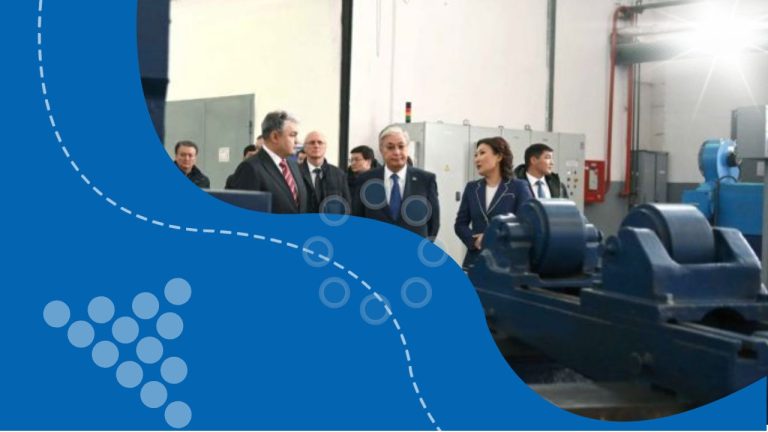
    The President visited the Ust-Kamenogorsk titanium-magnesium plant which is exporting its products to aerospace, shipbuilding and other industries around the world. t

    The President was informed about the current state of production and plans for further development of this enterprise. The plant is one of the leading titanium producers in the world, performing all stages of production – from the extraction of raw materials to the production of finished products. The plant’s products are certified by several global manufacturers and are exported to various countries, including the USA, Great Britain, France, China and others. The plant also plans to carry out 25 investment projects worth 207 billion tenge in the coming decades. The head of state visited the production shops and spoke with the plant’s employees, expressing his wishes for success in their work.

  • Owner of non-ferrous ore: to which countries does Kazakhstan sell titanium and aluminum. Infographics

    Owner of non-ferrous ore: to which countries does Kazakhstan sell titanium and aluminum. Infographics

    Kazakhstan has reduced sales of all types of non-ferrous metals abroad,  LS reports .

    Over the 11 months of 2023, 364.4 thousand tons of copper were exported from the country . This is 12.6% less than for the same period in 2022. Kazakhstan earned $2.9 billion from the export of this metal.

    The main buyer, China, reduced purchase volumes by 16.3%, to 216.4 thousand tons ($1.7 billion).

    Exports to Georgia also decreased by 2.4 times (16.8 thousand tons), the UK – by 1.8 times (6.6 thousand tons) and the UAE – by five times (4.8 thousand tons).

    At the same time, more copper was sold to Turkey by 1.6 times (106.8 thousand tons), to Latvia – by 155.7 times (10 thousand tons).

    Aluminum supplies abroad decreased by 13.4%, to 206.7 thousand tons, or $527 million.

    It was purchased by: Turkey – 62.6 thousand tons (+1.9 times), Azerbaijan – 55.8 thousand tons (+903 times), Uzbekistan – 25.6 thousand tons (-33%), Georgia – 17 .9 thousand tons (-2.7 times), Russia – 11.7 thousand tons (-19.6%) and Japan – 5.5 thousand tons (+1.7 times).

    Kazakhstan also reduced zinc exports  by 8.5%, to 213.7 thousand tons ($551.6 million).

    A reduction is observed in supplies to Russia – by 1.8 times (29.3 thousand tons), Turkey – by two times (43.9 thousand tons), the Netherlands – by 39.7 times (782.5 tons) and Uzbekistan – 4.4 times (45.6 tons).

    But Vietnam (41.4 thousand tons) and China (98.2 thousand tons) increased the purchase of zinc by 3.2 times and 6.1 times, respectively.

    Sales of lead fell by 9.4% (72.7 thousand tons). he was taken to Turkey, Vietnam, Poland, China, Singapore and Russia.

    Titanium exports decreased by 17%, to 11.9 thousand tons. Buying countries are France, Belgium, South Korea, USA, Italy and Great Britain.

    More detailed information on sales of non-ferrous metals is presented in the infographic.

  • Ukrainian titanium leader Velta retains Hatch to design new US manufacturing facility

    Ukrainian titanium leader Velta retains Hatch to design new US manufacturing facility

    “This new partnership brings Velta one step closer to bringing our revolutionary titanium powder technology to the US market, which is dangerously over-reliant on foreign supply chains,” Velta chief executive officer Andriy Brodsky said. “Hatch’s expertise in optimizing metallurgical facility design and operation will help Velta meet the enormous, unmet US demand for quality titanium. We’re ready to get to work.”

    Velta is currently engaged in an intensive site selection process. The facility Hatch has been retained to help design will become one of only a small number of US facilities producing titanium after decades of declining domestic production. The capacity of the new facility is being designed to produce upwards of 1,000 tonnes of titanium powder per annum with the potential to scale.

    Hatch is an engineering and project implementation consultancy with experience in various metal and minerals projects, including various TiO2 projects globally.

  • Ukraine: titanium ore exports down in January-August 2023

    Ukraine: titanium ore exports down in January-August 2023

    In January-August, Ukraine decreased exports of titanium-containing ore and concentrate by 96.4% YoY, to 7.83 million tons. Revenue fell by 84.8%, to $13.14 million. According to the State Customs Service, the main customers were Turkey (33.81% in monetary terms), Japan (24.43%) and India (7.76%). Ukraine did not import the products in the period. (Ukrainian metal)