Tag: Talga Group

  • Sweden Approves Zoning Plan for Nunasvaara South Graphite Mine Near Kiruna

    Sweden Approves Zoning Plan for Nunasvaara South Graphite Mine Near Kiruna

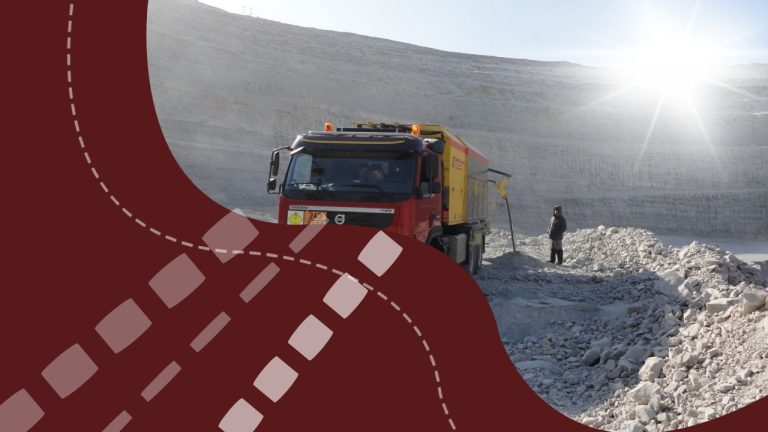
    Sweden has approved a zoning plan for the Nunasvaara South graphite mine near Kiruna, marking an important step in the country’s efforts to accelerate the development of domestic mining projects and strengthen Europe’s access to critical raw materials.

    The project is operated by Talga Group and is expected to produce about 100,000 metric tons of graphite ore annually. This output will be processed into roughly 20,000 tons of battery-grade anode material, primarily for use in electric vehicles and energy storage systems.

    Deputy Prime Minister Ebba Busch said the decision reflects Sweden’s strategic position within Europe’s critical minerals supply chain. She stressed that graphite plays a key role in steelmaking, battery production, and automotive manufacturing, adding that Swedish mining standards rank among the most sustainable globally.

    The decision aligns with the European Union’s broader strategy to expand domestic production of critical minerals and reduce dependence on imports from China and other suppliers, amid rising geopolitical tensions.

    Talga said it is currently focused on building its graphite processing facility in Luleå and expects mining operations at Vittangi to begin around 2029. According to company representatives, the zoning approval removes the most significant regulatory barrier, although several minor permits are still required before production can commence.

    Once operational, the Nunasvaara South mine is expected to supply around 2% of Europe’s projected graphite demand by 2030, with potential to scale up output in the future.

    Sweden is home to a wide range of mineral resources essential for green technologies, including batteries, magnets, telecommunications equipment, and defence applications. The country’s largest mining initiative is state-owned LKAB’s Per Geijer iron ore and rare earths project near Kiruna, which was designated a Strategic Project by the EU in 2025.

  • Talga’s Swedish Graphite Mine Gets Final Green Light, Bolstering EU’s Battery Supply Chain

    Talga’s Swedish Graphite Mine Gets Final Green Light, Bolstering EU’s Battery Supply Chain

    Australia’s Talga Group (ASX: TLG) has secured full regulatory approval to begin development of its Nunasvaara South graphite mine in northern Sweden, after the country’s government officially dismissed all remaining appeals against the exploitation concession.

    The decision marks the end of a long and turbulent permitting process, unlocking Talga’s broader Vittangi anode project, which integrates the newly approved mine with its previously permitted Luleå anode refinery. Together, these form one of Europe’s most advanced vertically integrated graphite projects.

    “Today validates years of dedication,” said Talga founder and managing director Mark Thompson, calling the milestone a major step in the company’s ambitions to supply Europe’s growing battery market.

    Sweden’s Energy, Business and Industry Minister Ebba Busch also welcomed the news, stating: “The graphite that Talga is planning to produce is a key material in battery manufacturing and the green transition to a fossil-fuel free society.”

    The announcement triggered a strong market reaction, sending Talga shares up 20% on Thursday to A48 cents, and lifting its market capitalization to A$216 million (approx. $140 million).

    A rough permitting journey
    The path to approval was far from smooth. After obtaining environmental and Natura 2000 permits in April 2023, Talga faced a string of legal challenges from environmental groups. While Sweden’s Land and Environment Court of Appeal upheld the permits, opponents took the case to the Supreme Court, which declined to hear it in October 2024.

    A final appeal against the exploitation concession was filed in December 2024, delaying the project again. This week’s rejection of that challenge by Sweden’s Ministry of Climate and Enterprise officially clears the way for development.

    Strategic timing for Europe
    Talga’s mine arrives just as European battery gigafactory capacity is surging, with demand for graphite anodes projected to rise from 30,000 tonnes in 2023 to over 500,000 tonnes annually by 2030. Currently, China controls 84% of global graphite processing, and Talga’s project is seen as a key move to reduce the bloc’s dependency on foreign supply.

    The EU has recognized the strategic importance of Talga’s project, awarding it a €70 million grant via the Innovation Fund, and naming it a strategic initiative under both the Critical Raw Materials Act and the Net-Zero Industry Act.

    Each 10,000 tonnes of locally produced graphite is expected to reduce the EU’s foreign mineral dependency by 7%, making this not just a commercial success for Talga, but a major geopolitical win for Europe’s green transition.

  • Talga Group’s Swedish Graphite Project Earns “Strategic Project” Status Under EU’s Raw Materials Act

    Talga Group’s Swedish Graphite Project Earns “Strategic Project” Status Under EU’s Raw Materials Act

    Stockholm, Sweden – Talga Group has announced a significant milestone: its Swedish graphite project has been designated a “Strategic Project” under the European Commission’s newly enacted Critical Raw Materials Act (CRMA). This designation underscores the project’s crucial role in securing Europe’s supply of essential materials for its green and digital transitions.

    Talga Group Ltd (ASX:TLG), a battery materials and technology company, has achieved a significant milestone with its natural graphite mine in northern Sweden receiving “Strategic Project” status under the European Commission’s Critical Raw Materials (CRM) Act.

    This designation is a major endorsement of the project’s strategic importance in securing Europe’s battery material supply chain, and is expected to significantly accelerate Talga’s efforts to finalize project financing and development.

    The CRM Act, designed to enhance the EU’s autonomy in critical raw materials vital for clean energy technologies, offers Strategic Projects a range of benefits. For Talga, this includes:

    • Improved Access to Financing: A dedicated subgroup within the CRM Board will coordinate EU, national, private, and public financial institutions to facilitate project financing.
    • Enhanced Appeal to Partners and Customers: The designation strengthens Talga’s position in ongoing discussions with debt providers, strategic investors, customers, and government-backed funding programs.
    • Expedited Permitting: Streamlined approvals will reduce project timelines and mitigate risks.

    “The Strategic Project status validates Talga’s natural graphite mine and our vital role in sustainable battery materials,” stated Martin Phillips, CEO of Talga Group. “Graphite is critical to the lithium-ion battery industry, and increased EU capacity to extract and produce battery-grade graphite is essential for Europe’s resilience and competitiveness. We look forward to engaging with new opportunities under the CRMA to deliver Europe’s first fully integrated active anode supply.”

    Talga’s Vittangi Anode Project aims to produce 19,500 tonnes per annum of Talnode®-C, a natural graphite battery anode material sourced from Talga’s wholly-owned graphite resources in Sweden. The project boasts a low emission footprint, vertical integration from mine to anode, and a resource base capable of supporting expansion to over 100,000 tonnes per annum.

    The Company is actively pursuing customer offtake agreements and project financing structures as it progresses towards a Final Investment Decision. This “Strategic Project” status significantly strengthens Talga’s position in the European battery materials market and underscores its crucial role in the region’s transition to sustainable energy.

    Mark Thompson, Founder & Managing Director of Talga Group Ltd commented, “This designation is a testament to the strategic importance of our Swedish project in securing a sustainable and reliable supply of graphite for Europe. We are committed to contributing to the EU’s ambitious green transition goals.”

    Adding to the excitement, he also revealed that they are embarking on a series of meetings focused on securing new funding opportunities, engaging with potential customers, and exploring the onshoring of EU battery materials. “I am on a plane tomorrow for a range of meets including new funding opportunities, new customers and onshoring of EU battery materials!”.

    This news comes at a crucial time as Europe intensifies its efforts to reduce reliance on foreign suppliers for critical raw materials and build a robust domestic battery supply chain. Talga’s “Strategic Project” status is expected to accelerate the development and implementation of their Swedish graphite operation, contributing significantly to the EU’s strategic autonomy and sustainability goals.

  • Talga Group Secures 25-Year Graphite Mining Concession in Sweden

    Talga Group Secures 25-Year Graphite Mining Concession in Sweden

    Talga Group (TLG.AX) has been granted the exploitation concession for its Nunasvaara South graphite mine in Sweden, allowing the company to begin mining activities in the region for an initial 25-year period, with the possibility of extending the concession. This milestone highlights Sweden’s status as a favorable mining jurisdiction where projects can obtain permits.

    The company is now focused on reaching its Final Investment Decision (FID), which depends on securing the remaining key mine permits and additional offtake agreements. Once the decision is made to proceed with construction, Talga expects the mine’s development to take 18-24 months, including the commissioning phase.

  • SQM and Talga Group Partner to Develop Sweden’s Aero Lithium Project

    SQM and Talga Group Partner to Develop Sweden’s Aero Lithium Project

    SQM (NYSE: SQM), the world’s second largest lithium producer, has signed an earn-in agreement with Talga Group(ASX: TLG), a company specializing in battery anode and advanced materials, to jointly advance the Aero lithium project in northern Sweden. Under this agreement, the Chilean lithium miner can earn up to a 70% interest in Aero by funding up to $19 million in exploration spending over a seven-year period.

    Talga will maintain all rights and obligations over graphite minerals at Aero and will receive a management fee for each stage of the earn-in deal. Additionally, Talga will be awarded a “success fee” if a decision to mine is made. Mark Thompson, managing director of Talga, expressed that collaborating with SQM presents an opportunity to build a European lithium supply center. “As one of the few potentially large-scale lithium hard rock opportunities in Europe, Aero might be significant to the region’s battery and electric vehicle industry,” Thompson said.

    Once the earn-in period concludes, both parties must contribute to further expenditures proportionate to their ownership stakes or face dilution. SQM International Lithium division CEO, Mark Fones, stated that the deal with Talga aligns with SQM’s strategy to build a global and competitive lithium asset portfolio. “Expanding into new and promising jurisdictions, such as Sweden, has been a strategic goal for us, and partnering with Talga, who has demonstrated expertise in the region, further enhances this achievement,” Fones noted.

    SQM’s expansion efforts began about three years ago, initially targeting Australia. In July, SQM reached an earn-in deal with Tambourah Metals (ASX: TMB) for the Julimar North project in Western Australia. Subsequently, SQM acquired a 30% interest in Australia’s Pirra Lithium, with an option to increase its stake to 40%. SQM also formed a partnership with Hancock Prospecting, owned by Australia’s richest person, Gina Rinehart, for the Azure’s Andover project.

    In addition to international ventures, SQM holds a 50/50 interest with Wesfarmers in the Mt. Holland lithium mine in Western Australia, which commenced operations in March. This operation is expected to produce enough lithium hydroxide to power nearly one million new electric vehicles annually for fifty years.

    Domestically, SQM has expanded its lithium carbonate capacity, aiming to produce 210,000 tonnes this year and 240,000 tonnes by 2025, with a target of 305,000 tonnes of lithium carbonate equivalent by then. The company recently signed an agreement with copper giant Codelco, granting the state-run miner a majority share in the new partnership while extending SQM’s lease in the Atacama salt flats through 2060.