Tag: sustainable development

  • IMC Montan at Minex Kazakhstan 2026: An Expert Perspective on Industry Challenges

    IMC Montan at Minex Kazakhstan 2026: An Expert Perspective on Industry Challenges

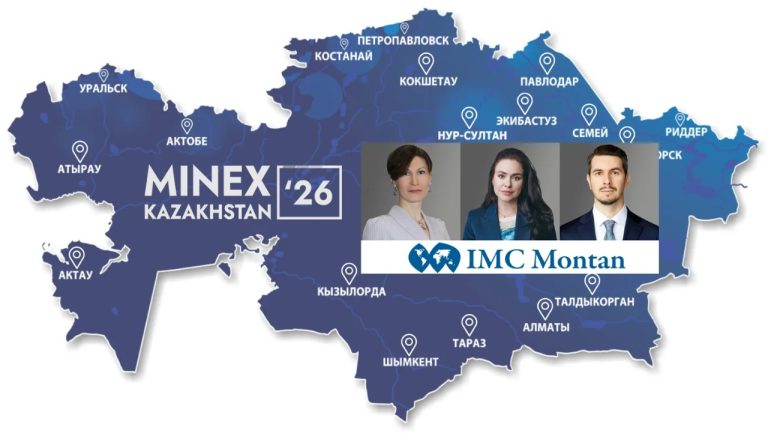
    This year, IMC Montan is co-organizing the session “ESG Transformation and the ‘Social License’ in Kazakhstan’s Mining Sector” at the Minex Kazakhstan forum. The company’s experts explain why the ESG agenda is becoming not just a trend, but an economic necessity.

    IMC Montan’s decision to co-organize a session dedicated to sustainable development is driven by the times. Kazakhstan has reached the point of regulatory implementation of ESG principles for business. Previously, this agenda was the prerogative of companies traditionally following international trends and seeking to meet investor or partner requirements. Now, ESG in Kazakhstan is actively developing not only due to external conditions. The mining sector is one of the most sensitive to ESG factors, so sharing experience on this topic will be valuable for all forum participants.

    What issues in this area do you consider most relevant for subsoil users today?

    When it comes to broad issues that go beyond national legislation and form part of sustainable development principles and the application of best available technologies, key topics include mining waste management, energy efficiency, rational water use, and biodiversity conservation. Closure and reclamation aspects deserve special mention. We are confident that forum participants will be interested in unconventional case studies addressing these issues. For example, relatively few experts have real hands-on experience with closure and reclamation works — yet these activities have a significant impact on the overall project economics, and underestimating these costs can become a critical factor. Environmental responsibility is playing an increasingly important role for business, and companies want to see financial benefits or preferences from implementing their environmental policies. The current agenda for subsoil users is therefore focused on asset lifecycle management: from waste handling during operations to post-investment assessment of closure and reclamation obligations.

    You mentioned the topic of mining and processing waste management. Could you share some interesting case studies?

    Mining companies must think carefully about where and how their large-tonnage mineral waste (overburden, processing tailings) will be handled. The main challenge is the sheer volume generated — conventional surface disposal requires significant land areas. The situation is further complicated by the conditions at mine sites: difficult terrain, proximity to populated areas, or the presence of environmentally or socially significant features. Naturally, subsoil users are interested in finding alternative approaches. There is also growing interest in recovering valuable components from mining waste and using waste as construction material or as a component thereof.

    However, waste disposal remains one of the most painful issues, as it is not only an environmental concern but equally an economic and land-property one. The most interesting case studies sit at the intersection of technological and legal solutions. Successful examples show that waste can be not just a financial burden, but a resource — if the rationale and documentation can be structured in line with circular economy principles.

    In our practice, we have encountered a number of innovative solutions. For example, placing tailings in exhausted open-pit voids (with or without prior waterproofing), or producing a specialized material from tailings (a recultivant) for backfilling mined-out areas — treating it not as waste disposal but as product manufacturing. Such unconventional approaches naturally require robust environmental safety justifications, but they open new opportunities. Both tailings management approaches yielded a tangible economic effect (in the range of $27–50 million USD), while requiring careful review of the legal framework and regulatory outlook to eliminate critical administrative risks — not just fines, but potential production shutdowns.

    An important regulatory stimulus emerged in Kazakhstan at the beginning of 2026 with the adoption of the “Concept for Managing All Types of Waste in the Republic of Kazakhstan for 2026–2030.” Waste management in the mining and metallurgical industries is identified as one of its strategic priorities. The planned development of the country’s regulatory framework regarding the utilization of mining waste (including as technogenic mineral formations) provides an additional incentive for subsoil users to seek optimal solutions.

    You separately mentioned closure and reclamation. In your view, what practical challenges do subsoil users face when fulfilling their closure and reclamation obligations?

    In our view, the main problem is a lack of understanding of the goals and principles of successful reclamation, which ultimately leads to ineffective solutions. In our practice, we frequently encounter “template” approaches to reclamation planning, and consequently, an underestimation of the associated costs. International practice has long established the core criteria for successful reclamation — environmental (such as site safety in terms of physical, geochemical and ecological parameters, protection of public health and safety, absence of water pollution post-closure, and ecological system integrity) and social (minimizing socioeconomic impacts of closure and generating socioeconomic benefits). Closure and reclamation plans should be developed as early as possible in the project design phase. Each of the mentioned criteria requires consideration during planning. Issues such as the adequacy of mine water management measures, forecasting the geochemical stability of waste dumps post-closure, and stakeholder engagement must be studied and solutions justified.

    In Kazakhstan, subsoil users are required to prepare reclamation plans at the design stage — however, in our observation, such plans tend to be formal documents rather than strategic ones. This can ultimately lead to insufficient financial provision for the required scope of reclamation and closure works when the time comes. That said, effective measures do not always mean costly ones. Some decisions made during overall production planning can reduce closure costs — such as the previously mentioned option of placing tailings in open pits, or accounting for the potential formation of acid drainage and managing it during waste rock stockpiling.

    Turning to the topic of international standards — in your personal view, can their implementation bring real benefits to business?

    Absolutely. Drawing on our practical experience working with industry enterprises across the CIS, we can confidently speak not just of benefits, but of the strategic necessity of implementing international standards. Integrating ESG principles enables a meaningful restructuring of risk management systems. We observe how chaotic responses to environmental and social incidents at many enterprises are being replaced by a systematic approach to predictive analysis and prevention. Standards also act as a catalyst for corporate culture: there is a marked increase in business accountability at all levels, which directly affects companies’ reputational assets.

    It is telling that the initiative most often comes from environmental protection departments — as those most attuned to regulatory changes. However, we have recently noted growing engagement from senior management as well. It is no secret that the cost of using natural resources is steadily rising — and the cost of environmental mistakes is rising even faster.

    Kazakhstan is now at a unique juncture: accumulated experience and current demand from both the state and the market are creating the conditions for a qualitative leap in eco-social responsibility.

    We have discussed challenges, unconventional solutions, economic effects and regulatory changes in the ESG space. What other areas of work — in this or other fields important to subsoil users — can IMC Montan’s experts shed light on?

    IMC Montan has been supporting mining projects for many years, including in the areas of environmental management, sustainable development and risk management. Our accumulated experience — spanning more than 1,000 completed projects worldwide — has allowed us to develop a comprehensive understanding of existing challenges and an expert approach to risk mitigation and overall project management. At the session, we will share illustrative case studies, present quantitative and qualitative characteristics of the approaches being implemented in natural resource management, and do our best to make the meeting both engaging and useful. Information about session participants and discussion topics is available at: https://2026.minexkazakhstan.com/ru/forum-agenda/tehnicheskaya-sessiya-2/

  • Kyrgyzstan Unveils Critical Minerals Strategy at MINEX Eurasia Conference in London

    Kyrgyzstan Unveils Critical Minerals Strategy at MINEX Eurasia Conference in London

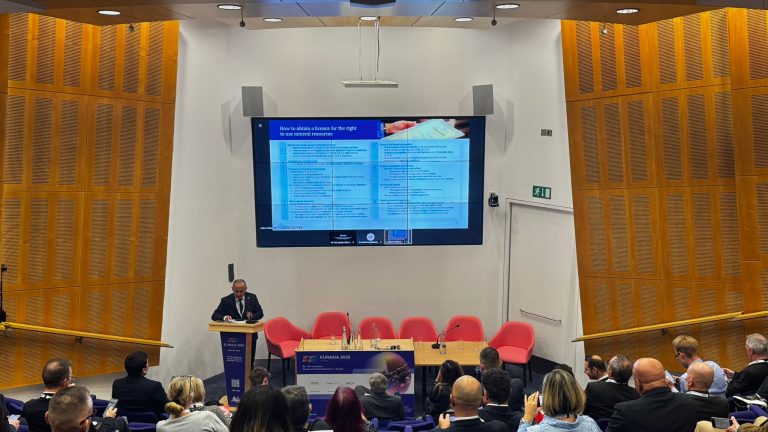
    London, 1 December 2025 – The MINEX Eurasia conference in London hosted a keynote address by H.E. Meder Mashiev, Minister of Natural Resources, Ecology, and Technical Supervision of Kyrgyzstan, outlining the country’s strategic vision for its critical minerals sector.

    Kyrgyzstan’s Strategic Minerals Vision

    The Minister outlined Kyrgyzstan’s methodical approach to prioritising and developing its critical minerals sector, identifying 21 key minerals based on global demand, local deposits, and resource concentrations. Kyrgyzstan’s analysis resulted in the selection of 4 priority projects, 5 promising deposits, and 16 prospective areas for further study and development. These assets, spread across antimony, beryllium, rare earths, molybdenum, bismuth, zinc, silver, and others, offer significant commercial and strategic potential for investors and end-users in energy, electronics, and high-value manufacturing.

    Investment and Development Framework

    State companies, notably Kyrgyzgeology, are driving exploration and project development, supported by government incentives and openness to international partnership. Strategic sites are being actively promoted for joint ventures or direct investment. Major domestic and international firms manage several large sites, while more than 100 mining enterprises operate in the country—spanning gold, copper, and polymetallic ores.

    Tax and Licensing Regime

    The session detailed Kyrgyzstan’s tax policy, which includes a mix of one-time bonuses for mining rights, royalties, profit tax, and VAT. The overall effective tax burden stands between 25–30%, complemented by social and environmental levies such as waste disposal, emissions, and water usage fees. Procedures for subsoil use licensing are harmonized with those in neighbouring countries, with initiatives being considered to simplify the processes and make it more transparent.

    ESG, Transparency, and Sustainable Mining

    Kyrgyzstan’s evolving strategy strongly emphasizes environmental, social, and governance (ESG) standards, aiming to foster responsible mineral development, minimize ecological impact, ensure transparency, and maximize benefits for local communities. The new strategy promotes the deployment of advanced technologies, environmental sustainability, and transparent investment processes, aligning with best practices to attract reliable, long-term partners.

    Opportunities for International Partnership

    Kyrgyzstan welcomes active collaboration with global investors and mining enterprises, seeking to leverage modern mining technologies, improve environmental outcomes, and maximize economic benefits. The country’s critical mineral strategy is closely linked to green growth targets and broader Eurasian supply chain integration.

  • Serbia Launches Consultation on New Mining Law to Align with EU Standards

    Serbia Launches Consultation on New Mining Law to Align with EU Standards

    Serbia’s Ministry of Mining and Energy has launched a public consultation on a new law on mining and geological exploration aimed at modernizing the country’s resource management framework and aligning it with European Union standards on critical raw materials, sustainable development, and the circular economy.

    According to the ministry’s draft outline, the legislation will be harmonized with the EU Critical Raw Materials Act and the European Green Deal, supporting Serbia’s gradual integration into the EU’s framework for sustainable mining, climate neutrality, and secure mineral supply.

    The move follows the European Commission’s decision earlier this year to include Rio Tinto’s Jadar lithium and boron project in Serbia among the EU’s strategic projects for critical raw materials — the only lithium extraction project on the list.

    The proposed law seeks to establish a modern, transparent, and efficient system for managing Serbia’s mineral and geological resources, strengthening the state’s role as owner and steward of natural assets. It also emphasizes environmental and social responsibility, calling for clearer investor obligations regarding environmental protection, land reclamation, and site remediation.

    In line with EU reporting standards, Serbia intends to adopt the Pan-European Reserves and Resources Reporting Committee (PERC) framework, the UN Framework Classification for Resources (UNFC), and the Petroleum Resources Management System (PRMS). The law will also mandate the application of ESG (environmental, social, and governance) principles throughout all stages of exploration and mining.

    Other key elements include:

    • Improving legal certainty in exploration and mining rights, with stricter oversight and consistent application of sustainability standards.

    • Defining and protecting strategic mineral deposits, ensuring they are incorporated into Serbia’s spatial and development plans.

    • Digitalizing permitting procedures through a unified online system for electronic applications and public access to data on exploration and mining areas.

    The ministry said the reform aims to ensure a gradual alignment with the EU’s green and digital transition goals while fostering investor confidence and transparency.

    The public consultation will remain open until November 11, allowing citizens, organizations, and industry representatives to submit comments and proposals on the draft framework.

  • Bishkek Forum Highlights Transparency and Investment as Keys to Kyrgyzstan’s Mining Future

    Bishkek Forum Highlights Transparency and Investment as Keys to Kyrgyzstan’s Mining Future

    Government officials, business leaders, civil society representatives, and international experts gathered in the Kyrgyz capital for the “Dialogue on the Extractive Industry: Investment, Transparency, Development” forum, aimed at fostering an open exchange on the future of Kyrgyzstan’s mining sector.

    The event, organized by the Ministry of Natural Resources, Ecology and Technical Supervision of Kyrgyzstan with the support of the World Bank, the Extractive Industries Transparency Initiative (EITI), and consulting firm Data Lab, focused on advancing reforms to make the country a competitive and sustainable hub for critical mineral investment.

    According to the ministry, the forum’s main goal was to build a framework for cooperation grounded in transparency, accountability, and sustainability — principles vital for developing industries tied to the global energy transition.

    World Bank representative Brian Land emphasized that Kyrgyzstan needs deep and sustained reforms to attract exploration and mining investments, while Arkady Rogalsky, a data consultant for the Bank, noted that the EITI standard remains essential for building trust between government, business, and citizens by promoting openness, anti-corruption measures, and equal rules for all participants.

    At the conclusion of the discussions, participants adopted a resolution outlining future priorities:

    • The government was urged to continue reforms and strengthen coordination in preparation for the EITI 2027 validation.

    • The private sector was encouraged to enhance corporate responsibility and environmental transparency while promoting equal opportunities.

    • Civil society was called to engage more actively in public oversight and dialogue.

    • International partners were invited to support Kyrgyzstan in advancing transparency and sustainable growth.

    Deputy Director of the Kyrgyz Geological Service Ruslan Kalilov stressed that citizen participation and transparency are the cornerstones of trust, adding that the mining industry can become a driver not only of economic growth but also of social development.

    A dedicated session addressed gender inclusion in transparency practices. Data Lab presented a gender analysis of EITI implementation, highlighting the importance of women’s participation in decision-making and leadership roles. Gulnura Toralieva, head of Data Lab, noted that the goal is to foster a “culture of transparency” based on respect and openness, not merely to produce compliance reports.

    The forum concluded with a joint commitment to prepare Kyrgyzstan for the 2027 EITI validation and to continue collaborative efforts to strengthen trust and sustainable development within the extractive industry. As participants agreed, when government, business, and civil society work in concert — the whole country benefits.

  • ERG Opens Pioneering Solar-Powered School in Kazakhstan as Part of KZT15 Billion Education Drive

    ERG Opens Pioneering Solar-Powered School in Kazakhstan as Part of KZT15 Billion Education Drive

    The KZT7.8 billion (£13.7 million) school, which can accommodate 1,200 students, is part of ERG’s “ERG mektep” (“ERG for Schools”) programme. This initiative has channelled over KZT15 billion into education in Kazakhstan in recent years.

    The new building, spanning over 19,590 square meters, is one of the largest constructed under the state-led Keleshek Mektepteri (“Schools of the Future”) initiative. It incorporates modern features focusing on ergonomics, inclusivity, and energy efficiency. The school also features advanced security systems integrated with artificial intelligence.

    Shukhrat Ibragimov, Chairman of the Board of Directors and CEO of ERG, expressed pride in the project’s inclusion in the national initiative. He quoted Kanysh Satbayev, a prominent Kazakh scientist, stating, “The future belongs to young people. But in order to be prepared for this future, they need to be equipped with knowledge.”

    The school boasts 60 classrooms, four computer labs, a STEM laboratory, a robotics room, and language labs. It also includes hydroponic systems for biology and ecology studies and a media centre with a podcast studio. Digital assistants will assist teachers, providing tailored learning tasks for students.

    A key feature of the design is its focus on inclusivity, with accessible classrooms and special elevators to accommodate students with special educational needs. The Akim of the Kostanay Region, Mr Kumar Aksakalov, praised the collaboration between government and business, stating the school “meets all modern requirements” and will “become a solid foundation for fostering honesty, hard work, patriotism and civic responsibility among the younger generation.”

    In a joint programme with the Teach for Qazaqstan foundation, four specialist STEM teachers will join the new school to strengthen technical education. ERG has a history of supporting educational infrastructure in the country, having previously funded similar projects in the Pavlodar Region and modernisations in Aksu and Khromtau.

  • Eurasian Resources Group Launches Major Wind Farm in Kazakhstan

    Eurasian Resources Group Launches Major Wind Farm in Kazakhstan

    Eurasian Resources Group (ERG), a global metals and mining company headquartered in Luxembourg, has opened the Khromtau wind farm in Kazakhstan with a capacity of 150 megawatts of green energy. The project is one of the largest renewable energy facilities in Kazakhstan and Central Asia and required an investment of more than US$142 million. The wind farm is located in the Aktobe Region and includes 24 turbines. The facility will generate more than 500 million kilowatt hours of green energy annually. All in all, the facility will help reduce up to 440,000 tonnes of carbon dioxide emissions and save more than 300,000 tonnes of coal each year. The project has been implemented by ERG Capital Projects, a Group subsidiary, with financial support from the Development Bank of Kazakhstan.

    During the opening ceremony of this critical green energy project, Shukhrat Ibragimov, CEO and Chairman of the Board of Directors of ERG, said: “With its Khromtau wind power project, the Group makes a major contribution towards achieving Kazakhstan’s national goal of increasing the share of renewable energy sources. ERG is committed to ESG principles, and the new Khromtau wind power farm is a logical and very ambitious next step while implementing this. ERG’s first wind power project has already become a symbol of our transition to green energy.”

    The ESG Agenda is part of the company’s Strategy. The Group’s medium-term goal is to reduce the carbon footprint of its core products (aluminium, ferroalloys and iron ore pellets) by 30%. To achieve this, ERG is implementing projects with cumulative investments totalling US$300 million. In addition to wind power, these projects include switching the Kacharsky heating centre to gas in the Iron Ore Division, reducing steam consumption and improving the alumina production process in the Aluminium Division, and building a ferroalloy gas recycling power facility at the Aktobe Ferroalloys Plant to convert secondary energy resources into electricity.

  • Over 3 Million Tonnes of Secondary Resources Processed in Karaganda

    Over 3 Million Tonnes of Secondary Resources Processed in Karaganda

    In early 2024, Qarmet established a new specialised department—the Recycling Department—with the primary goal of managing the processes of recycling secondary resources.

    As of the end of May 2025, the company has processed over 3.1 million tonnes of secondary raw materials, which is more than three times the figure for the same period last year. Based on these achievements, the forecast for 2025 is 7.6 million tonnes of processed materials, equivalent to a 95.2% increase compared to the results of 2024.

    Significant results have also been achieved in the processing of steelmaking slag. At the beginning of 2024, the monthly output of metallic scrap did not exceed 4,000 tonnes. However, by the third quarter, thanks to the modernisation of equipment operation approaches and improvements in internal processes, this figure increased to 20,000 tonnes per month.

    Additional impetus for the development of steelmaking slag processing came from contracts with subcontractor organisations, which completed commissioning and start-up work by the end of the year and transitioned to industrial operation of the equipment. This not only significantly increased processing volumes but also became a driver for creating new jobs in related industries, ensuring additional employment and the development of production cooperation.

    For Qarmet, the recycling of secondary resources is not just a technological direction but a crucial element of sustainable development.

  • Digital Kazakhmys: Embracing Technology for a Sustainable Future

    Digital Kazakhmys: Embracing Technology for a Sustainable Future

    The integration of automation represents an investment in the future, where technology benefits both businesses and people. The use of artificial intelligence in automation takes production efficiency to a new level. This was highlighted by Saken Shayakhmetov, Director of Sustainable Development at Kazakhmys Corporation, during his speech at the Digital Almaty 2025 forum.

    “Our main focus in developing the digital agenda is to nurture the competencies of the younger generation. Hence, we have a project with The Ulytau Educational Foundation, currently covering 85 schools across our regions. Through this foundation, we implement STEM laboratories, smart libraries, and career guidance activities. By educating skills and competences, we are developing digital proficiencies,” said Saken Shayakhmetov.

    Kazakhmys also operates two technological colleges that specialise in mining education. Currently, there are active efforts to establish a technical foundation in the Ulytau region.

    In addition, the company is addressing the challenges faced by Lake Balkhash. According to McKinsey’s research, by 2030, Balkhash may face a water deficit of up to 1.9 billion cubic metres, which would have serious consequences. Understanding these challenges, the corporation is implementing several significant projects to preserve this Kazakhstani gem. At the end of 2024, it was announced that $5 million would be allocated for the preservation of Lake Balkhash’s ecosystem, including research projects and the implementation of sustainable water management approaches in the region.

    Another crucial principle is employee safety, which involves monitoring their location and using an automated medical examination system to eliminate human error. Among the technologies being employed are predictive maintenance to minimise downtime, optimise technological processes, enhance safety, and reduce human factor risks.

    In 2018, at the 67th mine of the Zhezkazgan field, the company specialists implemented the DMMS (Digital Monitoring and Management System) for the first time, in compliance with industrial safety legislative requirements. As of today, this system is implemented in 13 underground facilities, with plans to cover four more in 2025.

  • Critical Raw Materials: A Catalyst for Ukraine’s Economic Transformation

    Critical Raw Materials: A Catalyst for Ukraine’s Economic Transformation

    Ukraine’s abundant deposits of critical raw materials could serve as a key driver for its economic growth and global market integration, according to We Build Ukraine co-founder Oleksandr Kubrakov.

    Kubrakov points out that the current closed nature of Ukraine’s mining sector poses a major challenge for investors. He recommends several reforms: aligning Ukraine’s mineral reporting standards with international frameworks, streamlining land acquisition for mining operations, and introducing industry incentives. He also emphasizes the need to digitize geological data, particularly through AI technology, to make it more accessible.

    Beyond just extraction, Kubrakov envisions developing comprehensive value chains – from building infrastructure to establishing local processing facilities and manufacturing finished products, such as electric vehicle components and medical-grade titanium items.

    The country holds impressive positions globally in terms of mineral reserves, ranking eighth in coal, fifth in iron ore, and fourth in manganese ore (a crucial element in glass, ceramic, and steel production).

  • Kazakhstan Prepares for the Launch of Gornostayevskoye Nickel-Cobalt Deposit

    Kazakhstan Prepares for the Launch of Gornostayevskoye Nickel-Cobalt Deposit

    The Gornostayevskoye nickel-cobalt deposit in the East Kazakhstan region is projected to begin operations within the next two years. According to Kaznickel LLP, public hearings on the project are scheduled for 23 January. The initial phase will focus on developing the Levoberezhny section using the innovative in-situ leaching (ISL) method.

    The ISL method, which extracts metals directly from underground deposits without raising ore to the surface, has been tested at the site since 2018. While commonly used for uranium extraction, its application for nickel mining is relatively rare. The Levoberezhny section contains an estimated 138.51 million tons of ore, including 793,600 tons of nickel (average content 0.57%) and 54,270 tons of cobalt (average content 0.039%).

    The Gornostayevskoye project has a maximum production capacity of 20,000 tons of nickel annually and is expected to be developed over 18 years. The project will involve the drilling of approximately 33,000 technological wells from 2026 to 2046. To support the leaching process, a sulfuric acid storage facility will be constructed directly at the site.

    This strategic initiative highlights Kazakhstan’s commitment to advancing sustainable mining technologies while leveraging its vast reserves of critical raw materials, such as nickel and cobalt, essential for the global transition to clean energy.