Tag: supply chain security

  • Vast Resources Joins US Defense Industrial Base Consortium to Enhance Critical Mineral Supply Chain Security

    Vast Resources Joins US Defense Industrial Base Consortium to Enhance Critical Mineral Supply Chain Security

    Vast Resources (VAST) has recently been admitted to the US Department of Defense-supported Defense Industrial Base Consortium (DIBC) and the Cornerstone Consortium, marking a significant step in enhancing its access to US defence, industry, and government stakeholders focused on critical mineral supply chain security. This membership is expected to provide Vast with numerous opportunities to engage in critical materials initiatives, attend industry events, and participate in research and prototyping programmes under the US government’s Other Transaction Authority framework.

    The DIBC, managed by Advanced Technology International, comprises over 1,500 member organisations from industry, academia, and government, all dedicated to areas deemed vital to US national security, including critical minerals, rare earth elements, energy storage, batteries, and microelectronics. Meanwhile, the Cornerstone Consortium operates under the Department of Defense’s Industrial Base Analysis and Sustainment programme, bringing together defence contractors, small businesses, private capital, and academic institutions to bolster the US manufacturing and defence industrial base.

    Andrew Prelea, CEO of Vast Resources, expressed that joining the DIBC is a significant milestone for the company, underscoring the strategic importance of its critical minerals portfolio. This is particularly relevant as Vast expands its operations into Tajikistan while maintaining its existing assets in Romania. Prelea highlighted the urgent need for secure sources of materials essential to defence and industrial applications, stating that membership provides valuable access to a collaborative network of US defence stakeholders and industry partners.

    Vast’s portfolio includes a range of minerals such as copper, lead, zinc, silver, antimony, and molybdenum, which are crucial for applications in defence, aerospace, advanced manufacturing, and energy technologies. While the memberships do not guarantee contracts or funding, they offer a structured pathway for Vast to demonstrate the strategic relevance of its assets and engage with initiatives aimed at reducing reliance on non-allied sources of critical minerals.

    The memberships are expected to enhance Vast’s visibility within the US defence and critical minerals ecosystem, potentially leading to partnerships, funding, and project development opportunities as Western governments increasingly seek secure supplies of strategic minerals. This move aligns with a broader trend of nations prioritising domestic and allied sources for critical materials, reflecting the growing importance of supply chain security in the mining and minerals sector.


  • Europe’s Raw Materials Strategy Under Pressure as China Tightens Supply Control

    Europe’s Raw Materials Strategy Under Pressure as China Tightens Supply Control

    Europe’s security of supply for critical raw materials is deteriorating, according to a new International Energy Agency report, raising serious questions about the effectiveness of the European Union’s Critical Raw Materials Act launched two years ago. The continent remains heavily dependent on a small number of countries, particularly China, which dominates the market for cobalt, lithium, manganese, and raw material processing, while Indonesia leads in nickel production. Together, these nations accounted for more than three-quarters of global refining growth between 2023 and 2025.

    The vulnerability became apparent when Chinese export restrictions on magnets forced some European car manufacturers to cut production last year, while the number of Chinese products requiring export licenses tripled. Compounding these challenges, global investments in critical minerals fell by 9 percent in 2025, further jeopardizing Europe’s raw materials security.

    Peter Tom Jones, Director of the Institute for Sustainable Metals and Minerals at KU Leuven, argues the strategy is fundamentally flawed. He contends that Europe’s approach of dividing the raw materials chain into separate components is inadequate in a world where China actively restricts exports and expands its monopoly. Jones advocates for comprehensive European investment across the entire value chain—from mining and processing to refining and manufacturing batteries and electric vehicles—requiring billions in state-backed funding.

    The bankruptcy of Swedish battery manufacturer Northvolt in 2025 has deterred private investment, underscoring the need for major government intervention. Jones also recommends implementing an export ban on metal and battery waste to keep high-quality materials within Europe for recycling rather than shipping them to China.

    Andor Lips, strategic advisor on critical raw materials at TNO, suggests Europe should pursue resilience through diversification and partnership rather than complete independence. He recommends building relationships with countries like Australia and Canada, which produce critical materials like rare earth ores for wind turbine magnets. While acknowledging that new European mines and recycling infrastructure require time to develop, Lips believes the Critical Raw Materials Act represents progress, though Europe must absorb supply shocks in coming years before the strategy fully materializes.


  • IEA Warns Critical Mineral Supply Concentration and Export Restrictions Pose Growing Economic Security Risks

    IEA Warns Critical Mineral Supply Concentration and Export Restrictions Pose Growing Economic Security Risks

    The International Energy Agency’s (IEA) 2026 Global Critical Minerals Outlook, released today, paints a stark picture of mounting vulnerabilities in the supply chains for minerals essential to the global energy transition and high-tech industries. The report finds that despite a rebound in prices in 2025 and early 2026 due to tightening supply conditions, investment in critical mineral projects fell by 9% in 2025, ending several consecutive years of growth. This decline is attributed to price volatility and escalating geopolitical tensions, which have been exacerbated by a wave of new export restrictions from dominant suppliers. Geographic concentration has intensified, particularly in refining, with top refiners—Indonesia for nickel and China for other key energy minerals—accounting for over three-quarters of total growth in refined supply over the past two years. In markets for manganese, nickel, and graphite, virtually all supply growth came from the dominant supplier. The report highlights that rare earth export controls introduced by China in April 2025 forced some automakers to reduce production or temporarily suspend operations. Further controls announced in October 2025, though delayed for one year, could jeopardize an estimated $6.5 trillion in annual downstream production outside China if fully enacted. However, there are signs of progress. Public finance commitments for critical mineral supply expansion more than quadrupled between 2023 and 2025, reaching $65 billion. In rare earth refining, new projects in the United States and increased production in Malaysia reduced the top supplier’s share from over 90% in 2023 to 85% in 2025, with projections to fall to 70% by 2035. Gaps between projected demand and anticipated supply for copper and lithium have also narrowed. Despite these gains, the report identifies a structural imbalance: investment is concentrated in mining, while refining and downstream capacity expansion lag. For rare earths, planned refining capacity reaches only about two-thirds of expected mine output by 2035, and planned magnet production amounts to just one-third. The IEA urges policymakers to focus on strategic minor minerals, where small markets but outsized economic impacts from disruptions offer opportunities for cost-effective supply security improvements. IEA Executive Director Fatih Birol emphasized that while critical minerals account for a small share of final product prices—allowing diversification costs to be absorbed with limited consumer impact—addressing technology, equipment bottlenecks, and workforce skills is essential. The report recommends emergency preparedness, enabling investment, and closing gaps in technology and skills to build resilient supply chains.


  • Uzbekistan–Turkey Business Forum: A Key Opportunity for MINEX Forum Partners

    Uzbekistan–Turkey Business Forum: A Key Opportunity for MINEX Forum Partners

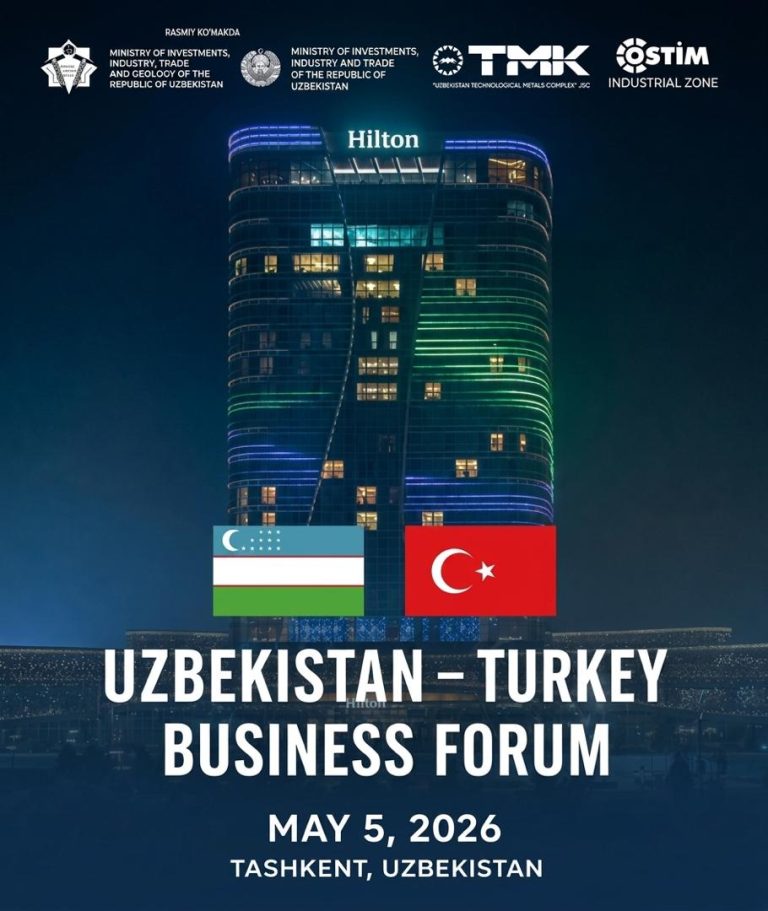
    The MINEX Forum team is delighted to participate in the upcoming Uzbekistan–Turkey Business Forum on 5 May at the Hilton Hotel. This event serves as a vital precursor to our broader regional discussions, focusing on concrete industrial proposals and joint investment ventures.

    The forum is a collaborative effort between OSTIM, the Ministry of Mining Industry and Geology of Uzbekistan, and TMK. It offers a deep dive into Uzbekistan’s ambitious industrial roadmap, specifically focusing on critical minerals and deep processing.

    Key highlights include presentations on:

    • The R&D Park for critical minerals.

    • Technopark initiatives for high-value metal processing.

    • Graphtech’s latest mining developments.

    Our representatives will be on the ground to discuss how these initiatives align with the broader goals of value creation and regional connectivity that we champion at MINEX. We invite our colleagues and partners to join us for a day of high-level networking and strategic planning.

  • US Plans $250M Contribution to $1 Trillion Supply Chain Investment Consortium

    US Plans $250M Contribution to $1 Trillion Supply Chain Investment Consortium

    The United States government is set to contribute $250 million to a major international investment consortium aimed at securing global supply chains for energy and critical minerals, a senior Trump administration official announced Monday.

    Under Secretary of State for Economic Affairs Jacob Helberg confirmed that Washington will lead the consortium, which is expected to bring together up to $1 trillion in assets under management drawn from sovereign wealth funds and institutional investors. The fund will count Japanese tech conglomerate SoftBank Group, Singapore’s state-owned Temasek Holdings, and Abu Dhabi’s Mubadala Investment Company among its founding participants.

    Helberg outlined the consortium’s top priorities as investments focused on preserving access to energy and rare earth minerals for the United States and its allies — with a particular emphasis on what he described as “mineral security, logistics, and likely energy security infrastructure.” Officials will convene to review a list of candidate projects before making joint investment decisions.

    Congress is expected to be formally notified of the $250 million US commitment in the near term. Representatives for SoftBank, Temasek, and Mubadala had not responded to requests for comment at time of publication.

    The fund forms a central pillar of a broader US-led supply-chain alliance known as Pax Silica, which has expanded its remit to include energy infrastructure following the blockade of the Strait of Hormuz. Helberg cited the ripple effects on global energy markets since the outbreak of conflict with Iran as a key driver, stressing the need to eliminate “single-points of failure” in critical supply networks. Deputy Energy Secretary James Danly is set to lead the consortium’s energy-focused efforts.

    The initiative comes amid heightened concern over the vulnerability of global supply chains exposed by nearly a month of conflict, during which energy infrastructure and key shipping lanes in the Gulf region have been repeatedly targeted, disrupting flows of oil, natural gas, and industrial inputs worldwide. Pax Silica currently counts Japan, India, South Korea, the United Kingdom, the United Arab Emirates, Qatar, and Singapore among its member states.

  • Finland Rare Earth Discovery Highlights Europe’s Processing Gap

    Finland Rare Earth Discovery Highlights Europe’s Processing Gap

    Recent drilling results from the Korsnäs rare earth project in Finland are drawing attention to Europe’s geological potential in critical minerals, but they also highlight a deeper challenge for the continent: the lack of domestic processing capacity.

    Exploration company European Resources reported its strongest rare earth intercept to date at the project, including a 31.5-metre interval averaging 4,902 parts per million total rare earth oxides (TREO). The mineralisation also contains a relatively high proportion of neodymium and praseodymium (NdPr), accounting for roughly 28–30% of the rare earth mix.

    While encouraging, the results represent only an early stage of resource development. The next phase will require additional drilling and modelling to confirm the continuity and scale of the deposit.

    NdPr is particularly important because it forms the foundation of permanent magnets used in electric vehicles, wind turbines, defence systems and other advanced technologies. These magnet rare earth elements are considered among the most strategically important minerals for Europe’s industrial and energy transition.

    However, experts note that discovering deposits alone does not guarantee supply security. In the rare earth sector, the most complex and capital-intensive stage of development typically occurs after mining, during chemical processing, separation and waste management.

    The Korsnäs project benefits from its location in Finland, a country with strong mining institutions, established infrastructure and relatively stable regulatory systems. This reduces certain development risks compared with projects in more uncertain jurisdictions.

    Early mineralogical studies suggest the deposit contains monazite and apatite minerals, which can support certain processing routes. However, monazite often contains trace amounts of thorium or uranium, which can introduce stricter regulatory requirements related to residue handling and environmental protection.

    Industry analysts say processing plants typically account for the largest share of capital expenditure in rare earth projects, often exceeding the cost of the mining operation itself. Complex processing flowsheets and environmental permitting requirements can significantly affect project economics and timelines.

    European Resources has already begun metallurgical testing and downstream processing studies with the Australian Nuclear Science and Technology Organisation (ANSTO) to evaluate potential separation technologies and processing pathways.

    Another notable feature of the Korsnäs results is the relatively high proportion of NdPr within the deposit. While TREO measures total rare earth content, economic value is usually concentrated in magnet elements such as neodymium and praseodymium, with smaller contributions from dysprosium and terbium. Deposits dominated by cerium and lanthanum, which are more abundant but less valuable, often face weaker economics.

    The development of projects such as Korsnäs also intersects with broader European industrial policy. Under the EU’s Critical Raw Materials Act, the bloc aims by 2030 to extract at least 10% of its annual demand for strategic minerals domestically, process 40% within the EU and source 25% from recycling.

    Achieving those targets will require major investment not only in mining but also in separation facilities, refining plants and downstream manufacturing. At present, China dominates the global rare earth processing sector, giving it significant influence over supply chains.

    Analysts say that even if Europe develops new mines, the continent will remain vulnerable to supply disruptions unless it builds domestic separation and refining capacity.

    The Korsnäs discovery therefore represents more than a geological milestone. It highlights Europe’s growing recognition that securing critical mineral supply will depend not only on discovering deposits, but also on developing the industrial infrastructure needed to process them.

  • Greenland’s Critical Minerals Potential Faces Decade-Long Development Timeline

    Greenland’s Critical Minerals Potential Faces Decade-Long Development Timeline

    Greenland holds vast reserves of rare earth elements and other critical minerals, but major infrastructure and logistical challenges mean large-scale production is likely at least a decade away.

    The Arctic island, an autonomous territory within the Kingdom of Denmark since 2009, covers a vast area but has a population of just about 56 000 people, making it the least densely populated country in the world. Around 80% of the island is covered by permanent ice, with most residents living along the southwestern coast.

    Greenland’s strategic importance extends beyond its resources. Located between North America, Europe and the Arctic Ocean, the island sits near the GIUK Gap — the Greenland-Iceland-United Kingdom maritime corridor — a key NATO chokepoint used to monitor naval movements between the Arctic and Atlantic. The United States also operates the Pituffik Space Base, formerly Thule Air Base, which supports missile warning systems and satellite surveillance.

    Beneath Greenland’s ice lies substantial mineral wealth. The U.S. Geological Survey estimates the island holds about 1.5 million tonnes of proven rare earth reserves, ranking it among the world’s top resource holders. Several deposits are considered globally significant.

    The Kvanefjeld deposit alone contains more than 11 million tonnes of rare earth resources, including around 370 000 tonnes of heavy rare earth elements. Another project, Tanbreez, may represent the world’s largest rare earth resource at approximately 28.2 million tonnes, with an unusually high proportion of heavy rare earths.

    These minerals — including dysprosium, neodymium, terbium and gadolinium — are critical for manufacturing permanent magnets used in electric vehicles, wind turbines, advanced electronics and defence technologies.

    Greenland also hosts 25 of the 34 critical minerals identified by the European Union and 43 of the 50 minerals classified as strategically important for U.S. national security. In addition to rare earths, the island has deposits of graphite, lithium, copper, zinc, gold and uranium, as well as an estimated 31 billion barrels of oil-equivalent hydrocarbon resources.

    Despite this geological potential, Greenland currently has no commercial rare earth production. The main obstacles include extreme Arctic conditions, widespread ice cover, limited infrastructure, absence of power grids and ports, and very high logistics costs.

    Projects have also faced regulatory and environmental challenges. The Kvanefjeld project, explored extensively since the late 2000s, was halted in 2021 after Greenland introduced a ban on uranium mining. Meanwhile, the Tanbreez project completed a preliminary economic assessment only in 2025 and remains years away from development.

    Even under favourable conditions, mining projects typically require seven to fifteen years from discovery to production. Greenland’s lack of existing infrastructure means development timelines could be even longer.

    Analysts note that while Greenland represents a significant long-term opportunity to diversify global supply chains for critical minerals, it cannot address immediate supply vulnerabilities. China currently dominates global processing capacity for many key materials, controlling roughly 95% of manganese processing, 65% of cobalt processing and about 35% of nickel processing.

    As a result, governments are increasingly focusing on accelerating domestic or allied mining projects that could reach production sooner, while simultaneously investing in long-term strategic opportunities such as Greenland.

    Experts say both approaches are necessary: developing Greenland’s resources will require sustained infrastructure investment and international cooperation, while near-term supply security will depend on faster development of projects in established mining jurisdictions.

  • Fen Deposit in Norway Expands 81%, Strengthening Europe’s Rare Earth Ambitions

    Fen Deposit in Norway Expands 81%, Strengthening Europe’s Rare Earth Ambitions

    Rare Earths Norway has announced a substantial upgrade to mineral resources at its Fen project, describing the deposit as Europe’s largest rare earth accumulation and a potential cornerstone of the continent’s strategic supply chain.

    According to a revised estimate prepared by consulting firm WSP, indicated and inferred resources at Fen now total 15.9 million tonnes of rare earth oxides, an 81 percent increase from the 8.8 million tonnes reported in 2024. The updated figures place Fen well ahead of Sweden’s Per Geijer deposit, previously cited by LKAB as Europe’s largest rare earth discovery.

    Bernd Schaefer, CEO of EIT RawMaterials, said the resource expansion elevates Fen from a promising discovery to what he described as a world-class strategic asset. He noted the project could serve as the foundation for a compact “mine-to-magnet” value chain within Europe, supporting industrial resilience and long-term raw material security.

    Europe currently has no operating rare earth mines, leaving the region heavily dependent on imports. Eurostat data show that in 2024, 95 percent of the European Union’s rare earth imports originated from China, Malaysia and Russia. The development of Fen would support EU efforts to diversify supply and reduce strategic vulnerability.

    Rare earth elements are essential for advanced defence systems, including precision motors and sensors used in naval vessels, fighter aircraft and drones, as well as permanent magnets required for electric vehicles, wind turbines and consumer electronics. The latest resource estimate indicates that approximately 19 percent of Fen’s oxides consist of neodymium and praseodymium, key materials for high-performance magnets. The deposit also contains notable quantities of niobium and thorium.

    Rare Earths Norway has previously outlined plans to commence production in late 2031, targeting annual output of 800 tonnes of NdPr by 2032, equivalent to roughly 5 percent of projected EU demand. While the company holds an extraction permit, it still requires an operating permit before mining can begin. The latest announcement did not revise projected timelines or production targets.

    The project aligns with the EU’s ResourceEU action plan adopted in December 2025, which seeks to accelerate domestic extraction, processing and recycling of critical minerals. However, current EU policy does not restrict the export destinations of rare earths mined within the bloc, meaning production could still be sold to non-European markets.

  • Ending the ‘Extract-and-Export’ Era: How FORGE and Pax Silica Transform Central Asian Mining

    Ending the ‘Extract-and-Export’ Era: How FORGE and Pax Silica Transform Central Asian Mining

    The 2026 Critical Minerals Ministerial in Washington has signaled the definitive end of Central Asia’s era as a “landlocked” geopolitical afterthought. For decades, the five nations of the region were viewed through the narrow lens of the “Great Game”—a buffer zone between Russian security interests and Chinese infrastructure investments. However, the “New Order” proposed by the Trump administration, articulated by Vice President JD Vance and Secretary of State Marco Rubio, has repositioned Kazakhstan, Uzbekistan, and their neighbors as the indispensable pivot of a new Western-aligned industrial statecraft.

    The Mineral Sovereignty Pivot

    The strategic argument for Central Asian states to embrace the U.S.-led FORGE (Forum on Resource Geostrategic Engagement) initiative and the proposed Preferential Trade Zone rests on the promise of escaping “coercive dependencies”. For years, Central Asian producers have been vulnerable to the same market distortions Vance identified in Washington: a “foreign supply” (read: China) that floods markets to crash prices and kill domestic projects.

    By joining the new trading bloc, countries like Kazakhstan and Uzbekistan are being offered a “necessary foundation for private financing” and a “price floor” enforced by adjustable tariffs. This mechanism is a game-changer for the region. It essentially guarantees that if Kazakhstan develops its potentially world-class rare earth element (REE) reserves—estimated by some to reach 20 million metric tons—its investments will be shielded from predatory pricing strategies designed to maintain Beijing’s monopoly.

    Kazakhstan: The Vanguard of the New Order

    Kazakhstan has moved first and most aggressively to align with this reindustrialization doctrine. President Kassym-Jomart Tokayev’s branding of critical minerals as the “new oil” is not mere rhetoric; it is backed by a landmark memorandum of understanding (MOU) with the U.S. signed in November 2025, which focuses on technology transfer and processing capacity.

    Perhaps most significantly, Kazakhstan’s accession to the Abraham Accords in November 2025 serves as a profound geopolitical signal. While traditionally a Middle Eastern normalization framework, its expansion to Kazakhstan—the first member with preexisting ties to Israel—is being used to facilitate secure, tech-driven supply chains that reduce the region’s reliance on China. This “unorthodox” alignment places Astana at the heart of the Pax Silica vision, where silicon, minerals, and energy are treated as shared strategic assets among “trusted partners”.

    Uzbekistan and the C5+1 Renaissance

    Uzbekistan is rapidly following this blueprint. On February 5, 2026, during the Ministerial, Tashkent signed its own strategic MOU with the U.S. to secure supply chains for rare earths and critical minerals like lithium, magnesium, and indium. For President Mirziyoyev, this is a path to modernize a mining sector that has often relied on outdated Soviet-era surveys.

    The broader C5+1 diplomatic platform, now celebrating its tenth anniversary, has evolved from a symbolic talk shop into a “pragmatic, project-driven economic coordination framework”. This “renaissance of American influence” is evidenced by the $17 billion in investment projects agreed upon following recent summits and the integration of the Middle Corridor (Trans-Caspian International Transport Route) into the Trump Route for International Peace and Prosperity (TRIPP).

    The Argument for Central Asian Alignment

    The “New Order” offers Central Asia three structural advantages that neither Moscow nor Beijing can—or will—match:

    1. Vertical Value Integration: Unlike China’s “extract-and-export” model, the U.S. framework emphasizes domestic processing and refining. This allows Central Asian states to capture high-value segments of the supply chain rather than remaining mere “resource bases”.

    2. Market Stability: The Project Vault and price floor mechanisms provide a buffer against “market whiplash”. For a region where commodity price volatility can destabilize entire national budgets, this sovereign de-risking is a vital survival tool.

    3. Connectivity Autonomy: By backing the Middle Corridor/TITR, the U.S. and its partners are providing the region with its first viable route to global markets that does not pass through Russia or China. This reduces the ability of larger neighbors to use transit as a tool of political pressure.

    Central Asia is currently in a “hedging game,” and both Pakistan and Central Asian states have approached these initiatives with a degree of caution to avoid immediate Chinese retaliation. However, the message from the 2026 Ministerial is clear: in an economy of “real things,” those who control the minerals control the future. For Kazakhstan and Uzbekistan, the American proposal is not just about mining; it is about finally securing their economic and territorial sovereignty.

  • Allied Nations to Meet in Washington on Critical Minerals Strategy as De-Risking from China Accelerates

    Allied Nations to Meet in Washington on Critical Minerals Strategy as De-Risking from China Accelerates

    Ministers from the United States, the European Union, the United Kingdom, Japan, Australia and New Zealand will gather in Washington this week to discuss the creation of a closer strategic alliance on critical minerals, as governments intensify efforts to reduce dependence on China-dominated supply chains.

    The meeting, convened by United States Department of State and led by Secretary of State Marco Rubio, will also include around 20 countries such as G7 members, India, South Korea, Mexico and potentially Argentina. It marks the second such summit in less than a month and is widely seen as part of a broader attempt to repair strained transatlantic relations and coordinate non-China sourcing strategies for minerals essential to energy transition, defence and advanced manufacturing.

    Australia underscored the urgency of the talks last week by announcing plans to establish a A$1.2 billion strategic reserve of critical minerals considered vulnerable to supply disruption from China. Canberra’s move follows Beijing’s decision last April to restrict rare earth exports in response to trade measures introduced under US President Donald Trump.

    A key issue on the Washington agenda will be whether the United States should guarantee minimum prices for critical minerals and rare earths to support investment in alternative supply chains. Reports this week that Washington may have ruled out such guarantees triggered a sell-off in Australian mining stocks, highlighting the sensitivity of the sector to policy signals. Australia has positioned itself as a major alternative supplier to China and plans to stockpile minerals such as antimony and gallium regardless of US pricing decisions.

    “Strengthening critical mineral supply chains with international partners is vital for the US economy, national security, technological leadership, and a resilient energy future,” the State Department said ahead of the summit.

    The European Union is expected to use the meeting to push for progress on broader trade irritants, including US tariffs on steel derivatives. EU officials argue that new levies on products containing steel, from bicycles to wind turbines, undermine trust following a tariff deal agreed last year. Brussels hopes the talks could pave the way for a joint statement that would signal a shift toward closer coordination with Washington on de-risking from China rather than recurring trade disputes.

    The European Commission has repeatedly warned that Europe remains highly exposed to Chinese supply chains, particularly for rare earth permanent magnets. According to Commission officials, the EU consumes around 20,000 tonnes of permanent magnets annually, with roughly 17,000–18,000 tonnes sourced from China and only about 1,000 tonnes produced domestically.

    Japan, which has long maintained strategic mineral stockpiles to guard against supply disruptions, is often cited by policymakers as a model for resilience. European and UK officials say closer alignment with partners such as Japan and Australia will be essential if Western economies are to secure stable access to minerals critical for everything from smartphones and electric vehicles to fighter jets and renewable energy systems.