Tag: Samruk-Kazyna

  • Kazakhstan’s Samruk-Kazyna Fund Acquires 40% Stake in Eurasian Resources Group

    Kazakhstan’s Samruk-Kazyna Fund Acquires 40% Stake in Eurasian Resources Group

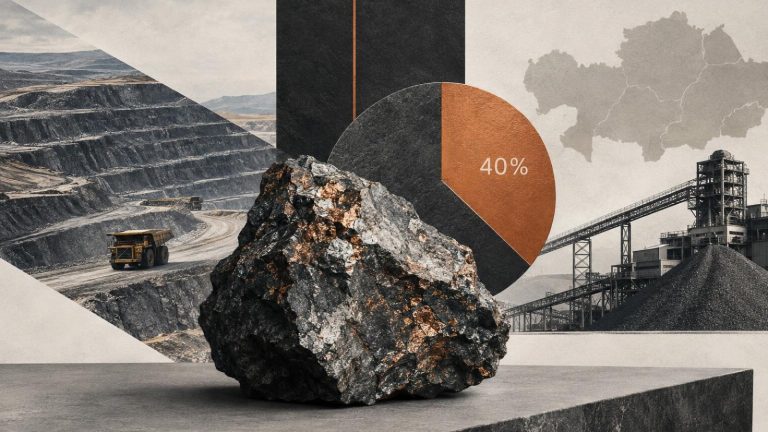
    In a significant development for Kazakhstan’s mining sector, the National Wealth Fund ‘Samruk-Kazyna’ has acquired a controlling 40% stake in Eurasian Resources Group S.à r.l. (ERG), a major player in the mining industry. This transaction, which took effect on August 4, 2026, marks a strategic shift in the ownership structure of ERG, previously held by the State Property and Privatisation Committee of the Ministry of Finance of Kazakhstan.

    The acquisition was confirmed by ERG, which stated that the fund is now the sole owner of the 40% stake, while the heirs of Alidjan Ibragimov, one of the founding shareholders, hold 20.7%, and Shakhmurat Mutalip retains 39.3%. This change in shareholding is part of a broader strategy by the Kazakh government to manage state assets effectively through Samruk-Kazyna, which is tasked with ensuring the sustainable operation of businesses in the country.

    On the same day, Samruk-Kazyna released an official statement regarding the acquisition, highlighting its commitment to managing state assets in the interests of Kazakhstan. The fund’s involvement is expected to enhance the operational stability of ERG, which has assured stakeholders that its enterprises will continue to operate normally and adhere to its development strategy.

    The transaction follows earlier discussions regarding the potential restructuring of ERG, with reports suggesting negotiations between shareholders Mutalip and the Ibragimov heirs about possibly dividing the group into separate Kazakhstan and international entities. However, the Ministry of Finance has stated that it has not received any formal requests regarding such a division.

    Additionally, the acquisition comes amid ongoing negotiations between ERG and Portuguese company Mota-Engil concerning the sale of Bahia Mineração (BAMIN), which holds iron ore assets in Brazil. These talks have reportedly slowed due to the recent changes in ERG’s ownership structure, with a deal initially expected to be finalised by mid-2026 now facing delays.

    As the Ibragimov family ranks among Kazakhstan’s wealthiest, with a net worth of $1.677 billion as of May 2026, the implications of this ownership shift are significant for the future of ERG and its operations both domestically and internationally. The mining sector in Kazakhstan continues to evolve, with state involvement poised to play a crucial role in shaping its trajectory.


  • Kazakhstan’s Ministry of Finance Transfers 40% Stake in ERG to Samruk-Kazyna Fund

    Kazakhstan’s Ministry of Finance Transfers 40% Stake in ERG to Samruk-Kazyna Fund

    In a shift in ownership, Kazakhstan’s Ministry of Finance has transferred its 40% stake in Eurasian Resources Group (ERG) to the sovereign wealth fund, Samruk-Kazyna. This move, which took effect on 4 August 2026, is seen as a strategic decision aimed at bolstering the national budget and streamlining the management of state assets. Experts suggest that the transfer could generate approximately 897 billion tenge (around $1.9 billion) for the government, echoing previous asset sales that have successfully replenished state finances.

    Nurlan Zhumagulov, director of the Energy Monitor public fund, indicated that the need for budgetary support was a driving factor behind this decision. He noted that similar transactions in the past, such as the sale of stakes in KazMunayGas and Kazatomprom, have provided critical funding for the state. The historical context of ERG’s role in supporting governmental initiatives further complicates the narrative, as the company has often acted beyond its commercial obligations to assist the state.

    Financial analyst Rasul Rysmambetov highlighted that discussions regarding the transfer of ERG’s state stake to Samruk-Kazyna had been ongoing for some time. He explained that ERG has historically taken on responsibilities that extended beyond standard business operations, effectively acting as a financial buffer for the government during challenging times. The management of the state’s stake is expected to transition to the Tau-Ken Samruk structure, although this will necessitate organisational changes and an increase in personnel.

    The consolidation of ERG’s management under a single state entity is viewed as a move towards unifying control over significant national assets. However, the implications of this change remain uncertain, with Rysmambetov cautioning against premature conclusions about its potential impact. The Ministry of Finance has historically been cautious about the company’s initiatives, which raises questions about how the new management structure will navigate the complexities of state-business relations.

    The transfer of shares was officially confirmed by Samruk-Kazyna, which stated that the acquisition aligns with its mandate to manage state assets effectively for the benefit of Kazakhstan. The decision to consolidate ERG under Samruk-Kazyna is part of a broader strategy to enhance the efficiency of state asset management, ensuring that the interests of both the government and the public are adequately represented.

    As ERG continues its operations, the company has reassured stakeholders that its strategic development plans remain intact despite the ownership changes. The new management structure is expected to be led by Kudrat Shamiyev, who will oversee the business’s direction in Kazakhstan. The transition marks a pivotal moment for ERG and the Kazakh mining sector, as the government seeks to optimise its control over vital resources and enhance fiscal stability.


  • Samruk-Kazyna Share Placement Worth $1.4 Billion Sparks Speculation Over Transfer of State’s 40% ERG Stake

    Samruk-Kazyna Share Placement Worth $1.4 Billion Sparks Speculation Over Transfer of State’s 40% ERG Stake

    Kazakhstan’s sovereign wealth fund Samruk-Kazyna has announced the placement of 31 of its own shares at 22.5 billion tenge each — a total of 697.7 billion tenge, equivalent to approximately $1.4 billion — in exchange for unspecified state property, sparking speculation that the transaction may involve the government’s 40% stake in Eurasian Resources Group currently held by the Ministry of Finance’s Committee on State Property and Privatisation.

    The fund’s sole shareholder, the Kazakhstani government, holds the pre-emptive right to purchase the shares. The announcement did not identify the state property being transferred, but the scale of the transaction — $1.4 billion — prompted financial analyst Arman Bataev of the Finmentor Telegram channel to suggest the asset in question is the government’s ERG stake, given that it is the most significant state-held mining asset at a comparable valuation.

    The timing adds to the intrigue. On 23 May, ERG announced a major ownership change: Nature Energy Solutions Ltd., owned by Kazakhstani businessman Shakhmurat Mutalip, acquired a combined 39.3% stake from Patokh Chodiev (18.6%) and the heirs of Alexander Machkevitch (20.7%). The Financial Times had previously reported that the transaction value was approximately $1.4 billion — precisely matching the sum now involved in the Samruk-Kazyna share placement.

    If the analysis is correct, the current ERG ownership structure would be: the Ministry of Finance holding 40%, the Ibragimov family 20.7%, and Nature Energy Solutions — Mutalip’s vehicle — 39.3%. A transfer of the Ministry of Finance’s 40% stake to Samruk-Kazyna would consolidate state control of ERG within the sovereign fund structure rather than the government’s direct balance sheet.

    ERG is one of Kazakhstan’s most strategically significant industrial conglomerates, producing ferroalloys, copper, cobalt, aluminium and gallium across operations in Kazakhstan, Africa and beyond.

  • Kazakhstan Mining and Energy Companies Deploy AI to Improve Safety and Efficiency

    Kazakhstan Mining and Energy Companies Deploy AI to Improve Safety and Efficiency

    Industrial enterprises in Kazakhstan are increasingly deploying artificial intelligence systems to improve operational safety and efficiency, according to the Ministry of Industry and Construction.

    Several large digital initiatives are currently being implemented at facilities operated by Solidcore Resources. Four major projects aimed at automating safety and production processes are underway across the company’s mining and processing sites.

    At the Bakyrchik mining operation in the Abai region, an automated employee health monitoring system has already been launched. The system uses AI algorithms to assess workers’ physical condition before each shift.

    If the system detects high blood pressure, signs of fatigue or alcohol intoxication, the employee is automatically prevented from performing hazardous tasks.

    Solidcore Resources plans to expand the use of intelligent technologies at its other facilities, including the Varvarinskoye hub in Kostanay region and the Ertis Hydrometallurgical Plant in Pavlodar region.

    One of the upcoming systems will provide real-time personnel positioning, allowing the company to track the location of employees across industrial sites. Workers entering hazardous zones will receive automatic alerts warning them about potential risks.

    Another tool under development is a digital operator assistant designed to support personnel in making operational decisions. The system will recommend optimal technological parameters and help prevent equipment failures.

    By the end of the year, the company also plans to introduce an AI-based flotation monitoring system. The technology is expected to reduce reagent consumption and minimize metal losses during processing.

    Artificial intelligence is also being adopted by other companies within the sovereign wealth fund Samruk-Kazyna.

    The national mining company Tau-Ken Samruk is using an intelligent core analysis system that automatically identifies signs of mineralization from photographs of drill core samples.

    Meanwhile, Samruk-Kazyna Ondeu is developing a digital twin of its sulfuric acid plant in Stepnogorsk. The virtual model will simulate equipment performance and is expected to reduce operating costs by 5–8%, lower downtime by about 5%, and decrease accident rates by 2–3%.

    KazMunayGas is also expanding the use of AI technologies through its ABAI digital platform. The company reported that an AI-based waterflood management module helped generate an additional 12000 tonnes of oil production in 2025, delivering an economic benefit of approximately 1.5 billion tenge.

    Officials say the growing use of artificial intelligence across Kazakhstan’s mining, metallurgy and energy sectors is part of a broader push to modernize industrial operations and improve productivity.

  • Kazakhstan to Draft Gas and Coal Power Development Plan as QazaqGaz Expands Exploration

    Kazakhstan to Draft Gas and Coal Power Development Plan as QazaqGaz Expands Exploration

    Kazakhstan’s Ministry of Energy and the Samruk-Kazyna sovereign wealth fund have been tasked with developing a comprehensive programme for the development of coal-fired and gas-fired power generation within one month. The initiative will also include detailed planning for the development of new oil and gas reserves to ensure a reliable long-term supply of gas for future energy facilities.

    The national gas company QazaqGaz is expected to play a central role in strengthening the country’s resource base. According to the Ministry of Energy, QazaqGaz is currently carrying out an extensive geological exploration programme across 14 sites, where preliminary estimates indicate gas resources of around 515 billion cubic metres.

    The exploration programme is set to expand significantly in the coming years. QazaqGaz plans to increase its exploration portfolio to 30 sites, with the combined potential of these areas estimated at up to 1.7 trillion cubic metres of gas. This expansion is intended to provide a solid foundation for future growth in gas production, particularly against the backdrop of rising domestic demand.

    As part of these efforts, QazaqGaz announced on 12 January that it had signed an agreement with Agip Caspian Sea to carry out joint geological and geophysical studies on the Kamenkovsky block in the Pre-Caspian sedimentary basin, targeting hydrocarbon potential.

    In parallel, the authorities plan to attract investment and reduce exploration risks through a series of electronic auctions. Around 50 prospective subsoil plots are expected to be offered. Geological exploration on these sites will be financed jointly by QazaqGaz, Samruk-Kazyna and private investors.

  • Kazakhstan’s Untapped Tungsten Reserves Draw U.S. Interest in Strategic Mining Deal

    Kazakhstan’s Untapped Tungsten Reserves Draw U.S. Interest in Strategic Mining Deal

    Kazakhstan’s sweeping steppes may soon become the focal point of a global shift in critical mineral supply chains. With an estimated 2 million tons of untapped tungsten reserves, the Central Asian nation is emerging as a potential powerhouse in a market vital to defense, clean energy, and advanced manufacturing. Ongoing negotiations between Washington and Astana could lead to the first large-scale, U.S.-backed tungsten mining operation in the region, underscoring Western efforts to reduce dependence on Chinese-controlled supply chains.

    Kazakhstan’s Tungsten Wealth: A Strategic Resource Reawakens

    Two massive deposits — Upper Kairaktinskoye and North Katpar in the Karaganda region — anchor Kazakhstan’s tungsten potential. Industry insiders estimate the sites are worth billions of dollars and could sustain production for up to four decades. While the U.S. Geological Survey (USGS) does not list Kazakhstan among the top tungsten holders, the country’s own geological data points to reserves exceeding 2 million tons, suggesting international underreporting of Central Asia’s mineral wealth.

    Kazakhstan’s sovereign wealth fund, Samruk-Kazyna, has described these sites as the world’s most desirable undeveloped tungsten deposits and is actively soliciting bids from foreign investors.

    From Dormancy to Development

    Tungsten mining in Kazakhstan halted more than 30 years ago following the Soviet Union’s collapse, as infrastructure decay, capital flight, and regulatory uncertainty halted operations. That long pause has left enormous reserves untouched — a rare opportunity for new investment at a time when global tungsten demand continues to climb.

    Strategic Importance of Tungsten

    Tungsten’s exceptional hardness, density, and heat resistance make it irreplaceable in defense and high-tech industries. It is a critical component in ammunition, projectiles, armor-piercing shells, and advanced weapon systems, earning a place on the U.S. Geological Survey’s list of critical minerals. The Pentagon’s Defense Logistics Agency identifies tungsten as a material of strategic importance, with supply disruptions posing potential risks to U.S. defense manufacturing and economic stability.

    Key Players in a High-Stakes Negotiation

    The leading U.S. contender, Cove Kaz Capital Group LLC, has positioned itself at the center of the negotiations. Building on its 2025 partnership with Kazakhstan’s JSC Qazgeology on rare earth exploration, Cove Kaz Capital aims to establish majority control of the tungsten venture while ensuring Kazakhstan retains a significant profit share.

    The company’s responsibilities would include mine development, local processing infrastructure, and export logistics, with a commitment to technology transfer and workforce development within Kazakhstan.

    For Samruk-Kazyna, the deal aligns with national goals of diversifying the economy, modernizing the mining sector, and expanding export markets beyond traditional partners like Russia and China. The fund’s competitive tendering process has attracted multiple international bidders, ensuring Kazakhstan maximizes both revenue and strategic leverage.

    U.S. Government’s Direct Role

    The unusual direct involvement of U.S. Commerce Secretary Howard Lutnick in the negotiations underscores the project’s geopolitical weight. Washington views the partnership as part of a wider strategy to secure critical mineral supply chains and implement former President Trump’s executive order prioritizing access to strategic materials such as tungsten.

    For the U.S., success in Kazakhstan could represent a decisive step toward reducing vulnerability to supply shocks and strengthening control over critical materials vital to both defense and green technologies.

  • Kazatomprom Retains Baa1 Rating Following Moody’s Review

    Kazatomprom Retains Baa1 Rating Following Moody’s Review

    Moody’s Ratings has confirmed JSC National Atomic Company Kazatomprom’s credit rating at ‘Baa1’ with a Stable outlook following a periodic review published on 10 September 2025. The agency underscored the company’s pivotal role in Kazakhstan’s economy, given state oversight via the sovereign wealth fund Samruk-Kazyna.

    Kazatomprom’s rating reflects its robust financial metrics, low production costs, and dominance in uranium supply—accounting for roughly 20% of global output. Moody’s also noted its vast uranium reserves, operational diversification, and long-term client contracts as key strengths.

    The review reiterated Kazatomprom’s alignment with Kazakhstan’s strategic interests, reinforcing investor confidence. For further details, refer to Moody’s press release.

  • Astana and Amman to Establish Joint Venture for Uranium Development in Jordan

    Astana and Amman to Establish Joint Venture for Uranium Development in Jordan

    Tuesday, 27 August 2025

    Kazakhstan and Jordan have announced plans to create a joint venture for the development of uranium deposits in Jordan. The agreement was revealed by Nurlan Zhakupov, Chairman of the Board of the “Samruk-Kazyna” Sovereign Wealth Fund, during a press briefing on Wednesday.

    According to Zhakupov, the joint venture will be established between Kazatomprom, Kazakhstan’s national uranium company, and Jordan’s national uranium company. The agreement, signed during the visit of Jordan’s King Abdullah II, is a legally binding document that outlines the creation of the joint venture by the end of 2026.

    Scientific and Industrial Collaboration

    Under the agreement, both parties will conduct scientific research and pilot industrial work to assess the extractability and enrichability of uranium in Jordan. If the results are positive, the joint venture will be finalized by the end of 2026, with Kazatomprom holding a 70% stake and the Jordanian company owning the remaining 30%.

    Kazatomprom, the national operator for uranium exports and related products in Kazakhstan, operates under the management of the “Samruk-Kazyna” fund. The company is responsible for the export of uranium, rare metals, nuclear fuel for power plants, and specialized equipment.

    Previous Agreements and Future Prospects

    In February 2025, Kazatomprom and the Jordan Uranium Mining Company (JUMCO) signed a memorandum of cooperation to jointly study projects related to uranium exploration and mining in Jordan. The decision to collaborate was made during the fifth meeting of the Kazakh-Jordanian intergovernmental commission at the end of 2024.

    The establishment of this joint venture underscores the strategic cooperation between Kazakhstan and Jordan in the nuclear energy sector, with both countries aiming to leverage their resources for mutual economic benefit.

  • “Samruk-Kazyna” Reports Record Revenue Amid Shifts in Investment Strategy

    “Samruk-Kazyna” Reports Record Revenue Amid Shifts in Investment Strategy

    The National Welfare Fund “Samruk-Kazyna” achieved a record revenue of 15.4 trillion tenge in 2023, despite moving further from its ideal model as an investment holding. This shift is driven by the government’s efforts to maximize returns from the Fund as both a policy tool and a profitable asset. According to the latest audited financial report, Samruk-Kazyna continued to grow its assets, reaching 36.9 trillion tenge, a 10% increase year-on-year. This growth was fueled by significant investments in fixed assets, with a capital expenditure level of 17% of revenue, up from 9% the previous year. The Fund’s long-term assets expanded by 6% to 26.6 trillion tenge, while current assets increased by 18%, bolstered by a 17% rise in inventories and a 19% increase in receivables.

    The asset structure saw a notable rebalancing of cash and deposits: cash holdings decreased by 7% to 2.7 trillion tenge, and bank deposits fell by 23%, with tenge deposits down by 27% and dollar deposits up by 18%. The overall asset growth of Samruk-Kazyna was driven by an increase in equity by 10%, a rise in retained earnings and non-controlling interests, and a 10% growth in liabilities. The liabilities included a reduction in fixed-rate loans by 9% and an increase in floating-rate loans by 19%, mainly short-term. The Fund’s short-term liabilities are now covered by cash at a rate of 61%, down from 71% the previous year. The currency composition of loans has remained consistent since 2022, with 58% in US dollars, 34% in tenge, and 4% each in Swiss francs and euros.

    In 2023, the Fund’s revenue increased by 4%, driven by a modest rise in crude oil sales, which account for 30% of revenue, alongside declines in refined petroleum products and refined gold sales. These decreases were offset by significant growth in other sectors, including rail freight transport (up 30%), uranium sales (up 44%), and gas processing products (up 10%). The revenue growth was accompanied by a comparable increase in production costs, mainly due to a 23% rise in labor costs and a 15% increase in depreciation and amortization expenses. The Fund reported total write-downs of 262 billion tenge, five times higher than in 2022. Net profit decreased by 10% to 2.1 trillion tenge, largely due to a significant reduction in earnings from joint ventures and associates.

    The relationship between Samruk-Kazyna and its sole shareholder, the government of Kazakhstan, remains complex. In 2023, total net cash distributions to the shareholder amounted to 1.3 trillion tenge, up from 306 billion in 2022. This included dividends of 1.27 trillion tenge, as well as other distributions for projects such as the construction of healthcare facilities and a sports complex. Meanwhile, the government recapitalized the Fund with 49 billion tenge, earmarked for infrastructure development in the National Industrial Petrochemical Park in Atyrau.

  • Mining Company Plans Zinc and Lead Extraction at Shalkiya Deposit

    Mining Company Plans Zinc and Lead Extraction at Shalkiya Deposit

    In a recent announcement, “Tau-Ken Samruk,” a mining company affiliated with “Samruk-Kazyna,” revealed its intentions to commence zinc and lead extraction operations at the Shalkiya deposit in the Kyzylorda region by October of this year. The company aims to reach a production volume of 2.2 million tons of ore by 2025, as stated by the chairman of the company’s board, Bakyt Chirchikbayev, during the MINEX-2024 forum. Chirchikbayev further disclosed plans for potential tolling arrangements for ore processing while the company’s own factory is under construction. Negotiations with potential partners for the purchase of a controlling stake are underway, with details expected to be finalized post-discussions.

    Additionally, Chirchikbayev mentioned the positive outcome of the state expertise regarding the technical and economic feasibility of the North Katpar and Upper Kayrakty tungsten projects. The company received favorable feedback on the project’s feasibility study, which has been circulated among interested partners. Currently, the project is under review by several potential collaborators, with further steps aligned with project privatization regulations.

    The financing of the Shalkiya project involves the European Bank for Reconstruction and Development (EBRD), with agreements dating back to June 2017. Updates to the credit agreement were made in September 2021, extending credit lines up to $175 million. Recent disbursements from the EBRD, including a second tranche of $40.5 million in October 2022, demonstrate ongoing financial support for the project. “Samruk-Kazyna” has provided full guarantees for “Shalkiya Zinc’s” obligations to the EBRD, ensuring financial security for the venture.