Tag: Romania

  • EBRD Finances Romania’s First Hybrid Solar and Battery Storage Project

    EBRD Finances Romania’s First Hybrid Solar and Battery Storage Project

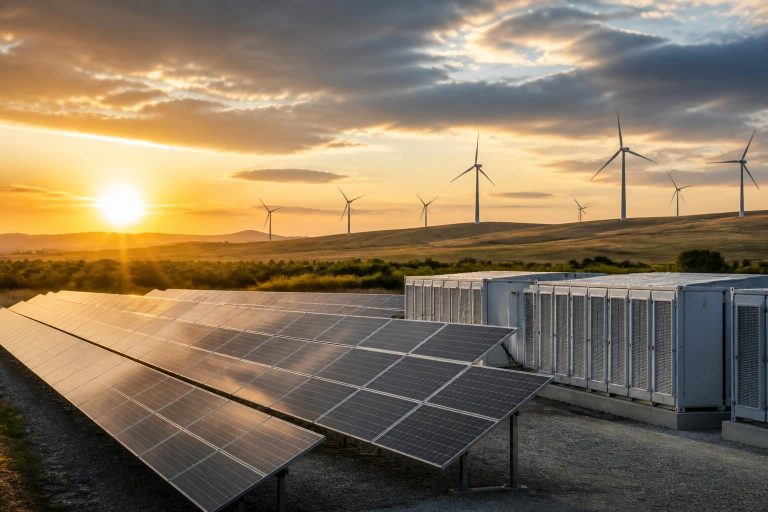
    The European Bank for Reconstruction and Development (EBRD) is making significant strides in Romania’s clean energy transition by financing the Părău 2 project, a pioneering hybrid solar photovoltaic and battery storage initiative. This project, developed by Econergy, combines 342 MW of solar capacity with a 150 MW/300 MWh battery energy storage system located in Brașov. The EBRD has committed up to €120 million to support the development, construction, and operation of this innovative project, marking the first instance of the bank financing a hybrid renewable energy project in Romania.

    The financing package consists of an EBRD A loan of up to €57 million and an EBRD B loan of up to €63 million, which includes a €3.6 million debt service reserve facility provided by commercial banks. The total debt financing for the project amounts to €229 million, with additional support from the Black Sea Trade and Development Bank, OTP Bank, and Exim Banca Românească. The European Union is also backing this initiative through the InvestEU programme, which provides a first-loss guarantee to mitigate risks associated with the project’s exposure to merchant revenue.

    Georgios Gkiaouris, the EBRD’s Head of Energy Europe, highlighted the significance of the Părău 2 project in enhancing Romania’s energy security and promoting a more resilient electricity system. The project is expected to increase renewable energy generation, improve grid flexibility, and reduce reliance on fossil fuels. Eyal Podhorzer, CEO of Econergy, expressed that securing €229 million for Părău 2 is a milestone for both the company and the Romanian market, showcasing the confidence of international lenders in their operational capabilities.

    The project is further supported by Romania’s Contract for Difference scheme, which aims to unlock 5 GW of solar and onshore wind capacity. The solar plant has already secured a 125 MWac allocation at a competitive strike price for 15 years, while the remaining capacity will operate on a merchant basis. Additionally, Intesa Sanpaolo and Exim Banca Românească will provide facilities to support the project’s Contract for Difference requirements.

    By integrating solar generation with battery storage, the Părău 2 project will facilitate the incorporation of more variable renewable energy into Romania’s electricity system. The battery storage component will enable the shifting of solar output to meet higher demand periods, thereby enhancing the grid’s flexibility and reducing dependence on fossil fuels for peak capacity. This investment underscores the EBRD’s commitment to supporting Romania’s green transition and energy security, having invested over €12.7 billion in the country through more than 600 projects to date.


  • Vast Resources Joins US Defense Industrial Base Consortium to Enhance Critical Mineral Supply Chain Security

    Vast Resources Joins US Defense Industrial Base Consortium to Enhance Critical Mineral Supply Chain Security

    Vast Resources (VAST) has recently been admitted to the US Department of Defense-supported Defense Industrial Base Consortium (DIBC) and the Cornerstone Consortium, marking a significant step in enhancing its access to US defence, industry, and government stakeholders focused on critical mineral supply chain security. This membership is expected to provide Vast with numerous opportunities to engage in critical materials initiatives, attend industry events, and participate in research and prototyping programmes under the US government’s Other Transaction Authority framework.

    The DIBC, managed by Advanced Technology International, comprises over 1,500 member organisations from industry, academia, and government, all dedicated to areas deemed vital to US national security, including critical minerals, rare earth elements, energy storage, batteries, and microelectronics. Meanwhile, the Cornerstone Consortium operates under the Department of Defense’s Industrial Base Analysis and Sustainment programme, bringing together defence contractors, small businesses, private capital, and academic institutions to bolster the US manufacturing and defence industrial base.

    Andrew Prelea, CEO of Vast Resources, expressed that joining the DIBC is a significant milestone for the company, underscoring the strategic importance of its critical minerals portfolio. This is particularly relevant as Vast expands its operations into Tajikistan while maintaining its existing assets in Romania. Prelea highlighted the urgent need for secure sources of materials essential to defence and industrial applications, stating that membership provides valuable access to a collaborative network of US defence stakeholders and industry partners.

    Vast’s portfolio includes a range of minerals such as copper, lead, zinc, silver, antimony, and molybdenum, which are crucial for applications in defence, aerospace, advanced manufacturing, and energy technologies. While the memberships do not guarantee contracts or funding, they offer a structured pathway for Vast to demonstrate the strategic relevance of its assets and engage with initiatives aimed at reducing reliance on non-allied sources of critical minerals.

    The memberships are expected to enhance Vast’s visibility within the US defence and critical minerals ecosystem, potentially leading to partnerships, funding, and project development opportunities as Western governments increasingly seek secure supplies of strategic minerals. This move aligns with a broader trend of nations prioritising domestic and allied sources for critical materials, reflecting the growing importance of supply chain security in the mining and minerals sector.


  • Coal Sector Protests and Shortages Threaten Power Supply in Romania and Bosnia

    Coal Sector Protests and Shortages Threaten Power Supply in Romania and Bosnia

    Workers in the coal mining and thermal power sectors across Southeast Europe are facing mounting pressure from austerity measures and supply disruptions, raising concerns about electricity generation and energy security in the region.

    In Romania, employees of state-owned Complexul Energetic Oltenia (CE Oltenia) have staged protests, including hunger strikes, in response to proposed wage cuts and the possible cancellation of meal vouchers. Thirteen workers have reportedly gone on hunger strike, while demonstrations have taken place at several coal mines and one thermal power plant.

    During a meeting with union representatives, Prime Minister Ilie Bolojan stated that CE Oltenia could only be exempted from austerity measures if it improves efficiency and reduces reliance on state aid. A government memorandum clarifying the situation is expected to be discussed next week. Energy Minister Bogdan Ivan noted that Romania had previously renegotiated with the European Commission the closure deadline for certain coal-fired power plants, extending it beyond December 31, 2025.

    Union representatives warned that if their demands are not addressed, protests could escalate and further reduce already strained coal supplies feeding the Rovinari and Turceni thermal power plants, which are central to Romania’s power system.

    Similar challenges are emerging in Bosnia and Herzegovina. The Ugljevik thermal power plant is currently offline due to coal shortages and has recently reduced salaries for all employees. In late January, the Government of the Republic of Srpska agreed to transfer part of the Ugljevik coal concession from Comsar Energy RS, majority owned by Russian businessman Rashid Sardarov, to RiTE Ugljevik, the plant’s operator.

    The transferred deposit reportedly contains around 50 million tonnes of coal, enough to supply the plant for approximately 25 years. The reserves had originally been earmarked for the planned Ugljevik 3 project, which was never completed.

    Labor tensions have also surfaced at the Zenica coal mine, which is scheduled for closure. In September, miners staged a five-day hunger strike over unpaid wages.

    The combined impact of labor unrest and coal shortages has contributed to a sharp rise in electricity imports. In 2025, Bosnia and Herzegovina’s electricity imports reached a record €321.6 million, roughly double the previous year, partly due to production halts at coal-fired facilities.

  • Romania Eyes Rare Earth Refining Capacity to Become Global Critical Materials Player

    Romania Eyes Rare Earth Refining Capacity to Become Global Critical Materials Player

    Romania could emerge as a global force in the rare metals industry as it moves to develop domestic refining capacity, Energy Minister Bogdan Ivan said in an interview with Antena 3.

    Ivan argued that Romania already possesses strong industrial foundations, including major automotive and industrial wiring manufacturers that currently import refined copper from countries such as India, China and Turkey, despite much of the raw ore being mined domestically. He said the establishment of a rare earths refinery would encourage high-tech manufacturers, including aerospace component producers, to relocate closer to Romanian industrial hubs such as Brasov, Sibiu and Feldioara.

    According to the minister, three Romanian projects involving critical raw materials were recognised by the European Union as strategically significant in April 2025. One of them is a €300 million investment to build the country’s first copper refinery in Hunedoara county. The project is being developed by a private Romanian company in partnership with state-owned copper miner CupruMin. Currently, copper ore extracted in Hunedoara is exported for refining in Turkey and Asia before being re-imported for use in domestic manufacturing.

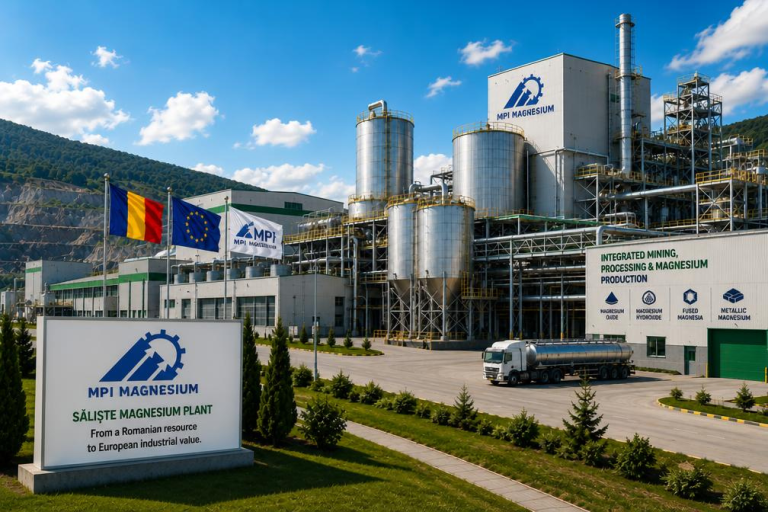
    Two additional projects, worth a combined €315 million, focus on metallic magnesium extraction in Bihor county and battery-grade graphite extraction in Gorj county. The Bihor project involves companies from the United States and Canada, while the graphite project in Baia de Fier is operated by majority state-owned company Salrom.

    Ivan also confirmed ongoing discussions with a US-based mining company holding licences for rare earth deposits in Greenland. By mid-April, Romania expects to finalise the terms of what would become its first fully integrated project covering extraction, refining and downstream consumption of rare earth materials. The minister said the US company already holds contracts with major aerospace firms.

    In December, the Energy Ministry announced that the Feldioara Uranium Concentrate Processing Plant, a subsidiary of Nuclearelectrica, would establish a joint venture with US-based Critical Metals Corp. Under the plan, 50% of rare earths extracted from a major Greenland deposit would be processed at the Feldioara facility. The initiative could position Romania as a stable supplier of strategic materials for microprocessors, aerospace and defence industries.

    The project may receive financing under the European RESourceEU Action Plan, which has a budget of up to €3 billion.

  • Romania Claims EU Leadership in Critical Raw Materials as US Partnerships Advance

    Romania Claims EU Leadership in Critical Raw Materials as US Partnerships Advance

    Romania holds 16 of the 32 critical raw materials designated at EU level and ranks first in the bloc in terms of subsoil resources for rare earths and strategic minerals, Energy Minister Bogdan Ivan has said.

    Speaking to local media, Ivan stated that Romania possesses half of the critical elements Europe considers essential, with some found only in Romania and at most one other EU member state. The minister argued that this positions the country as a key pillar of Europe’s resource security strategy.

    Romania is already working with what Ivan described as an “extremely important” American company in efforts to reduce dependence on Chinese critical minerals. According to local reports, this partner is likely Critical Metals Corp, which has links to investor Frank Timiș.

    Ivan acknowledged, however, that Romania currently lacks an integrated processing and refining chain for these materials. Developing such infrastructure would, he said, create the first fully integrated rare earth processing chain in the western hemisphere, potentially supplying strategic industries including aerospace and advanced technology manufacturers such as SpaceX.

    Discussions are also reportedly under way regarding cooperation between Critical Metals Corp and Nuclearelectrica (BVB: SNN). The proposal involves transforming the uranium processing facility at Feldioara into a plant capable of refining rare earth elements sourced from Greenland.

    In parallel, Ivan highlighted three Romanian projects included under the EU’s Critical Raw Materials Act, with a combined value of around EUR 615 million. According to European Commission data, these projects are being developed by Euro Sun Mining (copper), Salrom (graphite), and Verde Magnesium (magnesium). One of the projects, Euro Sun Mining’s copper development, currently lacks a valid environmental permit.

    The minister’s remarks come as the European Union intensifies efforts to diversify supply chains and reduce reliance on external suppliers amid geopolitical tensions and rising demand from the energy transition and defense sectors.

  • Understanding Critical Infrastructure in Contemporary Mineral Markets: Romania’s Rare Earth Test Case

    Understanding Critical Infrastructure in Contemporary Mineral Markets: Romania’s Rare Earth Test Case

    As Europe confronts growing vulnerabilities in critical mineral supply chains, processing infrastructure has emerged as the decisive bottleneck separating genuine industrial autonomy from continued dependence on geographically concentrated production hubs. Within this context, Romania’s rare earth processing initiative stands as a litmus test for Europe’s ability to translate strategic policy into operational capability.

    The planned rare earth processing facility at Feldioara is more than a standalone industrial project. It reflects a deliberate shift in European thinking, recognising that sovereignty over critical materials depends less on mining alone and more on control of midstream processing and refining. With China controlling roughly 80% of global rare earth refining capacity, European policymakers have identified downstream infrastructure as the most effective leverage point to rebalance supply chains.

    Romania’s advantage lies in its legacy nuclear infrastructure. The Feldioara site builds on decades of uranium concentrate processing expertise under Nuclearelectrica and its subsidiary FPCU, offering an existing base of metallurgical know-how, regulatory compliance systems, and a trained technical workforce. This significantly shortens development timelines compared with greenfield processing projects and reduces execution risk in a sector where technical complexity has derailed many Western initiatives.

    Strategically, the project aligns closely with the EU’s Critical Raw Materials Act and related funding instruments, which prioritise processing, recycling, and midstream integration over pure extraction. By focusing on processing capacity capable of handling material from multiple upstream sources, Romania positions itself as a regional hub rather than a single-mine solution. This model enhances resilience and supports European industries spanning defence, electrification, energy infrastructure, and advanced manufacturing.

    The joint venture structure between state-owned FPCU and Critical Metals Corp reflects a broader European experiment in public–private governance for strategic infrastructure. State participation anchors the project within EU strategic autonomy objectives, while private-sector involvement brings market access, operational expertise, and commercial discipline. However, this structure also places a premium on transparent governance, clear decision-making authority, and alignment between commercial incentives and strategic goals.

    Supply integration with the Tanbreez rare earth project in Greenland adds a further geopolitical dimension. The Greenland–Romania corridor represents a fully Western-aligned alternative to Chinese processing routes, but it also introduces technical challenges. Eudialyte-hosted rare earth mineralisation requires specialised processing flowsheets, demanding innovation, pilot-scale testing, and cost discipline to remain competitive against established Asian processors.

    Ultimately, the Feldioara project encapsulates the broader European dilemma in critical minerals. Policy ambition is now clear, financing tools are emerging, and geopolitical incentives are strong. The remaining question is execution. Success would validate Europe’s shift from regulatory aspiration to industrial governance, creating a replicable model for other critical materials. Failure would reinforce the structural challenges that have long constrained Western processing capacity.

  • Critical Metals Corp and Romania’s FPCU Form 50:50 JV to Build EU Rare Earth Processing Hub Linked to Tanbreez

    Critical Metals Corp and Romania’s FPCU Form 50:50 JV to Build EU Rare Earth Processing Hub Linked to Tanbreez

    Critical Metals Corp. (Nasdaq: CRML) has executed a term sheet to establish a 50:50 joint venture with Romania’s state-owned Fabrica de Prelucrare a Concentratelor de Uraniu (FPCU), marking a major step toward creating a fully integrated, Western-aligned rare earth supply chain spanning mine to processing.

    Under the agreement, the JV will secure long-term offtake rights to 50% of Tanbreez’s rare earth concentrate production and advance plans to develop a state-of-the-art rare earth processing facility in Romania. The project is designed to supply European industries and defence sectors while reducing reliance on China, which currently controls more than 80% of global rare earth processing capacity.

    The JV structure is notable in that CRML will not issue debt or equity to fund the facility. The company will retain its 50% stake on a carried-interest basis, with no capital expenditure obligations related to construction. The plant is expected to produce a range of high-value outputs, including aerospace- and military-grade rare earth magnets.

    With this agreement, CRML will have 75% of Tanbreez’s future production committed under long-term offtake agreements with allied partners, following earlier deals allocating 10% to UCORE and 15% to ReAlloys. Once mining at Tanbreez is commissioned, CRML will supply half of the project’s concentrate to the Romanian JV for the full life of mine on competitive market terms.

    The partners will now work to finalise the technical and commercial framework for the JV, overseen by a dedicated development committee responsible for plant design, development strategy and commercialisation of processed products. Both CRML and the Romanian government plan to apply for funding under the EU’s recently announced €3.5-billion critical raw materials support package.

    CRML also confirmed it is updating its feasibility study to reflect a redesigned processing flowsheet at Tanbreez. The company is targeting an increase in concentrate grade from 2.2–2.5% to above 3% TREO, which is expected to improve mine-to-metal economics and downstream product quality. An updated feasibility study and revised timelines are expected by Q1 2026.

  • Critical Metals Corp Strikes 50:50 JV with Romania’s FPCU to Build EU Rare Earth Processing Hub

    Critical Metals Corp Strikes 50:50 JV with Romania’s FPCU to Build EU Rare Earth Processing Hub

    European Lithium’s US-listed subsidiary, Critical Metals Corp (CRML), has signed a term sheet to form a 50:50 joint venture with Fabrica de Prelucrare a Concentratelor de Uraniu (FPCU), Romania’s state-owned strategic processor of mineral concentrates. The agreement marks one of Europe’s most significant moves yet to establish a Western-aligned rare earths processing base as the EU and NATO seek to reduce reliance on China.

    Under the deal, the JV will secure 50% of the offtake from Greenland’s Tanbreez rare earth project, lifting the total volume under long-term agreements with Western partners to 75%. The partners plan to design, finance and construct a rare earth refinery in Romania to convert Tanbreez concentrate into high-purity metals, salts and military-grade magnet products.

    CRML chair and CEO Tony Sage described the agreement as a “monumental game-changer”, arguing that the partnership positions Europe to claw back strategic independence in rare earths. The facility, he said, will underpin sectors ranging from defence to advanced manufacturing, supplying feedstock sourced entirely from Western-aligned jurisdictions. CRML will retain a 50% stake in the JV on a carried basis and will not contribute capital to construction.

    FPCU CEO Cosmin Ghiță called the initiative a core pillar of Romania’s emerging industrial strategy, aligning with its ten-year plan to modernise strategic materials production. The plant will be located at the Feldioara complex, a site with a long history of refining and hydrometallurgical operations.

    The term sheet also outlines CRML’s intention to upgrade Tanbreez concentrate grades by revising its processing flowsheet, potentially lifting TREO content above 3%. The enhancements will be incorporated into an updated feasibility study to be completed by the end of Q1 2026.

    The announcement comes as the European Commission rolls out up to €3.5 billion in financing to strengthen critical raw materials supply chains under its new Economic Security Strategy. CRML and the Romanian government plan to apply jointly for support under the funding package.

    The JV is expected to serve as a cornerstone of Europe’s rare earth supply chain, processing up to half of Tanbreez’s resource for downstream European industries. Once Tanbreez enters production, CRML will supply the Romanian plant for the life of the mine under competitive, market-based terms.

    Critical Metals Corp currently controls two key assets: the Tanbreez rare earth megadeposit in southern Greenland and the Wolfsberg lithium project in Austria, the first fully permitted lithium mine in Europe. Both are positioned to feed Western supply chains for electrification, defence, and high-tech industries.

  • Romania Renews Licence for Country’s Only Graphite Deposit at Baia de Fier

    Romania Renews Licence for Country’s Only Graphite Deposit at Baia de Fier

    Romania’s government has officially renewed the exploitation licence for the nation’s sole graphite deposit, located in Baia de Fier, Gorj County. The decision, signed by Minister of Economy Radu Miruță, grants state-owned Salrom the right to resume mining operations at the site.

    Graphite, a critical raw material used in conductors, mobile phone components, and the nuclear industry, has experienced surging demand globally. Minister Miruță said the licence renewal ensures the resource “remains the property of Romania” while delivering economic value domestically.

    “Today I signed the government decision by which Romania receives the exploitation licence for graphite from Baia de Fier. An extremely valuable mineral, sought after throughout the world, remains the property of Romania and will produce value for our economy,” Miruță said, adding that securing the licence was one of his key priorities.

    Although Salrom previously held the licence, mining activity had stopped. With operations now set to restart, Miruță stressed that the first steps will involve securing the mining perimeter and preparing for production. He noted that the project will create jobs, drive local economic growth, and stand as “a source of pride for Romanians.”

    The move forms part of a broader government strategy to safeguard and develop Romania’s strategic mineral resources in the national interest.

  • Euro Sun Secures $200M Loan with Trafigura Backing to Advance Romanian Copper-Gold Project

    Euro Sun Secures $200M Loan with Trafigura Backing to Advance Romanian Copper-Gold Project

    Euro Sun Mining (TSXV: ESM) has secured a $200 million loan package to help fund its Rovina Valley gold-copper project in Romania, marking a major milestone for one of Europe’s largest undeveloped critical mineral assets. The financing—arranged with international banks and supported by global commodities trader Trafigura—aims to push forward feasibility, permitting, and pre-development work.

    The loan includes a binding offtake agreement for up to all commercial production over seven to nine years and will be disbursed in two stages: an initial $50 million upon signing final documentation, and the remaining $150 million following completion of a definitive feasibility study. The project’s total build cost is estimated at $448 million, based on a 2022 feasibility study.

    Rovina Valley is listed among the European Union’s 47 strategic projects aimed at securing supply chains for critical minerals. Located in Hunedoara County, the mine is projected to operate for 27 years, producing an average of 116,000 oz of gold and 49 million lb of copper annually in its first decade.

    Despite long-standing opposition from environmental groups, Euro Sun says it is advancing environmental impact assessment submissions and plans close engagement with Romanian officials. The company also notes the project holds a mining licence and is the first non-state-owned deposit in Romania to do so.

    The support from Trafigura reinforces its strategy of investing upstream to lock in access to vital metals like copper, cobalt, and nickel amid global energy transition pressures.