Based on “How Public Finance Can Help Scale Responsible Critical Mineral Supply” by Isabel Munilla, Luke Balleny and Ke Wang, published by the World Resources Institute, 19 August 2026.
The European Union is testing whether grants, guarantees and equity stakes can succeed where markets have failed — rewarding critical mineral producers for meeting environmental and social standards rather than simply undercutting them on price.
As demand for cobalt, copper, lithium and nickel accelerates, the bloc’s policymakers are wrestling with a familiar tension: how to scale supply quickly without repeating the environmental and social failures that have dogged mining elsewhere. The underlying problem, according to a recent analysis by Isabel Munilla, Luke Balleny and Ke Wang published on the World Resources Institute platform, is that markets have not reliably rewarded stronger performance. Lower-cost, lower-standard supply has remained competitive even as certification schemes such as the Initiative for Responsible Mining Assurance and the Copper Mark have proliferated. Europe’s answer is to put public money behind the gap.
The CRMA as the organising framework
The EU Critical Raw Materials Act has become the central mechanism through which Brussels is trying to align finance with responsible production. Projects seeking “strategic project” status under the CRMA — and the financing and permitting benefits that come with it — must demonstrate sustainable implementation, including environmental impact minimisation, respect for human rights and indigenous and labour rights, and transparent business practices that guard against corruption. The European Commission has not yet mandated adherence to a specific certification scheme, but plans to open a recognition process in 2027, which would give the framework more teeth.
Strategic project status also acts as a funnel into EU and national financing programmes, and the European Investment Bank has moved to back that pipeline directly. In March 2025 the EIB adopted a Critical Raw Materials Strategic Initiative targeting €2 billion ($2.3 billion) in financing for critical raw material investments, with projects assessed against an 11-point Environmental and Social Sustainability Framework covering environmental, social, climate, community and health criteria. Mining projects must additionally comply with EU environmental directives and member-state law.
A parallel equity channel has opened through the EU and the European Bank for Reconstruction and Development, which launched a joint facility in July 2024 aiming to mobilise €100 million ($115.5 million) for equity investments in critical mineral exploration. Projects financed through it must meet the EBRD’s Environmental and Social Policy 2024, built around ten environmental and social requirements.
Blended finance and the Lionheart test case
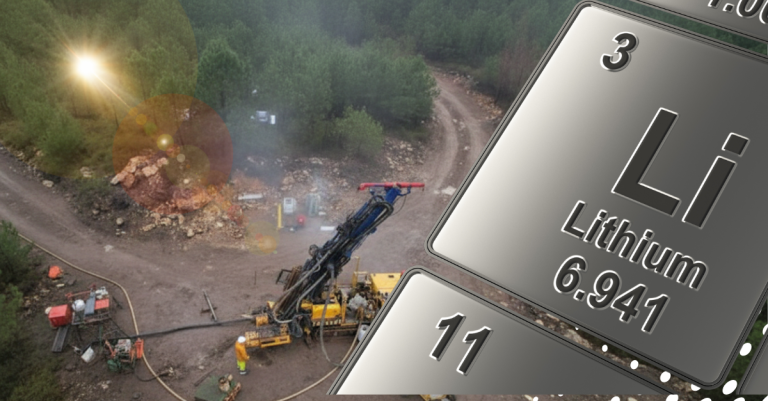
Perhaps the clearest illustration of how Brussels intends these tools to work in practice is Vulcan Energy Resources’ €2 billion Lionheart project in Germany — billed as Europe’s first commercial integrated lithium and renewable energy project, and expected to supply around 12 per cent of the continent’s projected lithium hydroxide demand by 2030. Lionheart draws on geothermal brines to build an integrated, battery-grade lithium supply chain, and was designated an EU Strategic Project under the CRMA.
Its first phase was financed through a blended structure: the EIB provided €250 million ($287.8 million) in debt, alongside twelve other lenders including five export credit agencies and seven commercial banks. The model reflects the logic set out in the WRI analysis — that InvestEU-style structures, which combine EU budget guarantees with EIB and national promotional bank financing, allow Brussels to absorb the riskiest tranche of capital and crowd in private lenders who would otherwise avoid early-stage exploration or unproven extraction technologies. Projects backed through InvestEU must clear environmental, social and governance screening aligned with the EU Taxonomy and the EIB’s own standards.
Why Europe’s approach differs from elsewhere
The report’s broader argument is that no single financial instrument fits every mineral market, and Europe’s own toolkit reflects that. For copper and lithium, where production is spread across jurisdictions with comparatively strong governance, the authors suggest conditional financing tied to existing certification systems can be applied fairly directly — which is broadly the CRMA’s approach. That contrasts with more concentrated, weaker-governance markets such as nickel, dominated by Indonesia, where the authors argue financial levers need to be paired with diplomatic and trade engagement rather than deployed alone — a reminder that Europe’s toolkit, built for its own regulatory environment, may not transfer easily to the jurisdictions that actually supply many of the minerals it needs.
The tension between tightening and oversupplied markets also matters for how Brussels calibrates its tools. Lithium demand is currently outpacing supply, which the analysis suggests argues for ensuring new entrants — like Lionheart — build in strong ESG performance from the outset, tying access to concessional finance to compliance with recognised standards. Nickel, by contrast, is described as already oversupplied but often falling short on environmental and social performance, suggesting European finance directed there should prioritise retrofitting and emissions upgrades over expanding output.
An unproven bet
Brussels’s wager is that public money can shift market norms beyond the individual projects it touches — that conditioning access to grants, guarantees and equity on verifiable performance will eventually make responsible production the commercial default rather than a cost handicap. The clearest precedent for that kind of spillover comes not from Europe but from the United States: the now-expired Section 30D clean vehicle tax credit, which required automakers to prove mineral provenance and comply with restrictions on Foreign Entities of Concern, is credited with pushing traceability and chain-of-custody systems into permanent use across supply chains, even after the credit itself lapsed.
Whether the CRMA, the EIB’s sustainability framework and the EU-EBRD equity facility can produce a comparable, lasting shift remains untested. Most of the instruments are too recent to assess on outcomes, and the report’s authors caution that public finance works only in combination with other levers — trade agreements, procurement mandates, price support — rather than as a standalone fix. For Europe, which is simultaneously trying to secure supply, cut dependency on China and hold itself to higher ESG standards than most of its competitors, the coming years of CRMA implementation will be the first real test of whether that combination adds up.


The Minister outlined Kyrgyzstan’s methodical approach to prioritising and developing its critical minerals sector, identifying 21 key minerals based on global demand, local deposits, and resource concentrations. Kyrgyzstan’s analysis resulted in the selection of 4 priority projects, 5 promising deposits, and 16 prospective areas for further study and development. These assets, spread across antimony, beryllium, rare earths, molybdenum, bismuth, zinc, silver, and others, offer significant commercial and strategic potential for investors and end-users in energy, electronics, and high-value manufacturing.