China has built a commanding lead in the global competition for critical minerals that its rivals are only beginning to take seriously, and the strategies required to challenge that dominance will need to go well beyond capital deployment, according to an analysis by Veridicor that frames the contest as a “Great New Game” of geopolitical rivalry over strategic resource access.
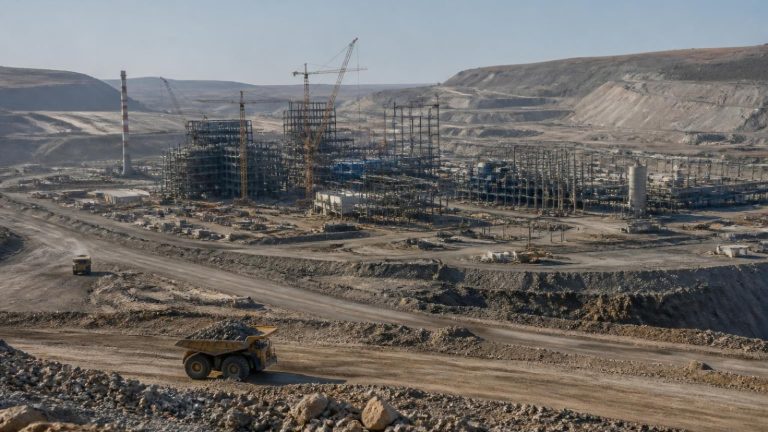
The scale of China’s position is striking. The country controls 60% of global rare earth mining and 87% of refining, 64% of graphite mining and 100% of its refining, 65% of cobalt refining and 40% of copper refining. This dominance has been built deliberately over 25 years through a strategy that understands critical minerals as integrated value chains — combining mining, refining and infrastructure — rather than isolated extraction activities. The integration of critical minerals policy with broader industrial strategy has delivered additional competitive advantages, including global leadership in solar power and electric vehicle manufacturing.
The macroeconomic context driving urgency is severe. Demand projections point to significant supply gaps in the medium and longer term. Estimates suggest the world needs to mine as much copper in the next 50 years as it has in the last 5,000 years — a challenge that Wood MacKenzie estimates will require $2.3 trillion in net new mining investment globally to address. The pattern repeats across most critical minerals, with supply gaps both looming and material.
The analysis argues that for the US, Europe and others to challenge China’s dominance, differentiation rather than imitation is the key strategic imperative. “Writing checks won’t be enough to change the critical minerals balance that China has earned,” the paper states. The proposed differentiator is excellence in responsible mining practices — an area where Western actors can build genuine competitive advantage in ways that China’s state-driven model has not prioritised.
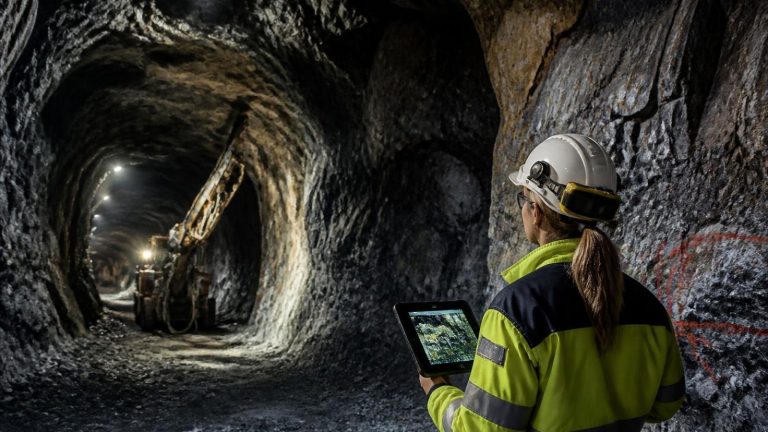
The logic operates through several mechanisms. Communities, Indigenous nations and other stakeholders in mining regions can accelerate or obstruct permitting processes depending on the trust relationships developed with project operators. Responsible practices that earn genuine social licence reduce conflict risk and improve the stability and predictability of mineral flows from operating mines. Artisanal and small-scale miners represent a particularly underutilised opportunity: these operators are often early exploration indicators, can be integrated into formalised supply chains through professionalisation and offtake agreements, and their collaboration with large mines reduces conflict risk while boosting aggregate productivity.
The financing model proposed — Stakeholder Prosperity Bonds, developed as a subset of the broader sustainability bond market — combines artisanal mining professionalisation, improvements to large mine operations, infrastructure development, small-scale processing facility construction and regional capacity building into a single regional investment vehicle. The approach is framed not as a cost centre but as a generator of bankable value through productivity gains, risk reduction and regional development.