Tag: Preliminary Economic Assessment

  • Goldsky Resources Initiates Metallurgical Testing at Barsele Project in Sweden

    Goldsky Resources Initiates Metallurgical Testing at Barsele Project in Sweden

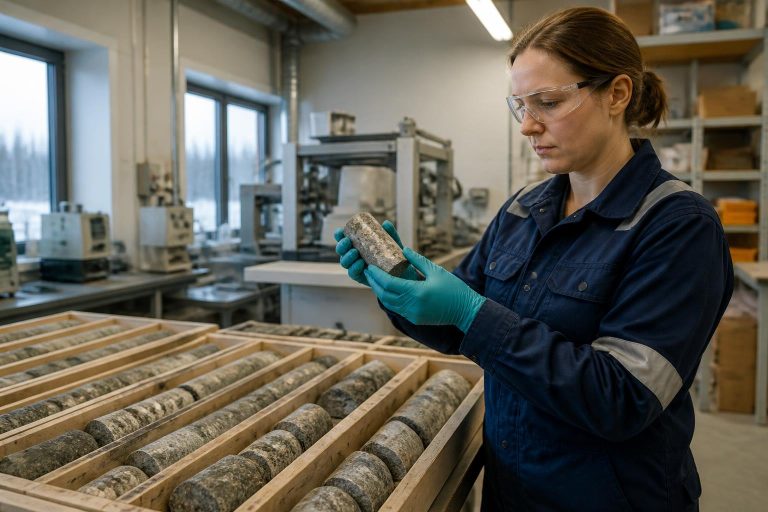
    Goldsky Resources Corp, a publicly listed gold exploration company, has announced the commencement of metallurgical test work on composite samples from its Barsele Project in Sweden. The samples, weighing a total of 345 kg, have been sent to Alfred Knight in Truro, United Kingdom, for analysis. This test work is crucial for determining the power requirements and reagent dosage necessary for the project, which is expected to contribute significantly to the Preliminary Economic Assessment (PEA) scheduled for publication in 2027.

    The metallurgical testing will encompass a range of assessments, including crusher comminution tests, Bond rod mill and ball mill tests, gravity gold recovery tests, gold leach kinetic tests, and detoxification tests. These tests are designed to provide essential data that will inform the resource update at Barsele, which is currently host to an Indicated Mineral Resource of 7.88 million tonnes grading 1.27 g/t Au and an Inferred Mineral Resource of 28.75 million tonnes grading 1.98 g/t Au.

    Russell Bradford, CEO of Goldsky Resources, expressed enthusiasm about the initiation of this metallurgical test program, highlighting its importance for the company’s future operations and resource assessment. The entire program is expected to take approximately 16 weeks, with results to be released to the market as they become available.

    Goldsky Resources is consolidating assets in Sweden and Finland, with the Barsele Project being its flagship asset. The company holds a district-scale license position surrounding Barsele, covering around 80,000 hectares on Sweden’s Gold Line greenstone belt, which includes two additional projects, Paubäcken and Storjuktan. In Finland, Goldsky Resources owns the entire underexplored Oijärvi greenstone belt, including the Kylmäkangas deposit, the largest known gold occurrence in that region, as well as the Rajapalot gold-cobalt project in northern Finland.

    As the mining industry continues to evolve, the results from Goldsky’s metallurgical tests could play a pivotal role in shaping the future of the Barsele Project and the company’s strategic objectives in the region. Investors and stakeholders are keenly awaiting the outcomes of these tests, which are expected to provide valuable insights into the project’s economic viability and operational efficiency.


  • Allied Critical Metals Posts Strong PEA Economics for Borralha Tungsten Project as 20,000 m Drill Program Gets Underway

    Allied Critical Metals Posts Strong PEA Economics for Borralha Tungsten Project as 20,000 m Drill Program Gets Underway

    Allied Critical Metals Inc. has released the results of an initial Preliminary Economic Assessment (PEA) for its 100%-owned Borralha Tungsten Project in northern Portugal, outlining an underground development concept with strong returns across multiple tungsten price scenarios and a fully funded drilling campaign aimed at expanding resources beyond the initial mine plan.

    In the study’s medium case using a tungsten price of USD 1,000/mtu WO₃, the project delivers an after-tax NPV(8%) of C$473.4 million (USD 346.6 million) and an after-tax IRR of 48.8%, with an estimated payback period of 4.2 years. Under the base case aligned with an Argus long-term average price assumption of roughly USD 704/mtu WO₃, the after-tax NPV(8%) is C$182.7 million (USD 134.0 million) and the after-tax IRR is 27.2%, with a payback of 5.8 years. A high-price sensitivity case at USD 1,500/mtu WO₃ increases the after-tax NPV(8%) to C$963.8 million (USD 706.4 million) and the IRR to 78.4%, shortening payback to 3.2 years.

    The PEA estimates initial capital at approximately USD 91 million (C$124.2 million) and sustaining capital at about USD 87 million (C$118.8 million), for total life-of-mine capital of roughly USD 178 million (C$243.1 million). The mine plan covers an 11-year operating life, based on the Santa Helena Breccia deposit, with a nominal processing rate of 1.4 million tonnes per annum and average mill feed grade of about 0.20% WO₃. Average annual recovered production is estimated at approximately 1,708 tonnes WO₃, with peak annual output of 2,388 tonnes WO₃. The company reported an all-in sustaining cost estimate of around USD 303/mtu WO₃.

    Allied said the economic model was built on conservative design assumptions, including mine design and cut-off grade selection developed using USD 659/mtu WO₃. The company highlighted that reported spot market pricing for tungsten has recently been materially higher than the study’s sensitivity cases.

    The company also reported several de-risking milestones and strategic positioning factors. Borralha has received a favourable Environmental Impact Declaration (DIA) from Portugal’s environment agency, subject to standard regulatory conditions, and the project has been endorsed by idD Portugal Defence as a strategic initiative of national importance.

    To support growth beyond the initial 11-year plan, Allied has begun a fully funded 20,000-metre drill program targeting resource expansion, conversion of inferred material into higher-confidence categories, potential mine life extension, and possible throughput and scale optimisation. The PEA does not include Allied’s other tungsten project at Vila Verde.

  • Cornish Metals Receives Favorable Assessment for South Crofty Tin Project

    Cornish Metals Receives Favorable Assessment for South Crofty Tin Project

    Cornish Metals expresses satisfaction with the Preliminary Economic Assessment (PEA) conducted independently for the South Crofty tin project in Cornwall, heralding promising financial prospects. The base case after-tax Net Present Value (NPV) of US$201 million and an Internal Rate of Return (IRR) of 29.8% validate the project’s potential to operate as a cost-effective mine, according to Cornish Metals. Projected estimates, based on a 14-year life of mine (LOM) and a tin price of US$31,000 per tonne, foresee South Crofty yielding a clean, high-grade tin concentrate. With the PEA indicating a payback of upfront capital expenditure within three years and a projected total revenue of US$626 million over the project’s lifespan, Cornish Metals underscores the financial viability of South Crofty. The forecasted all-in sustaining cash cost (AISC) of US$13,661 per tonne positions South Crofty as a competitive player in the tin production market, notes Cornish Metals. Over the 14-year LOM, the project anticipates producing 49,310 tonnes of tin metal in concentrate, maintaining an average annual tin production exceeding 4,700 tonnes for years 2 through 6, with a peak of over 5,000 tonnes in year four. Owen Mihalop, the chief operating officer, highlights the NPV as a robust starting point for further project evaluation, signaling Cornish Metals’ progression towards a construction decision and targeted first tin production in 2027. Ken Armstrong, interim chief executive, emphasizes the significance of the PEA as a pivotal step towards responsible tin mining revitalization in Cornwall and the UK, underscoring South Crofty’s strategic advantages in terms of existing permits and infrastructure.