Tag: Porphyry Copper

  • Kazakhstan Bets on AI, Deep Processing and $500 Million in Geology Funding to Spark World-Class Mineral Discoveries

    Kazakhstan Bets on AI, Deep Processing and $500 Million in Geology Funding to Spark World-Class Mineral Discoveries

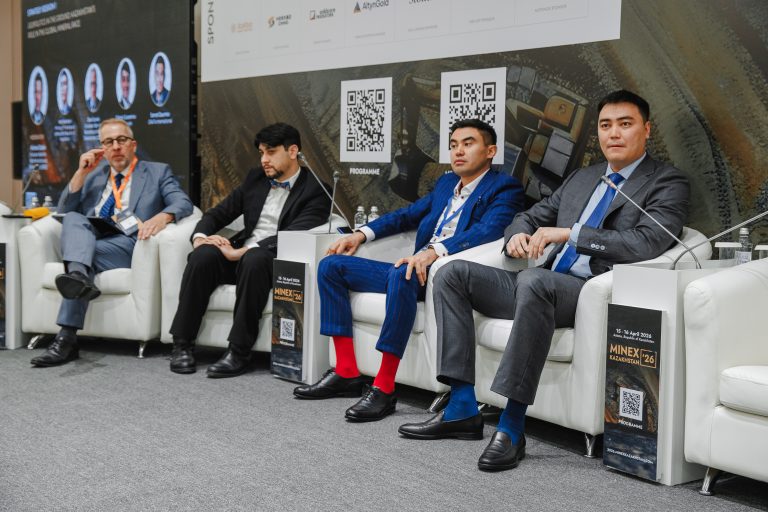
    The era of easy extraction and quick results is over. Finding and developing Kazakhstan’s remaining mineral wealth now demands advanced technology and substantial capital — and how to attract both was the central question at the MINEX international forum in Astana, where delegations from more than 30 countries gathered to assess the country’s geological ambitions and investment potential.

    The Kazakhstani state is committing approximately 240 billion tenge — equivalent to more than 40 billion Russian roubles — to mineral exploration over the next three years, and authorities say they are ready to share that burden with private investors, whose own contributions to exploration have grown 2.5 times over the past five years. The opportunity is significant: beyond already catalogued deposits, the country holds substantial reserves of hydrocarbons, uranium, tungsten, copper, rare earth elements, lithium and graphite.

    Vice Minister of Industry and Construction Iran Sharkhan framed the scale of Kazakhstan’s geological endowment: “Kazakhstan possesses unique geological opportunities. The state register currently lists more than 10,000 deposits — around 1,000 of which are solid mineral deposits.” But having deposits, he made clear, is no longer enough. The country is moving away from selling cheap raw materials toward deep processing, new technologies and expanded export markets.

    MINEX forum executive director Artur Polyakov outlined the twin imperatives: “Kazakhstan must build domestic value chains that transform raw materials into refined products, industrial materials and ultimately high-technology manufacturing. And technology — artificial intelligence, geostatistics, digital exploration tools and modern processing technologies — will play a key role in developing more complex deposits, improving efficiency and reducing environmental impact.”

    Twenty priority areas have been identified for detailed geological mapping and seismic survey work, covering a combined area of 100,000 square kilometres, with a further 30,000 square kilometres to be added each year. The head of Kazakhstan’s National Geological Survey, Yerlan Galiyev, expressed optimism that the intensified programme could yield a discovery of global significance: “We very much hope that a major world-class porphyry copper deposit will be found. The most recent discoveries of this type globally were in Mongolia and the Democratic Republic of Congo. We hope the next one will be in Kazakhstan — and all the work we are doing is directed toward that goal.”

    Artificial intelligence is already playing a practical role in the search. A programme developed at the K. Turysov Institute of Geology and Oil and Gas Affairs has been fed all available geophysical data from known gold deposits and tasked with identifying analogous prospective zones in surrounding areas. “We gave the programme all the geophysical data corresponding to known deposits and asked it to find more prospective zones,” said Professor Gulzada Umirova. “Which it did.”

  • Kazakhstan Junior Qaz Aurum Targets Antimony, Copper and Bonanza-Grade Gold Across Three Projects as It Seeks Investors

    Kazakhstan Junior Qaz Aurum Targets Antimony, Copper and Bonanza-Grade Gold Across Three Projects as It Seeks Investors

    Kazakhstani junior exploration company Qaz Aurum is advancing a diverse portfolio of antimony, copper and gold projects across several regions of the country, driven in part by geopolitical shifts that have dramatically elevated the strategic value of the minerals it is chasing, the company’s director Takhir Kaliyev told the Geoscience and Exploration Central Asia forum in Astana.

    At the Karasuk antimony project in Aktobe Region, historic data points to high-quality mineralisation averaging 6.5% antimony, with peak grades reaching as high as 31% at individual occurrences. The project hosts two mineral showings separated by a tectonic fault which the company believes could host additional resources. All preparatory work has been completed, geophysical surveys and prospecting traverses are planned, and Qaz Aurum says it is ready to begin drilling at Karasuk this year. Antimony — a metalloid that hardens alloys and has critical applications in defence, flame retardants and battery technology — has surged in strategic importance following China’s export restrictions on the material.

    On copper, the company is active at the Egemen porphyry copper project near the settlement of Shortandy in Akmola Region, which benefits from well-developed existing infrastructure. Of 17 drill holes completed to date, 16 have intersected ore-grade mineralisation. The mineralised strike extends approximately two kilometres with widths of up to 300 metres, and the deposit also contains molybdenum. Historical surveys conducted in the 1970s estimated copper potential at 10 million tonnes across the broader area, while Qaz Aurum has so far delineated 370,000 tonnes of copper equivalent in resources. Drilling and metallurgical testing are planned over the next two years, and the company is actively seeking investors to support the programme given current funding constraints.

    The most advanced project in the portfolio is the Ungyrtas gold deposit, located 70 kilometres from Almaty. Qaz Aurum describes it as a high-grade, bonanza-style system — sample grades have exceeded 100 grams of gold per tonne in multiple instances, with a peak assay of 789 grams per tonne. A preliminary resource block modelled in Micromine returned an average grade of 19 grams per tonne over a 50-metre intersection. Metallurgical testwork using gravity separation and cyanidation has achieved gold recovery of 85.6%. The company has already reached an agreement with a processing plant located 70 kilometres away, allowing ore to be delivered without the need for capital-intensive on-site processing infrastructure. Drilling is planned for this year, with a resource estimate to follow, and the company intends to apply for a mining licence in 2026 with production targeted to begin the following year. Investor discussions are also underway for Ungyrtas.

    In addition, Qaz Aurum is in the process of securing fresh exploration licences in the northern Pribalkhashye region, targeting copper and gold mineralisation. Following the forum, company geologists were set to travel to the area on a week-long field expedition to verify mineralisation described in historic geological reports, ahead of planned geophysical, geochemical and drilling programmes.

  • Mundoro Advances Exploration on Trstenik Project with BHP, Targets Five Prospective Sites for Drilling

    Mundoro Advances Exploration on Trstenik Project with BHP, Targets Five Prospective Sites for Drilling

    Mundoro Capital Inc., partnering with BHP Exploration, has made strides in its exploration of the Trstenik project in Serbia’s Timok Magmatic Complex, identifying five potential porphyry copper sites. Each site shows promising geophysical and geochemical indicators for copper, molybdenum, and gold deposits. Drill permits for all targets are anticipated in Q4 2024. Among the key areas are the SouthWest Zone, with significant copper mineralization close to the Majdanpek deposit, and the North-Central Zone, where a magnetic anomaly suggests a potential sulfide-rich porphyry. Mundoro and BHP’s integrated approach emphasizes the potential mineral wealth of the Timok region.