Tag: Polymetal

  • Solidcore Exceeds Production Plan by 3%

    Solidcore Exceeds Production Plan by 3%

    Solidcore Resources plc, formerly Polymetal, surpassed its 2024 production target by 3%, producing 490,000 ounces of gold equivalent, according to the company’s official report. This marks a modest 1% increase year-on-year.

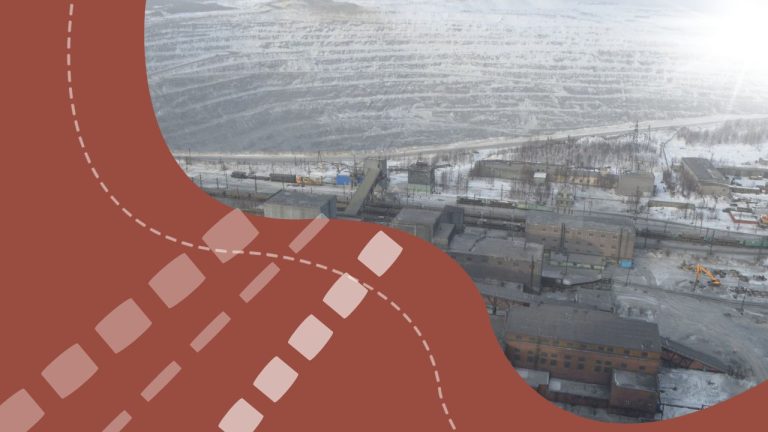
    The bulk of the production came from the Kyzyl asset (Bakyrchik deposit), contributing 320,000 ounces, with the remainder produced at the Varvarinsk hub facilities.

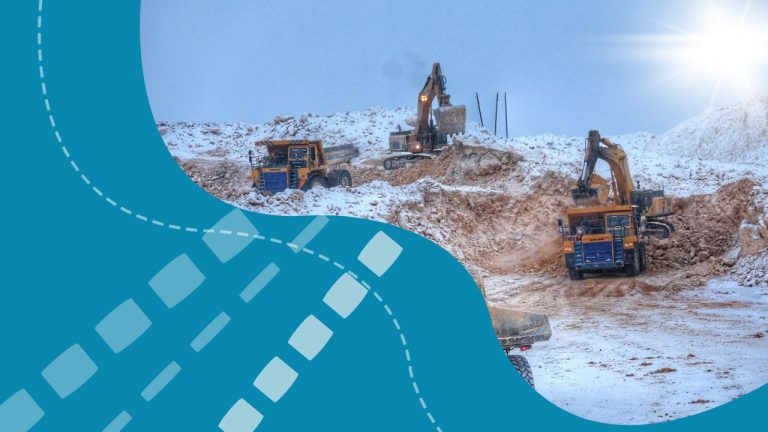
    Gold-bearing ore extraction reached 5.2 million tonnes, slightly below 2023 levels. The processing of this ore remained stable at 6.37 million tonnes. However, the average gold content in the ore gradually declined year-on-year to 2.8 g/t.

    In terms of sales, Solidcore saw a 17% increase in the volume of finished products sold, reaching 536,000 ounces of gold equivalent. This was largely driven by the Kyzyl project, which contributed 365,000 ounces to the total, a 35% rise from the previous year. The positive performance was partially due to the unloading of concentrate stockpiled the previous year, following logistical challenges.

    The increased sales volume, combined with record-high gold prices, led to a near-doubling of Solidcore’s revenue, which reached $1.327 billion. As of the end of 2024, the company’s net cash position had risen to $374 million.

    Looking ahead to 2025, Solidcore forecasts a decrease in production to 470,000 ounces, primarily due to the planned reduction in gold content and recovery rates at both the Kyzyl and Varvarinsk operations.

  • Kazakhstan’s Gold Mining Industry Faces Challenges and Opportunities

    Kazakhstan’s Gold Mining Industry Faces Challenges and Opportunities

    At the recent V Forum of Gold Industry in Astana, Aida Alzhanova, Deputy General Director for Strategic Development of Polymetal Eurasia, discussed the current state of the industry and the company’s business growth plans.

    Aida addressed concerns about the depletion of the mineral resource base in the gold mining industry, despite experts’ optimism about Kazakhstan’s subsurface resources. The industry faces significant challenges, including the depletion of the mineral resource base, which is seen as a fundamental issue. Gold mining companies are increasing production rates annually, but the real growth in reserves is slow, with exploration and preparation of deposits taking seven to eight years on average. No major gold deposits have been discovered since independence, and many operations rely on Soviet-era discoveries. Some enterprises consider short-term extraction of off-balance ores, and some plants continuously seek external raw materials.

    Two primary reasons for these challenges are the low investment attractiveness of geological exploration, especially greenfield, and the bureaucratic process of obtaining permits for sample export for research. Investment incentives, such as real VAT exemptions for both subsoil users and service companies, are seen as effective tools. A significant issue for the entire mining sector is the non-return of payable VAT, which deters investors.

    Another major challenge is the low intensity of geological exploration. A bureaucratic process hampers the export of samples for analysis, with delays due to local accreditation requirements. The only internationally accredited laboratory, ALS Kazgeokhimia, is overloaded, with standard analyses taking 45 to 60 days, which is too long given the short field season in many regions. Accelerating exploration would benefit from the launch of a digital geological information database, which would facilitate AI implementation, expedite site selection, and increase the chances of discovering good deposits.

    To replenish the mineral resource base, Polymetal Eurasia actively collaborates with junior companies. The 2017 Subsoil Code simplified exploration rights acquisition, boosting domestic junior business and improving geological study quality. The company has about 20 exploration licenses and several for geological study, covering over 70,000 square kilometers. They are also developing digital solutions for managing large volumes of geoinformation and constructing an analytical laboratory with a capacity of 200,000 samples per year.

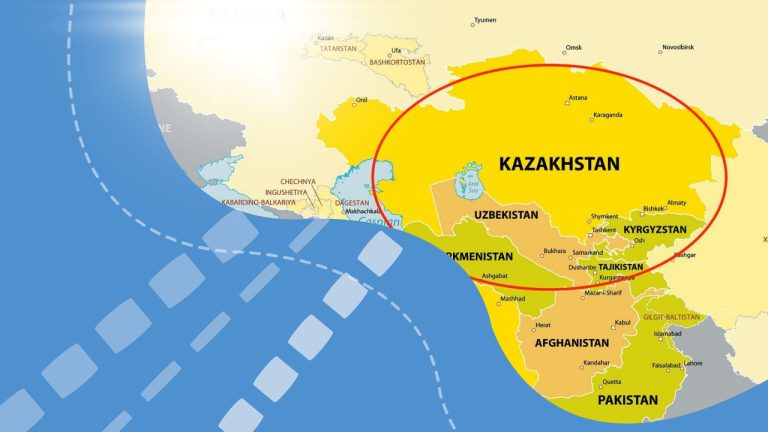
    Following the sale of Russian assets and the company’s rebranding to Solidcore Resources plc, Polymetal’s focus has shifted to prioritizing Kazakhstan. The strategy involves developing processing hubs in eastern and northern Kazakhstan and pursuing greenfield projects to establish new hubs. Long-term growth involves acquiring new deposits with assessed or ready-for-final-evaluation reserves, with domestic junior companies being key partners in this endeavor.

    Polymetal plans to invest approximately $1 billion, primarily in building a metallurgical plant in Pavlodar (Irtyshsky GOK) and expanding the company’s asset portfolio, including exploration and M&A activities.

  • Title: Polymetal Announces Name Change to Solidcore Resources plc Amid Sanctions and Business Restructuring

    Title: Polymetal Announces Name Change to Solidcore Resources plc Amid Sanctions and Business Restructuring

    Gold mining company Polymetal has announced its intention to rename the business to Solidcore Resources plc, according to a release obtained by “Kursiva”. The move comes in the wake of U.S. sanctions following the sale of its Russian operations, which retained the name “Polymetal”. The company’s leadership is seeking shareholder approval for the new name. Polymetal’s release also highlights that the sale of its Russian business has significantly reduced debt and increased liquidity, necessitating investments of over $1 billion in projects in Kazakhstan and Central Asia, particularly the new Irtysh GOK and merger and acquisition deals. The company notes that due to ongoing complex geopolitical and macroeconomic conditions, and the lack of access to major debt financing sources, the board recommends not paying dividends for the year ending December 31, 2023. Polymetal has also completed its re-domiciliation from Jersey to the Astana International Financial Centre (AIFC) and is now listed on the AIX and Moscow Exchange.

  • Polymetal Completes Sale of Russian Assets, Focuses on Kazakhstan Operations

    Polymetal Completes Sale of Russian Assets, Focuses on Kazakhstan Operations

    Polymetal (Polymetal International plc) announced on March 11 the completion of the sale of its Russian assets. Polymetal, the second-largest gold producer in Kazakhstan, disclosed this information, as reported by Orda.kz.

    According to the company’s press service, Polymetal finalized the sale of 100% of the shares of JSC “Polymetal” (the holding company of the group’s Russian assets) to AO “Mangazeya Plus.” This move was aimed at mitigating risks. Vitaly Nesis, CEO of Polymetal, stated that the company intends to present a new strategy and capital allocation policy in May.

    “After the completion of the deal, the group’s net cash position is approximately $130 million,” the Polymetal press release stated.

    Polymetal Group is the second-largest gold producer in Kazakhstan, with two production assets in the country: Kyzyl (Bakyrchik deposit, Abai region) and Varvarinsky Hub (Varvarinsky and Komarovsky deposits, Kostanay region). The company also controls Irtysh GMK. Polymetal is registered with the MFCA with its head office in Astana, and its largest shareholder (23.9% stake) is Maaden International Investment from Oman.

    The company’s shareholders approved the sale of Russian assets at a meeting on March 7. The deal aims to restore the shareholder value of the Polymetal group by reducing risks. Selling the Russian business will enable the company to focus on the development and exploration of Kazakh deposits.

    Polymetal International plc was one of the companies that relocated to Kazakhstan from Russia. It was reported in May 2023 that the group was shifting its focus to the development of its Kazakh business and would be registered with the MFCA.

  • Polymetal International has recently taken significant steps towards divesting its Russian business.

    Polymetal International has recently taken significant steps towards divesting its Russian business.

    Listed on AIX in Astana (Kazakhstan) Polymetal International plc has recently taken significant steps towards divesting its Russian business. On 19 February the company has entered into contracts for the divestment, aiming to preserve shareholder value and reposition its strategy. The proposed transaction involves selling JSC Polymetal and its subsidiaries, with an effective total consideration of approximately US$3.69 billion. Completion of the transaction is subject to various conditions, including shareholder approval.
    The move aligns with Polymetal’s commitment to restore shareholder value. By swiftly and transparently exiting the Russian business, the company aims to comply with sanctions and create stability. The divestment will allow Polymetal to de-risk its operations, generate stable cash flows, and explore new investment opportunities.

    The transaction will focus Polymetal’s efforts on its operations in Kazakhstan. If approved by shareholders, it will enable appropriate valuation of the company’s Kazakhstan assets and contribute to de-risking and de-leveraging the group’s operations in Kazakhstan. Notably, the US Department of the Treasury’s Office of Foreign Asset Control (OFAC) confirmed that non-US persons participating in or facilitating the transaction would not face sanctions.

    The divestment will occur through the sale of 100% of the share capital of JSC Polymetal (Polymetal Russia) to JSC Mangazeya Plus. With this strategic move, Polymetal aims to enhance its focus, streamline operations, and create value for its stakeholders.

  • Polymetal takes part in the Syrymbet tin project

    Polymetal takes part in the Syrymbet tin project

    Polymetal is exploring the reserves of the Syrymbet tin deposit together with Tin One Mining, which holds the subsoil license for this site. The publication on inbusiness.kz reported that mining companies are strengthening cooperation.
    Tin One Mining and Polymetal specialists need to select options on how to optimize the existing technological scheme for processing the deposit’s tin ores. According to representatives of the gold mining company in response to a media request, the parties have been cooperating in this direction for more than one year.

    Polymetal may potentially acquire a share in the project in the future. Incidentally, it was precisely the issue of studying the properties of ore, the lack of suitable competencies and solutions, that at one time slowed down the development of Syrymbet.

    Proposals to develop the site first came in the late 1990s, and tin mining began only in 2021. The mining and metallurgical plant at Kazakhstan’s largest tin deposit was planned to be launched by 2025, according to Tin One Mining’s management.

    During a recent conference call with investors, held, the head of Polymetal, Vitaly Nesis, said that in the future the company may be interested in Kazakh deposits of copper, tin, lead, and zinc.

  • Polymetal clarified the timing of the launch of underground mining at the Bakyrchik gold deposit

    Polymetal clarified the timing of the launch of underground mining at the Bakyrchik gold deposit

    It will begin in 2035, and preparations for it five years earlier.
    Polymetal will switch to underground mining at the Bakyrchik gold deposit in the Abay region in 2035. The head of the company, Vitaly Nesis, announced this during an online conference on production results for 2023 and its fourth quarter. Open pit mining at Bakyrchik has been carried out by Polymetal under the auspices of the Kyzyl project since 2018.

    “We planned to actually start underground ore mining at Bakyrchik in 2035. But the project itself will begin in 2030 in terms of building the surface infrastructure for the underground mine and the development workings that will be required to access the ore. I think it will last more than four years. Thus, despite the fact that from the point of view of total capital expenditures, the expenses will be very significant – presumably the current estimate is $200-250 million, they will not be critical from the point of view of the amount of total capital investments,” explained the head of Polymetal, commenting on the issue in business. kz.

    Let us remind you that earlier the media reported that Polymetal intends to begin the underground mining stage at Bakyrchik in 2030, in addition, other dates were announced – 2031.

    During his speech at the online conference, Vitaly Nesis also said that in addition to searching for objects for subsoil use in Kazakhstan, where the company may be interested in deposits of base metals – copper, zinc, lead, tin, Polymetal is now engaged in a country analysis of possible projects in Tajikistan. A similar assessment has already been carried out for Uzbekistan and Kyrgyzstan, however, nothing suitable has been found there yet.

    As is known, Chinese companies dominate the mining sector in Tajikistan. More than ten years ago, Kazzinc tried to enter there through a tender for the Bolshoi Konimansur silver deposit. This spring, Polymetal management plans to travel to the mountainous republic again to visit subsoil use facilities; perhaps, already in the third quarter it will become known about any projects in this country.

    As for Russian assets, the gold mining company plans to part with them by the end of the first quarter, as was promised to the Kazakh authorities; now there is a potential buyer for this within the Russian Federation. In Russia, the company continues to have difficulties with the sale of finished product reserves; a significant tightening of control over the export of precious metals has led to the accumulation of concentrates from Kyzyl, Albazino, Nezhdaninsky, Vorontsovsky and Maysky in seaports, Polymetal indicated in a release for the past quarter.

    “Our Russian subsidiary continues to make efforts to convert inventory into sales in Russia, which also affects sales from Kazakhstan, since a significant portion of the concentrate from Kyzyl is sold as a mixture with pure Russian concentrate. As a result, we are seeing an accumulation of concentrates from Kyzyl, Albazino, Nezhdaninsky, Vorontsovsky and Maysky in all directions in seaports. We continue to hope that this issue will be resolved in the first half of this year, obviously with a particular focus on Kyzyl. We inadvertently expect that the concentrate from Kyzyl this year will be much purer and will not require as much mixing as in 2023,” said Vitaly Nesis during a conference call.

    Let us remind you that high-carbon concentrate from Kyzyl is exported to China. In October, inbusiness.kz wrote that Polymetal faced logistical challenges when delivering gold-containing raw materials from Kyzyl to the Far Eastern harbors.

    It should be noted that in 2023, production at Kyzyl decreased to 316 thousand ounces of gold, 4% less than the 2022 production figure of 330 thousand ounces. The company explains this by a decrease in the content of precious metal in the ore of the deposit. When switching to underground mining, it can increase by 20-25%, Nesis believes.

    The decline in production at the Varvarinsky hub in the Kostanay region was even greater – by 20% from 211 thousand ounces in 2022 to 169 thousand ounces in 2023, which “is due to the lower content of Komarovsky ore in the cyanidation area and a decrease in the share of high-quality third-party ore in raw materials at the flotation section,” as specified in the Polymetal release. In total, the company produced 486 thousand ounces (approximately 15.1 tons) in Kazakhstan last year, which can hardly be called achieving the previously planned figure of half a million ounces. By the way, in the context of the unclear prospect of the withdrawal of capital expected from the upcoming sale of Russian mines and the planned capital expenditures for the Irtysh MMC, Polymetal was not able to completely free itself from the debt load of its Kazakh assets – at the end of 2023 they reached $171 million.

    Meanwhile, the cost of gold production in Kazakhstan began to be strongly influenced by tariffs for electricity and freight transportation by rail, growing from year to year.

    “The Company expects cash costs (TCC) of US$ 900 – 1,000 and all-in cash costs (AISC) of US$ 1,250 – 1,350 per gold equivalent ounce. The increase compared to the previous year is mainly due to a sharp increase in tariffs for electricity and rail transportation in Kazakhstan,” the final release states.

    Commenting on the publication’s questions about how the growing tariffs of KTZ and the electric power industry will affect the cost of production in Kazakhstan in the next five years, Vitaly Nesis noted that the company is not particularly trying to analyze tariffs on the railway due to uncertainty, but in energy supply it plans ensure your own generation.

    “From an electricity perspective, we believe tariffs will rise in real terms by at least 20% per annum over the next five years. Therefore, we continue to invest in our renewable energy facility: solar energy plus gas (gas piston station – approx.) at Varvarinsky, and then we have plans to do the same at Kyzyl. The only way to avoid significant increases in electricity prices in Kazakhstan is to switch from expensive coal power to renewable energy sources, which are much cheaper and more environmentally friendly, and this is our strategy in this regard,” Nesis noted.

    PS This material was adapted on February 2, 2024 at 18.30 after receiving updated information that the subsoil use contract for the Bakyrchik gold deposit was extended until December 31, 2030.

  • Polymetal transferred Bakyrchik from a mining contract to a license

    Polymetal transferred Bakyrchik from a mining contract to a license

    The subsoil use agreement for the gold deposit in the Abay region expired in July 2023.

    Polymetal transferred the Bakyrchik gold deposit in the Abay region from a mining contract for subsoil use to a license. The head of the company, Vitaly Nesis, announced this during an online conference on production results for 2023 and its fourth quarter. Mining at Bakyrchik has been carried out by Polymetal under the auspices of the Kyzyl project since 2018.

    “The subsoil use contract has expired. In fact, Bakyrchik now has a license. For the last three or four years, I think, it has been possible to exploit the subsoil in Kazakhstan either under the previous system of contracts or under the new system of licenses. We decided that we would try to do as many licenses as possible, and Bakyrchik actually switched to a license last year.” – said the top manager, commenting on the question from inbusiness.kz.

    According to the list of existing contracts for subsoil use of the Ministry of Industry, the agreement for Bakyrchik was issued in 1997 and ended in July 2023. The publication’s correspondent was unable to find a new license for this field in the register of the industry department, which was last updated in June last year, although previously it was updated with fresh data much more often.

    In addition, commenting on questions from inbusiness.kz, Nesis clarified the timing of the launch of underground mining at Bakyrchik.

    “We planned to actually start underground ore mining at Bakyrchik in 2035. But the project itself will begin in 2030, in terms of building the surface infrastructure for the underground mine and the development workings that will be required to access the ore. I think it will last more than four years. Thus, despite the fact that in terms of total capital expenditures the costs will be very significant – presumably the current estimate is $200-250 million, they will not be critical in terms of the amount of total capital investments,” explained the head of Polymetal.

    During his speech at an online conference, Vitaly Nesis said that, in addition to searching for objects for subsoil use in Kazakhstan, where the company may be interested in deposits of base metals – copper, zinc, lead, tin, Polymetal is now engaged in a country analysis of possible projects in Tajikistan. A similar assessment has already been carried out for Uzbekistan and Kyrgyzstan, but nothing suitable has yet been found there.

    As is known, Chinese companies dominate the mining sector in Tajikistan. More than ten years ago, Kazzinc tried to enter there through a tender for the Bolshoi Konimansur silver deposit. This spring, Polymetal management plans to travel to the mountainous republic again to visit subsoil use facilities; perhaps, already in the third quarter it will become known about any projects in this country.

    As for Russian assets, the gold mining company plans to part with them by the end of the first quarter, as was promised to the Kazakh authorities; now there is a potential buyer for this within the Russian Federation. In Russia, the company continues to have difficulties with the sale of finished product reserves; a significant tightening of control over the export of precious metals has led to the accumulation of concentrates from Kyzyl, Albazino, Nezhdaninsky, Vorontsovsky and Maysky in seaports, Polymetal indicated in a release for the past quarter.

    “Our Russian subsidiary continues to make efforts to convert inventory into sales in Russia, which also affects sales from Kazakhstan, since a significant portion of the concentrate from Kyzyl is sold as a mixture with pure Russian concentrate. As a result, we are seeing an accumulation of concentrates from Kyzyl, Albazino, Nezhdaninsky, Vorontsovsky and Maysky in all directions in seaports. We continue to hope that this issue will be resolved in the first half of this year, obviously with a particular focus on Kyzyl. We inadvertently expect that the concentrate from Kyzyl this year will be much purer and will not require as much mixing as in 2023,” Vitaly Nesis said during a conference call.

    Let us remind you that high-carbon concentrate from Kyzyl is exported to China. In October, inbusiness.kz wrote that Polymetal faced logistical challenges when delivering gold-containing raw materials from Kyzyl to the Far Eastern harbors.

    It should be noted that in 2023, production at Kyzyl decreased to 316 thousand ounces of gold, 4% less than the 2022 production figure of 330 thousand ounces. The company explains this by a decrease in the content of precious metal in the ore of the deposit. When switching to underground mining, it can increase by 20-25%, Nesis believes.

    The decline in production at the Varvarinsky hub in the Kostanay region was even greater – by 20%, from 211 thousand ounces in 2022 to 169 thousand ounces in 2023, which “is due to lower grades in Komarovsky ore at the cyanidation site and a decrease in the share of high-quality third-party ore in the feedstock at the flotation section,” as specified in the Polymetal release. In total, the company produced 486 thousand ounces (approximately 15.1 tons) in Kazakhstan last year, which can hardly be called achieving the previously planned figure of half a million ounces. By the way, in the context of the unclear prospect of the withdrawal of capital expected from the upcoming sale of Russian mines, and the planned capital expenditures for the Irtysh MMC, Polymetal was not able to completely free itself from the debt load of its Kazakh assets – at the end of 2023 they reached $171 million.

    Meanwhile, the cost of gold production in Kazakhstan began to be strongly influenced by tariffs for electricity and freight transportation by rail, growing from year to year.

    “The Company expects TCC to be US$900-1,000 and AISC to be US$1,250-1,350 per GE ounce. The increase compared to the previous year is mainly due to a sharp increase in tariffs for electricity and rail transportation in Kazakhstan,” the final release states.

    Commenting on the publication’s questions about how the growing tariffs of KTZ and the electric power industry will affect the cost of production in Kazakhstan in the next five years, Vitaly Nesis noted that the company is not particularly trying to analyze tariffs on the railway due to uncertainty, but in energy supply it plans ensure your own generation.

    “From an electricity perspective, we believe tariffs will rise in real terms by at least 20% per annum over the next five years. Therefore, we continue to invest in our renewable energy facility: solar energy plus gas (gas piston station – Note) at Varvarinsky, and then we have plans to do the same at Kyzyl. The only way to avoid significant increases in electricity prices in Kazakhstan is to switch from expensive coal power to renewable energy sources, which are much cheaper and more environmentally friendly, and this is our strategy in this regard,” Nesis noted.

  • Polymetal enterprises in the Republic of Kazakhstan produced 486 thousand ounces of gold equivalent

    Polymetal enterprises in the Republic of Kazakhstan produced 486 thousand ounces of gold equivalent

    In 2023, Polymetal’s assets in the Republic of Kazakhstan – Kyzyl and Varvarinskoye – brought in 486 thousand ounces in gold equivalent. The production of precious metals decreased by 10% compared to the year before, follows from the report of the gold mining company.

    Polymetal’s total production was 1.7 million ounces. The company achieved almost the same result in 2022.

    At the Bakyrchik deposit (Kyzyl project) in 2023, gold ore production increased by 9% – to 2.43 thousand tons. However, due to the fact that the subsoil user is now extracting ores with a lower precious metal content, gold production has decreased decline In total, the asset produced 316 thousand ounces (−4% for the year).

    At the deposits of the Varvarinsky hub – Varvarinsky and Komarovsky – production fell from 3.86 thousand to 2.83 thousand tons. Ore processing remained almost at the level of last year. The total volume of precious metal issued decreased, according to plan, to 169 thousand ounces (−20% year-on-year).

    The Amur MMC increased its capacity to 66 thousand tons. In 2022, the enterprise processed 37% less ore.

    The gold miner’s revenue exceeded $3 billion. In annual terms, the figure increased by 8%, but only due to Polymetal’s assets in the Russian Federation. The Kyzyl and Varvarinskoye projects, in turn, brought the manufacturer $893 million – 4% less when compared to the year before.

    In 2024, Polymetal will make a final decision on the development of the Irtysh MMC. A site has already been allocated for the plant in the SEZ near Pavlodar. The company expects that this year the production of precious metals at Kazakh assets will remain at the 2023 level.

  • Russian tycoon Nesis’s group sells Polymetal stake to Omani fund

    Russian tycoon Nesis’s group sells Polymetal stake to Omani fund

    CT Holding, led by Russian billionaire Alexander Nesis, sold its entire holding in a gold producer to a Omani state-backed fund.

    ICT’s unit closed the deal to sell 23.9% in Polymetal International to a subsidiary of Oman’s Mars Development and Investment, the miner said in a statement Monday. The value of the deal wasn’t disclosed, but the stake was worth about $550-million based on its market value on Friday.

    Polymetal, which generates about 70% of its sales in Russia and the remainder in Kazakhstan, re-domiciled from Jersey to Astana last year. It was a first step toward spinning off its Russian business, but the unit was put on sale when it was added to a US sanctions list in May. The parent company as well as the billionaire Nesis are not under sanctions.

    The buyer, Maaden International Investment, “has confirmed its full support of Polymetal’s strategy, which includes de-risking the company’s business by disposing its Russian operation and further developing its asset base in Kazakhstan and the wider region,” Polymetal’s CEO Vitaly Nesis said in the statement.

    Maaden, which has become the largest investor in Polymetal, said it supports the management and the board, according to the statement.