Tag: Poland

  • Poland Requests Extension of EU Coal Plant Subsidies Until 2028 Amid Transition to Nuclear Energy

    Poland Requests Extension of EU Coal Plant Subsidies Until 2028 Amid Transition to Nuclear Energy

    Poland, in a bid to facilitate its transition to nuclear energy by the next decade, is seeking an extension of EU rules permitting coal plant subsidies until 2028. Maciej Bando, the deputy climate minister responsible for strategic energy infrastructure, emphasized the necessity of coal power generation until nuclear facilities become operational. With coal currently contributing 60% of electricity output and serving as a backup for intermittent renewable sources, Warsaw aims to have its first large-scale nuclear plant operational by 2033. Bando highlighted the potential collaboration among EU nations seeking support for their energy assets, citing Germany’s pursuit of EU approval for gas plant subsidies. Despite plans for a floating liquefied natural gas terminal in Gdansk, Bando suggested its expansion might not be necessary until after 2030 due to lower demand projections.

  • Poland’s Turów Coal Mine Closure Sparks Debate on Environmental Policy and Economic Stability

    Poland’s Turów Coal Mine Closure Sparks Debate on Environmental Policy and Economic Stability

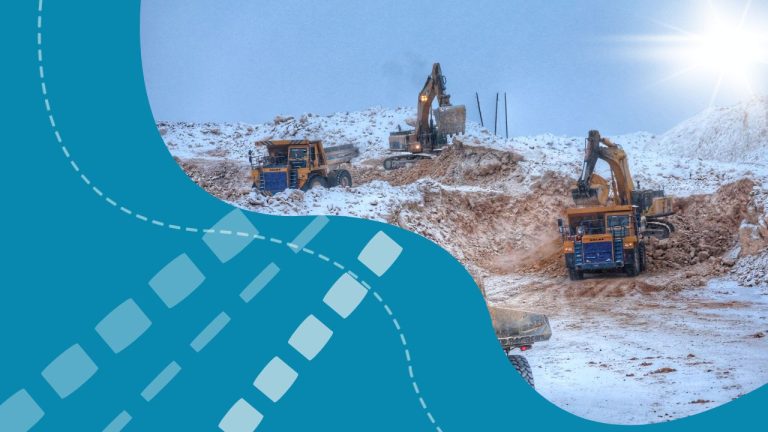
    Poland finds itself at a critical juncture as it grapples with the impending closure of the Turów coal mine, a decision fraught with implications for both environmental sustainability and economic prosperity. Prominent Members of the European Parliament from Poland’s Law and Justice party, Anna Zalewska and Dominik Tarczyński, have vehemently opposed a recent court ruling mandating the mine’s closure, attributing it to the stringent environmental regulations of the European Green Deal. This development has ignited a heated debate, highlighting the intricate balance between judicial decisions, environmental policy, and economic interests.

    Unveiling the Controversy: Turów Mine’s Closure The closure order stems from a court decision that invalidated the environmental permit for the Turów coal mine in Poland’s Dolnośląskie region. Central to the ruling was the absence of a Polish-Czech agreement within the permit, raising concerns over the potential influence of political agendas on judicial proceedings. This decision not only raises doubts about Poland’s energy security but also triggers discussions on the judiciary’s role in shaping environmental policy amidst the backdrop of the European Green Deal’s demands.

    Political Rhetoric vs. Action: A Closer Look at the Opposition The Law and Justice party’s opposition extends beyond the mine’s closure, accusing opposition parties of hypocrisy regarding environmental concerns. They criticize what they perceive as a gap between public statements advocating for Polish farmers and energy security and actions taken in the European Parliament, particularly concerning trade policies with Ukraine. This exposes the complexities of domestic politics conflicting with international obligations, further complicating discussions surrounding the European Green Deal’s implications for Poland.

    Energy Security and Economic Interests at Stake Amidst these challenges, Zalewska and Tarczyński call for urgent measures to safeguard Poland’s energy security and economic stability. Their demands resonate with a considerable portion of the population and industry stakeholders who fear the economic fallout of stringent environmental regulations. The ongoing debate underscores the uncertainty surrounding Poland’s energy policy and its alignment with environmental sustainability objectives, posing critical questions about balancing economic growth with environmental protection.

  • Landmark Court Decision Reverberates Through Poland’s Energy Landscape

    Landmark Court Decision Reverberates Through Poland’s Energy Landscape

    In a groundbreaking decision with far-reaching implications for Poland’s energy sector, the Voivodeship Administrative Court (WSA) in Warsaw has overturned an environmental ruling concerning the Turów lignite coal mine, operated by PGE GiEK. While the ruling doesn’t immediately halt mine operations, it underscores the delicate balance between energy demands and environmental preservation, prompting state-owned power company PGE GiEK to contemplate future strategies.

    Background and Court Ruling: The court’s ruling follows a lawsuit challenging the environmental impacts of the Turów mine, situated near the Polish-Czech border. Criticizing the lack of consideration for a bilateral agreement with the Czech Republic addressing cross-border mining effects, the WSA’s decision resonates beyond legal realms. Despite the verdict, Turów’s operations, vital for Poland’s electricity supply, remain unaffected. PGE GiEK vows compliance with environmental standards and continues investing in mitigating measures.

    Environmental Measures and Investments: PGE GiEK’s substantial investments target minimizing Turów mine’s environmental footprint. Initiatives include constructing an underground anti-filtration screen to safeguard Czech water resources and implementing various ecological and noise-reduction endeavors. These efforts underscore Poland’s struggle to balance energy demands with environmental obligations, shaping the nation’s energy transition trajectory.

    Implications for Future Energy Policy: Although subject to further legal proceedings, the court ruling prompts reflection on Poland’s coal mining future and its broader energy policy. Amidst efforts to diversify energy sources and reduce coal dependency, the Turów case epitomizes the challenges of transitioning towards sustainable energy while ensuring energy security. Beyond Turów, the discourse resonates with Poland’s energy direction and environmental legacy considerations.

  • Kalisz, Poland, Secures PLN 14 Million Funding for Geothermal Drilling Project

    Kalisz, Poland, Secures PLN 14 Million Funding for Geothermal Drilling Project

    The City of Kalisz in Poland is poised to embark on an exploratory geothermal drilling initiative, thanks to PLN 14 million (approx. USD 3.5 million) in funding from the National Fund for Environmental Protection and Water Management (NFOSiGW). The financial support, granted based on Kalisz’s application, aims to subsidize the drilling of a vertical borehole, reaching a depth of 1700 meters at a designated site near the Aquapark swimming pool complex within the 2024-2025 timeframe. Kalisz Mayor Krystian Kinastowski expressed satisfaction, emphasizing the city’s long-standing efforts in project development and analysis. The geothermal well is expected to provide insights into the resource, aiding decisions on potential applications for heating or recreational purposes. Professor Jacek Zimny highlights the region’s geothermal potential, particularly along the Poznan–Konin-Kalisz-Sieradz line, deemed the “valley of warm,” with a relatively shallow reservoir at about two kilometers. Encouragement also stems from the successful utilization of geothermal heat in the nearby town of Uniejow. Geotermia Uniejow’s co-generation plant has been operational since the early 1990s, utilizing geothermal, biomass, and oil sources. Geothermal wells in Uniejow, reaching depths of approximately 2000 meters, serve as a promising precedent. The NFOSiGW’s commitment to geothermal development in Poland is evident, having allocated PLN 530 million in subsidies to 18 localities for geothermal research and appraisal well drilling by the end of 2023. Progress is already underway in Gniezno, Otwock, and Zyrardow.

  • Poland Emerges as Silver Giant: Implications and Challenges

    Poland Emerges as Silver Giant: Implications and Challenges

    Recent weeks have witnessed a surge of headlines in Poland, revealing a stunning revelation: the country harbors vast silver resources estimated at half a trillion zloty. This development has catapulted Poland into the spotlight as a global leader in silver reserves, a distinction confirmed by the latest report from the U.S. Geological Survey (USGS) titled “Mineral Commodity Summaries 2024.”

    According to the USGS report, Poland boasts an impressive silver reserve of 170,000 tons, surpassing other silver-rich nations by a significant margin. Peru, the second-largest holder, lags behind by 60,000 tons. Despite its recent emergence, Poland has swiftly risen to become the fifth-largest global producer, generating 1,300 tons of silver in 2023.

    This substantial update in reserves, from the previously reported 65,000 tons to the current 170,000 tons, is based on data from Poland’s Geological Service. Earlier indications of this wealth were hinted at in a 2023 report, which highlighted substantial copper and silver deposits across regions like the Fore-Sudetic Monocline and the North Sudetic Basin, particularly in areas surrounding Lubin, Polkowice, and Głogów.

    At current market prices, Poland’s silver reserves are valued at approximately $127 billion, exceeding half a trillion PLN, a sum capable of potentially covering the country’s budget deficit twice over.

    However, despite the economic promise, challenges loom in the realm of silver mining. Adam Stroniawski from the Mint of Poland underscores the importance of these reserves while acknowledging the time-consuming process of accessing, mining, and refining them. He emphasizes the necessity for advanced technology, robust infrastructure, and the scattered distribution of silver deposits.

    Moreover, silver’s significance in various industrial sectors cannot be overlooked, from medicine to electronics and renewable energy. Yet, Stroniawski cautions that while silver remains undervalued and accessible, its exploitation demands careful consideration of environmental impacts and sustainable mining practices.

    The environmental implications of silver mining in Poland are significant, requiring stringent environmental protections and substantial investments in infrastructure, technology, and skills. Developing these resources sustainably is vital for meeting the growing demand for silver in critical sectors such as renewable energy.

    Poland’s ascent as a silver giant signals a pivotal moment in the global market, with potential implications for prices and industrial applications. Nonetheless, navigating the challenges inherent in silver mining demands innovative solutions and international cooperation to ensure that Poland’s newfound wealth benefits both the nation and the global community.

  • Financial support for Poland from the EU could revive the Central European steel market

    Financial support for Poland from the EU could revive the Central European steel market

    Last year, the European Commission reached an agreement on a recovery and resilience plan worth approximately 60 billion euros with Poland’s previous government, led by the nationalist Law and Justice (PiS) party. However, access to these funds, part of the EU budget for 2021-2027, was initially blocked due to concerns about changes made to Poland’s legal system. Following the election of a new government led by pro-European Prime Minister Donald Tusk in December, the first installment of around €5 billion of previously blocked EU funding was received. Additionally, an additional €6.9 billion has been applied for, with potential reforms paving the way for access to more funds. This injection of funds could significantly benefit the region’s steel mills. Poland’s recovery and resilience plan aims to use its multibillion-dollar funding to enhance residential housing for improved energy efficiency. Moreover, the Offshore Wind Fund seeks to catalyze private investment in large-scale renewable energy projects. While these developments may take time to materialize, they offer hope for a market revival. However, economic pressure persists. Steel market participants in Poland and neighboring Czech Republic have reported weak demand, particularly from key sectors like construction and automotive, largely due to reduced exports to Germany. In 2023, the German economy contracted by 0.3%, with indicators like the Hamburg Commercial Bank (HCOB) German construction sector PMI and manufacturing PMI reflecting ongoing challenges, despite some improvement in recent months. Although the steel sector in Poland and the Czech Republic remains fragile, signs of greater economic stability are emerging. Inflation rates have decreased in both countries, potentially paving the way for lower interest rates across Europe, stimulating construction and retail activity. However, an impasse between cautious purchasing behavior from buyers and the need for factories to maintain prices due to higher raw material costs has been observed. Limited domestic supply, exacerbated by production issues at Liberty Steel plants, has contributed to recent price increases. Overall, suppressed demand is expected to persist in the European steel sector in the near term. Nevertheless, the potential EU funding for Poland, coupled with hopes of lower interest rates, has improved sentiment regarding the market outlook.

  • Construction of Poland’s first offshore wind farm set to begin

    Construction of Poland’s first offshore wind farm set to begin

    Orlen announced yesterday that it has secured all the requisite construction permits, contracted all key components and secured all necessary financing. It has also started the construction of a terminal in the port city of Świnoujście that will speed up the installation of offshore wind turbines.

    “Despite the formidable challenges posed by the pandemic, supply chain disruptions and military conflict across our eastern border, we have adhered to the ambitious timeline we set from the outset,” said Orlen’s CEO, Daniel Obajtek. His firm describes Baltic wind as “Central Europe’s largest green energy project”.

    The foundation laying for the Baltic Power project is scheduled for 2024. The wind farm will comprise of 76 250-metre-high turbines, each with a unit capacity of 15 MW. Total installed capacity will reach 1.2 GW in 2026.

    Last month, Baltic Power signed loan agreements for a total of around €4.4 billion (a figure higher than the €3.6 billion initially reported) with 25 Polish and international financial institutions.

    “This is the largest financing obtained for a single investment in Poland’s history and one of the largest transactions of its kind in the offshore area in Europe,” said Orlen.

    As part of its energy transition strategy, the company also announced last month a $1 billion (4.2 billion zloty) investment in carbon capture and storage on Norway’s continental shelf.

    Poland has one of Europe’s most polluting energy sectors. The country still relies on coal to produce around 70% of its electricity, by far the highest proportion in the EU.

    But the government, which has been friendly towards the politically important coal sector, this year set a new target for Poland to produce three quarters of its energy from renewables and nuclear by 2040. The plans include offshore wind power capacity of 5.9 GW by 2030 and 18 GW in 2040.


  • Poland issues environmental permit for first nuclear power plant

    Poland issues environmental permit for first nuclear power plant

    PEJ, the Polish government company that is progressing its policy to deploy up to six reactors at multiple sites in the country by 2040, submitted the environmental impact assessment (EIA) report for the first plant to GDOŚ on 29 March 2022. GDOŚ is an expert institution responsible for environmental protection and control of the investment process.

    The EIA report examined the environmental impact of constructing and operating a plant with a generating capacity of up to 3750 MWe in the area of ​​the municipalities of Choczewo, Gniewino and Korkowa in the province of Pomerania. PEJ said the final EIA report complied with the provisions of the decision of GDOŚ, which in 2016 defined the scope of the environmental report in relation to the considered location variants and their technical sub-options, as well as in relation to the infrastructure accompanying the power plant.

    The draft decision was reviewed by the Director of the Maritime Office in Gdynia, the State Sanitary Inspector for the Pomorskie Voivodeship, the Director of the Regional Board of Water Management in Gdańsk of the State Water Holding Wody Polskie, the President of the Polish National Atomic Energy Agency, and the Minister of Climate and Environment.

    GDOŚ has now issued its final decision, which PEJ said is “a key permit obtained in the investment process, as subsequent administrative approvals, including the location decision and the construction permit, must be consistent with the terms and conditions contained in the decision on environmental conditions”.

    The obtained decision on environmental conditions determines the site variant for the first nuclear power plant in Poland, at the Lubiatowo-Kopalino site in the Choczewo municipality. It also defines the conditions of using the environment at the stage of development and operation of the facility, requirements concerning the environment protection necessary to be included in the design documentation, requirements for counteracting the effects of industrial accidents, and it also imposes an obligation of the reassessment of environmental impact, as part of the procedure for issuing the construction permit.

    The decision was preceded by national and transboundary consultations with 14 countries that applied for participation in this procedure. The national consultations, held from 20 July to 18 August 2023, included all residents of Poland, who could review the documentation and submit their comments and conclusions. The transboundary consultations were held from September 2022 until July 2023. As part of the procedure, relevant protocols were signed with all the countries involved, including four protocols signed after intergovernmental expert meetings held under Article 5 of the Espoo Convention, which contributed to closing the process within the assumed timeframe.

    “The issued decision on environmental conditions is one of the most important stages in the permitting process and brings us significantly closer to the start of the construction of the first nuclear power plant in Poland,” said PEJ President Mateusz Berger. “It defines the conditions that must be met in order to execute a nuclear investment project in compliance with environmental regulations and requirements on both the national and international level.”

    PEJ – a special-purpose vehicle 100% owned by the State Treasury – has already obtained a decision-in-principle issued by the Ministry of Climate and Environment confirming that the company’s investment is in line with the energy policy implemented by the state. In August, it applied to the head of the Pomeranian Voivodeship for a location decision for the plant.

    The Polish government selected the Westinghouse AP1000 reactor technology for construction at Lubiatowo-Kopalino in Pomerania in November 2022.

    Westinghouse and Bechtel have just signed a formal agreement to partner on the design and construction of the plant. They expect to sign an engineering services contract with PEJ within the next week.

  • Poland proposes ban on Russian diamonds, LPG in new sanctions package

    Poland proposes ban on Russian diamonds, LPG in new sanctions package

    In a proposal brought forth on Monday, Poland has put forth suggestions for new European Union sanctions against Russia in light of its invasion of Ukraine. The proposal, obtained by Reuters, advocates for a ban on Russian diamonds and Liquid Petroleum Gas as part of the sanctions. Additionally, Poland calls for aligning the sanctions against Belarus with those against Moscow.

    According to the proposal, Poland recommends prohibiting the importation of Russian diamonds, which accounted for a substantial $4.5 billion in revenue for the Russian budget in 2021. The document further suggests implementing individual sanctions specifically targeting the Russian diamond company, Alrosa (ALRS.MM). The Polish paper highlights that Alrosa has been providing support to the Russian military forces and facilitating their engagement in the war in Ukraine, both directly and indirectly, over an extended period.

    The proposal also emphasizes the need for the European Union to expand the scope of sanctions beyond diamonds and Liquid Petroleum Gas. Poland suggests that the EU should impose a ban on Information and Communication Technology (ICT) services provided to entities from Russia. This would encompass computer software, cybersecurity services, and other ICT/IT services. By restricting these services, the EU would exert additional pressure on Russia and send a clear message regarding its actions.

    It is worth noting that the European Union has already implemented eleven sanctions packages against Russia since the invasion of Ukraine in February 2022. The proposal from Poland seeks to further strengthen these measures and ensure a coordinated approach in dealing with both Russia and Belarus.

    As discussions continue within the European Union, the outcome of this proposal remains to be seen. However, the proactive stance taken by Poland underscores the commitment of member states to address the ongoing crisis and hold those responsible accountable for their actions.

  • Polish main opposition seeks green push after October election

    Polish main opposition seeks green push after October election

    Poland’s largest opposition party, Civic Platform (PO), harbors ambitious plans to expedite the country’s departure from coal if it emerges victorious in the fiercely contested upcoming election. At present, Poland heavily relies on coal for electricity generation, resulting in exorbitant power prices within Europe and a substantial carbon footprint. Such circumstances could impede the nation’s ability to attract environmentally friendly projects and export energy-intensive goods, such as steel. PO envisions a radical transformation, aiming to transition from coal to wind and solar as the primary sources of Polish electricity by the decade’s end.

    Grzegorz Onichimowski, a former CEO of the Polish power exchange and a member of the team shaping PO’s energy program, emphasizes the urgency of establishing renewable energy sources as the bedrock of Poland’s energy system. The party sets its sights on achieving between 65% and 70% of the country’s energy production from renewable sources by 2030.

    At present, coal accounts for roughly 70% of Poland’s electricity generation. PO’s energy plan, with the support of potential coalition partners from smaller left-wing and centrist groups, entails measures like unbundling state-controlled power utilities to facilitate grid access for renewable capacity. Furthermore, the party plans to loosen regulations for constructing new onshore wind farms, thereby bolstering capacity and replacing outdated turbines with more efficient ones.

    PO opposes the current government’s strategy of establishing a new state-owned company for coal-fired power plants, instead favoring the utilization of coal plants with the shortest lifespan and lowest profitability as a reserve pool for the power grid.

    While polls generally indicate that the ruling Law and Justice party (PiS) and its allies maintain a lead in the election race, the margin is narrow enough that PO, in collaboration with smaller parties, could potentially form a majority coalition. However, the implementation of its energy policy would require overcoming resistance from influential trade unions and potential presidential vetoes from PiS-aligned President Andrzej Duda.

    Although renewable energy garners broad support among the Polish populace, the election’s primary focus remains on economic concerns, encompassing double-digit inflation and escalating energy prices. Nevertheless, the opposition may capitalize on the argument that transitioning to renewables can alleviate the cost of living.

    Poland’s coal industry employs nearly 76,000 individuals, and the government has committed to sustaining coal mining until 2049. However, coal production is dwindling, leading to increased costs and reduced power generation. Embracing renewables could not only reduce energy bills but also yield savings in fuel and emission expenses.

    Moreover, Poland’s competitiveness in attracting foreign industrial investments may be at stake. As companies increasingly prioritize environmental, social, and corporate governance (ESG) criteria, the availability of renewable power for production facilities is emerging as a pivotal factor. Therefore, Poland’s commitment to a more sustainable energy transition may prove indispensable in securing investments from companies seeking cleaner energy sources.