Tag: nuclear power

  • Uzbekistan Announces Plans for Second Nuclear Power Plant to Boost Energy Supply

    Uzbekistan Announces Plans for Second Nuclear Power Plant to Boost Energy Supply

    Uzbekistan is set to construct its second nuclear power plant, as President Shavkat Mirziyoyev emphasised the necessity of stable electricity supply to attract foreign investment. The announcement was made during a ceremony for investment projects in the Khorezm region on August 17, 2026. Although details regarding the location, capacity, and timeline for the new plant are yet to be disclosed, Mirziyoyev highlighted the importance of reliable electricity and predictable energy prices for potential investors. He stated, ‘Why do investors come here? What is their first question? ‘I will bring my investment, but what will the price of electricity be? What guarantees will there be?” This underscores the government’s commitment to implementing its energy strategy through 2030, aiming to ensure dependable power supplies and reduce production costs.

    Uzbekistan’s long-term energy strategy includes a significant expansion of nuclear power, with plans to increase nuclear generation capacity from 0.3 GW by 2030 to 4 GW by 2040. This expansion would position nuclear energy as a dominant source of electricity, surpassing coal. The head of Uzatom, Azim Akhmedkhazhayev, noted that the site of the first nuclear power project has the potential for up to four large reactors, although no decisions have been made regarding such an expansion.

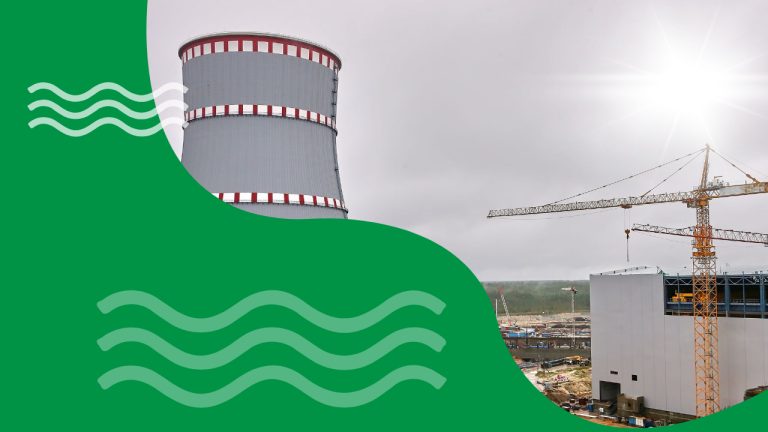
    The first nuclear power complex is currently under construction near Lake Tuzkan in the Farish district of Jizzakh region, with Russian state nuclear corporation Rosatom involved in the project. The facility will feature two small RITM-200N reactor units and two larger VVER-1000 units, with a total generating capacity of approximately 2.1 GW. These reactors are expected to commence operations between 2029 and 2035, contributing significantly to Uzbekistan’s electricity supply.

    Uzbekistan’s nuclear energy ambitions have sparked public debate, with proponents arguing that nuclear power will enhance reliability and support industrial growth, while critics express concerns over environmental safety and project costs. Public hearings regarding the first nuclear power plant were conducted in December 2025, with Uzatom reporting satisfactory outcomes. As preparations for the second plant commence, nuclear energy is poised to play a crucial role in meeting Uzbekistan’s rising electricity demand and fostering future investment.


  • Kazakhstan’s Strategic Balancing Act in the Global Uranium Market

    Kazakhstan’s Strategic Balancing Act in the Global Uranium Market

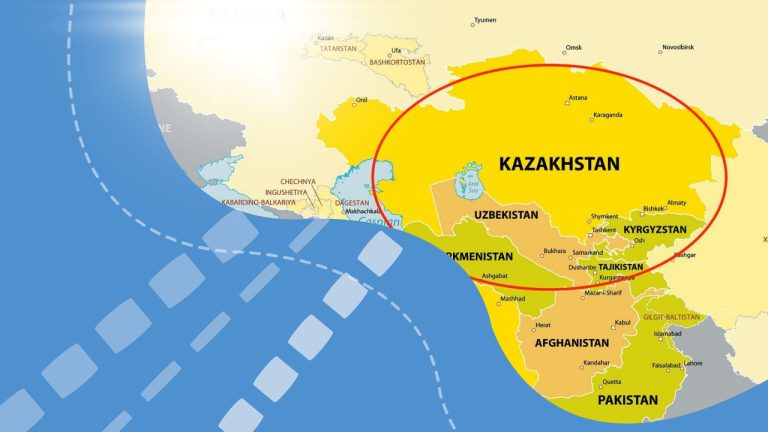
    Kazakhstan is navigating a complex geopolitical landscape in the global uranium market, which has seen significant shifts due to rising demand for green energy and geopolitical tensions. As the country accounts for nearly 40% of the world’s uranium supply, its strategic decisions are under scrutiny. Political analyst Komron Rahimov discusses the delicate balance Kazakhstan is attempting to maintain between asserting control over its resources and engaging with Russian state corporation Rosatom.

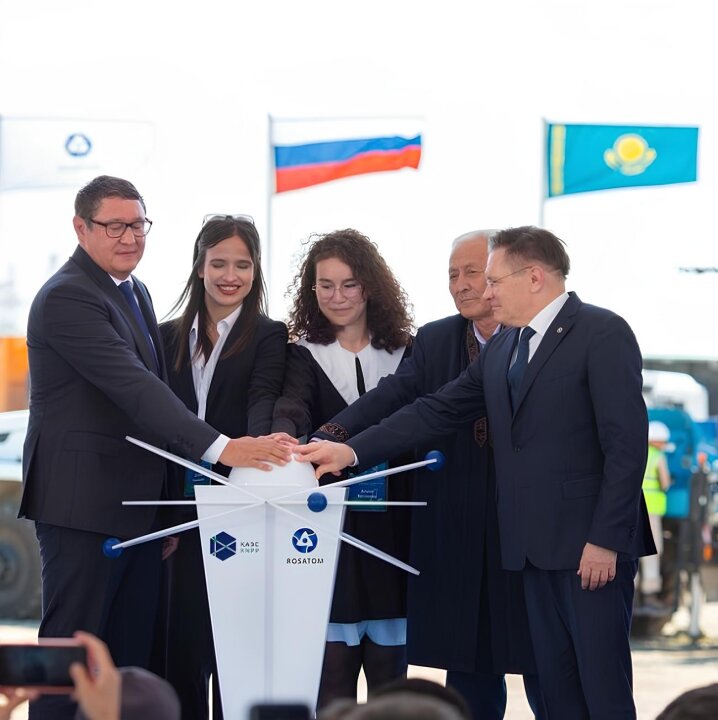
    In recent developments, Kazakhstan has unilaterally reclaimed control over the Akdala uranium deposit from Rosatom while simultaneously awarding the construction of its first nuclear power plant, the Balkhash Nuclear Power Plant, to the Russian corporation. This dual approach raises questions about whether Kazakhstan is losing control over its resources or if it is executing a calculated strategy to enhance its sovereignty. Rahimov argues that the current dynamics reflect a nuanced compromise rather than a straightforward expansion by Rosatom.

    Kazakhstan’s recent amendments to its subsoil code require that up to 90% of uranium contract renewals be allocated to the state-owned Kazatomprom, reinforcing the country’s commitment to reclaiming its natural resources. This shift has already resulted in the loss of Rosatom’s control over the Akdala deposit, which transitioned entirely to Kazakh ownership in March 2026.

    Despite these gains, Kazakhstan’s relationship with Russia remains significant, particularly in high-tech sectors. The agreement for the Balkhash Nuclear Power Plant, valued at over $14 billion, sees Russia financing 85% of the project, ensuring its technological influence in the region. This dependency on Russian expertise and nuclear fuel could pose long-term challenges for Kazakhstan’s energy independence.

    Rahimov highlights that while Kazakhstan is enhancing its economic sovereignty by reclaiming resources, it is also entering a strategic alliance with Russia that could bind it to Russian technology and services for decades. The construction of the Balkhash plant is expected to take around ten years, further solidifying Russia’s presence in Kazakhstan’s energy sector.

    The geopolitical landscape is further complicated by sanctions against Rosatom from the United States, which could impact Kazakhstan’s access to Western financial markets. However, Kazakhstan is actively diversifying its uranium export routes, with China emerging as a significant buyer, accounting for 44% of its revenue. The development of the Trans-Caspian route aims to mitigate risks associated with reliance on Russian supply chains, although its capacity limitations present challenges.

    In conclusion, Kazakhstan’s multi-faceted strategy reflects a sophisticated balancing act between asserting its resource sovereignty and maintaining essential partnerships. The country is poised to navigate a complex geopolitical environment while striving to secure its long-term interests in the uranium market.


  • Sweden Lifts Uranium Mining Ban, Opening Path to Exploration from January

    Sweden Lifts Uranium Mining Ban, Opening Path to Exploration from January

    Sweden’s parliament, the Riksdag, has voted to repeal a 2018 moratorium on uranium mining, reopening the country to exploration and production beginning January 1. The decision restores uranium’s status under the Minerals Act, enabling companies to apply for exploration and mining concessions after a seven-year freeze.

    The move positions Sweden — which holds an estimated 27% of Europe’s known uranium resources, according to the Geological Survey of Sweden — to play a larger role in Europe’s energy transition and nuclear fuel supply security.

    “It is very positive that the Riksdag is now backing the government’s proposal,” said Maria Sunér, CEO of the Swedish Mining Association (Svemin). “There are no factual reasons for uranium to be treated differently than other metals, and it is therefore entirely reasonable that we now have the opportunity to utilize the resources found in our bedrock efficiently.”

    A municipal veto on handling small quantities of uranium was also narrowed, reducing local barriers to development.


    Policy Shift and Strategic Context

    The repeal caps a two-year legislative push led by Sweden’s Climate and Enterprise Ministry. The government formally presented the bill in August 2025, describing uranium as strategic for both nuclear energy expansion and raw-materials security.

    Sweden operates six nuclear reactors, supplying roughly one-third of the nation’s electricity. Plans are underway to build several new reactors over the next decade to meet surging power demand.

    The change also aligns with broader EU supply-chain resilience goals, as the bloc seeks to reduce its dependence on imported uranium, particularly from Russia.


    Exploration Ready to Resume

    Several companies are preparing to act immediately.

    Australian explorer Aura Energy (ASX: AEE; AIM: AURA), which controls the Häggån polymetallic deposit in Jämtland, has already submitted a 25-year exploitation permit to Sweden’s Mining Inspectorate. Häggån’s JORC resource includes roughly 800 million lb of uranium oxide (U₃O₈) within a 2.55-billion-tonne vanadium deposit.

    “This vote means that from now on uranium has the potential to be an important contributor to Sweden’s economy and energy security and to support the region’s intention to triple nuclear power,” said Aura executive chairman Phil Mitchell.

    Canada’s District Metals (TSXV: DMX) also hailed the vote as a “historic step.” The company plans fieldwork in 2026 at its Viken project, including geophysics, drilling, and economic studies. Viken hosts an indicated resource of 176 million lb U₃O₈ and an inferred resource of 1.54 billion lb U₃O₈, alongside vanadium and molybdenum.


    Market Response

    Despite the legislative breakthrough, uranium developers saw modest share pullbacks:

    • Aura Energy fell 7% to A$0.20, trimming its 12-month gain to 46% (market cap A$188 million / $122 million).

    • District Metals slipped 6% to C$1.37, giving it a valuation of C$228 million ($162 million), though its stock has quadrupled in the past year.


    Next Steps

    A separate proposal is now under consultation until December 3 to redefine uranium mining so it is no longer legally classified as a nuclear installation. If adopted, that change would take effect on July 1, 2026, further simplifying the permitting process.

  • Leaked French Energy Roadmap Signals Shift Toward Nuclear, Delays Renewable Targets

    Leaked French Energy Roadmap Signals Shift Toward Nuclear, Delays Renewable Targets

    A document published Friday by the newly formed Fédération Nationale de l’Énergie Solaire (FNES) reveals the French government’s intention to pivot heavily toward nuclear power while delaying solar and wind deployment targets. Though not officially released, the document was dated today and appeared on LinkedIn, suggesting the roadmap may be imminent.

    According to the statement, the government plans to “increase nuclear development targets” and raise operational availability for existing nuclear reactors. While it does not specify the number of new nuclear units, the roadmap must align with France’s energy programming bill currently under parliamentary debate, which includes 27 GW of new nuclear capacity by 2050.

    At the same time, renewable energy goals are being scaled back or postponed. Targets for solar, onshore wind, and offshore wind have been delayed, citing “lower-than-expected power demand in recent years” and the desire to “optimise industrial returns for French manufacturers.” A draft version of the roadmap from March aimed for 65–90 GW of solar by 2035, along with 40–45 GW of onshore wind and 18 GW of offshore wind.

    Significantly, the leaked document notes the roadmap could still be revised to reflect the final outcome of the energy programming bill, set for a second reading in the National Assembly in September.

    The bill has stirred political controversy. In June, the lower house rejected it after divisive amendments, including a proposed moratorium on new wind and solar projects. The Senate later passed a revised, nuclear-heavy version in July. Critics warn that prematurely releasing the roadmap could inflame tensions, particularly among right-wing MPs who view early publication as a breach of legislative protocol.

    French energy minister Marc Ferracci recently told Sud Radio the decision to publish rests with the Prime Minister: “I’m hoping it happens quickly – our nuclear and renewables sectors need visibility,” he said.

  • China Proposes $5.47B Nuclear Power Project in Kazakhstan, Halving Estimated Cost

    China Proposes $5.47B Nuclear Power Project in Kazakhstan, Halving Estimated Cost

    China National Nuclear Corporation (CNNC) has proposed constructing two nuclear power plant units in Kazakhstan with a combined capacity of 2.4 GW for a total cost of $5.47 billion—almost half the previously estimated cost of $10–15 billion, according to The Moscow Times.

    The proposal positions CNNC as a serious contender in Kazakhstan’s ongoing selection process, which also includes bids from Russia’s Rosatom, South Korea’s KHNP, and France’s EDF. CNNC’s offer stands out not only for its lower price, but also for its commitment to share technology and grant Kazakhstan full control over the nuclear fuel cycle.

    Kazakh authorities expressed strong interest in China’s approach, particularly its experience in nuclear and water-ecological safety at all stages of nuclear plant development. The International Atomic Energy Agency (IAEA) has also pledged its readiness to support Kazakhstan in the project.

    The proposed plant would mark Kazakhstan’s return to nuclear energy following the decommissioning of the Soviet-built Shevchenko plant in 1999, which was shut down due to proliferation concerns. Now, with global energy security concerns rising and Kazakhstan holding 43% of the world’s uranium production via Kazatomprom, the country is looking to tap its nuclear potential anew.

    Kazakhstan’s Ministry of Energy had previously warned that global inflation in materials and services could increase the cost of a nuclear plant by 1.5 times, underscoring the strategic appeal of CNNC’s more affordable and flexible proposal.

  • Kazakhstan Eyes Russian Participation in First Nuclear Power Plant Project

    Kazakhstan Eyes Russian Participation in First Nuclear Power Plant Project

    Kazakhstan’s Foreign Minister Murat Nurtleu has expressed hope that Russia will participate in building the country’s first nuclear power plant (NPP). The statement was made during his meeting with Russian Foreign Minister Sergey Lavrov, according to TASS.

    “We already have over 170 joint projects with Russian businesses, and the NPP construction is among the most strategic. I hope our respective ministries will move forward with the necessary work,” Nurtleu noted.

    The project has strong public support — a referendum held on October 6, 2024, showed 71.12% of Kazakhstani voters are in favor of building a nuclear power plant. Four international companies are currently under consideration to supply technology and lead construction:

    • Rosatom (Russia)

    • CNNC (China)

    • KHNP (South Korea)

    • EDF (France)

    According to Deputy Minister of Energy Sungat Yessimkhanov, the contractor selection will be completed by June 2025. President Kassym-Jomart Tokayev has previously confirmed that the NPP will be developed through an international consortium, should the public support it.

    The first NPP will be located in the village of Ulken, Almaty region. Preparatory work has already begun, with plans to create an industrial zone, social infrastructure, and to modernize local roads and water supply systems to support NPP operations.

    Speaking at the recent National Kurultai, a major national forum, President Tokayev revealed even more ambitious plans:

    “Kazakhstan will not stop at one NPP. We are preparing to establish three nuclear power plants, alongside the formation of a dedicated Nuclear Energy Agency.”

    The push for nuclear energy comes amid Kazakhstan’s broader strategy to diversify its energy mix, reduce emissions, and strengthen energy security in the region.

  • President Zelenskiy Reveals US Proposed “Large, Comprehensive” Minerals Deal

    President Zelenskiy Reveals US Proposed “Large, Comprehensive” Minerals Deal

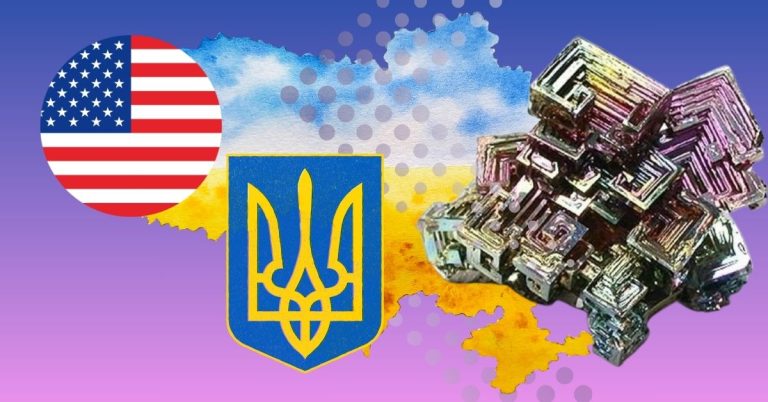
    Kyiv, Ukraine – Ukrainian President Volodymyr Zelenskiy announced on 25 March that the United States has presented a significantly expanded proposal for a minerals deal, moving beyond the initial framework agreed upon last month. This development follows President Donald Trump’s recent public statement indicating an imminent agreement between the two nations.

    The new proposal comes after a previously planned deal was derailed in February following a tense exchange between Trump and Zelenskiy at the White House. While the specific details of this “large, comprehensive agreement” remain confidential, Zelenskiy confirmed that it excludes US involvement in Ukraine’s nuclear power sector, a point previously raised by Trump.

    “Previously, we had a framework agreement, followed by the development of a full agreement. Now, the American side has proposed a grand agreement right away,” Zelenskiy stated to reporters.

    A Ukrainian official, speaking to the Financial Times, clarified that while the nuclear issue was discussed, it was ultimately omitted from the current proposal. Zelenskiy had previously acknowledged discussions regarding the Zaporizhzhia nuclear power plant, Europe’s largest, currently under Russian control, but maintained that these talks did not progress further.

    A US Treasury spokesperson, in a statement to the Financial Times, reiterated, “The United States remains committed to the quick conclusion of this vital agreement and to securing a lasting peace for both Ukraine and Russia.”

    The initial framework agreement outlined a fund where Ukraine would contribute 50% of future profits from the extraction of state-owned natural resources. Reports suggest that Ukraine possesses mineral deposits valued at upwards of $10 trillion, including crucial rare earth elements used in defense and high-tech industries. However, the economic viability of these deposits is yet to be internationally validated. Ukrainian data indicates the country holds deposits of 22 of the 34 minerals identified by the European Union as critical.

    This expanded proposal signifies a potential shift in the strategic partnership between the US and Ukraine, particularly concerning critical mineral resources, amidst ongoing geopolitical tensions in the region. The full implications of this “large, comprehensive” deal are expected to unfold as further details are released.

  • Costain Secures Major Contract to Lead Infrastructure Investment at Urenco’s Capenhurst Site

    Costain Secures Major Contract to Lead Infrastructure Investment at Urenco’s Capenhurst Site

    Costain has been awarded a significant framework contract by Urenco to lead and deliver an integrated program for infrastructure investment activities at its Capenhurst site in the UK. The contract, spanning a minimum of three years, will see Costain oversee a series of complex work programs aimed at enhancing the long-term resilience of the site, which provides uranium enrichment services for civil nuclear power stations worldwide.

    The Capenhurst site plays a crucial role in producing fuel for low-carbon electricity generation, supporting global efforts to transition to sustainable energy. A key focus of the project will be the establishment of Europe’s first High Assay Low Enriched Uranium (HALEU) advanced fuels facility, marking a significant milestone in the nuclear energy sector.

    Costain will collaborate closely with local supply chain partners, providing strategic direction, integration, assurance, and governance for the works. Sam White, Managing Director of Natural Resources at Costain, emphasized the importance of the project, stating, “Ensuring the supply of safe, low-carbon electricity is critical for creating a sustainable future. We’re bringing decades of experience in predictable, best-in-class delivery to help safeguard the UK’s energy security and support the transition to more sustainable energy generation.”

    White also highlighted Costain’s commitment to the North West region, noting that the project will create new jobs, develop skills, and drive prosperity for local communities.

  • Kazakhstan’s Nuclear Energy Future: Insights from Expert Panel Discussion

    Kazakhstan’s Nuclear Energy Future: Insights from Expert Panel Discussion

    Kazakhstan, known for its abundant uranium reserves, stands at a pivotal moment as it considers expanding its role in the global nuclear energy sector beyond mere resource supply.  In a significant move that could reshape Central Asia’s energy landscape, Kazakhstan is advancing plans to develop nuclear power capabilities, with potential implications for both domestic energy security and global nuclear fuel markets. A recent British-Kazakh Society webinar brought together international experts to examine the opportunities and challenges ahead.

    The webinar featured a panel of distinguished experts, moderated by Nicholas Pomeroy, General Director of AngloKazakh. The panel included Ben Godwin, Managing Partner at PRISM Strategic Intelligence; Aldiyar Toktarov, Chairman of the Atomic Industry Development Association; Mehmet Ogutcu, Chairman of the London Energy Club and Biplab Rakshi, Managing Director of Atomic Acquisitions.

    Nuclear Power in Kazakhstan: Ambitious Plans Meet Complex Realities

    In a significant move that could reshape Central Asia’s energy landscape, Kazakhstan is advancing plans to develop nuclear power capabilities, with potential implications for both domestic energy security and global nuclear fuel markets.  The country faces an existing electricity deficit and increasingly relies on electricity imports. With about 70% of current electricity generation coming from coal, Kazakhstan must balance its ambitious 2060 net-zero target against growing energy demands. The government’s plan to decommission all coal power plants by 2050 adds urgency to developing alternative baseload power sources.

    Following a national referendum that approved nuclear power development, Kazakhstan has announced plans for not just one, but potentially three nuclear power plants: one in the initial phase, with additional facilities proposed for West Kazakhstan (Aktau) and East Kazakhstan. This ambitious scope has raised both excitement and concerns among industry observers.

    The Consortium Question

    A key focus of Kazakhstan’s nuclear strategy is the formation of an international consortium to construct and operate the plants. While the exact composition remains unannounced, President Tokayev has pointed to Turkey’s Akkuyu nuclear project as a potential model. However, experts at the webinar highlighted both opportunities and risks in this approach.

    The Turkish model, which relies heavily on Russian state nuclear corporation Rosatom for financing and technology, has faced challenges including sanctions-related complications affecting international equipment supplies. This has led to cost overruns and delays, prompting suggestions that Kazakhstan might benefit from a more diversified partnership approach.

    Sanctions and International Partners

    The role of Russian participation emerges as a particularly complex issue. While Rosatom itself isn’t under direct sanctions, experts noted that 70 of its subsidiaries and key personnel are designated under various international sanctions regimes. This creates potential complications for international financing and technology transfer.

    Ben Godwin, partner at PRISM Strategic Intelligence, emphasised that while Russian involvement might seem inevitable given regional ties, Kazakhstan will need to carefully structure any such participation to avoid compromising other international partnerships and financing options.

    Local Content and Industrial Development

    A recurring theme in the discussion was Kazakhstan’s opportunity to develop domestic nuclear industry capabilities. Aldiyar Toktarov, chairman of the Atomic Industry Development Association, highlighted how multiple nuclear projects could create economies of scale that justify investments in local supply chains and workforce development.

    Kazakhstan’s position as the world’s largest uranium producer provides unique leverage. Experts suggested the country could use this advantage to negotiate better terms with technology vendors and potentially develop higher-value nuclear fuel cycle capabilities domestically.

    Regulatory and Financial Challenges

    The development of an appropriate regulatory framework emerges as a critical near-term priority. Currently, Kazakhstan lacks an independent nuclear regulator, though experts noted this could be developed following IAEA guidelines. The financial aspects also present challenges, with nuclear projects notorious for cost overruns. Recent examples cited include the UK’s Hinkley Point C project, whose budget has escalated from £16 billion to potentially £40-50 billion.

    Kazakhstan’s current fiscal situation adds another layer of complexity. With the country already dedicating over 20% of its budget to debt service, financing multiple large infrastructure projects simultaneously will require careful planning and potentially innovative funding approaches.

    Looking Ahead

    The path forward for Kazakhstan’s nuclear ambitions will require balancing multiple priorities. These include:

    – Developing clear criteria for consortium partners that address both technical and geopolitical considerations
    – Building robust regulatory frameworks aligned with international standards
    – Creating sustainable financing structures that don’t overburden state resources
    – Maximising local content and industrial development opportunities
    – Ensuring environmental and safety standards meet international best practices

    While the timeline for announcing the initial consortium structure appears to be measured in months rather than years, experts emphasized the importance of “hurrying slowly” to ensure proper foundation-laying for what will be a multi-decade program.

    The success of Kazakhstan’s nuclear power program could have implications beyond its borders, potentially offering a model for other developing nations seeking to balance energy security, economic development, and climate goals. However, the complexity of the challenges ahead suggests that careful planning and international cooperation will be essential for turning these ambitious plans into reality.

    The British-Kazakh Society plans to host further webinars to delve deeper into these critical areas, ensuring continued dialogue and progress. For more information on upcoming events, visit the BKS website.

  • Tokayev Pushes for Faster Nuclear Power Plant Construction in Kazakhstan

    Tokayev Pushes for Faster Nuclear Power Plant Construction in Kazakhstan

    Kazakh President Kassym-Jomart Tokayev has called for the acceleration of nuclear power plant construction in Kazakhstan. According to Tokayev, the country may build two or three large nuclear stations to advance its nuclear energy sector.

    “We are currently focused on major infrastructure projects, digitalization, artificial intelligence, and nuclear energy. These are the key strategic areas for the development of our country. The government must prioritize these critical issues in its work,” the president emphasized.

    Tokayev also discussed the future of nuclear energy in Kazakhstan, noting the need for faster progress.

    “Regarding the construction of nuclear power plants — we need to speed up. As I mentioned in an interview, we plan to build two large plants, possibly three. We must transform Kazakhstan into a country with a developed nuclear energy sector, a nation where artificial intelligence functions and digitalization is fully implemented,” he concluded.

    On October 6, 2023, Kazakhstan held a referendum on the construction of nuclear power plants in the Almaty region. Tokayev had stated that, should the public approve, the construction would be undertaken by an international consortium of companies.

    The referendum results showed that 71.12% of Kazakh citizens voted in favor of nuclear plant construction. The Ministry of National Economy announced that the state would not fund the project. Instead, the government is considering project financing, with funds potentially provided by a consortium of international financial institutions. The state would repay this loan not from the national budget, but from the revenue generated by the nuclear plants.

    Kazakhstan is currently considering four companies as potential suppliers of nuclear technology: CNNC (China), Rosatom (Russia), KHNP (South Korea), and EDF (France).