Tag: North Macedonia

  • North Macedonia Revokes 45 Mining Concessions Over Legal and Environmental Breaches

    North Macedonia Revokes 45 Mining Concessions Over Legal and Environmental Breaches

    The government of North Macedonia has terminated 45 mining concessions due to violations of legal and environmental regulations, as well as unpaid fees and unauthorized transfers, Deutsche Welle’s local branch reported.

    According to the report, 34 contracts were unilaterally terminated, while 11 expired and were not renewed. The Ministry of Economy said the decision followed findings of non-compliance, including unpaid concession fees, unauthorized transfers of rights, and extraction beyond permitted zones.

    Between January and October 1, authorities conducted 170 extraordinary inspections and 78 regular checks, resulting in the enforcement measures.

    The move comes amid tightened government oversight of North Macedonia’s natural resource sector, part of a broader effort to improve transparency, environmental compliance, and responsible resource management in the country’s mining industry.

  • North Macedonia’s ESM Plans to Open New Coal Mine Near Greek Border

    North Macedonia’s ESM Plans to Open New Coal Mine Near Greek Border

    North Macedonia’s state-owned power utility, Elektrani na Severna Makedonija (ESM), has announced plans to open a new coal mine in Zivojno, close to the Greek border, according to the Ministry of Environment and Physical Planning.

    The ministry is currently seeking public feedback on the environmental impact assessment study for the project, with submissions open until May 15.

    ESM intends to begin operations at the Zivojno mine in 2026, following a three-year preparatory phase. Despite its ambitious start, the mine is projected to have a relatively short operational life of just four years, local broadcaster Telma reported.

    The announcement comes amid North Macedonia’s broader strategy to phase out coal-fired energy production. The government has committed to closing its two existing coal plants, REK Bitola and Oslomej, by 2030, as part of its efforts to transition towards cleaner energy sources.

  • Central Asia Metals Confident About 2025 Despite Mixed 2024 Production Results

    Central Asia Metals Confident About 2025 Despite Mixed 2024 Production Results

    Central Asia Metals (CAML), the operator of the Kounrad copper recovery plant in Kazakhstan and the Sasa zinc-lead mine in North Macedonia, reported mixed production results for 2024 but remains optimistic for 2025.

    Key highlights:

    • Copper Production: Full-year output at Kounrad reached 13,439 tonnes, within guidance but slightly lower than 2023’s 13,816 tonnes.
    • Zinc and Lead Production: At Sasa, zinc-in-concentrate production totaled 18,572 tonnes and lead-in-concentrate production 26,617 tonnes, both slightly below guidance and 2023 levels.
    • Safety Record: Kounrad reported zero lost time injuries, while Sasa had two incidents.
    • Strategic Progress: Significant advancements were made at Sasa, including near-completion of the dry stack tailings (DST) plant, transition to paste-fill mining, and the central decline project.

    Financials and Outlook:
    CAML ended 2024 with a strong cash position of $67.6 million. For 2025, the company targets:

    • Copper: 13,000–14,000 tonnes
    • Zinc-in-concentrate: 19,000–21,000 tonnes
    • Lead-in-concentrate: 27,000–29,000 tonnes

    CEO Gavin Ferrar expressed confidence in achieving 2025 production guidance, citing experience gained during the 2024 transition to paste-fill mining and the anticipated operational launch of the DST plant in Q1 2025.

  • North Macedonia Advances Solar Energy with EBRD Grant for Two Photovoltaic Plants

    North Macedonia Advances Solar Energy with EBRD Grant for Two Photovoltaic Plants

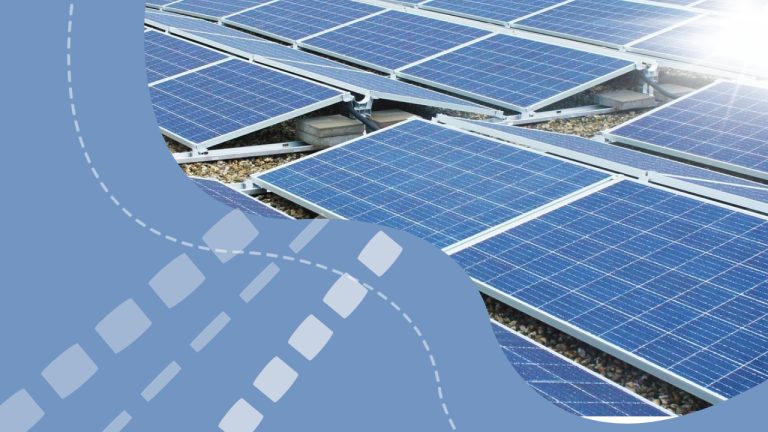
    The European Bank for Reconstruction and Development (EBRD) has allocated nearly €5 million to North Macedonia’s state energy company, ESM, to construct two photovoltaic power plants with a combined capacity of 30 MW on former coal mine sites. The projects, supported under the Western Balkans Investment Framework (WBIF), complement a €25 million loan for Bitola 1 (20 MW) and Oslomej 2 (10 MW). Set for completion by 2026, the plants will produce 46 GWh annually, serving 7,000 households and cutting CO₂ emissions by 40,000 tons.

    Energy Minister Sanja Božinovska highlighted the environmental benefits, including the reclamation of 45 hectares near Bitola and Oslomej, enhancing local conditions. The initiative aligns with broader decarbonization efforts, with EBRD’s Fatih Türkmenoğlu emphasizing its role as a model for sustainable energy transitions.

    Since 2009, North Macedonia has secured €500 million via WBIF for projects spanning energy, transport, and digitalization, further bolstered by new reform frameworks for a greener future.

  • Granit Acquires Local Mining Company Lep-Kop Invest for 5,000 Euro

    Granit Acquires Local Mining Company Lep-Kop Invest for 5,000 Euro

    North Macedonia-based construction company Granit announced the acquisition of local mining company Lep-Kop Invest for 5,000 euro ($5,528). According to a statement filed with the bourse on Tuesday, Lep-Kop Invest specializes in the extraction of gravel, sand, clay, and kaolin.

    The acquisition was completed on September 2. On the same day, Granit’s shares were trading at an average price of 1,565 denars ($28.1/25.4 euro) on the Macedonian Stock Exchange, based on the latest available data.

    Granit, established in 1952 and privatized in 1996, focuses primarily on the construction and rehabilitation of roads. The company also operates several concrete and asphalt plants, along with stone quarries.


  • Yildirim Seeks Approval for Acquisition of Euronickel Industries Assets in North Macedonia

    Yildirim Seeks Approval for Acquisition of Euronickel Industries Assets in North Macedonia

    Yildirim, a Turkish holding company, has formally requested approval from North Macedonia’s Commission for Protection of Competition (CPC) to acquire assets belonging to Euronickel Industries, formerly known as Feni Industries. These assets, currently held by local lender Komercijalna Banka, include the ferronickel producer’s facilities. Additionally, Yildirim is eyeing the purchase of assets belonging to Nova Refractories, a refractory plant based in Pehcevo, also under the ownership of Komercijalna Banka. The CPC has announced that the public has a ten-day window to provide feedback on these proposed transactions. Kingmen Refractories and Double Eagle Nickel, both local subsidiaries of Yildirim specifically established for these acquisitions, have already inked agreements with Komercijalna Banka on March 22. This move comes after Komercijalna Banka disclosed in December its acquisition of Euronickel Industries’ assets worth 37.9 million euros ($41.2 million) through a forced collection of claims. The bank, being the primary creditor of Euronickel Industries, took possession of these assets as the ferronickel producer entered bankruptcy proceedings in early February.

  • Kazakhstan, Macedonia Discuss Ways to Boost Trade Relations

    Kazakhstan, Macedonia Discuss Ways to Boost Trade Relations

    Kazakh Foreign Minister (FM) Murat Nortlu and current chairman of Organization for Security and Cooperation in Europe, and North Macedonian Foreign Minister (FM) Boyar Osmani discussed ways to strengthen trade relations, during their meeting in the capital, Astana.

    “The two sides agreed on the effective use of the resources of the Intergovernmental Committee for Trade and Economic Cooperation in order to maintain the pace of development of trade relations,” the Kazinform news agency quoted the minister as saying.

    He indicated that he agreed with Osmani to focus on promising sectors such as new technologies, energy, agriculture, mining and tourism, especially since sales of goods between Kazakhstan and North Macedonia increased in 2022 by 5.5 times.

    Nortlu emphasized that Kazakhstan could increase its commodity exports and mutual sales by $350 million.

    For his part, Osmani indicated that the OSCE attaches great importance to developing relations with Kazakhstan and Central Asia.