Tag: Nikolai Radostovets

  • MINEX Kazakhstan 2026 Calls for Second Wave of Mining Reforms as Legal Fragmentation Holds Back Investment

    MINEX Kazakhstan 2026 Calls for Second Wave of Mining Reforms as Legal Fragmentation Holds Back Investment

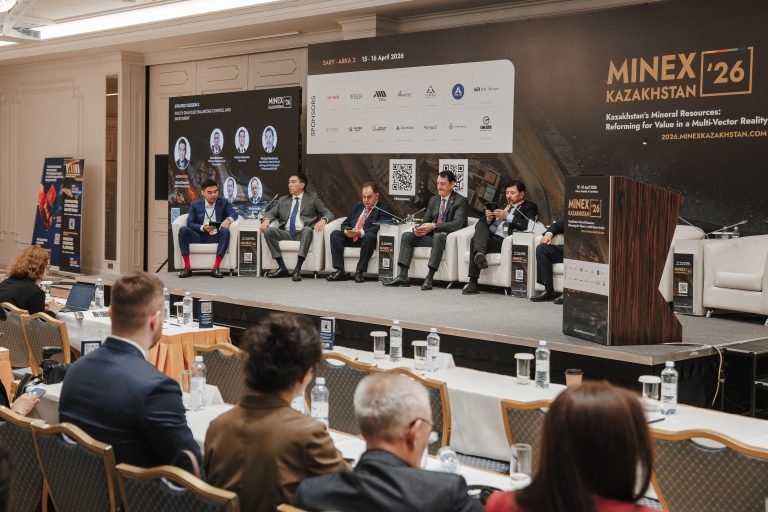
    Kazakhstan’s XVI MINEX Kazakhstan 2026 forum in Astana delivered a clear verdict: the country’s first wave of mining sector reform has laid important foundations, but a deeper, systemic second phase is now urgently needed if Kazakhstan is to realise its ambition of becoming a global critical minerals hub rather than simply remaining a large raw material exporter.

    The forum’s central thesis — articulated by speakers from government, industry and the expert community — is that mineral resources must no longer be viewed purely as export potential, but as the foundation for value creation, technological modernisation and industrial sovereignty. MINEX executive chairman Artur Polyakov set the tone in his opening remarks, noting that Kazakhstan’s endowment of more than 9,500 deposits and significant global reserves of uranium, tungsten, copper, rare earth metals, lithium and graphite, combined with its location between Europe and Asia, gives the country the potential to become one of the world’s most important critical minerals centres. “But geology alone is not enough,” he said. “The key question is not whether Kazakhstan has resources, but how the country can turn them into long-term prosperity, industrial capacity and international partnerships.”

    Vice minister of industry and construction Iran Sharkhan outlined the practical reform agenda: a transition to a royalty-based tax system replacing the mineral extraction tax, the introduction of a strategic investor status granting preferential conditions tied to domestic processing commitments, and 2025 amendments to the Subsoil Code aimed at simplifying regulation, attracting investment and digitalising procedures. Geological survey coverage has reached 2.038 million square kilometres against a 2026 target of 2.2 million square kilometres, and 17 new deposits were placed on the state register in 2025 alone.

    The most pointed intervention came from Nikolai Radostovets, executive director of the Republican Association of Mining and Metallurgical Enterprises, speaking at the forum’s strategic session on the balance between regulatory control and investment. He acknowledged that the 2018 Subsoil Code was a landmark modernisation — introducing the first-application licensing principle, new approaches to geological data management and improved investor access to exploration. But in practice, he said, the code cannot be fully implemented because it was never synchronised with the Land, Water, Environmental and Tax codes. The result is a web of administrative barriers: difficulties obtaining land rights, contradictory water legislation requirements, excessive environmental procedures and misaligned tax norms that collectively slow both exploration and production projects and erode investment attractiveness.

    The Association is calling for the second phase of subsoil reform to focus specifically on amending the adjacent codes that obstruct the Subsoil Code’s implementation. Concrete proposals include a land reservation mechanism for subsoil use purposes, simplified land allocation procedures for exploration and extraction, streamlined regulation of works in water protection zones, reduced bureaucracy in environmental permitting, and adjustments to royalty calculation methodology, processing taxation and the taxation of technogenic mineral formations.

    The forum’s conclusion was unambiguous: for Kazakhstan to secure stronger positions on the emerging global critical minerals market, it requires modern legislation, quality geological data, predictable regulation, advanced technology and sustained investor confidence — and all of these must advance together.

  • Kazakhstan Embarks on a Second Phase of Mining Sector Reform

    Kazakhstan Embarks on a Second Phase of Mining Sector Reform

    Photo: agmp.kz

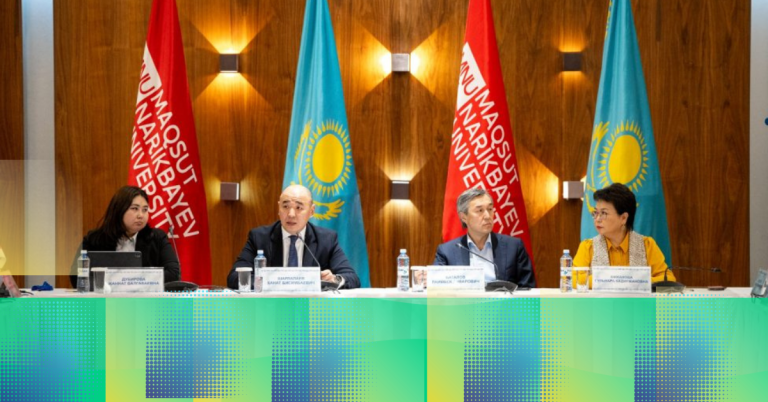
    On 26 February 2025, Maqsut Narikbayev University hosted a roundtable discussion tackling crucial issues surrounding the country’s mining sector, particularly focusing on the implementation of the Unified Platform for Mineral Resource Use (minerals.e-qazyna.kz).

    The event, chaired by Minister of Industry and Construction Kanat Sharlapaev and Acting Chairman of the Board of the National Business Chamber of Kazakhstan “Atameken” Raimbek Battayev, brought together key stakeholders, including representatives from mining companies, government agencies, and industry associations.

    Need for Continued Development:

    Minister Sharlapaev highlighted the government’s commitment to boosting Kazakhstan’s mineral resource base by intensifying geological exploration. He acknowledged the significant contributions of major mining companies in expanding these exploration areas and praised the effectiveness of the 2014-2018 legislative reforms, which introduced the licensing principle for geological exploration.

    Emphasising the need to sustain this progress, Minister Sharlapaev stressed the importance of developing a robust regulatory framework that fosters a favorable investment climate in the mining sector. He further underscored the imperative of prioritizing industrial safety, encouraging its integration into the corporate culture of mining companies.

    Unified Platform: A Transparent and Efficient System:

    Vice-Minister Zhanat Dubirova took the opportunity to present the Unified Platform for Mineral Resource Use. This online platform provides open access to all geological data, streamlining several processes.

    The platform currently offers 22 digitalised government services and has already processed 506 applications since its launch. It serves as a one-stop shop, providing potential mineral resource users with comprehensive information on a proposed site, including infrastructure details, geological reports, and available licenses.

    Dubirova pointed out the innovative aspects of the platform, such as the interactive map that allows users to visualise the land status, upcoming auctions, and relevant geological data, eliminating the need for intermediaries.

    Streamlined Control and Regulatory Framework:

    The platform also facilitates greater transparency and efficiency in monitoring compliance with licensing and contractual obligations. Previously, this control was largely manual, but now, automated verification systems will ensure real-time updates and streamline interactions between the government and mining companies.

    Towards the Second Phase of Reform:

    Nikolai Radostovets, Executive Director of the Association of Mining and Metallurgical Enterprises (AGMP), expressed support for paperless operations and emphasized the need for training on the digital platform. He proposed conducting this work systematically on a weekly basis, providing company specialists with opportunities not only for training but also for project refinement.

    Radostovets emphasized that the subsoil use reform requires further development. He proposed moving to the second stage of reform, noting that the President of Kazakhstan highlighted the continuation of subsoil use reform in his speech at an expanded government meeting.

    To address this issue, Radostovets requested the minister to resume the activities of the Working Group on amendments to the Subsoil Code, which was created last year, and to involve consultants and experts.

    “We still have many unresolved issues regarding land and water matters after the reform,” he said. “It is necessary to bring the Subsoil Code into compliance with other regulatory legal acts. AGMP has worked with companies on about 60 amendments to the Subsoil Code. On behalf of all subsoil users, we ask you to submit amendments to the Subsoil Code to Parliament this year or to finalize the draft law currently under discussion to advance reforms on a wide range of issues.”

    Minister Sharlapayev agreed with the need to further advance the reform in subsoil use and resume the Working Group’s activities. He proposed involving a law firm in developing the legislative act to ensure the document is competent, well-thought-out, and developed through collective dialogue with deputies and government agencies. According to him, there is an opportunity to submit the draft law to Parliament in 2025, as provided for in the legislative work plan.

    Industry Participation:

    The roundtable was attended by experts and executives from major companies including ERG, Solidcore Resources, Kazakhmys Corporation, Qarmet JSC, Altynalmas JSC, Kazzinc Holdings, Qaragandy Power Silicon, the Association of Precious Metals Producers, Kazakhstan Mining Chamber, Er-Tai LLP, National Geological Service, KAZRC Association, Caravan Resources LTD, TENIR LOGISTIC, Chu lli Resources Ltd, Kazakhstan Foreign Trade Chamber, Kazatomprom, and Tau-Ken Samruk.

    The meeting concluded with a question-and-answer session, highlighting the collaborative approach between government and industry stakeholders in advancing Kazakhstan’s mining sector reforms.