Tag: National Geological Service

  • Kazakhstan to Open National Laboratory for Rare Earth and Precious Metal Export Control

    Kazakhstan to Open National Laboratory for Rare Earth and Precious Metal Export Control

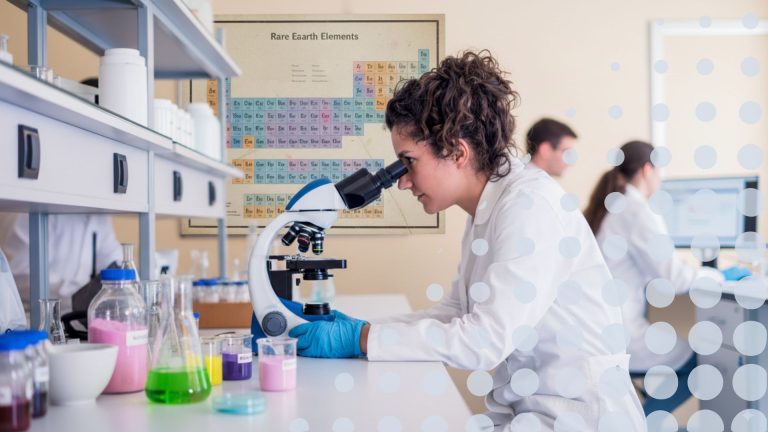
    Kazakhstan will establish a new laboratory to strengthen oversight of exported raw materials and detect the presence of rare earth elements (REEs) and precious metals, Vice Minister of Industry and Construction Iran Sharkan announced at a briefing, according to Interfax-Kazakhstan.

    The facility will be created under the National Geological Service and accredited to international standards. Its role will be to analyze the composition of ores and concentrates leaving the country, preventing the uncontrolled export of materials that may contain valuable or scarce metals.

    Sharkan emphasized that unauthorized export of rare earths remains a pressing issue for Kazakhstan, and the government is actively working to address it. The new laboratory will ensure that shipments are properly assessed before crossing borders, closing gaps in current oversight.

    The initiative follows calls made in September by the Ak Zhol party, which proposed that all export shipments of ores and concentrates undergo chemical testing in independent accredited laboratories, alongside the creation of state-run labs. The party argued that existing procedures—where analyses are commissioned directly by subsoil users—leave results unchecked and unverifiable by government authorities.

    By establishing its own laboratory infrastructure, Kazakhstan aims to tighten control, safeguard strategic resources, and ensure transparency in the country’s mineral exports.

  • Kazakhstan to Launch State-Run Lab for Rare Earth Metals Export Control

    Kazakhstan to Launch State-Run Lab for Rare Earth Metals Export Control

    Kazakhstan will create a specialized laboratory under the National Geological Service to combat the illicit export of rare earth metals (REMs), Vice Minister of Industry and Construction Iran Sharhan revealed during a briefing in Almaty on 17 September.

    Cracking Down on Illegal Exports

    The lab, which will seek international accreditation, is designed to detect and block unauthorised shipments of REMs disguised as other raw materials or concentrates. Sharhan emphasised the urgency of the measure, stating, “This allows us to identify accompanying elements in raw materials, including rare earth metals. The lab will help intercept illegal exports.”

    The announcement follows allegations by Azat Peruashev, a parliament member from the Ak Zhol party, who warned that precious and rare earth metals are being smuggled out of Kazakhstan under false labeling. He criticised the current system, where private labs contracted by mining firms handle export certifications, calling for independent, state-controlled oversight.

    Political and Industry Backing

    The Ak Zhol party has pushed for mandatory third-party chemical analysis of exported ores and concentrates, alongside potential state-run labs under government agencies.

    The National Geological Service, Kazakhstan’s primary body for geological data management, will house the new facility. The move aligns with President Kassym-Jomart Tokayev’s proposal at the Central Asia-EU Summit in Samarkand to establish a Regional Research Center for REMs in Astana.

    Recent Discoveries and Global Demand

    The decision comes as Kazakhstan reports new REM deposits in the Karaganda region. With global demand for rare earth metals surging—driven by renewable energy and tech sectors—the lab aims to ensure transparency and compliance in Kazakhstan’s mineral trade.

    “This is a critical step to protect our resources and integrate with international standards,” Sharhan concluded.

  • Unified Subsoil Use Platform Launched in Kazakhstan

    Unified Subsoil Use Platform Launched in Kazakhstan

    Kazakhstan has launched a unified platform for subsoil use, a digital system streamlining the process from applying for exploration or mining to auctioning and licensing. Kazakh Vice-Minister of Industry and Development Zhannat Dubiyrova announced the launch during a meeting of the Ministry of Industry and Infrastructure Development.

    As of today, 22 state services in the sphere of geology and subsoil use are available on the platform. The system allows potential users to pay their subscription fees directly through the platform.

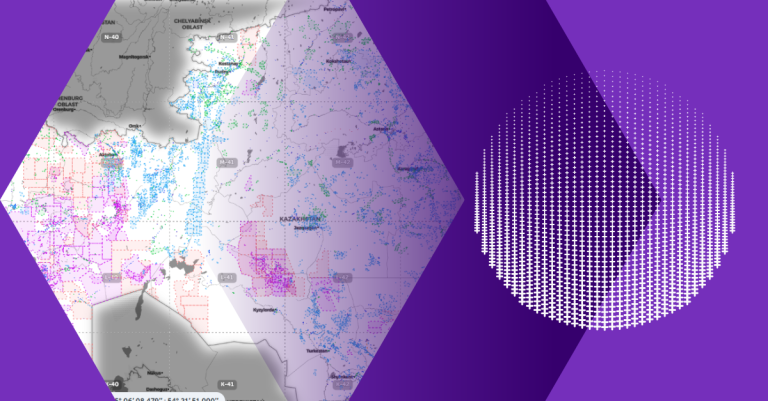
    The interactive map feature on the platform provides a comprehensive picture of the requested area, from infrastructure to geological and geophysical reports.

    Moreover, the platform automates the control process for licenses and contracts related to solid minerals, increasing transparency and efficiency. Previously, this control was conducted manually for 3,000 licenses and contracts.

    The system has also automated the annual reports of subsoil users, eliminating the need for paperwork.

    The Kazakh Government’s National Geological Service has digitized over 56,000 open secondary geological reports to populate the platform.

    The launch of the platform was the result of significant work conducted since July 2024, which included studying international experience, re-engineering business processes, and reviewing system architecture. The project was based on best practices from Finland, Canada, the United Kingdom, and the United Arab Emirates.

    The development of the platform was carried out by the Information and Accounting Center (AIOC) under the Ministry of Finance of the Republic of Kazakhstan. The platform can be accessed at minerals.e-qazyna.kz.
    Since its launch, the platform has processed 506 applications for licenses and other state services in the digital format. In January 2025, the platform successfully held auctions for 21 mining sites, with over 50 companies participating. The total subscription bonus payment was 20.069 billion tenges.

    Thus, the launch of the Unified Platform for Subsoil Use marks an important milestone in the geology and subsoil use sector, elevating the interaction between state authorities and subsoil users to a new level, ensuring transparency and control over subsoil resources.

    Main Photograph: A screenshot of the Unified Platform for Subsoil Use in Kazakhstan

  • Kazakhstan Produces Over Half of Raw Materials Critical for EU Economy

    Kazakhstan Produces Over Half of Raw Materials Critical for EU Economy

    Kazakhstan produces and processes 19 types of essential raw materials included in the list of critical raw materials for the European Union (EU), reported the Ministry of Industry and Construction on Feb. 6. The list updated by the EU in 2023 includes 34 critical raw materials.

    The raw materials from Kazakhstan are also exported to China, the EU, South Korea, the United Kingdom, the United States and Russia.

    “Kazakhstan’s producers supply the European market with metal and chemical products such as beryllium, tantalum, titanium, ammonium metavanadate, and phosphorus,” said the ministry in a statement.

    Kazakhstan is also among the world’s top 10 copper-producing countries. Kazakhstan boasts opportunities to establish a cluster for battery material production, such as nickel, cobalt, manganese, and lithium.

    Rare metals and rare earth metals are considered critical types of raw materials in demand by leading sectors of the global economy, necessary for the transition to green energy, the development of digital technologies, defense, aerospace, medical, and other high-tech areas.

    “One of the main problems in the rare metals mining industry is the dependence on imported raw materials. Additionally, the development of the production of essential raw materials is hindered by the wear and tear of technologies and equipment at enterprises,” said the ministry.

    These issues are outlined in the comprehensive plan for the development of the rare earth metals industry for 2024-2028, which was approved by the government on Dec. 28.

    According to the document, the main problems of the domestic rare metals and rare earth metals industry are low level of geological exploration, low level of assessment and commercial exploitation of technogenic mineral formations, wear and tear of the main assets of enterprises, and underdevelopment of the regulatory framework for the industry.

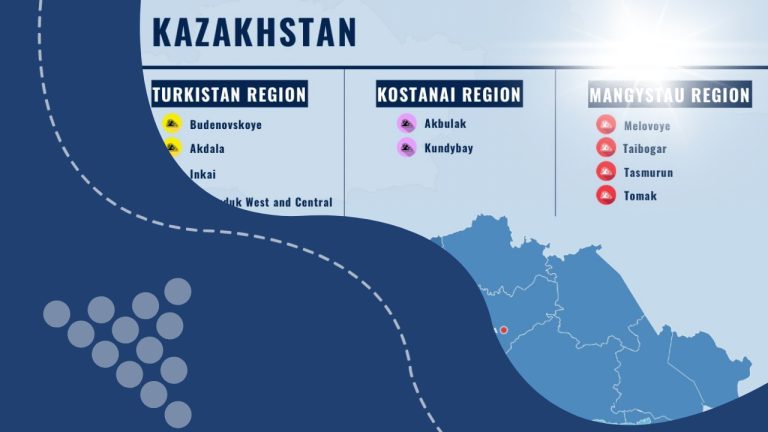
    The ministry noted it is working on the tasks for the next five years. Overall, 15 rare earth deposits registered in the state are spread across three regions of Kazakhstan: Turkistan, Kostanai, and Mangystau. Data from the National Geological Service also indicates Kazakhstan possesses a raw material base of rare metals, including tungsten with 2.2 million tons of reserves, molybdenum with one million tons, lithium with 75,600 tons, tantalum with 4,600 tons, niobium with 28,100 tons, beryllium with 58,000 tons, among others.

    Kazakhstan’s Minister of Industry and Construction Kanat Sharlapaev headed the Kazakh delegation at the Raw Materials Week in Brussels in November. Speaking at a panel session in Brussels, Sharlapaev said critical materials represent a blueprint for a new chapter in the Kazakhstan-EU cooperation.

    “Our country is not just rich in terms of the mineral base. It has been a reliable partner for the EU, particularly contributing to its energy security through oil supplies and to the nuclear energy sector through uranium supplies. Now, Kazakhstan is ready and committed to integrate itself with the value chain of critical materials, which was aptly named critical for our green energy transition,” he said back then.

    __________________

    Photo credit: strategy2050.kz.

  • Kazakhstan Houses More Than 8 Thousand Mineral Deposits, Reports MIID RK

    Kazakhstan Houses More Than 8 Thousand Mineral Deposits, Reports MIID RK

    The Ministry of Foreign Affairs’ Deputy Head highlighted the dual-pronged approach in the nation’s geological study of its subsoil: “regional subsoil exploration” and “prospecting endeavors.”

    Nationwide regional subsoil studies have achieved substantial coverage, encompassing 94.5% of Kazakhstan’s territory through expansive geological surveys at a 200,000th scale. In tandem, focused prospecting efforts are underway across 16 key areas, aimed at securing the stability of pivotal city-centric industries adjacent to single-industry towns. Notably, 12 of these sites are actively engaged in developing the rare earth metals sector, following Cabinet directives.

    The Program overseeing the State Subsoil Fund encompasses the entirety of Kazakhstan’s subsoil accessible for use. To unlock the nation’s potential and amplify investment in exploration, the Vice Minister underscored the necessity of allocating funds for regional research.

    MIID RK is strategically poised to augment the mineral resource repository and attract investments for geological exploration. Their proposal encompasses the integration of geological exploration into Kazakhstan’s national priorities, introducing innovative mechanisms to heighten both public and private investments. This strategy is complemented by an exhaustive review of historical data, culminating in a methodical approach tailored to the distinct mineral types.

    Additionally, Beispekov detailed the successful launch of the minerals.gov.kz information platform this year. With around 40,000 reports integrated into the system, plans are underway to digitize the operational processes of subsoil users. This initiative aims to provide open access to geological materials and simplify interactions for prospective and existing investors through a unified interface.

    Simultaneously, the National Geological Service, established in 2021, is actively digitizing primary geological data. This transformation will result in publicly available information on minerals.gov.kz. The conversion target for the year includes 861,000 paper records, 129,000 graphical documents, 38,000 magnetic media, and 16,000 cartridges into electronic formats.

    Beispekov emphasized the comprehensive nature of Kazakhstan’s state balance sheet, accounting for over 8,000 deposits spanning a diverse range of more than 100 mineral types, including solid minerals, hydrocarbons, and groundwater.