Tag: Mining Projects

  • Kyrgyzstan reviews major mining projects launched over the past year

    Kyrgyzstan reviews major mining projects launched over the past year

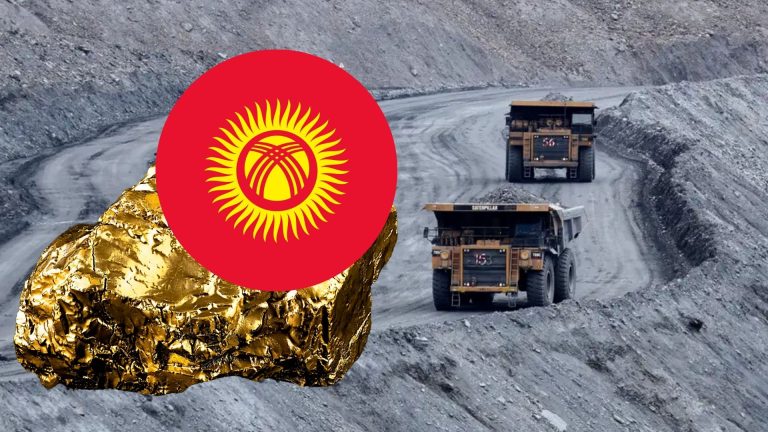
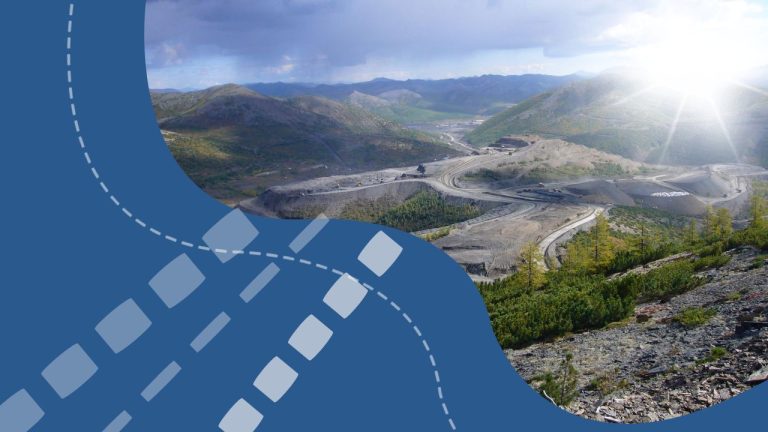
    At the start of the new year, Kyrgyzstan is taking stock of major mining projects implemented by domestic companies over the past period. One of the most significant developments came in August, when Kumtor Gold Company, one of the country’s largest subsoil users, launched underground gold mining at the Kumtor deposit in the Issyk-Kul region.

    At the same time, 147 tonnes of gold were added to the company’s balance sheet, providing enough reserves for 17 years of underground operations, which are being carried out alongside open-pit mining. Overall, the Kumtor mine is expected to remain in operation for at least another 40–50 years. The underground project is designed to minimize waste rock extraction and reduce environmental impact, including protecting local glaciers.

    Last year, Kumtor Gold Company also began processing tailings from the Kumtor tailings storage facility, expanding resource utilization. In August, several other mining enterprises were launched, including the Shah Tal gold mine in the Naryn region and the Kozho Kelen and Besh-Burkhan coal mines in the Osh region.

    In October, Kyrgyzgeology obtained a license to develop the Nasonovskoye polymetallic deposit in the Chui region, which is estimated to contain 751,000 tonnes of ore, 5.6 tonnes of gold and 4,600 tonnes of copper.

    Projects related to strategically important metals have received less public attention, though local media reported that a Kyrgyz-Chinese company for rare metals development was registered in April. At the INFOCM 2025 international forum on critical minerals in May, a representative of the Ministry of Natural Resources said Kyrgyzstan has 11 rare earth deposits, with Kutessay II among the largest, holding reserves of 63,300 tonnes.

  • Uzbekistan Opens First National Center for Critical Minerals Research

    Uzbekistan Opens First National Center for Critical Minerals Research

    Uzbekistan has launched a new scientific center dedicated to critical minerals, established on the initiative of the Technological Metals Combine (TMK) and located inside the National Library. According to the company, this is the country’s first innovation hub designed to connect science with industrial development and serve as a national analytical platform for critical raw materials.

    The center will operate as an open-access facility for researchers, students, and industry specialists. TMK plans to implement more than 50 projects related to strategic minerals between 2025 and 2027, including 13 new production facilities.

    The Ministry of Mining and Geology reports that Uzbekistan holds deposits containing 28 types of critical minerals, including copper, lithium, graphite, germanium, tungsten, vanadium, tantalum, niobium, and rare-earth elements.

    By 2028, the country aims to complete 70 projects focused on developing strategically important mineral resources, with a total investment portfolio exceeding $1.6 billion.

  • Zijin Mining Group Discusses Major Mining Projects in Kazakhstan

    Zijin Mining Group Discusses Major Mining Projects in Kazakhstan

    Zijin Mining Group Co., Ltd recently held discussions with Kazakhstan’s Deputy Foreign Minister and representatives from Kazakh Invest regarding potential projects in the mining and metallurgical industry. The foreign investor plans to open a processing plant in the republic, according to a report from the Kazakh Ministry of Foreign Affairs.

    The new facility is expected to produce concentrates of precious and non-ferrous metals. However, this project is likely to be a long-term endeavor, as Zijin Mining is still in the process of identifying a suitable mineral resource basefor the plant.

    The company has expressed its readiness to develop Kazakhstan’s gold, copper, and polymetallic deposits. The specific region for the project has yet to be determined.

    The concentrates produced by the new processing plant are intended to be sent to local metallurgical plants for the extraction of valuable metals. An initial investment of $100 million is planned for the project, which is expected to create at least 1,000 new jobs in the republic.

    Additionally, Zijin Mining plans to engage in geological exploration of new prospective areas. The Kazakh authorities, keen on expanding the country’s mineral resource base, are prepared to offer state-level support to their Chinese partner.

    Zijin Mining is a multinational mining conglomerate that operates over 30 projects in 12 countries. Last year, the company’s assets produced 720,000 tons of copper and 250 tons of refined gold.

  • Tau-Ken Samruk to Explore Lithium Deposits near the Aral Sea with Funding from EBRD

    Tau-Ken Samruk to Explore Lithium Deposits near the Aral Sea with Funding from EBRD

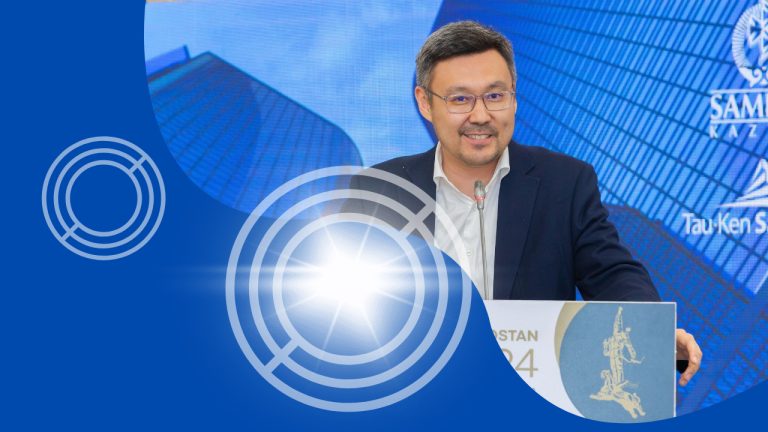
    Tau-Ken Samruk, the national mining company, is set to conduct exploratory research funded by the European Bank for Reconstruction and Development (EBRD) to assess the presence of lithium in the brines of salt lakes near the Aral Sea. This initiative was announced by the company’s Chief Business Development Officer, Nariman Absametov, during the MINEX Kazakhstan -2024 forum. Absametov highlighted the similarities between Kazakhstan and South American countries, particularly Chile, where lithium is extracted from salt brines. The project, initiated six months ago, aims to demonstrate the presence of sufficient lithium in the region for industrial development. The EBRD has granted 400,000 euros, equivalent to 190.7 million tenge, for a two-year research project in the Aral Sea region.

    Tau-Ken Samruk is actively engaged in over 50 mining projects, with 15 partner companies. Notably, the company recently absorbed another national entity, Kazgeology, promising comprehensive support to partners in negotiations with government bodies. Absametov highlighted gold as the primary metal of interest, citing Tau-Ken Altyn, a refining plant in Astana, which exceeded its initial capacity of 25 tons of gold and 50 tons of silver annually since 2019, refining 55.6 tons of gold in 2022. Additionally, copper and rare earth metals are among the company’s areas of interest.

  • Parliament Takes Action to Strengthen the EU’s Focus on ‘Strategic Projects’ in Critical Minerals Sector

    Parliament Takes Action to Strengthen the EU’s Focus on ‘Strategic Projects’ in Critical Minerals Sector

    The political groups within the European Parliament are pushing to enhance social and environmental safeguards for “strategic” mining projects in Europe and abroad as the EU seeks to secure vital raw materials for its green and digital transitions.

    The Parliament’s industry committee is set to vote on the EU’s draft Critical Raw Materials Act, which aims to reduce the bloc’s reliance on China and other countries for metals like rare earths.

    The proposal, unveiled in March by the European Commission, outlines benchmarks to increase domestic capacity for raw materials extraction, processing, and recycling. The aspirational targets correspond to 10%, 40%, and 15% of the EU’s needs, respectively.

    EU member states voted in June to raise the Commission’s proposed benchmark for processing on European soil from 40% to 50%. Lawmakers in the Parliament’s industry committee support this 50% objective but have added an international dimension. They suggest that “up to 20% of the Union’s new processing capacity” could be developed through “strategic partnerships” with foreign countries.

    These partnerships would be facilitated through “strategic projects” that receive expedited permitting rules and access to finance. However, they would also face closer scrutiny regarding environmental and social safeguards.

    These moves have been praised by green campaign group Transport and Environment (T&E), which sees the establishment of safeguards as more important than voluntary targets. Julia Poliscanova, Senior Director at T&E, emphasized that these safeguards would ensure that environmental and social standards are met.

    Strategic projects can encompass all stages of the raw materials supply chain, from mining to processing and recycling. They must be mutually beneficial for both the EU and the host country, according to the draft Parliament report.

    The EU is currently in discussions with Chile to establish a strategic partnership on raw materials as part of a broader EU-Chile trade agreement. This partnership could facilitate the EU’s access to Chile’s significant lithium reserves.

    The draft parliamentary report, authored by Nicola Beer, a centrist lawmaker from Germany’s liberal FDP party, underscores the need for diversifying raw materials supplies as a priority in the EU’s external action and diplomacy.

    The European Parliament is also considering stricter sustainability requirements for critical raw material projects. This includes imposing more stringent conditions for EU-wide recognition of industry certification schemes. These schemes will need to have multi-stakeholder governance systems in place to qualify. Compliance with EU certification standards will be verified at the site level rather than the company level.

    These certification amendments have broad cross-party support and are expected to pass. However, the fate of other aspects of the draft, such as stress tests for large companies and funding for self-sufficiency targets, remains uncertain.

    After the industry committee vote, the draft Critical Raw Materials Act is expected to be voted on in the European Parliament’s plenary session on September 11. This will initiate negotiations with EU member states to finalize the law.