Tag: Mining Projects

  • Tungsten Price Surge Highlights Supply Crisis and Future Demand Challenges

    Tungsten Price Surge Highlights Supply Crisis and Future Demand Challenges

    The tungsten market is experiencing a significant price surge, with prices increasing by 310% from January to July 2026, driven by Chinese export controls and rising military demand. According to a recent report from S&P Global, global first-use tungsten demand is projected to rise from approximately 162,000 tonnes of WO₃ in 2025 to 180,000 tonnes by 2030 and 202,000 tonnes by 2035. China remains the dominant player in the tungsten market, having produced 67,000 tonnes of the total 85,000 tonnes mined globally in 2025 and controlling about 85% of APT refining capacity.

    Despite the announcement of 11 new projects that could add about 20,000 tonnes of annual mine capacity outside China by 2030, S&P Global estimates a primary mine supply gap of 16,000 tonnes ex-China by 2030. This gap is concerning, especially as the price of tungsten APT has surged from approximately US$83/kg WO₃ in January 2026 to US$340/kg in July 2026. While the price increase has surpassed the theoretical investment hurdle for new supply, the real challenge lies in the development bottlenecks related to financing, permitting, and construction.

    The report highlights several key projects that could potentially deliver new tungsten supply, including the Sangdong project in South Korea, Hemerdon in the UK, and Northern Katpar in Kazakhstan. However, the timeline for these projects remains uncertain, and their success is contingent upon various factors, including financing and regulatory approvals.

    Tungsten is classified as a critical mineral due to its unique properties, which make it essential for various applications, including defence, industrial tools, and technology. The rising prices reflect a complex interplay of supply chain issues, geopolitical tensions, and strategic stockpiling, particularly in the context of US-China relations. As the US prepares to impose significant restrictions on tungsten imports from certain countries in 2027, the market is likely to face further challenges in meeting demand.

    While the current price levels may incentivise new tungsten supply, the industry faces significant hurdles in terms of project financing and development timelines. The tungsten market is at a critical juncture, with supply constraints likely to persist unless substantial investments and regulatory support are provided to facilitate new production.


  • Building Trust: The Key to Successful Mining Projects in Europe

    Building Trust: The Key to Successful Mining Projects in Europe

    In a recent interview with Aspermont’s Mining IQ, John Heasley, Chief Financial Officer of Anglo American, emphasised the critical role of trust in the successful development of mining projects in Europe. He highlighted that while the mining industry has made significant strides in improving safety, social, and environmental standards, many projects still face challenges due to a lack of public support. Heasley pointed out that the industry is often perceived negatively, particularly in regions where mining has not been a recent activity, such as Europe. In contrast, countries like Chile, where mining is deeply integrated into the economy, demonstrate higher levels of public trust and support for mining operations.

    Heasley noted that public attitudes towards mining can vary significantly, with communities that have direct interactions with mining operations generally expressing more support. He cited Anglo American’s successful operations in Chile, where the company has been recognised as one of the most attractive employers, as an example of how positive engagement can lead to improved perceptions of the industry. The Leadership Insights 2026 report, which features insights from 13 industry executives, reveals that half of mining professionals rate overall trust in the sector as low, highlighting the need for continued efforts to build and maintain trust.

    The report also discusses the economic implications of negative public perceptions, including delays in project approvals and challenges in securing community support. Heasley stressed that a positive reputation is essential for obtaining and sustaining a licence to operate, as demonstrated by the successful launch of the Quellaveco mine in Peru, which benefited from extensive community engagement.

    As the demand for critical minerals rises due to the energy transition, Heasley expressed hope that public awareness of the importance of mining will improve perceptions of the industry. However, he cautioned against compromising environmental and social standards in the rush to accelerate mining approvals, emphasising that maintaining high standards is crucial for rebuilding public trust. He concluded by reiterating the importance of demonstrating the advancements in modern mining practices, which are significantly different from those of the past, as a means of fostering trust and support for future projects in Europe and beyond.


  • Uzbekistan to Launch Uranium Extraction at Four New Deposits

    Uzbekistan to Launch Uranium Extraction at Four New Deposits

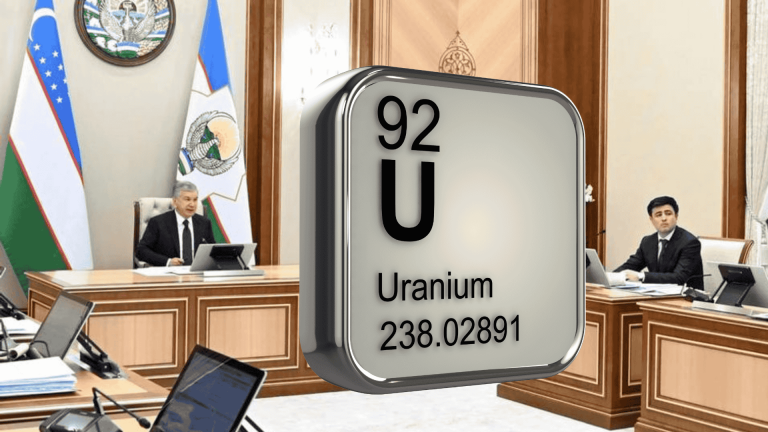
    President Shavkat Mirziyoyev has reviewed the latest developments and future plans for Uzbekistan’s coal and uranium industries during a recent presentation, according to the presidential press service.

    Discussions centred on increasing coal output, strengthening competition within the sector, and improving the use of existing reserves. It was noted that during the 2025–2026 autumn-winter season, the country plans to extract 10 million tonnes of coal — 1.3 million tonnes more than last season. Production so far has reached 9 million tonnes, up by 590,000 tonnes year-on-year, with next season’s goal set at 11 million tonnes.

    Efforts will focus on faster development of deposits in the Tashkent and southern regions, expanding selective extraction, and engaging additional excavators and outsourced equipment. By supporting private entrepreneurs, authorities expect to produce an extra 2.5 million tonnes of coal in 2026.

    Particular attention was given to the “Nishbosh” coal deposit in Angren, where a nearly $500 million investment project is set to begin production this year. With reserves of about 233 million tonnes, the site is expected to yield 1 million tonnes of coal in its first year and reach an annual output of 10 million tonnes. The project will also create around 880 permanent jobs.

    Separately, state company Uzkimyosanoat unveiled a $5 billion initiative to establish a new polymer production facility based on the chemical processing of coal. The plant will be capable of converting 8–9 million tonnes of coal into 1.18 million tonnes of polymer products annually.

    In 2025, Uzbekistan produced 7,000 tonnes of uranium while confirmed reserves rose to 139,000 tonnes. This year, the government plans to start mining operations at four new deposits — ArnasayWestern KizilkukSouthern Jongeldi, and Eastern Agron. To accommodate rising output, additional uranium processing capacity will be developed, including stable supplies of sulphuric acid and technical sulphur.

  • Strickland Delivers First Resource for Gradina at Rogozna

    Strickland Delivers First Resource for Gradina at Rogozna

    Strickland Metals has released the first Mineral Resource Estimate (MRE) for the Gradina deposit at its Rogozna project in Serbia, defining 12 million tonnes at 3.0 g/t gold, equivalent to 1.2 million ounces of contained gold. Gradina is one of four large-scale gold and base metals deposits identified at Rogozna and was the last to receive a formal resource.

    The Rogozna project also includes the Shanac (5.30 Moz AuEq), Medenovac (1.28 Moz AuEq), and Copper Canyon (0.81 Moz AuEq) deposits. Strickland said it plans to publish an updated resource for Shanac in the first quarter following its 2025 drilling campaign, which continues to indicate both bulk-tonnage and higher-grade mineralisation potential.

    During 2025, the company completed its largest drilling programme at Rogozna to date, with 79 holes for 46,737 metres. For 2026, Strickland plans to increase drilling to 60,000 metres, a 20% rise year-on-year. In parallel, the company is advancing internal scoping work and pre-feasibility study scenarios, targeting delivery of a pre-feasibility study in the first half of 2027.

    Strickland acquired Rogozna in July 2024 through the $37 million (€31.5 million) purchase of Betoota Holdings, which owns the project via its Serbian subsidiary Zlatna Reka Resources.

  • Almalyk MMC expands copper processing capacity at Concentrator No. 2

    Almalyk MMC expands copper processing capacity at Concentrator No. 2

    Almalyk Mining and Metallurgical Complex (AGMK) is constructing new beneficiation facilities at its Copper Concentrator No. 2 to increase ore processing capacity. The new complex will cover an area of 3.1 hectares and is designed to process up to 5 million tonnes of ore per year from the Yoshlik I deposit, producing 74,200 tonnes of copper concentrate, the company’s press service said.

    Construction is being carried out by the Olmalikmetallurgkurilish trust, which is part of AGMK. The project is currently at the earthworks stage, while the design documentation for the new production unit was prepared by the complex’s internal project management division.

    The facility will be equipped with modern crushing, grinding, flotation, filtration and thickening units, as well as compressor stations. Key equipment will be manufactured at AGMK’s central repair and mechanical plant, with installation handled by its specialised maintenance unit.

    Around 600 jobs will be created at the new complex. Once commissioned, AGMK’s total ore processing capacity is expected to reach nearly 10 million tonnes per year.

  • Critical Metals shares jump on Tanbreez upgrades and renewed US focus on Greenland

    Critical Metals shares jump on Tanbreez upgrades and renewed US focus on Greenland

    Shares of Critical Metals surged to their highest level in nearly three months after the company announced further upgrades to its flagship Tanbreez rare earth project in southern Greenland, amid renewed geopolitical attention on the Arctic territory from the United States.

    Earlier this week, the Nasdaq-listed company said it will acquire a fully integrated, mobile assay laboratory to support its Tanbreez project, which hosts one of the world’s largest known rare earth deposits. The laboratory, developed by mining solutions provider Bromet, will enable real-time, on-site geochemical analysis of drill core and pilot plant samples, strengthening data collection and accelerating decision-making as the project advances toward pilot-scale operations.

    Critical Metals CEO Tony Sage described the acquisition as a transformative step in moving Tanbreez from exploration into pre-mining development. The company is expected to pay around $1 million for the mobile laboratory. The move follows a recent decision to construct an Arctic-grade storage and pilot facility in Qaqortoq, scheduled for completion by mid-2026, and comes alongside potential logistics improvements linked to the planned opening of a new international airport near the project site.

    The upgrades are part of a modular, turnkey development strategy aimed at fast-tracking Tanbreez into production as early as this year. A preliminary economic assessment released last year outlined an initial production target of approximately 85,000 tonnes of rare earth oxides per year, with potential expansion to 425,000 tonnes annually. The assessment estimated a pre-tax net present value of about $3 billion and an internal rate of return of 180%, based on resources of at least 45 million tonnes within the largely underexplored kakortokite unit.

    Investor interest has also been boosted by rising geopolitical tensions surrounding Greenland. US President Donald Trump reiterated his desire for US control of Greenland this week, citing national security concerns, and senior US, Danish and Greenlandic officials held discussions in Washington on the issue. Analysts view Greenland’s vast untapped mineral resources, including rare earths, as a key driver behind Washington’s intensified interest.

    Following the announcements and geopolitical developments, shares of Critical Metals jumped as much as 35% in New York trading, lifting the company’s market capitalization to around $2.1 billion.

  • European Metals submits full EIA for Cinovec lithium project in Czech Republic

    European Metals submits full EIA for Cinovec lithium project in Czech Republic

    European Metals Holdings has submitted the full environmental impact assessment (EIA) for its Cinovec lithium project to the Czech Ministry of the Environment, marking a key regulatory milestone and meeting an important condition tied to EU funding. The EIA was formally lodged on 31 December, completing the two-stage environmental assessment process that began with an initial screening submission earlier in the year.

    The filing covers the entire Cinovec development and aligns with the recently completed definitive feasibility study, which outlined a mine life exceeding 26 years and forecast annual production of about 37,500 tonnes of battery-grade lithium carbonate. The ministry will now begin its formal review, with public consultations and hearings expected later in the quarter.

    The submission also satisfies a core requirement of the EU Just Transition Fund grant awarded to the project. In April, Czech authorities approved CZK 800 million, around $36 million at the time, subject to the EIA being filed by the end of 2025 and approved by mid-2026. European Metals said the project remains on track to meet the full timetable.

  • Zinnwald Lithium advances German lithium project after planning assessment

    Zinnwald Lithium advances German lithium project after planning assessment

    Zinnwald Lithium has completed the spatial impact assessment for its proposed integrated lithium mining and processing project in Germany. The Saxony State Directorate concluded that the development concept outlined in the company’s pre-feasibility study is spatially compatible and the most favourable option for large-scale development.

    The concept предусматривает processing at Liebenau with ore transported via a conveyor tunnel. While the assessment does not constitute a development permit, it provides the planning framework needed to proceed to the environmental impact assessment and mining permitting stages under the Saxon Mining Authority. The milestone reduces regulatory risk and supports the project’s role in supplying lithium to Europe’s battery industry.

  • Critical Metals approves Arctic pilot facility to advance Tanbreez rare earth project in Greenland

    Critical Metals approves Arctic pilot facility to advance Tanbreez rare earth project in Greenland

    Rare earth developer Critical Metals has approved the construction of a multi-use storage and pilot facility in Qaqortoq, Greenland, a move that sent its shares sharply higher on Wednesday. The new infrastructure is intended to support the company’s flagship Tanbreez project as it moves toward development.

    The company said the facility will be delivered under a full turnkey contract covering engineering, permitting, logistics, construction and commissioning. Designed specifically for Arctic conditions, the site is expected to be completed and operational by May 2026. In parallel, Critical Metals has acquired a residential property in Qaqortoq, which will be converted into a permanent local office and operational base.

    Chief executive Tony Sage said the project provides a clear and structured pathway to deploy pilot-scale infrastructure in a challenging Arctic environment, while also demonstrating the company’s commitment to responsible local operations.

    Investors reacted positively to the announcement, with Critical Metals’ stock rising as much as 16% to its highest level in more than two months, lifting the company’s market capitalization to around $1.5 billion.

    The Tanbreez project is regarded as one of the world’s largest rare earth deposits, hosting at least 45 million tonnes of resources within a largely underexplored kakortokite unit. Earlier this year, Critical Metals published a preliminary economic assessment outlining a phased development plan, with initial annual production of about 85,000 tonnes of rare earth oxides, potentially scaling up to 425,000 tonnes following modular expansion. The company has already secured offtake agreements covering roughly three-quarters of expected output and aims to finalize the remainder in the near term.

  • Tajikistan highlights key mining contracts and projects announced over the past year

    Tajikistan highlights key mining contracts and projects announced over the past year

    The past year was marked for Tajikistan’s extractive industry not by major new discoveries, but by a series of significant contracts and project announcements shaping development plans for the coming years. Several large initiatives across antimony, iron ore, gold, coal and lithium were either launched or confirmed.

    In July 2025, construction began on a mining and processing plant at the Pakhandara antimony deposit in the Sughd region, located at an altitude of about 3,000 meters above sea level. The project is scheduled for completion by 2027. The license for both open-pit and underground mining is held by Pakhandara Mining, while HKSkyline Development Limited is acting as the contractor. Once operational, the plant is expected to process more than 150,000 tonnes of ore annually and produce around 5,000 tonnes of antimony.

    The same month also saw the commissioning of several other facilities, including a new antimony processing plant operated by ARB Minerals Group, the second phase of the TVEA Dushanbe gold mining enterprise, and the Angishti Takht coal beneficiation plant.

    In December, the Tajik Metallurgical Plant signed an agreement with the government to build an iron ore mining and processing facility, using deposits located in the Sughd region as its raw material base. The first phase of the project is set to be launched in 2027, with the second phase planned for 2031. The design capacity of the complex is 2.5 million tonnes of ore and 1.1 million tonnes of iron ore concentrate per year.

    At the International Mining and Metallurgical Forum of Tajikistan held in Dushanbe in December, officials also announced the construction of a lithium plant in the country, although further details of the project have not yet been disclosed. During the same event, it was stated that around 800 prospective mineral deposits have been identified nationwide, while just over 100 sites covering 50 types of mineral raw materials are currently involved in active development.