Tag: mining investment

  • Kazakhstan Targets Coal Output Growth as New Generation Plan Forecasts Rising Demand

    Kazakhstan Targets Coal Output Growth as New Generation Plan Forecasts Rising Demand

    Kazakhstan’s Ministry of Energy has held talks with the country’s largest coal producers to discuss implementation of presidential directives issued at the Fifth National Kurultai, alongside a newly adopted national plan for coal-fired power generation.

    The plan reaffirms coal’s role as a strategic asset for Kazakhstan, which holds reserves exceeding 33 billion tonnes. According to ministry forecasts, new industrial projects are expected to require an additional 19 million tonnes of thermal coal annually by 2032, placing pressure on producers to expand output capacity in the coming years.

    Major domestic mining companies have indicated readiness to meet the anticipated increase in demand. Bogatyr Komir, one of Kazakhstan’s largest coal producers, said it plans to raise production from 42.7 million tonnes to 45.2 million tonnes this year, with a longer-term target of 56.5 million tonnes annually by 2032.

    To achieve this expansion, the company intends to invest approximately KZT 360 billion in the launch of new cyclic-flow technology (CFT) complexes and the modernisation of its mining equipment fleet. The investment programme also includes the implementation of digital systems such as MES solutions for CFT operations and advanced haulage optimisation tools.

    Shubarkol Komir likewise confirmed plans to increase output to 16.1 million tonnes this year. Over the next six years, the company will invest KZT 95.5 billion in the second phase of its CFT infrastructure development, alongside nearly KZT 50 billion earmarked for new machinery and equipment purchases, including robotic systems.

    The ministry emphasised that coordinated industry efforts will be essential to maintain energy security and support industrial growth as Kazakhstan balances its resource base with evolving economic priorities.

  • At PDAC’s “Uzbekistan Day,” the “Mine-Metal-Market” Model is Presented to the International Community

    At PDAC’s “Uzbekistan Day,” the “Mine-Metal-Market” Model is Presented to the International Community

    At the “Uzbekistan Day” event, organized in Toronto, Canada, as part of the prestigious PDAC-2026 global mining and geological conference, Uzbekistan’s potential in critical minerals was showcased to an international audience.
    During this event, held under the auspices of the Ministry of Mining Industry and Geology of the Republic of Uzbekistan, the country’s geological capabilities, investment potential, and an industrial model based on the complete “Mine-Metal-Market” value chain were presented to the global community.
    The event was attended by the Ambassador Extraordinary and Plenipotentiary of Uzbekistan to the USA, representatives from the Ministry of Foreign Affairs, as well as the management, consultants, and international experts of the Uzbek Technological Metals Complex – the country’s first and only industrial operator focused on critical minerals, established at the initiative of President Shavkat Mirziyoyev.
    “Uzbekistan Day” was met with great interest by representatives of the global mining and metallurgical industry. The event drew representatives from nearly 200 companies and institutions, including leadership from major firms such as Alpha Bronze, international engineering giant AtkinsRéalis, AGT Systems NA, aerogeophysical services leader Xcalibur, Speyside, Global Mining Capital Corp, and Freedom Capital Markets, as well as representatives from the US Geological Survey (USGS) and the European Commission’s critical raw materials policy division.
    Scott Sutherland, Managing Director of the Society of Exploration Geophysicists:
    “I participated in the Uzbekistan Day session at PDAC and was very impressed by the geological and mining potential presented by Uzbekistan. By the end of this year, the Society of Exploration Geophysicists plans to hold an international conference in Uzbekistan, specifically in Tashkent, dedicated to the mining industry.We are pleased with the fruitful cooperation we have established with the Government of Uzbekistan and intend to work even more actively in the country in the future, contributing to the realization of its resource potential and extensive opportunities.”
    The event highlighted the large-scale reforms underway in our country, promising projects for developing new deposits and the deep processing of rare and technological metals, and initiatives aimed at expanding international cooperation.
    Additionally, during the event, the Uzbek Technological Metals Complex signed a memorandum with the Canadian company OMAD International Inc. aimed at attracting investment and developing industrial cooperation.
    Furthermore, a memorandum of cooperation was signed with Erdenes IT LLC, which entails the creation of technology parks, the implementation of joint research and development initiatives, and collaboration in mining, geology, and international marketing.
    These agreements reflect a consistent strategic approach to the international promotion of the “Mine-Metal-Market” model, which aims to transform Uzbekistan’s geological potential into globally competitive industrial products with high added value and establish the country as a key link in the global critical minerals value chain.

  • Uzbekistan to Showcase Mining and Investment Opportunities at PDAC 2026 in Toronto

    Uzbekistan to Showcase Mining and Investment Opportunities at PDAC 2026 in Toronto

    We look forward to seeing you at Uzbekistan Day!

    As part of PDAC 2026 — one of the world’s most prestigious mining and geology conventions held in Toronto, Canada — the Ministry of Mining Industry and Geology of the Republic of Uzbekistan is organizing the “Uzbekistan Day” event.

    The event will be attended by the Ambassador Extraordinary and Plenipotentiary of Uzbekistan to the United States, as well as representatives of the Ministry of Foreign Affairs, the Ministry of Investments, Industry and Trade, and leading national companies.

    “Uzbekistan Day” serves as a key platform to present Uzbekistan’s geological potential, investment opportunities, and its integrated industrial model based on the full value chain under the “Mine–Metal–Market” principle.

    📅 March 1, 2026
    ⏰ 08:00–12:00
    📍 PDAC North Building, Meeting Room 202B

    We also invite you to attend the “Uzbekistan Global Roundtable” session, held as part of the PDAC Global Roundtables organized by Canada’s Trade Commissioner Service (TCS).

    📅 March 2, 2026
    ⏰ 14:30–16:00 (EST)
    📍 MTCC, North Building, Room 104A

    During this session, participants will gain deeper insight into Uzbekistan’s investment potential in the technological metals sector and its new industrial model focused on value-added processing and downstream development.

    Please note that seating is limited. To register, kindly contact:
    📩 anna.ilhan@uztmk.uz

    Throughout PDAC, we also welcome you to visit our booth #7523N in the North Building, where you will have the opportunity to engage in direct B2B discussions on project development and partnership opportunities with the Uzbekistan Technological Metals Complex.

  • Tau-Ken Samruk and Cove Capital Sign Agreements on Northern Katpar and Verkhneye Kairakty Tungsten Projects

    Tau-Ken Samruk and Cove Capital Sign Agreements on Northern Katpar and Verkhneye Kairakty Tungsten Projects

    Kazakhstan’s state mining company Tau-Ken Samruk has signed a series of agreements with US-based Cove Capital for the joint development of the Northern Katpar and Verkhneye Kairakty deposits, according to a press release from Samruk-Kazyna.

    The projects are expected to form the raw-material base for establishing deep tungsten processing in Kazakhstan. As part of the Northern Katpar project, the partners plan to produce ammonium paratungstate, a key intermediate product used in high-tech and industrial applications.

    To implement the projects, Cove Capital will secure no less than $1.1 billion in financing. Of this amount, $900 million is expected to be provided by the Export-Import Bank of the United States. In addition to financing, the American side will provide technological support for mining, processing, and beneficiation operations. The US will also facilitate exports to global markets, including arranging offtake contracts with US authorities.

    The two deposits contain an estimated 410,000 tonnes of tungsten. According to the mine development plan presented this week by Northern Katpar, sales of tungsten trioxide, molybdenum, copper, and bismuth are projected to generate more than 1 trillion tenge (approximately $2 billion) in revenue between 2030 and 2048.

    The parties initially agreed on joint development of the deposits in November last year. According to Reuters, Cove Capital will hold a 70 percent stake in the joint venture, while Tau-Ken Samruk will retain 30 percent.

  • ERG to Invest Over $1 Billion in Mining and Metallurgical Projects in Kazakhstan

    ERG to Invest Over $1 Billion in Mining and Metallurgical Projects in Kazakhstan

    Eurasian Resources Group (ERG) plans to invest more than $1 billion in its mining and metallurgical assets in Kazakhstan, marking the largest investment programme in the country in the company’s history.

    The funding will be directed primarily toward ERG’s existing operations, as well as the construction of new production facilities and projects focused on higher value-added products. The investment plans were announced by ERG CEO Shukhrat Ibragimov during a visit to one of the group’s Kazakh sites this week.

    Kazakhstan remains ERG’s core operating base, accounting for more than one-third of the country’s total metals and mining output. The company is also a major player in the Democratic Republic of Congo, where its Metalkol operation ranks among the world’s largest cobalt producers and is a significant source of copper. The government of Kazakhstan holds a 40% equity stake in ERG.

    Key projects scheduled for development this year include a hot briquetted iron (HBI) plant with a planned capacity of 2 million tonnes per year, an iron ore pelletising facility, and an 80-megawatt ferroalloy gas utilisation power station at the Aktobe ferroalloys plant in northwestern Kazakhstan.

    Additional investments will support the development of a new chromium mine with annual capacity of 7.5 million tonnes, as well as modernisation of the Aksu power station. At the Pavlodar alumina plant, ERG plans to build vertical calcination kilns, install new product filtration units, and add recovery facilities capable of producing up to 15 tonnes of gallium per year.

    Both gallium and HBI, which are used in semiconductors, advanced alloys and steelmaking, are not currently produced in Kazakhstan, making these projects strategically significant for the country’s industrial diversification.

    Separately, ERG signed a three-year cobalt supply agreement in 2024 with Electra Battery Materials to supply its refinery in Ontario, Canada. From 2026, ERG is expected to deliver around 3,000 tonnes of cobalt hydroxide annually. Once fully commissioned, the refinery could produce enough cobalt to support battery production for up to 1.5 million electric vehicles per year.

  • RG Gold enters new growth phase after Zijin Mining acquisition and outlines major expansion plans

    RG Gold enters new growth phase after Zijin Mining acquisition and outlines major expansion plans

    Kazakhstan’s gold miner RG Gold has described 2025 as a turning point in its development following the acquisition of the Raygorodok deposit in Akmola region by global mining major Zijin Mining Group. The deal, valued at more than $1 billion, transferred 100% ownership of the asset to Zijin and marked one of the largest transactions in the country’s mining sector in recent years.

    According to the company, the entry of a new shareholder has provided access to international technologies, management standards and long-term strategic capital, while significantly raising the scale of future ambitions. RG Gold plans to invest around $500 million in the construction of a new processing plant, which would increase ore processing capacity by an additional 10 million tonnes per year. This would lift total annual throughput to more than 16 million tonnes.

    In 2025, RG Gold delivered record operating results, processing 6.5 million tonnes of ore and producing nearly 6.5 tonnes of gold. Metallurgical recovery at the processing plant exceeded 87%. The company emphasized that these results were achieved while maintaining high safety standards and protecting employee health.

    The Raygorodok deposit, first explored in the mid-1990s, remains one of Kazakhstan’s largest gold mining projects. Despite relatively low gold grades, the ore is considered easily recoverable, ensuring economic sustainability. Investments in exploration have significantly expanded reserves, while the launch of a CIP-based processing plant in 2022 boosted production efficiency. The mine’s operating life is currently projected to extend to at least 2040, even with higher processing volumes.

    Looking ahead, 2026 is expected to become a key investment year, with construction of the new processing facility forming the core project. RG Gold estimates that the expansion will create more than 1,000 new jobs and deliver broader socio-economic benefits for the region.

    Environmental management and workplace safety remain central to the company’s strategy. In 2025, RG Gold completed preparatory work for ISO 14001 certification, invested in environmental training, launched biodiversity research projects and carried out large-scale land restoration, including planting 100,000 pine seedlings. Safety initiatives introduced during the year contributed to a 38% reduction in workplace incidents.

    Company executives said that integration into Zijin Mining Group opens new opportunities for staff development, knowledge exchange and the adoption of global best practices. Over the next three to five years, RG Gold’s strategy will focus on efficiency improvements, production growth, resource base development and strengthened ESG performance, positioning the company as a benchmark for sustainable gold mining in Kazakhstan.

  • Investors Voice Concerns Over Amendments to Kazakhstan’s Subsoil Code

    Investors Voice Concerns Over Amendments to Kazakhstan’s Subsoil Code

    Recent amendments to Kazakhstan’s Code on Subsoil and Subsoil Use have raised concerns among investors, particularly over changes to the application of priority rights in subsoil use, according to industry representatives. The package of amendments was reviewed by the Mazhilis in the autumn and approved by the Senate earlier this month.

    In an interview with inbusiness.kz, Ruslan Baymishev, head of the Kazakhstan Mining Chamber, said the reforms include both positive measures and provisions that risk undermining investor confidence. He noted that since the introduction of the Subsoil Code in 2018, Kazakhstan has seen a sharp increase in private investment in geological exploration, driven by transparent rules and equal access to subsoil resources. This, he said, allowed junior and international companies to invest heavily in exploration at their own risk, generating valuable geological data for the state without budgetary spending.

    Among the positive changes, Baymishev highlighted the formal establishment of a unified digital subsoil use platform, simplification of access to exploration areas, and the introduction of electronic auctions for subsoil rights after licences are revoked or terminated. He also welcomed stricter measures against illegal mining, including the possibility of revoking exploration licences for violations, which he said protects bona fide investors.

    However, the amendments have also triggered serious concerns. Baymishev warned that the return of priority rights and the expansion of state and national company privileges, particularly in uranium and potentially rare earth elements, could signal a move toward greater state monopolization. According to him, such measures weaken the principle of open and equal access to subsoil resources that previously attracted major global investors and significantly increased exploration spending.

    Another source of concern is the application of priority rights outside auction mechanisms, which Baymishev described as a “side entry” dependent on discretionary decisions. He said this raises questions about fairness and predictability for investors. Industry representatives are also wary of potential spillover effects from hydrocarbons regulation into the solid minerals sector, which could distort competition and create unequal conditions.

    Baymishev stressed that while the state’s goal of increasing geological knowledge through private investment is understandable, regulatory conditions must remain transparent and uniform for all market participants. He emphasized the need for a clear medium-term strategy to ensure investment returns and avoid deterring international capital.

    Despite the concerns, the Mining Chamber said it continues to engage in dialogue with government bodies and lawmakers, aiming to preserve the core principles of the 2018 reform while refining specific mechanisms. Baymishev warned that a shift back toward manual regulation could redirect exploration investment flows to other jurisdictions at a time when global demand for new mineral discoveries is growing.

  • JSW Completes Deepening of Shaft III at Pniówek Mine, Enhancing Safety and Efficiency

    JSW Completes Deepening of Shaft III at Pniówek Mine, Enhancing Safety and Efficiency

    Jastrzębska Spółka Węglowa (JSW), the European Union’s largest producer of coking coal, has completed a major investment project at its Pniówek mine, finalizing the deepening of shaft III to a depth of 1053 meters and commissioning a new operational horizon at the 1000-meter level. The company announced the milestone in a press release issued in December.

    The project involved extending shaft III from its previous depth of 856 meters and modernizing the hoisting installations in both the eastern and western sections to service the new horizon. Work on the project began in 2020 and was carried out under full operating conditions by a consortium comprising PBSz SA and PPG ROW-JAS.

    According to mine officials, the deepening significantly improves occupational safety, transport logistics, and working conditions for miners. Shaft III, with a diameter of 7.5 meters, performs key ventilation and transport functions, including air extraction, personnel transport, and material handling. Following completion of the project, the shaft now serves three operational levels: 705, 830, and the newly commissioned 1000 level, which has become the mine’s primary horizon. Around 60% of employees now begin their shifts at this level.

    The launch of the 1000 level has allowed the mine to discontinue material transport from the 830 level, directly improving safety and productivity. A new three-deck cage capable of carrying up to 78 people has been installed, while upgraded hoisting machines and new ropes enable the handling of heavier loads. The ventilation system has also been enhanced as part of the investment.

    Mine representatives described the project as a critical step for long-term operations. Management noted that deepening the shaft while maintaining production at the 705 and 830 levels was particularly challenging, requiring the use of an artificial bottom to ensure uninterrupted and safe operations.

    The completion of shaft III comes as JSW moves forward with broader strategic measures. In October 2025, the company announced the start of preparatory work for a large-scale business restructuring aimed at improving liquidity and securing financial stability in the short and medium term.

  • Tau-Ken Samruk and U.S. Cove Capital to Jointly Develop Major Tungsten Deposits in Kazakhstan

    Tau-Ken Samruk and U.S. Cove Capital to Jointly Develop Major Tungsten Deposits in Kazakhstan

    Kazakhstan’s state mining holding Tau-Ken Samruk and U.S.-based Cove Capital have signed an agreement to jointly develop the Northern Katpar and Upper Kairakty tungsten deposits in the Karaganda region. The document was signed on the sidelines of the C5+1 Summit in Washington, D.C.

    According to Reuters, the joint venture will be 70% controlled by Cove Capital, with total investments estimated at $1.1 billion, including up to $900 million in financing from the U.S. Export-Import Bank (Exim Bank)kursiv.media reported.

    Specialists are already conducting preparatory work for the feasibility study (FS) for the Northern Katpar project. The investment initiative foresees the use of existing primary processing capacities in Kazakhstan to produce ammonium paratungstate (APT) — a key intermediate product for high-demand materials such as tungsten powders and wear-resistant components used in tools, machinery, and defense applications.

    The Northern Katpar and Upper Kairakty deposits are considered among the largest tungsten reserves in the world, with combined resources of up to 410,000 tonnes of tungsten, according to the JORC classification.

    Tau-Ken Samruk acquired LLP Northern Katpar and the deposit itself in 2015 for 7.7 billion tenge, while the Upper Kairakty exploration license was obtained in 2016.

    Founded in 2015Cove Capital invests in renewable energy and mining projects. In Kazakhstan, the U.S. company is already engaged in rare and rare-earth metal exploration at the Gremyachinsky site in East Kazakhstan and Akbulak in the Kostanay region.

  • Turkey’s Miryildiz Mining to Launch Gold and Copper Production in Kazakhstan by 2026

    Turkey’s Miryildiz Mining to Launch Gold and Copper Production in Kazakhstan by 2026

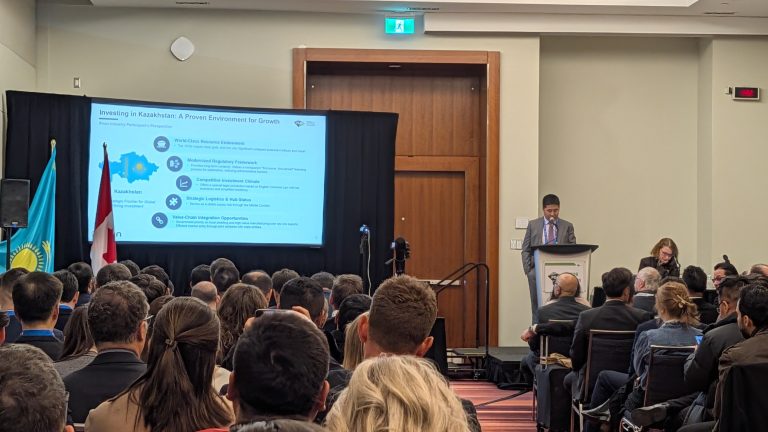
    Turkish mining company Miryildiz Mining plans to begin gold and copper production in Kazakhstan by late 2026, the company’s CEO Emrah Erdem announced at the Kazakhstan Global Investment Roundtable (KGIR).

    “We are engaged in gold and copper mining. Our plants in Turkey have been operating for nearly ten years. I hope that by the end of 2026, we will start gold production in Kazakhstan,” Erdem said.

    According to him, Miryildiz Mining is currently working in cooperation with the Development Bank of Kazakhstan (DBK), a subsidiary of the Baiterek Holding.

    The company operates in five countries, extracting gold, copper, chromium, and other metals, with Turkey remaining its primary market. It produces around 1 million tonnes of copper ore annually.

    “We have now set targets for copper mining in Kazakhstan,” Erdem said, adding that the company sees strong potential for copper extraction in East Kazakhstan, particularly in the Abai and Pavlodar regions.

    He also highlighted promising opportunities in the gold and rare earth metals sectors, noting Kazakhstan’s untapped mineral wealth.

    $482 Million Mining and Processing Project

    Earlier this year, Miryildiz Mining presented a $482 million project to construct a mining and processing complex (MPC) in the Zhanan-Boko-Zaisan gold ore zone to Abai Region Governor Berik Uali. The facility is expected to employ around 2,000 workers.

    The company has already completed geological exploration and purchased some of the necessary extraction and ore-processing equipment.

    Global Footprint

    Miryildiz Mining holds over 100 exploration and production licenses worldwide and is active in Central African Republic (CAR)Sierra Leone, and The Gambia, where it is also building a gold mining operation.

    In Kazakhstan, its subsidiary MIRYILDIZ KZ Ltd plans to conduct metal exploration at the Takyr site in the Zhetysu and Abai regions between 2025 and 2030.

    Market Context

    The company’s expansion comes amid record-high commodity prices — copper surpassed $11,000 per tonne, and gold exceeded $4,000 per ounce in 2025 — boosting investment in mining and geological exploration across the sector.