Tag: mining

  • Reforming Efforts Underway in Kazakhstan’s Geological and Mining Committee

    Reforming Efforts Underway in Kazakhstan’s Geological and Mining Committee

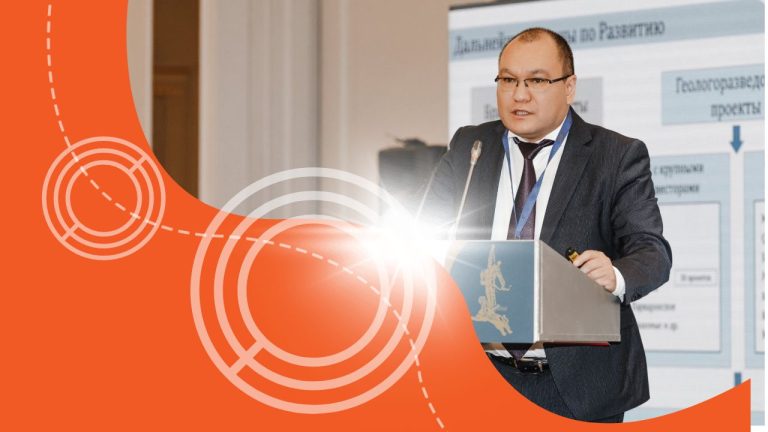
    The Committee of Geological, Mining, Coal Mining, and Metallurgical Industry (CGMCMI) of the Presidium of the National Chamber of Entrepreneurs of the Republic of Kazakhstan “Atameken” is currently undergoing a phase of restructuring. These changes not only affect the organizational structure but also aim to enhance the overall efficiency of its operations. Highlighting the committee’s proactive approach, Atameken’s Presidium Chairman Raimbek Batalov emphasized the necessity for adaptation, citing the evolving landscape of strategic issues within the mining and metallurgy sector, requiring innovative approaches and swift community consolidation.

    During the latest committee session chaired by CGMCMI Director Nikolay Radostovets, discussions revolved around topics such as research and development funding amounting to 1% of extraction expenses, reforming commodity exchange legislation, procurement of goods by subsoil users, agreement on the roadmap for mining and metallurgy development, supply of metals to processing industry enterprises, and the establishment of a Working Group to incentivize waste processing. Deputy Chairperson of Atameken’s Presidium, Gulnara Bizhanova, also participated in the committee session.

    Among the deliberations was the initiative from government bodies and parliamentarians to amend the funding procedure for research and development, setting it at 1% of extraction expenses. Within the Working Group discussing the science and technology policy bill, proposals were made to channel all allocated funds for research and development through the Science Fund via the national and local budgets.

    According to Atameken’s expert, Erlan Smailov, centralizing research funding through the Science Fund could diminish the economy’s innovation capacity and pose financial burdens. He argued against interfering with a system that has demonstrated growth, presenting statistics indicating a 42% increase in research and development expenditure in the science and education sector in 2023 compared to the previous year.

    Deputy Executive Director of the CGMCMI, Erbol Zakariyanov, reminded of similar discussions held three years ago when legislative amendments were proposed to ensure non-tax revenues to the national budget through subsoil user funds allocated for research and development. These proposals failed to gain government support.

    Zakariyanov stressed the significant role of subsoil users in advancing industry science, conducting research in their own research centers and laboratories, partly financed through contractual obligations. He emphasized the need for a funding mechanism that prevents adverse impacts on subsoil users, maintains conditions for their research activities, and only centralizes unused funds.

    The agenda also included discussions on the roadmap for mining and metallurgy development. Deputy Chairperson of Atameken’s Presidium, Gulnara Bizhanova, highlighted the industry’s lack of strategy and accumulated issues. As a result, a comprehensive set of proposals addressing key industry challenges was formulated within the roadmap. Two roadmaps were developed, one requiring decisions from the authorized body and the other involving the government with other state agencies. Both documents were endorsed during the session and will be submitted for government approval.

    Attention was also given to ensuring domestic raw material supply to processing industry enterprises based on relevant agreements. Domestic raw materials refer to goods listed in the domestic raw material products list approved by the Ministry of Industry and Infrastructure Development. Export of domestic raw materials listed in the list is allowed based on licenses issued by the authorized body. The licensing mechanism will be enforced six months after the law comes into effect.


  • BGV Group Management Promotes British-Ukrainian Mining Partnership in London

    BGV Group Management Promotes British-Ukrainian Mining Partnership in London

    On March 26, BGV Group Management, one of Ukraine’s largest investment companies, showcased cooperation opportunities with Ukraine in the mining sector at a prestigious event in London. Founder Gennadii Butkevych and the management team were invited to join British parliamentarians, members of the House of Lords, and state ministers at the Houses of Parliament to discuss investment prospects in Ukraine. The focus was on fostering British-Ukrainian collaboration in critical minerals mining to facilitate the UK’s advancement in technology and its transition to clean energy.

    The event witnessed the participation of Lord Martin Callanan, Under Secretary for Energy Efficiency and Green Investment at the Department for Energy Security and Net Zero, and Bob Seely MP, alongside representatives from Ukrainian business entities.

    During their address, the BGV team outlined three key areas for bilateral development:

    1. Exploration of Ukraine’s Mining Potential: Highlighting Ukraine’s abundance of critical minerals essential for advanced technologies and clean energy transition. With over 117 mineral types discovered, including 22 out of 30 critical resources identified by the EU, Ukraine possesses substantial reserves of minerals like beryllium, zirconium, titanium, rare earths, and graphite, strategically located with favorable logistics.
    2. Risk Mitigation: Emphasizing the necessity of war risk insurance to safeguard foreign investments in Ukraine. The Multilateral Investment Guarantee Agency (MIGA) and other international entities offer insurance mechanisms to support investments in Ukrainian projects.
    3. Investment Opportunities: Encouraging increased British investment in Ukrainian mining. BGV Group, with over $100 million invested in Ukrainian mining projects, expressed readiness to collaborate with British investors. Projects such as the Balakhiv graphite production complex and the Perzhansk beryllium deposit were presented as potential areas for investment.

    The BGV team stressed that collaboration in critical minerals could provide Britain with a robust resource base for various industries, including medicine, automotive, technology, aerospace, while reducing European dependence on Chinese minerals.

  • Kazakhstan’s President Emphasizes Potential of Rare Earth Minerals Mining

    Kazakhstan’s President Emphasizes Potential of Rare Earth Minerals Mining

    President Kassym-Jomart Tokayev of Kazakhstan views the extraction of critical raw materials as a promising area for cooperation, as reported by the state leader’s press service.

    “Rare earth metals have become a crucial component for a wide range of technologies. They are essential for achieving net-zero emissions and are vital in strategic sectors such as industry, digital technologies, space, and defense. We continue to work with international partners on the most effective ways to develop our large deposits of uranium, lithium, titanium, and other rare earth elements,” quoted the press service Tokayev’s remarks on Thursday at the plenary session of the Boao Asian Forum (BAF).

    Earlier, it was reported that exploration work on the potential of lithium was planned to commence in three regions of Kazakhstan. In particular, during the partnership forum between the European Union and Kazakhstan in Belgium, Erlan Galiev, Chairman of the Board of JSC “National Geological Survey,” stated that “as part of state geological exploration, work is planned to begin on studying the potential of lithium in three regions of Kazakhstan.”

    “If indigenous lithium deposits are projected in the eastern and southeastern parts, then the mineralized brines of the Aral sedimentary basin, according to preliminary data, are very favorable for lithium. Its geological conditions are similar to the Salar de Atacama salt flat in Chile, which holds about 30% of the world’s lithium reserves,” Galiev said.

    According to the Chairman of the Board, as of 2023, six deposits where lithium may be present are listed on the state balance sheet in Kazakhstan: Jubilee, Verkhne-Baimurzinskoye, Bakenoye, Akhmetkino, Medvedka, and Akhmirovskoye.

    “Significant lithium and REM (rare earth metals) reserves are concentrated in the tailings and ‘tail sand’ of beneficiation plants and deposits in central and southern Kazakhstan, as well as rare metal deposits in eastern Kazakhstan,” he said.

    Galiev assured that JSC “National Geological Survey” is ready to partner with foreign companies and invited interested parties to familiarize themselves with the projects, promising to take all necessary measures to ensure favorable conditions for investors.

    Later, it became known that German companies Knauf Gruppe, GP Gunter Papenburg AG, Roxtec, and the German Lithium Institute (ITEL) formed a consortium for the development and production of lithium, using Kazakhstan’s deposits as a basis.

  • Central Asia Metals Releases Full-Year Results for 2023, Despite Economic Challenges

    Central Asia Metals Releases Full-Year Results for 2023, Despite Economic Challenges

    Central Asia Metals Limited (CAML), a London-based mining company with operations in Kazakhstan and North Macedonia, disclosed its full-year results for 2023, ending on December 31st, earlier this week on March 25th. Despite facing global economic headwinds, CAML continued its investment initiatives, particularly focusing on the development of its mining projects in North Macedonia and Kazakhstan. Nigel Robinson, CAML’s CEO, highlighted the company’s commitment to enhancing operations at the Sasa and Kounrad mines, including the transition to paste fill mining at Sasa and the completion of a solar power project at Kounrad. Despite challenges posed by a sluggish global economy and declining metal prices, CAML managed to meet its production targets, emphasizing its low-cost operations and robust financial position.

  • Conference Explores Business Opportunities in Armenia’s Mining Sector

    Conference Explores Business Opportunities in Armenia’s Mining Sector

    In a recent conference titled “Exploring Business Opportunities,” stakeholders gathered to discuss the pivotal role of “Environment, Social Sphere, and Management” in Armenia’s business sector. The event served as a significant platform for deliberating issues, proposed solutions, and the exploration of international practices. Armen Stepanyan, the Director of Sustainable Development at the Zangezur Copper-Molybdenum Combine, highlighted the importance of such gatherings, emphasizing their role in addressing existing challenges through active engagement and knowledge sharing. Stepanyan reiterated the company’s commitment to tackling various challenges in the mining industry, stressing their incremental progress towards sustainable solutions. Despite the perception of mining as an environmental burden, Stepanyan assured that both the Zangezur Combine and other mining enterprises in Armenia are capable of managing environmental impacts effectively. He acknowledged the multitude of challenges but affirmed the company’s proactive approach in identifying and resolving them systematically. Stepanyan concluded by expressing the Zangezur Combine’s dedication to meeting international standards in the coming years.

  • Gabriel Resources’ Legal Battle Casts Uncertainty on Future Amid Mining Ambitions

    Gabriel Resources’ Legal Battle Casts Uncertainty on Future Amid Mining Ambitions

    Gabriel Resources Ltd., based in Yukon, Canada, once envisioned establishing a significant gold and silver mine in Romania’s Carpathian Mountains, a region steeped in mining history spanning over 2,000 years. However, its aspirations have hit a roadblock as the proposed mining area finds itself listed on the UNESCO World Heritage register, following an eight-year legal dispute with Romania that has clouded the company’s prospects.

    The company’s trajectory serves as a cautionary tale, shedding light on the evolving dynamics surrounding resource extraction and the complexities of the global financial landscape. Gabriel’s focus for over a decade had been its arbitration claim against Romania at the International Centre for Settlement of Investment Disputes, seeking $4.4 billion in damages for hindering its mine project.

    Investors had eagerly anticipated a resolution to the legal impasse, driving Gabriel’s stock price to double in recent months. However, sentiments quickly soured after the arbitration panel’s decision on March 8, rejecting Gabriel’s claim and awarding Romania $10 million in legal fees and expenses. The aftermath was swift and severe, with Gabriel witnessing one of the most significant single-day market cap losses for a Canadian junior mining company in recent memory.

    Richard Brown, Gabriel’s CFO, refrained from commenting on the ruling, although the company criticized the decision, denouncing it as unjust and flawed. Despite contemplating an annulment, Gabriel faces financial uncertainty, with dwindling cash reserves and impending financial obligations.

    Regardless of the outcome, Gabriel’s prolonged legal battle underscores the profound impact of investor protection treaties, which have ramifications on the global economy. Over the past two decades, Canadian investors have initiated numerous arbitration claims, reflecting a broader trend shaping international commerce.

  • Romanian Government Prevails in Legal Battle Against Canadian Mining Company

    Romanian Government Prevails in Legal Battle Against Canadian Mining Company

    After a prolonged legal battle, the Romanian government has emerged victorious in a dispute with Canadian mining firm Gabriel Resources over a failed gold and silver mining project in the country’s mountainous western region of Rosia Montana.

    Gabriel Resources, which held concession rights for the project, sought $4.4 billion in damages from the Romanian state after it withdrew its support for the venture in 2014. The project faced staunch opposition from environmentalists and local activists due to its potential environmental impact, including the displacement of families and the creation of a waste lake containing cyanide.

    The ruling, delivered by the International Centre for Settlement of Investment Disputes, ordered Gabriel Resources to cover the legal costs incurred by the Romanian government during the arbitration process initiated by the Canadian company in 2015.

    Romania’s Prime Minister Marcel Ciolacu expressed gratitude to the legal team for their professionalism and emphasized that it would have been unjust for Romanian citizens to bear the financial burden of a potential loss.

    The contentious project, planned over a 16-year period, would have entailed the destruction of mountainous terrain and posed environmental risks. The opposition to the project culminated in widespread protests in 2013, drawing tens of thousands of demonstrators to the streets.

    Rosia Montana, the site of the proposed mining project, holds significant historical value as it is home to ancient Roman mining galleries, recognized as a UNESCO World Heritage site in 2021.

    Despite arguments from Gabriel Resources regarding potential job creation in the region, the project’s environmental concerns and opposition from local communities ultimately led to its abandonment.

  • Rupert Resources Offers to Acquire B2Gold’s Stake in Finnish Gold Exploration

    Rupert Resources Offers to Acquire B2Gold’s Stake in Finnish Gold Exploration

    Aurion Resources (TSXV: AU) received notification from its joint venture partner, B2Gold (TSX: BTO), regarding an acquisition offer for B2Gold’s 70% interest in their gold exploration JV focused on the Central Lapland greenstone belt in northern Finland. The offer, extended by Rupert Resources (TSX: RUP), aligns with Rupert’s exploration efforts in the same region, particularly centered around its Rupert Lapland project, home to the significant Ikkari discovery. This proposition entails issuing roughly 28.6 million shares to B2Gold, valuing the transaction at approximately C$102.8 million ($76 million) based on Rupert’s share price as of March 8, 2024. Rupert’s stock, however, observed a 1.1% decline to C$3.55 by midday Monday, despite confirming preliminary discussions with B2Gold. The potential acquisition would expand Rupert’s exploration targets, encompassing 293 sq. km. of the Sirkka shear zone, including the Helmi discovery and the Kutuvuoma prospect. With a right of first refusal per a 2019 shareholders agreement, Aurion has until May 9, 2024, to decide on its course of action regarding the proposed sale by B2Gold. The transaction remains contingent upon final agreements, due diligence completion, and regulatory green lights. Simultaneously, Aurion’s stock experienced a notable surge of 11.5% to C$0.58 per share on Monday, elevating the company’s market capitalization to C$76.8 million ($57 million).

  • “Ridder-Polymetal” plans to extract polymetallic and copper-bearing ores at the Strezhansky deposit.

    “Ridder-Polymetal” plans to extract polymetallic and copper-bearing ores at the Strezhansky deposit.

    Ridder-Polymetal, a mining company, is gearing up to extract polymetallic and copper-bearing ores from the Strezhansky deposit located in the East Kazakhstan region. Having secured the necessary license in 2017, the company plans to initiate underground mining operations, slated to continue until 2038.

    The mining plan has been made public on Kazakhstan’s Unified Environmental Portal, with scheduled public hearings on March 11, 2024. Pending coordination with environmentalists and the public, development of the deposit is expected to commence this year.

    The Strezhansky deposit, whose reserves were integrated into the state balance in 2016, boasts significant ore reserves. On the state balance, ore reserves amount to 4,831 thousand tons, while off-balance reserves stand at 2,362 thousand tons. Notably, the deposit holds valuable components including copper, zinc, lead, gold, silver, cadmium, and bismuth.

    Ridder-Polymetal aims to ramp up productivity at the mine, targeting 240 thousand tons of ore per year by the second year of operation, and 360 thousand tons annually by the fifth year.

    Furthermore, the company highlights the strategic significance of the project, emphasizing its role in supplying raw materials to the ore processing plant in Altai. This becomes crucial as the plant’s capacity faces reduction due to the depletion of local deposits.

  • Mundoro Capital Inc. Reflects on Transformative 2023 and Plans for 2024 Expansion

    Mundoro Capital Inc. Reflects on Transformative 2023 and Plans for 2024 Expansion

    In a recent announcement, Mundoro Capital Inc. (TSXV: MUN | OTCQB: MUNMF | www.mundoro.com) shared insights into its significant progress throughout 2023 and outlined ambitious plans for the year ahead. The company celebrated a year marked by extensive field programs, fruitful partnerships, and strategic advancements across multiple projects spanning various countries. Notably, the collaborative efforts with partners resulted in the identification of numerous drill targets, showcasing Mundoro’s commitment to exploration and value creation.

    Throughout 2023, Mundoro managed nine active projects with four partners and executed partner-funded programs, totaling exploration expenditures of approximately $14 million. These initiatives propelled multiple targets to drill-ready phase, validating the company’s strategy of disciplined exploration and prospect generation.

    Looking ahead to 2024, Mundoro anticipates regaining 100% control of certain projects following the termination of agreements with Vale Base Metals. This transition presents new partnership opportunities in districts known for their rich mining heritage and substantial mineral deposits. The company remains dedicated to delivering value to shareholders through strategic partnerships and continued exploration.