Tag: MINEX Kazakhstan

  • Kazakhstan Digitalises 22 Mining Services and Raises $40 Million Through Online Auctions as MINEX Forum Charts New Era of Mineral Development

    Kazakhstan Digitalises 22 Mining Services and Raises $40 Million Through Online Auctions as MINEX Forum Charts New Era of Mineral Development

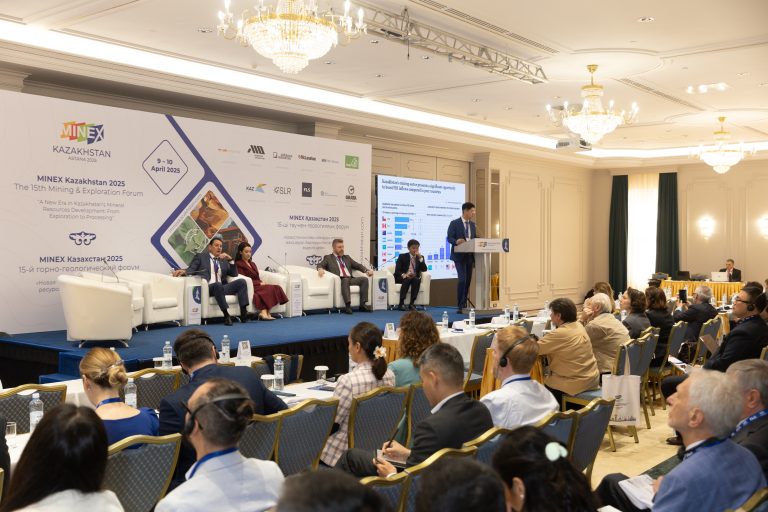
    Kazakhstan has digitalised 22 state services for the subsoil use sector and processed more than 500 licence applications through a new unified platform since its launch at the start of 2026, the country’s vice minister of industry and construction told the MINEX Kazakhstan forum in Astana — the country’s flagship annual gathering for the mining and geology sector, now in its 15th year.

    Speaking at the forum, which this year runs under the theme “A New Era of Mineral Resource Development in Kazakhstan: From Exploration to Processing,” vice minister Zhannat Dubirova outlined the practical impact of the digitalisation drive. In January alone, digital auctions conducted through the new Unified Subsoil Use Platform attracted $40 million in investment commitments across 21 licence areas. The platform allows investors to access available sites and submit auction applications directly, without intermediaries. Compliance monitoring across the approximately 3,000 active licences and contracts for solid minerals, previously conducted manually, has also been fully digitalised.

    Almas Kushimov, director of the Ministry of Industry and Construction’s subsoil use department, reported strong market appetite for new resource opportunities. Over the past two years, 117 subsoil areas and deposits have been sold through electronic auctions, generating a combined signature bonus of more than 29 billion tenge. An auction covering 50 deposits of gold, silver, coal and rare metals is planned for June 2025.

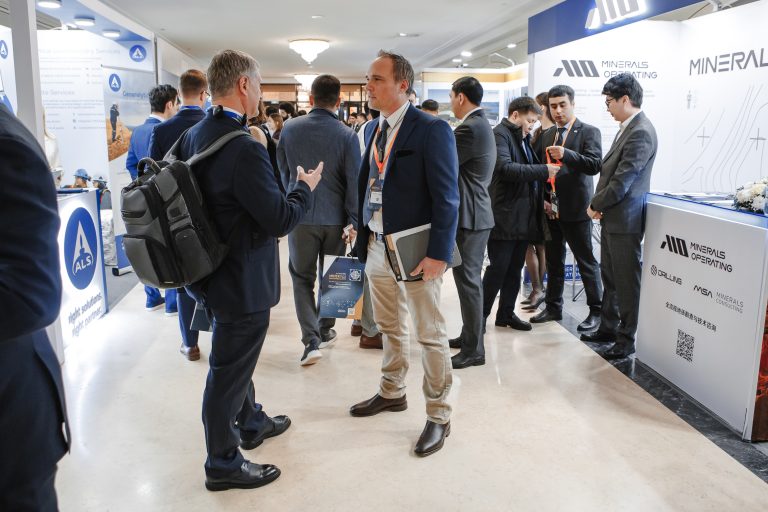
    The forum brought together approximately 100 speakers, more than 450 delegates and around 40 exhibitors from countries across Central Asia, Europe, North America, Africa, the Middle East, Australia, China, India, Malaysia and Singapore. Sessions covered investment climate, Kazakhstan’s strategic role in global critical raw material supply chains, uranium industry development and nuclear energy prospects. The forum is due to close with a workforce development and national competency session, followed by a gala evening at which the Kazakhstan Mining Chamber will present its annual Mining Industry Achievement Awards.

  • AI Takes the Wheel in Kazakhstan’s Mines as Real-Time Sensor Data Replaces End-of-Shift Guesswork

    AI Takes the Wheel in Kazakhstan’s Mines as Real-Time Sensor Data Replaces End-of-Shift Guesswork

    Artificial intelligence is moving from a supporting tool to an operational management system in Kazakhstan’s mining sector, fundamentally changing how production is monitored, maintained and planned, according to the chairman of the MINEX Forum.

    Speaking to Kazinform, Artur Polyakov, managing director of Advantix and executive chairman of the MINEX Forum, described a shift that is already underway on mine sites across the country. A single haul truck in an open-pit mine may carry between 300 and 1,000 sensors. Until recently, that data was collected manually by an engineer at the end of each shift and processed by hand. Today, the data flows continuously in real time and artificial intelligence processes it without human intervention.

    The practical consequence, Polyakov said, is a fundamental change in how problems are managed — from reaction to prediction. “We are moving to a model where you can understand in advance what will break down and when — whether it is a light bulb, a conveyor belt or an entire piece of equipment. This makes it possible to plan maintenance before a breakdown occurs and significantly reduce costs,” he said.

    The transition to predictive maintenance is enabling mining operations to become more stable and controllable, with decisions driven by a constant stream of live data rather than retrospective reporting. Polyakov noted that the most advanced systems are already beginning to incorporate external variables alongside technical parameters — including market conditions and macroeconomic risk factors — elevating AI from an analytical instrument to a component of strategic production planning.

    The development reflects a broader transformation underway in Kazakhstan’s extractive sector, where the government is simultaneously pushing for deeper mineral processing, expanded geological exploration and a shift toward higher value-added industrial output — all of which depend on operational efficiency gains of the kind AI-driven systems are beginning to deliver.

  • Kazakhstan Faces Tough Road to Deep Processing as Critical Minerals Forum Highlights Technology and China Competition Challenges

    Kazakhstan Faces Tough Road to Deep Processing as Critical Minerals Forum Highlights Technology and China Competition Challenges

    Kazakhstan’s mining sector stands on the threshold of transformation, but turning ambition into reality will require overcoming significant technological, financial and competitive hurdles — a frank assessment that emerged from discussions at the mining and geology forum in Astana, where the path from raw material extraction to high-value processing was the central theme.

    The forum’s focus on critical and rare earth metals reflects a global reality: demand for these materials is rising rapidly, driven by the energy transition, defence needs and advanced manufacturing. For Kazakhstan, the logic is clear — selling unprocessed ore generates far less revenue than supplying refined or intermediate products. The country possesses the resource base; what it still lacks, participants agreed, is the technology and investment required to move up the value chain.

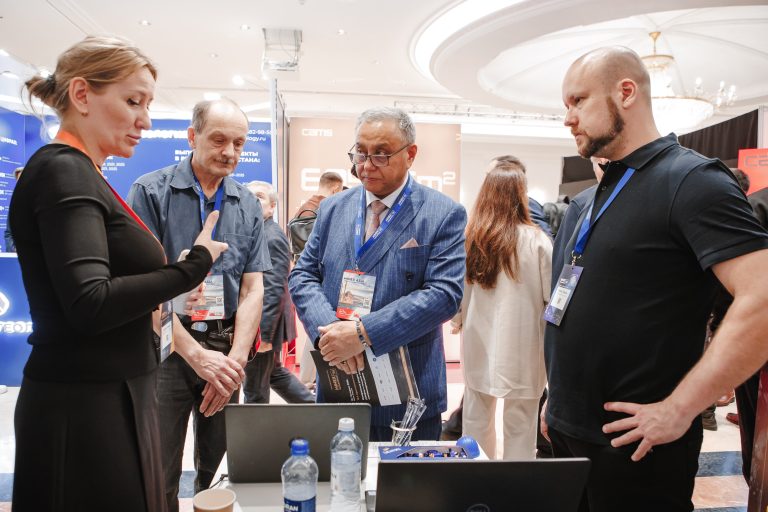
    New portable analytical equipment on display at the forum illustrated how technology is already beginning to change fieldwork. Vasily Makeyev, a representative of a equipment distribution company, demonstrated devices capable of performing on-site chemical analysis of ore and rock samples without the need to wait for laboratory results. “A geologist, right in the field or underground in a mine, can immediately assess the chemical composition of material on the spot,” he said, “rather than waiting for laboratory data that can take several hours or even several days to process.”

    On the broader challenge of building a domestic deep processing industry, participants were candid about the obstacles. Ros Lund, chief executive of the Eurasian Critical Minerals Organisation, acknowledged that while Kazakhstan has the intent and policy mechanisms, competing in processing is far from straightforward. “Next door is China with enormous capacity,” he said. “The key question is how to motivate companies to build processing facilities in Kazakhstan. Tax incentives are already in place and the process is moving. New plants should appear within the next five years.”

    The forum comes as Kazakhstan intensifies efforts to position itself as a critical minerals hub, backed by subsoil use reforms, increased state geological funding and new frameworks for attracting strategic investors committed to domestic value-added production.

  • Kazakhstan’s AIFC Launches Junior Mining Platform to Connect Early-Stage Explorers With International Capital

    Kazakhstan’s AIFC Launches Junior Mining Platform to Connect Early-Stage Explorers With International Capital

    The Astana International Financial Centre has announced the launch of a dedicated Junior Mining Platform designed to bridge the funding gap between early-stage geological exploration companies and domestic and international investors, as Kazakhstan moves to unlock the vast mineral potential that remains hidden across 65% of its still geologically underexplored territory.

    The platform was unveiled ahead of the MINEX Kazakhstan 2026 forum at the inaugural meeting of the AIFC’s newly established Mining Sector Expert Council — an advisory body bringing together leading industry participants including representatives of national companies, international investors and AIFC officials. Council members include Nariman Absametov, chairman of national geological holding Tau-Ken Samruk; Yerlan Galiyev, chairman of the National Geological Survey; Aida Alzhanova, deputy chief executive of Solidcore Resources; Said Sultanov, founder of Aurora Minerals Group; and Tim Barry, chief executive of Arras Minerals Corp.

    The Junior Mining Platform will see the AIFC act as an intermediary between licence holders and capital providers, screening and selecting projects according to recognised industry criteria before presenting them to investors. The initiative is intended to address what the AIFC describes as the sector’s most acute structural problem: a lack of structured access to capital at the exploration stage. Kazakhstan currently has approximately 3,000 active geological exploration licences requiring investment, yet many projects are unable to access financing due to limited reserve confirmation under internationally recognised standards such as JORC and KAZRC.

    AIFC chief product officer Zhanbolat Kakishev said the platform was designed to create “a transparent and understandable environment where projects can attract financing at early stages, and investors can access a pipeline of projects selected according to industry-recognised criteria.” Among the financial instruments the AIFC plans to introduce through the platform are royalty arrangements, streaming agreements and earn-in deals — tools widely used in international junior mining markets but less established in Kazakhstan.

    The backdrop to the launch is significant. Kazakhstan’s mining sector contributed 12.1% of GDP and approximately 33% of total national exports in 2024. The country holds substantial reserves of copper, gold, chromium, rare earth elements and other critical minerals, and mining and metallurgy currently account for 17% — or $3 billion — of total foreign direct investment. Against that backdrop, the global capital requirement for the extractive sector is estimated to reach $2.1 trillion by 2050, presenting a substantial opportunity for Kazakhstan to position itself as a regional investment hub if early-stage financing barriers can be reduced.

    Junior companies wishing to participate in the platform can submit applications and review selection criteria on the AIFC’s official website.

  • 15th MINEX Kazakhstan Forum Highlights Second Phase of Mining Law Reform

    15th MINEX Kazakhstan Forum Highlights Second Phase of Mining Law Reform

    The 15th anniversary MINEX Kazakhstan Forum has officially opened in Astana, bringing together over 450 delegates and more than 100 speakers from 30 countries, including Central Asia, Europe, the Americas, the Middle East, Southeast Asia, Africa, and Australia. The forum emphasizes Kazakhstan’s growing importance in the global mineral resource market.

    The central theme of the event is “A New Era in Kazakhstan’s Mineral Development: From Exploration to Processing.” Key discussions focused on sustainable development, ESG principles, technological innovation, digitization, investment, exploration, and cross-border cooperation.

    During the plenary session, Nikolai Radostovets, Executive Director of the Republican Association of Mining and Metallurgical Enterprises (AGMP), highlighted the need to continue reforms in subsoil use and taxation.

    He praised the government’s proactive efforts in attracting both domestic and foreign investment in geological exploration. Over 3,000 licenses have been issued, demonstrating momentum in the sector. However, Radostovets emphasized that a second phase of subsoil use reform is necessary to address remaining legislative gaps.

    Notably, he proposed splitting the current Subsoil Code into two separate laws — one for hydrocarbons and another for solid minerals — to better address the specific needs of each sector.

    Radostovets also outlined key priorities for transforming the sector:

    • Classifying exploration expenses as tax-deductible,

    • Introducing agreements for processing low-grade deposits,

    • Stimulating the processing of technogenic mineral formations,

    • Developing a new Tax Code with provisions tailored to the mining sector.

    One of the central issues is the introduction of royalties for new and existing deposits. While initial industry reactions were hesitant, similar to past transitions from contracts to licensing, Radostovets expressed optimism that fair and competitive royalty rates will encourage investment and higher value-added processing.

    The executive also called for greater alignment between the Subsoil Code and other legislation, such as the Water and Land Codes, to address legal inconsistencies.

    Legislative amendments — more than 60 proposals — are currently under review by the Ministry of Industry and Construction. A working group will begin public discussions in the coming weeks, and the finalized amendments are expected to be submitted to Parliament in September 2025.

    Radostovets stressed the importance of coal as a strategic resource, advocating for investment in coal chemistry despite global calls to move away from coal combustion. He also promoted the development of industrial clusters, including copper and aluminum clusters, to support local value-added production.

    “We are optimistic. The MINEX Kazakhstan Forum not only facilitates dialogue and debate but helps us move forward with meaningful reforms in Kazakhstan’s mining sector,” Radostovets concluded.

  • Kazakhstan to Auction 50 Mineral Deposits Including Gold, Copper, and Rare Earth Metals

    Kazakhstan to Auction 50 Mineral Deposits Including Gold, Copper, and Rare Earth Metals

    Kazakhstan is set to hold a large-scale electronic auction in June 2025, offering 50 solid mineral deposits, including gold, copper, coal, polymetals, and rare earth elements, according to Almas Kushumov, Director of the Subsoil Use Department at the Ministry of Industry and Construction. He made the announcement during the MINEX Kazakhstan forum.

    The rights will be granted for both exploration and extraction, with deposits containing balance reserves to be auctioned directly for mining. The full list of deposits is expected to be published in the coming days.

    Kushumov noted that 117 deposits were auctioned via e-auctions in 2023–2024, bringing in over 20 billion tenge in signing bonuses for the state. In 2024, 43 new deposits were officially registered, including 22 solid mineral sites. Resource growth figures include:

    • 20 tons of gold

    • 9,000 tons of silver

    • 48,000 tons of copper

    Kazakhstan’s current reserve lifespan is estimated at 33 years for gold and 44 years for copper, based on current production levels.

    Minister of Industry and Construction Kanat Sharlapayev previously stated that companies from the United States, the European Union, and China would be able to participate in the auctions for rare and rare earth metal rights. He emphasized that competition among major players in the global critical materials market—used in dual-use goods, renewable energy tech, electric vehicles, and more—could help maximize Kazakhstan’s revenues.

    Quote:

    “This will be a high-interest auction. The competition between Western countries and China in the rare earth sector gives us the opportunity to attract the best offers,” Sharlapayev said.