Tag: mineral processing

  • Uzbekistan and KAIST Explore Collaborative Opportunities in Metallurgy and Education

    Uzbekistan and KAIST Explore Collaborative Opportunities in Metallurgy and Education

    On 31 July 2026, F. Khamidova, the First Deputy Minister of Mining Industry and Geology of Uzbekistan, met with a delegation from the Korea Advanced Institute of Science and Technology (KAIST), led by Professor Shin Byungha, the Head of the Department of Materials Science and Engineering. The meeting focused on the potential for expanding scientific, technological, and academic cooperation between Uzbekistan and South Korea, particularly in the metallurgical sector.

    The discussions highlighted the importance of implementing joint projects aimed at enhancing mineral processing technologies and fostering collaborative research initiatives. Both parties recognised the need for innovation in the mining and metallurgy sectors, which are crucial for Uzbekistan’s economic development. The meeting also underscored the significance of academic exchange programmes and the training of highly qualified specialists, which are essential for building a skilled workforce capable of advancing the industry.

    As a result of the meeting, Uzbekistan and KAIST agreed to continue developing joint initiatives and prepare proposals to further strengthen their bilateral cooperation in science, education, and technology. This partnership is expected to contribute significantly to the advancement of Uzbekistan’s mining industry and enhance the capabilities of its educational institutions.


  • EU-Africa Critical Minerals Cooperation

    EU-Africa Critical Minerals Cooperation

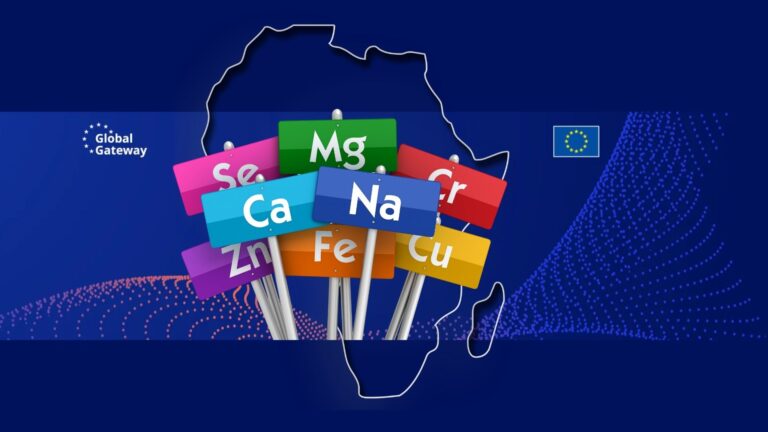
    As the European Union accelerates its green and industrial transitions, securing reliable access to critical raw materials has become a strategic imperative. The continent faces significant supply chain vulnerabilities, with China controlling approximately 70% of global mineral processing and refining capacity. Global demand for lithium alone is projected to surge by more than 350% by 2040, intensifying competition among major economies for secure sources. The European Critical Raw Materials Act represents the EU’s comprehensive response to these challenges, with Africa emerging as a central pillar of the bloc’s diversification strategy.

    The EU has already established critical minerals partnerships with several African nations, including South Africa, Rwanda, Namibia, the Democratic Republic of the Congo, and Zambia, backed by substantial financing commitments through the Global Gateway initiative, which aims to mobilise €300 billion in public and private investments. However, current cooperation frameworks remain heavily focused on extraction rather than value-added activities such as processing and manufacturing. This approach creates tension with sustainability objectives and fails to deliver the mutual economic benefits that African governments increasingly demand. Mining operations risk driving deforestation, water and soil pollution, whilst their substantial energy requirements may divert critical resources from domestic electrification in a region where approximately 600 million people lack access to affordable energy.

    To achieve genuine supply chain diversification and ensure commercially viable partnerships, the EU must fundamentally reshape its approach. This requires closing coordination gaps across fragmented EU and member state initiatives, introducing demand aggregation and non-price public procurement criteria, and expanding circular economy cooperation including battery recycling and mine tailings reprocessing. Critically, the EU should adopt phased public-private partnership models that combine upfront infrastructure investment with binding commitments to mining, processing and refining activities. Development cooperation must be aligned with critical mineral initiatives to strengthen local infrastructure, skills and regulatory capacity. Long-term purchasing and offtake agreements for processed or refined minerals, coupled with robust environmental, social and governance safeguards and meaningful community engagement, are essential to prevent the perpetuation of the resource curse and ensure that African countries derive tangible, lasting benefits from their mineral wealth.

  • Kazakhstan Opens 50 Mining Deposits to Auction and Builds New National Geology Lab in Push to Attract Processing-Focused Investors

    Kazakhstan Opens 50 Mining Deposits to Auction and Builds New National Geology Lab in Push to Attract Processing-Focused Investors

    Kazakhstan is expanding access to its subsoil resources and modernising the infrastructure underpinning its geological research sector, as the government advances a strategy to draw in a new class of investor — one committed not just to extraction but to building processing capacity inside the country.

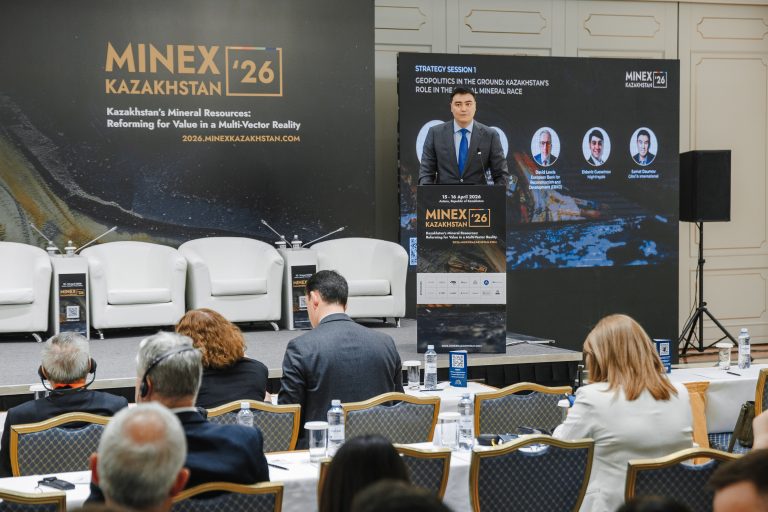
    Speaking at the MINEX Kazakhstan 2026 forum in Astana, vice minister of industry and construction Iran Sharkhan confirmed that auctions for exploration and production rights across 50 deposits of solid minerals are planned for 2026, significantly broadening the pool of opportunities available to both domestic and international investors. The auctions will be conducted through Kazakhstan’s newly launched Unified Subsoil Use Platform, which has digitalised 22 state services and allows investors to browse available areas and submit applications without intermediaries.

    To support the science underpinning exploration, a modern laboratory complex is under construction in Astana on the basis of the National Geological Survey, with commissioning targeted for 2028. The facility is expected to raise the quality and speed of geological research, providing a stronger data foundation for the exploration decisions of both state bodies and private investors. Geological survey coverage has now reached 2.038 million square kilometres against a 2026 target of 2.2 million square kilometres, with a shift to more detailed mapping scales prioritised to sharpen the identification of prospective areas. Seventeen new deposits — including Kok-Zhon, Altyn-Shoko and Samombet — were added to the state register in 2025, bringing the total to approximately 10,000.

    Sharkhan reaffirmed that the legislative framework is being redesigned to reward investors who commit to value-added activity. A royalty system is set to replace the existing mineral extraction tax, and a strategic investor status will provide preferential conditions to companies that take on domestic processing obligations. Amendments to the Subsoil and Subsoil Use Code introduced in 2025 have also targeted the digitalisation of regulatory procedures and the simplification of licensing processes. “Kazakhstan is moving from a raw materials model to a value-added economy,” Sharkhan said. “The priority is deep processing of raw materials within the country, technology development and attracting strategic investors oriented toward long-term impact.”

  • Kazakhstan’s Baiterek Holding Eyes $2.5 Billion in Annual Mining Finance as Two Rare Earth Projects Enter Bank Review

    Kazakhstan’s Baiterek Holding Eyes $2.5 Billion in Annual Mining Finance as Two Rare Earth Projects Enter Bank Review

    Kazakhstan’s state development holding Baiterek is considering financing two rare earth metal extraction projects through its subsidiary the Bank for Development of Kazakhstan, a senior holding official has revealed, as the group targets at least $2.5 billion in annual mining and metallurgical sector financing in 2026.

    Speaking to journalists on the sidelines of MINEX Kazakhstan 2026 in Astana, Baiterek managing director Aydin Akan confirmed that two rare earth projects are currently being assessed under a programme the Bank for Development of Kazakhstan launched in November last year. “There is a pool of projects they are looking at,” he said, cautioning that timelines for approval and disbursement remain uncertain as both projects must complete the bank’s internal procedures and have their project documentation pass mandatory state expert review — a process requiring at least six months of preparation.

    The rare earth projects may also receive financing through Qazaqstan Investment Corporation, another Baiterek subsidiary, which takes equity stakes of typically less than 50% in projects for a defined period before exiting through sale to the private sector. “We are ready to enter the capital and be participants, co-partners in a project — support it and at a certain point exit through sale to the private sector,” Akan said, emphasising that the operational lead must always remain with a private company.

    Baiterek’s broader mining sector financing reached $2.5 billion in 2025 out of a total loan portfolio of approximately $20 billion, and Akan said he expects that figure to be maintained or exceeded in 2026. “The dynamics are very good. We are growing twofold on an annual basis,” he said.

    Crucially, Akan was clear about the boundaries of Baiterek’s mandate: the holding does not finance exploration or extraction, but exclusively targets the creation of added value from raw materials. “Our mandate is precisely the financing of processing capacity construction — we finance the creation of added value from raw materials,” he said, listing the instruments available as direct loans, equipment leasing, working capital financing, guarantees and equity participation through QIC. The emphasis on processing aligns directly with Kazakhstan’s broader strategic push to move up the mineral value chain and reduce dependence on raw material exports.

  • Tungsten West Produces First Tungsten Concentrate in Hemerdon Restart Trial

    Tungsten West Produces First Tungsten Concentrate in Hemerdon Restart Trial

    Tungsten West (LON: TUN) has achieved a major milestone in its plans to restart production at the Hemerdon mine in Devon, England, after successfully producing its first tungsten concentrate during an ongoing mineral processing trial.

    The trial is part of a broader plant optimization and technical validation program, designed to test and enhance the performance of key sections of the mine’s processing facility. The company said the data collected will support the planned restart of full-scale operations, expected by late 2026.

    “This progress marks an important milestone in restarting operations at Hemerdon,” said CEO Jeff Court. “It provides confidence to our neighbours, the environment agency, investors and off-takers that we are moving towards production.”

    Court added that the company is maintaining high environmental and operational standards throughout the trial, noting Hemerdon’s growing importance as demand for diversified tungsten supply intensifies globally.


    Strategic Importance

    Hemerdon — historically known as Drakelands mine — is one of the largest tungsten deposits in the world. Located about 7 miles northeast of Plymouth, the site has a long mining history, with operations dating back to 1918 and production during both World Wars.

    After feasibility work in the 1980s, the mine was redeveloped into a modern tungsten and tin operation that ran from 2015 to 2018 under previous ownership. The project’s restart is considered strategically significant for both the UK and Europe, offering a potential secure tungsten supply outside China, which dominates global production.

    Tungsten is a relatively small market — valued at around $5 billion in 2023 — but it plays a critical role in defense and high-tech industries. Its density and hardness make it the material of choice for armour-piercing ammunition, aerospace components, and heavy-duty tools.


    Market Reaction

    Shares in Tungsten West rose 12% following the announcement, closing with a market capitalization of £21.28 million ($28 million).

    The company’s management emphasized that the successful trial demonstrates technical readiness and operational credibility, key steps toward securing financing and offtake agreements for the mine’s full-scale restart.

  • 15th MINEX Kazakhstan Forum Highlights Second Phase of Mining Law Reform

    15th MINEX Kazakhstan Forum Highlights Second Phase of Mining Law Reform

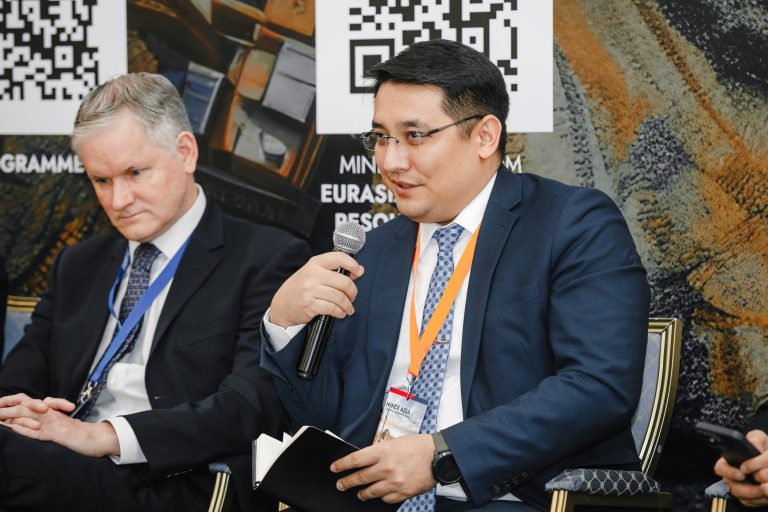
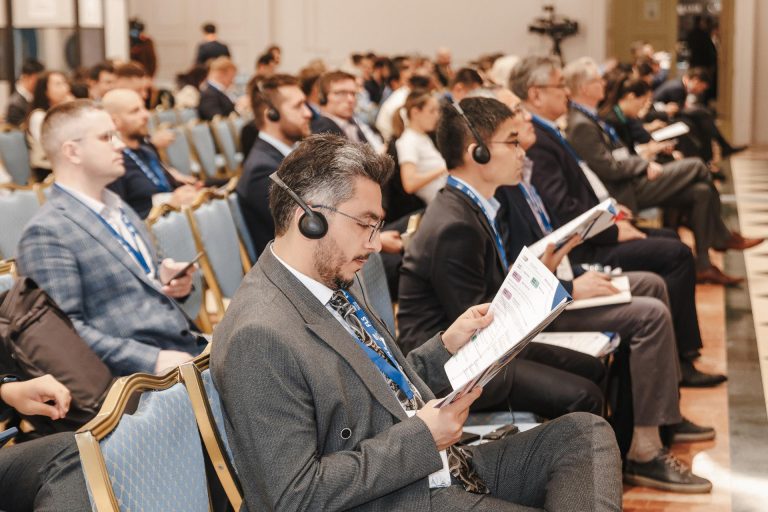
    The 15th anniversary MINEX Kazakhstan Forum has officially opened in Astana, bringing together over 450 delegates and more than 100 speakers from 30 countries, including Central Asia, Europe, the Americas, the Middle East, Southeast Asia, Africa, and Australia. The forum emphasizes Kazakhstan’s growing importance in the global mineral resource market.

    The central theme of the event is “A New Era in Kazakhstan’s Mineral Development: From Exploration to Processing.” Key discussions focused on sustainable development, ESG principles, technological innovation, digitization, investment, exploration, and cross-border cooperation.

    During the plenary session, Nikolai Radostovets, Executive Director of the Republican Association of Mining and Metallurgical Enterprises (AGMP), highlighted the need to continue reforms in subsoil use and taxation.

    He praised the government’s proactive efforts in attracting both domestic and foreign investment in geological exploration. Over 3,000 licenses have been issued, demonstrating momentum in the sector. However, Radostovets emphasized that a second phase of subsoil use reform is necessary to address remaining legislative gaps.

    Notably, he proposed splitting the current Subsoil Code into two separate laws — one for hydrocarbons and another for solid minerals — to better address the specific needs of each sector.

    Radostovets also outlined key priorities for transforming the sector:

    • Classifying exploration expenses as tax-deductible,

    • Introducing agreements for processing low-grade deposits,

    • Stimulating the processing of technogenic mineral formations,

    • Developing a new Tax Code with provisions tailored to the mining sector.

    One of the central issues is the introduction of royalties for new and existing deposits. While initial industry reactions were hesitant, similar to past transitions from contracts to licensing, Radostovets expressed optimism that fair and competitive royalty rates will encourage investment and higher value-added processing.

    The executive also called for greater alignment between the Subsoil Code and other legislation, such as the Water and Land Codes, to address legal inconsistencies.

    Legislative amendments — more than 60 proposals — are currently under review by the Ministry of Industry and Construction. A working group will begin public discussions in the coming weeks, and the finalized amendments are expected to be submitted to Parliament in September 2025.

    Radostovets stressed the importance of coal as a strategic resource, advocating for investment in coal chemistry despite global calls to move away from coal combustion. He also promoted the development of industrial clusters, including copper and aluminum clusters, to support local value-added production.

    “We are optimistic. The MINEX Kazakhstan Forum not only facilitates dialogue and debate but helps us move forward with meaningful reforms in Kazakhstan’s mining sector,” Radostovets concluded.

  • East Hope Group to Build Major Industrial Park in Kazakhstan, Investing Over $12 Billion

    East Hope Group to Build Major Industrial Park in Kazakhstan, Investing Over $12 Billion

    Chinese conglomerate East Hope Group (EHG) has announced plans to construct a large-scale industrial park in Kazakhstan, focusing on non-ferrous metallurgy and advanced mineral processing technologies. The project was revealed by the press service of Kazakh Invest, the national investment company that facilitated negotiations between EHG and Kazakh authorities.

    A tripartite agreement has already been signed between the Chinese investor, Kazakhstan’s Ministry of Foreign Affairs, and the Ministry of Industry and Construction. EHG is set to invest over $12 billion to establish metallurgical production facilities in the country. The company has registered a subsidiary in Kazakhstan and is currently evaluating potential sites for construction across various regions.

    The project is expected to create up to 10,000 new jobs at different stages of its development. While specific details about the products to be manufactured in the industrial park remain undisclosed, EHG is a prominent player in the global market for aluminum and other non-ferrous metals. The goods produced in Kazakhstan are planned to be exported to Europe, Central Asia, and China.

    According to Yerzhan Yelekeev, Chairman of the Board of Kazakh Invest, the project will help localize production, introduce cutting-edge processing technologies, and strengthen Kazakhstan’s position as a leading exporter of non-ferrous metals.

  • Martin Engineering Expands Operations to Central Asia

    Martin Engineering Expands Operations to Central Asia

    Martin Engineering has announced the establishment of a new regional hub in Kazakhstan, aiming to provide its full range of products and services to the rapidly expanding mining sector across Central Asia.

    Kazakhstan, the world’s ninth-largest country by land area, boasts a rich and diverse geology filled with valuable metal ores and mineral resources. The mining and minerals production industry plays an increasingly pivotal role in the nation’s economy, with most materials being exported.

    Building on its previous successes in Kazakhstan, Martin Engineering decided to solidify its presence by forming a dedicated business unit. Notably, the company has already delivered innovative conveyor belt cleaning solutions to one of Kazakhstan’s largest copper producers, significantly enhancing plant efficiency and productivity.

    The new venture will be overseen by General Manager Oleg Glukhov, who has been with the company for seven years. Glukhov emphasized Martin Engineering’s readiness to support Kazakhstan’s leading mineral processing firms in improving operational performance and safety.

    “Kazakhstan is one of the world’s key sources of metals and industrial minerals,” Glukhov stated. “Processing materials safely, efficiently, and profitably is important, and that’s where Martin Engineering comes in.”