Tag: Metinvest

  • Challenges Facing Ferrexpo and Metinvest Amid Black Sea Port Blockade

    Challenges Facing Ferrexpo and Metinvest Amid Black Sea Port Blockade

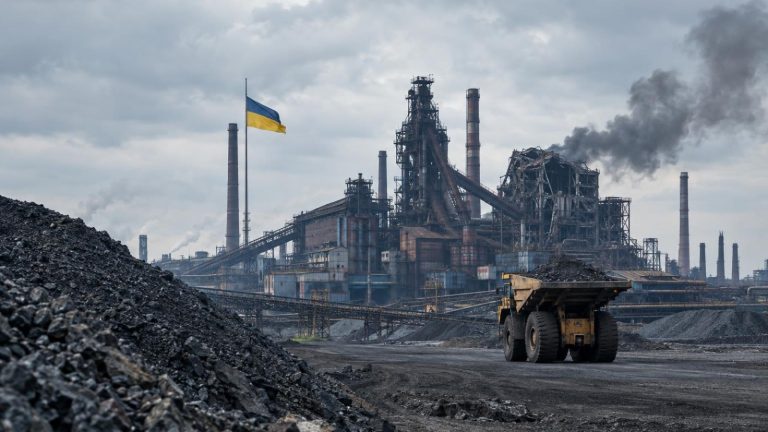
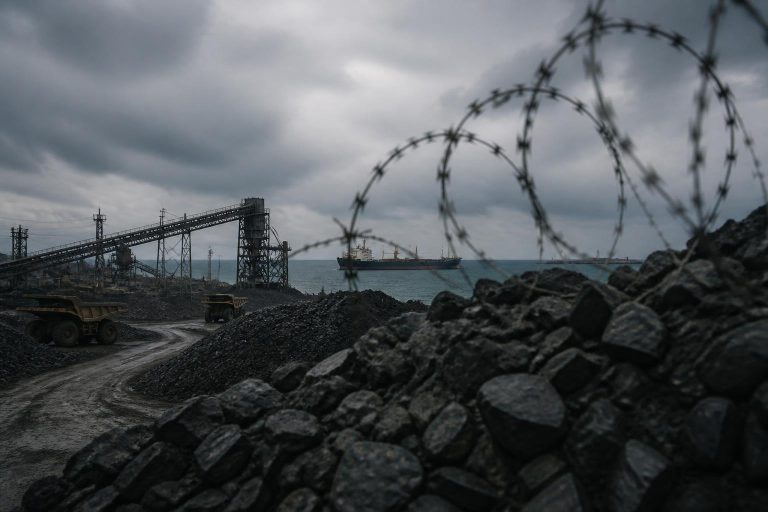
    The ongoing blockade of the Black Sea ports has severely impacted Ukraine’s mining and metallurgy sectors, particularly affecting major players like Ferrexpo and Metinvest. The closure of these ports has not only disrupted agricultural exports but has also halted the maritime export of iron ore, which is crucial for the economy. Ferrexpo has been forced to suspend production at its Poltava mining and processing plant, while Metinvest has temporarily halted operations at its Southern Mining and Processing Plant (Southern GOK).

    Before the war, Ukraine produced a record 81.2 million tonnes of iron ore in 2021, with a significant portion exported to China. However, the onset of the conflict led to a drastic decline in production and exports, dropping nearly 2.5 times due to the loss of key domestic buyers and the blockade of maritime routes. The only alternative has been to redirect iron ore exports via rail to the European Union, but this has proven economically unfeasible due to high logistics costs.

    The situation briefly improved in late 2023 when a maritime corridor reopened, allowing for a resurgence in exports. However, this recovery was short-lived, as Russian attacks on energy infrastructure led to rising electricity costs, which account for a significant portion of production expenses. The combination of low global iron ore prices and high transportation costs has made it difficult for Ukrainian companies to compete with Australian and Brazilian producers.

    As of early 2026, the situation remains dire, with exports dropping by 27.3% in the first half of the year. Ferrexpo, lacking its own steel production facilities in Ukraine, is particularly vulnerable, relying entirely on exports. The company has warned that without additional funding and the resumption of full-scale shipments, it may only have enough resources to operate until mid-September. Meanwhile, Metinvest, which has its own steel mills, is also facing challenges, including a significant reduction in production and increased transportation costs due to the blockade.

    Experts warn that the continued closure of maritime routes threatens the macroeconomic stability of Ukraine, with the potential for widespread plant shutdowns if the situation does not improve soon. The reliance on European markets is not a viable long-term solution, as the logistics and costs associated with land transport are prohibitive. The Ukrainian mining sector is at a critical juncture, with the need for government intervention and support to mitigate the impact of these challenges on the industry and the economy as a whole.


  • Metinvest Completes Buyback of Eurobonds Due 2025

    Metinvest Completes Buyback of Eurobonds Due 2025

    Metinvest BV, the Dutch-based parent company of Ukrainian mining and metallurgical giant Metinvest Group, has fully redeemed its 2025 Eurobonds, according to a stock market disclosure. The bonds were officially paid off on June 17.

    Chief Executive Officer Yuriy Ryzhenkov noted that since the start of Russia’s full-scale invasion in 2022, Metinvest has repaid two bond series totaling nearly $600 million—a significant milestone considering the company continues to operate under extreme wartime conditions.

    “These payments were made despite the war’s profound impact on the Group’s business model, including the loss of operational control and shutdown of certain assets in Ukraine,” Ryzhenkov told Interfax-Ukraine.

    Metinvest, a vertically integrated group with operations across Ukraine (Donetsk, Luhansk, Zaporizhzhia, and Dnipropetrovsk regions), the EU, UK, and US, is majority-owned by SCM Group (71.24%) and Smart-Holding (23.76%).

    In December 2024, Metinvest repurchased $16.27 million worth of its 2025 Eurobonds during an auction, buying them back at prices ranging from 86% to 92.5% of par value. Following the auction, €161.9 million in bonds remained outstanding.

    The company explained the buyback was part of a broader strategy to manage its debt portfolio, smooth payment obligations, bolster resilience, and ease liquidity pressures amid the high-risk operating environment in Ukraine.

    Despite these financial maneuvers, Metinvest reported a third consecutive annual loss in 2024, totaling $1.15 billion, mainly due to asset write-downs at Pokrovske Coal Group. In Q1 2025, steel output held steady, though coal production declined due to the situation in Pokrovsk, and iron ore concentrate volumes dropped by 21% compared to the same period in 2024.

  • Metinvest’s ESG Practices: How Transparency and Accountability Are Paving the Way to the EU Market

    Metinvest’s ESG Practices: How Transparency and Accountability Are Paving the Way to the EU Market

    Ukrainian industrial giant Metinvest is proactively addressing the European Union’s escalating sustainability-reporting requirements, viewing robust Environmental, Social, and Governance (ESG) practices not just as an advantage but as a necessity for accessing the EU market.

    At a recent training session organized by the Federation of Employers of Ukraine (FEU) and the Danish Business Association, Kristina Rusnak, Metinvest’s ESG and Sustainable Finance Manager, shared the company’s extensive experience in implementing ESG practices, managing sustainability risks, and preparing for new reporting mandates. She also highlighted Metinvest’s commitment to social responsibility during wartime.

    The session brought together experts from the FEU, the Confederation of Danish Industry, and other leading Ukrainian companies to discuss the EU’s new regulations, particularly the Corporate Sustainability Reporting Directive (CSRD). A key takeaway was the concept of Double Materiality Assessment, which considers both a company’s impact on the environment and society, and how those factors, in turn, affect the business itself.

    Why ESG Matters for Metinvest:

    Rusnak emphasized that adhering to ESG principles helps Metinvest:

    • Reduce Risks: Mitigating risks related to environmental protection, employee safety, regulatory compliance, and corporate governance.
    • Enhance Resilience and Stability: Bolstering the company’s overall resilience and financial stability.
    • Meet Regulatory Pressure: Responding to EU requirements like the CSRD and the planned Carbon Border Adjustment Mechanism (CBAM).
    • Secure Financing: Meeting ESG criteria increasingly applied by international and Ukrainian banks and investment funds.
    • Address Consumer Demand: Catering to growing consumer demand for transparency and environmental responsibility throughout supply chains.

    Navigating the EU’s New Rules (CSRD):

    The CSRD, set to replace the Non-Financial Reporting Directive (NFRD), will significantly expand ESG reporting requirements. From 2028, even large, unlisted companies connected to the EU market will need to publish detailed sustainability reports.

    Metinvest’s approach to implementing ESG begins with identifying material topics – understanding its impact on people and the environment, and vice versa. These topics are updated annually using the Global Reporting Initiative (GRI) Standards. Subsequently, the company selects indicators to track progress across all ESG areas, including detailed environmental data.

    “In wartime, social responsibility takes on particular significance. Metinvest has already allocated more than US$250 million to support the Armed Forces of Ukraine, humanitarian projects and aid to civilians,” Rusnak stated.

    Metinvest annually publishes its sustainability data on its website, aligning with recommendations from the GRI, Sustainability Accounting Standards Board (SASB), and the Task Force on Climate-related Financial Disclosures (TCFD).

    Metinvest’s Reporting Journey:

    Metinvest’s commitment to sustainability reporting dates back to 2008 with its first corporate social responsibility report based on GRI standards. Key milestones include:

    • 2019: Annual sustainability reports incorporating SASB standards and initial materiality assessments.
    • 2021: First integrated report combining sustainability data with financial results.
    • Last Year: First disclosure of climate-related practices, including risk assessment under Paris Agreement scenarios and a shift in corporate governance to focus on climate change.

    The company also uses three ESG ratings to track progress and identify areas for improvement.

    Governance and Risk Management:

    Metinvest’s ESG practices are guided by principles of accountability, transparency, and alignment with international standards. Core areas like community engagement, workforce relations, occupational health and safety, and environmental protection are governed by internal policies and overseen by the Supervisory Board through dedicated committees and executive directorates.

    In 2024, climate governance was integrated, now supervised by the Health, Safety and Environmental Committee. The Internal Audit Directorate monitors ESG risks and reports annually to the Supervisory Board’s Audit and Finance Committee.

    Furthermore, Metinvest operates a Code of Ethics for all employees and, in 2024, adopted a Human Rights Policy extending to partners. An anonymous Trust Line is available for reporting misconduct. The company also enforces a Code of Business Conduct for all suppliers, with compliance being a mandatory condition for doing business.

    Metinvest continuously reviews and mitigates ESG risks, including emerging threats like climate-related challenges (CBAM and global climate change) and wartime labour shortages. The company is actively strengthening its climate-risk management system, exploring low-carbon technologies, launching decarbonisation initiatives, and expanding human-capital programmes, including pay rises, enhanced employee support, and veteran-focused initiatives.

  • Metinvest Expands to Scandinavian Markets, Signs Annual Contracts with Swedish SSAB

    Metinvest Expands to Scandinavian Markets, Signs Annual Contracts with Swedish SSAB

    Since the beginning of the war, Metinvest Group has restructured its logistics and shifted focus to new markets, including Scandinavian countries. In a recent interview with FAQ Talks, Dmytro Nikolaienko, Commercial Director of Metinvest, revealed that the company has begun supplying iron ore to SSAB, a leading Swedish steelmaker, for its plant in Finland.

    “While Europe remains our primary market, with many consumers in Eastern Europe, we have successfully found new buyers for our iron ore during the war. For example, we now supply SSAB, shipping ore to their Finnish plant via Polish ports,” Nikolaienko stated. He added that SSAB has become a long-term client, with supplies secured under annual contracts.

    SSAB is one of Europe’s largest steel producers, specializing in high-strength steel and operating in over 40 countries. The company, headquartered in Stockholm, produces more than 8 million tonnes of steel annually.

    Metinvest’s mining segment saw a 39% increase in export revenue last year, reaching 2.5billion, with physical exports surging by 73, nearly $3.9 billion of which came from Metinvest and Zaporizhstal. The company now supplies iron ore, flat steel, and semi-finished products to 51 countries, including newly entered markets like India, Sweden, and Norway.

    Metinvest also remains the largest taxpayer in Ukraine’s steel industry, contributing UAH 19.8 billion (61% of the sector’s total taxes) to state budgets in 2024.

  • Metinvest CEO Discusses Challenges and Prospects for Ukraine’s Metallurgy

    Metinvest CEO Discusses Challenges and Prospects for Ukraine’s Metallurgy

    Ukraine offers a wide range of investment opportunities across various industries, including rare earth metals mining, agriculture, automotive manufacturing, and household appliance production. However, according to Metinvest Group CEO Yuriy Ryzhenkov, investments in metallurgy are impossible without security guarantees, and the industry cannot fully develop without continuous investment.

    In an interview with BBC Talking Business, he stated that since 2022, Metinvest has lost about 40% of its assets, including Ukraine’s largest steel plants—Azovstal and Ilyich Iron and Steel Works. The blockade of Black Sea ports caused logistical disruptions, but deliveries were restored in 2023-2024, allowing Metinvest to operate at full capacity, supplying products to Europe and the Far East.

    The company also faced significant challenges in 2023 due to power supply disruptions and unstable electricity prices. To minimize losses, Metinvest had to shut down less energy-efficient facilities. Ryzhenkov noted that this was a major challenge for engineers, who had to maintain production while preventing industrial accidents.

    A key issue remains the high cost of electricity, which severely impacts iron ore mining—a crucial sector for Ukraine’s economy. One of Metinvest’s mining and processing plants halted operations in mid-2023 and remains idle.

    Despite these difficulties, Metinvest paid UAH 20 billion in taxes in 2024, a 36% increase from the previous year. Since 2022, the company has invested over UAH 30 billion in capital projects in Ukraine, making it the country’s second-largest investor.

  • Ukraine Defies Odds with Steel Production Growth in Early 2025 Despite Key Mine Loss

    Ukraine Defies Odds with Steel Production Growth in Early 2025 Despite Key Mine Loss

    Ukraine has managed to achieve a 9.9% increase in raw steel production during the first two months of 2025, reaching 1.18 million metric tons, according to data released by the Ukrainian steel producers’ union on Saturday. This growth comes despite the suspension of operations at the country’s key coking coal mine in Pokrovsk, located in the eastern region, due to escalating security concerns as Russian forces advance.

    The suspension of the Pokrovsk mine, operated by Ukrainian steelmaker Metinvest, has raised fears of a significant decline in steel output. The mine, which supplies a critical ingredient for steel production, has been a cornerstone of Ukraine’s industrial sector. The steelmakers’ union had previously warned that the potential closure of the mine could slash production to 2-3 million metric tons in 2025.

    Despite these challenges, Ukraine’s steel industry has shown resilience. The country, once a major global steel producer and exporter, saw its output plummet by 70.7% in 2022 to 6.3 million tonsfollowing Russia’s invasion. Production slightly declined to 6 million tons in 2023 but rebounded to 7.58 million tons in 2024.

    Producers are now exploring alternatives to sustain output, including sourcing coking coal from other domestic locations and relying on imports, though the latter option is expected to drive up costs. The ongoing conflict continues to pose significant risks to Ukraine’s industrial infrastructure, with several major steel plants already destroyed since the war began in February 2022.

  • Metinvest Announces 2024 Operational Results: Steel and Mining Performance Highlights

    Metinvest Announces 2024 Operational Results: Steel and Mining Performance Highlights

    Metinvest B.V., the parent company of a leading international vertically integrated group of steel and mining companies, has released its operational results for the fourth quarter and the full year ending 31 December 2024.

    In the fourth quarter of 2024, the Group produced 489 thousand tons (kt) of crude steel, reflecting a 14% decrease compared to the previous quarter’s output of 568 kt. Despite this quarterly decline, the annual crude steel production for 2024 reached 2,099 kt, marking a 4% increase from the 2,025 ktproduced in 2023.

    The Group’s iron ore concentrate production showed a positive trend, with 3,493 kt produced in the fourth quarter, a 4% rise from the third quarter’s 3,347 kt. For the full year, iron ore concentrate output surged to 15,733 kt, a significant 42% increase compared to 11,092 kt in 2023.

    However, coking coal concentrate production experienced a decline, with 1,057 kt produced in the fourth quarter, down 7% from the previous quarter’s 1,135 kt. Annually, coking coal concentrate output fell to 4,277 kt, a 22% decrease from 5,455 kt in 2023.

    These results highlight the Group’s resilience in iron ore production despite challenges in steel and coking coal output. Metinvest continues to play a pivotal role in the global steel and mining sectors, adapting to market dynamics and maintaining a strong operational presence.

  • Metinvest’s Kamet-Steel Plant Announces Major Investment Program for 2025

    Metinvest’s Kamet-Steel Plant Announces Major Investment Program for 2025

    Kamet-Steel, a subsidiary of Metinvest Group, has unveiled an ambitious investment program for 2025 with a total planned budget exceeding 2.5 billion hryvnias (approximately $59.8 million). This significant investment comes as the company continues its systematic work towards construction and reconstruction to improve production reliability and efficiency, despite the ongoing challenging wartime conditions.

    Key highlights of the investment program include:

    1. Major overhaul of Blast Furnace No. 9, which will receive nearly one-third of the program’s budget.
    2. A pilot project to construct an alternative power station using solar panels, marking Metinvest’s first venture into this type of renewable energy project.
    3. Implementation of 114 investment projects of varying scales throughout the year.
    4. Capital repairs of key equipment in main production shops.
    5. Modernization of the energy infrastructure, with a focus on constructing new water pipelines.
    6. Initiation of the first launch complex for a large-scale project to build a new blast furnace gas collector.
    7. Modernisation of the drive control system for continuous casting machine No. 1.

    Mikhail Koptev, Director of Capital Construction and Investments at Kamet-Steel, emphasized that this year’s investment budget is the largest in recent years. He stated that a significant portion of the funds will be directed towards supporting and upgrading core production equipment, which will serve as a springboard for further development and modernization of the enterprise.

    The company expects that the restoration of production capabilities will allow Kametstal to renew its presence in existing markets and expand into new ones, thereby generating additional profit.

    This investment program demonstrates Metinvest’s commitment to maintaining and improving its production facilities, even in the face of ongoing challenges. It also aligns with the company’s broader strategy of expanding its market presence and investing in green steel technology, as evidenced by its recent focus on North Africa and Turkey for future growth.

  • Metinvest’s Northern GOK Increases Product Output to Meet Orders from European Metallurgists

    Metinvest’s Northern GOK Increases Product Output to Meet Orders from European Metallurgists

    Northern GOK, part of Metinvest Group, has ramped up production of commercial products to fulfill orders from European steel manufacturers. The plant has launched a second pelletising machine to handle additional order volumes for European partners. Currently, both LURGI 552 A and LURGI 552 B machines are engaged in pellet production.

    The Pelletizing Plant #2 team prepared in advance for the increased production plans approved for the beginning of the year. To ensure equipment reliability, a complex of repair works was carried out on both pelletizing machines in the fall. The LURGI 552 B underwent equipment inspection and quarterly maintenance, including standard procedures to maintain key components. This improved machine reliability, ensured quality indicators were met, and allowed for higher loading today. Repair works were also completed on machine A in the fall, along with a major overhaul of the rotary reclaimer used for finished product loading.

    To fulfill European steel makers’ orders on time, the plant decided to launch both pelletizing machines simultaneously, rather than alternating their use as usual. Additional shifts for key workers on weekends and nights were organized to prepare and launch the second machine. This operating mode requires non-standard approaches and significant resources, as both machines need servicing, which is challenging in cold weather and with personnel shortages.

    The machines A and B are currently operating at productivities of 463 and 460 tons of high-quality pellets per hour respectively.

    Dmitry Malykh, Director of Production and Planning for Metinvest’s GOKs, noted: “The market dictates its rules, and we must maintain the company’s reputation and strengthen its competitiveness. It will be more challenging for Northern GOK teams, especially Pelletizing Plant #2, due to the changed regime. But our people meet such challenges with dignity, aware of their responsibility for the overall result. More production means more earnings and more taxes for the state to direct towards critically important areas during wartime.”

  • Ukraine’s Steel Industry Faces Crisis After Closure of Last Coking Coal Mine

    Ukraine’s Steel Industry Faces Crisis After Closure of Last Coking Coal Mine

    Ukraine’s steel producers are scrambling for alternatives after the country’s last operating coking coal mine in Pokrovsk shut down on Jan. 13. Metinvest Group, the mine’s owner, halted operations and evacuated workers as Russian forces advanced on the Donetsk Oblast town.

    The Pokrovsk mine, valued at around $1.8 billion before the war, was the last Ukrainian-controlled source of coking coal, a critical raw material for steelmaking. With its closure, domestic steel producers must now rely on costly imports, threatening Ukraine’s global competitiveness in the industry.

    “To produce 7.5 million metric tons of steel in 2024, we would need to import 1.9 million tons of coal. We have doubts whether such quantities can be secured, and import costs will further strain steelmakers,” said Oleksandr Kalenkov, head of Ukraine’s steelmakers’ association.

    Once a global top-10 steel producer, Ukraine has slipped below 20th place since Russia’s full-scale invasion. Annual coke production plummeted from 23.7 million tons in 2013 to just 2.7 million tons in 2023, reflecting the loss of key production sites in occupied territories.

    With no immediate domestic alternative, steelmakers, including Metinvest and ArcelorMittal Kryvyi Rih, will turn to imports from Poland, Australia, and the U.S. However, the added costs—estimated at $50 per ton for Australian coking coal—will raise steel production expenses by 11%, squeezing already thin profit margins.

    Before the war, the Pokrovsk mine supplied 66% of Ukraine’s steel industry with coking coal. Finding a replacement will require nearly 3 million tons of imports, but logistical and economic challenges loom large. Poland, the primary source of Ukraine’s coke imports (85% in 2024), has limited export capacity. Meanwhile, shipping coal from overseas can take over six weeks.

    Despite the industry’s struggles, steel remains a cornerstone of Ukraine’s economy, contributing 5.7% of GDP in 2023. While production grew 21% last year, forecasts for 2025 suggest a sharp decline. Without Pokrovsk, steel output could drop to as little as 2-3 million tons, potentially cutting 1% off GDP.

    Although global coking coal prices are currently low, Ukraine’s reliance on imports will inflate costs, impacting post-war reconstruction efforts. With domestic mining investments unlikely during wartime, Ukraine may eventually be forced to import steel itself, further increasing reconstruction expenses already estimated at nearly $500 billion.