Tag: metals

  • Qarmet Recycling Launches Aluminium and Metal Recovery Plant in Kazakhstan

    Qarmet Recycling Launches Aluminium and Metal Recovery Plant in Kazakhstan

    Qarmet Recycling, formerly known as Recycling Company, has unveiled plans for a new facility aimed at recycling metals, including aluminium, from old vehicles. Located in the village of Doskey in the Bukhar-Jyrau district of the Karaganda region, the plant is part of Kazakhstan’s industrial and innovative development programme. The facility, which was established on June 15, 2016, has recently undergone ownership changes and is now under the management of Qarmet, which acquired the property in 2024.

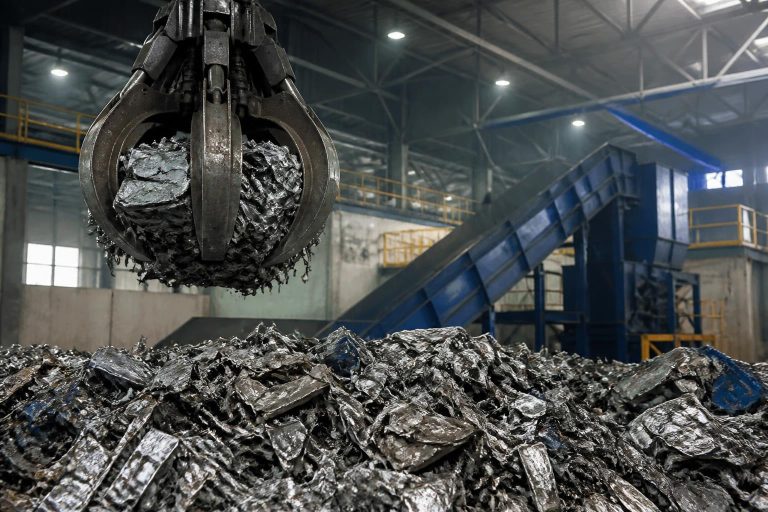
    The primary operations of the plant involve the production of cast iron, steel, aluminium, and non-ferrous metal alloys from scrap materials derived from decommissioned vehicles, special machinery, and agricultural equipment. The recycling process includes melting metals and converting waste oils into fuel and gas, as well as processing hydrocarbon-containing waste, such as used tyres, into usable energy sources. This shift in focus comes as the company adapts to new emission standards that were revised following changes in ownership and operational scope.

    With an annual processing capacity of up to 80,000 tonnes of end-of-life vehicles (ELVs), the plant is expected to yield approximately 63,750 tonnes of ferrous scrap and 16,250 tonnes of other materials annually. The facility sources its raw materials through a tendering process involving both individuals and legal entities. However, the actual volume of recycling and the specific client list are contingent upon the outcomes of these competitive procedures.

    In addition to vehicle recycling, the plant has the capability to process up to 14,000 tonnes of oil-containing waste per year, including 7,000 tonnes of used oils and lubricants from its pyrolysis facilities. The facility also handles solid hydrocarbon waste, such as tyres, with a processing capacity of up to 9,000 tonnes annually. The output from these operations includes up to 6,000 tonnes of liquid pyrolysis fuel and between 3,500 to 4,500 tonnes of fuel oil each year, along with 600,000 cubic metres of fuel gas.

    Before recycling, vehicles undergo a preparation process where oils and technical fluids are removed. The vehicles are then compressed into briquettes, which are sorted and processed into different categories of metals and other materials. The plant features advanced shredding and melting equipment, including two induction furnaces capable of producing 2,000 tonnes of metal annually. The melted metal is then cast into moulds for further use.

    Qarmet Recycling is part of the Qarmet group, owned by entrepreneur Andrei Lavrentev, who ranks 11th on Forbes’ list of Kazakhstan’s wealthiest individuals, with a net worth of $877 million.


  • Kazakhstan Maintains Position Among Top Copper Producers with 710,000 Tonnes in 2025

    Kazakhstan Maintains Position Among Top Copper Producers with 710,000 Tonnes in 2025

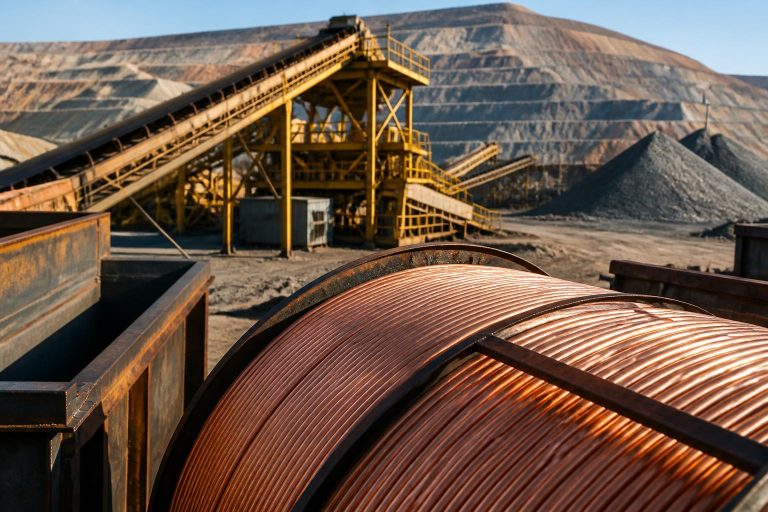
    Kazakhstan’s copper industry has reaffirmed its status as a significant player in the global market, producing 710,000 tonnes of copper in 2025. This output has secured the country a place in the top ten copper-producing nations, ranking ninth alongside Indonesia, which reported similar production figures. The data, sourced from the Energy Institute and the United States Geological Survey, highlights Kazakhstan’s continued relevance in the competitive landscape of copper mining.

    The global copper production landscape is led by Chile, which produced a staggering 5.3 million tonnes in the past year. The Democratic Republic of Congo follows in second place with 3.2 million tonnes, while Peru rounds out the top three with 2.7 million tonnes. China and Russia occupy the fourth and fifth positions, respectively, with outputs of 1.8 million tonnes and 1.3 million tonnes.

    In addition to Kazakhstan and Indonesia, other notable producers include the United States, which achieved a production level of 1 million tonnes, Zambia at 740,000 tonnes, and Australia with 730,000 tonnes. Collectively, the top ten copper-producing countries accounted for a total of 18.39 million tonnes of copper, contributing significantly to the estimated global production of over 23 million tonnes, as reported by the Energy Institute.

    Kazakhstan’s performance in copper production not only underscores its mining capabilities but also reflects the country’s strategic importance in the global supply chain for this essential metal, which is critical for various industries, including electronics and renewable energy. As demand for copper continues to rise, Kazakhstan’s position in the market may further strengthen, providing opportunities for investment and development in its mining sector.


  • Mining & Metals Analytical Report Highlights Kazakhstan’s Potential as a Mineral Investment Hub

    Mining & Metals Analytical Report Highlights Kazakhstan’s Potential as a Mineral Investment Hub

    A new analytical report produced by AIFC highlights Kazakhstan’s significant potential to become a leading hub for mineral investment, positioning the country as a crucial player in the global energy transition. The report, which includes what is believed to be the first-ever comparative benchmark of Kazakhstan against major mining jurisdictions like Canada, Chile, Australia, and Indonesia, concludes that while the nation has vast untapped potential, it must take specific steps to fully capitalize on it.

    The report identifies several key actions necessary to support this ambition. These include a strategic focus on active investment in junior mining companies, which are vital for early-stage exploration. The country also needs to provide a stable legal and regulatory framework to attract and retain foreign investment. Finally, Kazakhstan must align its development strategy with its mineral strengths and global trends, focusing on the materials most in demand for clean energy technologies.

    The report’s findings are underpinned by compelling data points that showcase Kazakhstan’s existing role and future prospects in the mining and metals sector. In 2024, the industry attracted $3 billion in gross foreign direct investment, accounting for 17% of the national total. Mining and metals also made up a substantial 12.1% of the country’s GDP last year. Despite its established importance, a staggering 65% of Kazakhstan’s geological area remains unexplored, presenting a monumental opportunity for new discoveries. These domestic figures are set against the backdrop of a global context where an estimated $2.1 trillion in mining investment will be needed by 2050 to meet the demands of a net-zero world.

  • Aurubis Shares Drop as Third-Quarter Earnings Miss Expectations

    Aurubis Shares Drop as Third-Quarter Earnings Miss Expectations

    Shares in Aurubis plummeted by as much as 8.8% on Monday after the company, Europe’s largest copper producer, reported third-quarter earnings that fell short of market expectations. Despite a five-fold increase in earnings before tax (EBT) to €90 million ($98 million) from the same period last year, which had been marred by a significant metals theft, the results were below analysts’ forecast of €99 million.

    Comparing with two years ago, earnings were down by 13%. The custom smelting and products segment also saw a 13%decline in EBT, registering €82 million, while revenue for the smelting business decreased by 7% compared to the same period in 2021-22.

    One trader expressed concerns that the current full-year EBT expectation of €467 million may be “rather optimistic” given the results. He noted that robust metal prices should have mitigated the impact of a major maintenance shutdown in Hamburg, which concluded in July.

    While copper prices have dropped by about 18% from their peak in May, they remain relatively high. However, weak economic indicators from the US and China have pressured prices. Metzler analyst Thomas Schulte-Vorwick attributed the earnings miss to higher-than-anticipated costs from the Hamburg shutdown and the launch of a new plant in the United States.

    Aurubis reiterated its full-year EBT guidance of €380-480 million and highlighted that this was their best-ever quarterly result during a major plant shutdown. However, the company’s future performance could heavily depend on copper prices, with weak production in the US and China posing significant risks.

  • Germany’s Dependence on Rare Earths and Critical Metals Threatens Economic Stability

    Germany’s Dependence on Rare Earths and Critical Metals Threatens Economic Stability

    A recent study by IW Consult at the German Economic Institute and Fraunhofer Systems and Innovation Research (ISI) has highlighted Germany’s reliance on imports of rare earths, copper, and lithium and their significance to the economy.

    The study reveals that nearly one-third of the added value in Germany’s manufacturing sector is linked to goods containing copper, while lithium-containing goods contribute to one-tenth, and those containing rare earths make up over a fifth.

    Industries such as automotive and electronics heavily rely on these raw materials, with car manufacturers and suppliers being particularly vulnerable.

    China currently dominates the rare-earth market, with other potential sources like Greenland, Canada, and Sweden remaining underexplored. Despite efforts to diversify supply chains, over 80% of the market is controlled by the top three suppliers.

    A substantial portion of Germany’s imports of these critical materials comes from China, posing a significant risk due to potential trade restrictions and export controls imposed by the Chinese government.

    The study also underscores the importance of Russia and Chile as key suppliers of copper and lithium, respectively, highlighting the diverse range of countries involved in Germany’s supply chain.

    Matthias Wachter from the Federation of German Industries (BDI) warns that dependence on Chinese raw materials surpasses that of Russian gas, emphasizing the vulnerability of supply chains to geopolitical tensions and export regulations.

    Cornelius Bähr of the German Economic Institute (IW Köln) emphasizes the need for diversification, domestic production, and recycling to mitigate supply chain risks and ensure resilience.

    Fritzi Köhler-Geib, chief economist at KfW, stresses the importance of securing the entire supply chain to support Germany’s green and digital transformation, despite initial costs.

    In the face of looming threats to industrial production and climate ambitions, Wachter calls for urgent action to safeguard supply security and prevent potential economic setbacks.

    Bähr warns that failure to address these vulnerabilities could jeopardize Germany’s industrial prowess and hinder progress towards a sustainable future, highlighting the urgent need for strategic planning and investment.

  • The new government of the Republic of Kazakhstan sets tasks for the development of high value-added production

    The new government of the Republic of Kazakhstan sets tasks for the development of high value-added production

    Large Kazakh industrial enterprises will need to develop roadmaps for establishing new high-value production facilities. The new Prime Minister of the Republic of Kazakhstan, Olzhas Bektenov, issued this instruction during an extended government meeting.

    According to the press service of the Cabinet of Ministers, in the near future, First Deputy Prime Minister Roman Sklyar will conduct negotiations with the heads of significant production facilities in the republic. Primarily, mining companies will be confronted with the challenge of producing high-value-added products.

    This directive aligns with the message of the head of state, “Economic Course of a Fair Kazakhstan.” Last fall, the president emphasized that the country should establish distinct industrial clusters. Kassym-Jomart Tokayev proposed giving priority to the deep processing of metals, coal, oil and gas chemistry, uranium conversion and enrichment, heavy engineering, and so on.

    Another directive from the Prime Minister concerns the utilization of domestic raw materials in the manufacturing industry. According to Mr Bektenov, industrial giants must significantly increase the procurement of domestic goods, services, and works.

    In 2024, the manufacturing industry of the Republic of Kazakhstan intends to implement a total of 180 investment projects worth 1.5 trillion tenge.