Tag: lithium production

  • Vulcan Energy Completes Preliminary Feasibility Study for Project Ludwig in Germany

    Vulcan Energy Completes Preliminary Feasibility Study for Project Ludwig in Germany

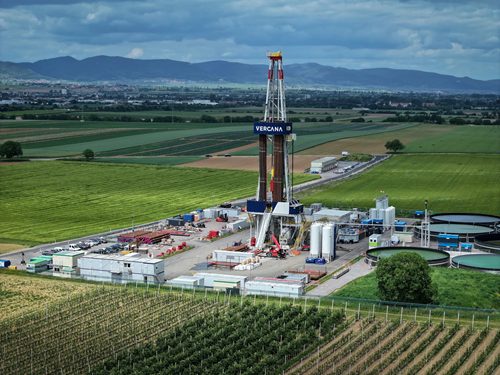
    Vulcan Energy (ASX: VUL, FSE: VUL) has announced the completion of its Preliminary Feasibility Study (PFS) for Project Ludwig, marking a significant advancement in its lithium and geothermal energy production strategy in the Ludwigshafen region of Germany. This project is set to build on the successes and learnings from Vulcan’s first phase, Project Lionheart, and aims to establish an integrated lithium chemical and renewable heat production facility within the Upper Rhine Valley Brine Field (URVBF).

    The PFS highlights robust economic metrics, projecting a pre-tax net present value (NPV8) of €2.6 billion and an internal rate of return (IRR) of 25.0% over a planned 30-year operational life. Notably, Project Ludwig is expected to produce 21,100 tonnes per annum (tpa) of battery-grade lithium carbonate (Li2CO3) while also generating 3,125 GWh per annum of renewable heat for both internal use and external sales. The capital expenditure (CAPEX) for the project is estimated at €1.26 billion, reflecting a 15% reduction in capital intensity compared to Project Lionheart, showcasing Vulcan’s commitment to capital efficiency and sustainable production practices.

    The study indicates a significant increase in mineral resources, with indicated lithium resources rising from 655 kt LCE to 1,251 kt LCE, and inferred resources increasing from 2,128 kt LCE to 2,230 kt LCE. Additionally, a maiden geothermal resource estimate of 193 PJ has been established, further solidifying the project’s potential.

    Vulcan’s Managing Director and CEO, Cris Moreno, expressed optimism about Project Ludwig, stating that it represents a strategic next step in the company’s phased development approach. The project aims to leverage Vulcan’s existing infrastructure and expertise gained from Lionheart, applying a proven integrated geothermal-lithium development model to enhance shareholder value and contribute to Europe’s critical raw materials supply chain.

    The PFS was conducted with support from Worley and JordProxa, ensuring a comprehensive evaluation of the project’s technical and economic viability. As Vulcan prepares for a Final Investment Decision (FID) post-Lionheart production commencement, it is also pursuing an asset-level financing strategy to advance Project Ludwig, with strategic partner selection processes already underway. The project aligns with the European Union’s focus on securing sustainable domestic supply chains for critical raw materials, particularly lithium, as the demand for electric vehicles and battery storage continues to rise.

    Project Ludwig not only aims to enhance Vulcan’s lithium production capabilities but also integrates renewable geothermal heat generation, positioning the company as a key player in the transition to a sustainable energy future in Europe.


  • Vulcan Secures €104 Million in German State Grants for Clean Lithium Production

    Vulcan Secures €104 Million in German State Grants for Clean Lithium Production

    German-Australian start-up Vulcan Energy Resources has been awarded €104 million in public funding to advance its clean lithium production project in Germany, the company announced on Tuesday. The funding comes from the federal government and the states of Rhineland-Palatinate and Hesse, and is part of Berlin’s broader strategy to boost electric vehicle (EV) manufacturing and reduce dependency on foreign raw material imports.

    The grants will support Vulcan’s €690 million investment in a geothermal-powered lithium extraction and refining facility. The project includes a plant in Landau, where lithium chloride will be extracted from geothermal brines, and a conversion plant near Frankfurt to produce lithium hydroxide — a vital input for EV battery production.

    The company aims to commission its first large-scale industrial plant by the end of 2026, with a projected annual output of 24,000 tonnes of lithium hydroxide. This volume would be sufficient to power approximately 500,000 EVs per year, according to Vulcan.

    Germany currently relies heavily on lithium imports from countries such as Australia, Argentina, Chile, and China. However, a recent study by the Federal Institute for Geosciences and Natural Resources and the Fraunhofer IEG suggests the country has enough lithium reserves to meet domestic demand for decades.

    Germany’s lithium demand is expected to hit 170,000 tonnes annually by 2030, driven by a sharp rise in battery production needs. Economy Ministry State Secretary Stefan Rouenhoff emphasized the importance of the project, stating: “In times of increasing geopolitical challenges, it is necessary to intensify efforts to open up alternative sources of raw materials for our domestic economy.”

    The €104 million in grants will begin disbursement on October 1, spread over a 36-month period. The federal states of Rhineland-Palatinate and Hesse will each co-finance approximately 30% of the total support package.

  • Condor Energies Secures Lithium Production License in Kazakhstan’s Kolkuduk Field

    Condor Energies Secures Lithium Production License in Kazakhstan’s Kolkuduk Field

    Condor Energies Inc., a Calgary-based energy company, has secured a license to produce solid minerals at the Kolkuduk field in Kazakhstan, spanning 6,800 hectares. The company believes the field holds significant lithium reserves, bolstering its position in the global critical minerals market.

    The Kolkuduk field is adjacent to the Sayakbay field, a 37,300-hectare site already managed by Condor. Both fields are located in a geologically active region characterized by faults that facilitate the accumulation of mineralized brines in underground reservoirs. Initial geological exploration at Kolkuduk has revealed approximately 130 milligrams of lithium per liter of brine water, with historical data indicating the presence of other valuable minerals such as rubidium, strontium, and cesium in brine reservoirs up to 1,000 meters deep.

    Don Streu, Condor’s President and CEO, emphasized the strategic importance of the project, stating, «Condor’s focus on developing critical minerals in Kazakhstan aligns with the global push to create diverse, secure, and sustainable supply chains.» Kazakhstan’s geographic location, situated between Europe and China—two of the largest consumers of critical minerals—further enhances the project’s potential.

    In addition to its mineral exploration, Condor announced in January 2024 that it had secured natural gas quotas to produce 350 tons of liquefied petroleum gas (LPG) daily starting in 2025. This volume could power 125 railway engines or 215 dump trucks with a capacity of 150 tons each, showcasing the company’s diversified energy portfolio.

  • Portugal’s Battery Value Chain Receives Major Boost with Five Key Developments

    Portugal’s Battery Value Chain Receives Major Boost with Five Key Developments

    In a significant stride for Portugal’s battery value chain, five major developments have been announced in the past two weeks, marking a pivotal moment for the country’s role in the global energy transition and electric vehicle (EV) industry.

    1. CALB Group Co., Ltd., the world’s fourth-largest battery producer, has confirmed the Final Investment Decision (FID) for a battery gigafactory in Sines. The facility, set to begin construction this year, will initially produce 15 GWh and is expected to be operational by 2028.
    2. Savannah Resources PLC has resumed field work in its concession area in Boticas, advancing plans to start production at Europe’s largest lithium spodumene resource by 2027. The project, which currently employs 50 people (mostly locals), has received strong support from the Portuguese government, emphasizing its strategic importance for the region and Europe.
    3. Lifthium Energy has identified Estarreja as the preferred location for its lithium refinery, signaling significant progress. The company’s €35 million pilot plant and state-of-the-art R&D lab in Coimbra are nearing completion.
    4. DST Group, based in Braga, has partnered with CALB to collaborate on battery recycling and storage solutions, further strengthening Portugal’s position in the battery ecosystem.
    5. Portugal’s Battery Cluster (Battery Cluster Portugal), which includes all the above entities alongside 50 other organizations, has been officially recognized as one of the country’s four key Competitiveness Clusters for the 2024-2030 cycle.

    These developments come at a critical time, as the European Commission recently announced an urgent integrated industrial plan for the automotive sector, which is undergoing its largest transformation in over a century. The battery value chain is central to this transition, supporting nearly 15 million high-quality jobs across Europe.

    Despite challenges, these milestones highlight Portugal’s growing influence in the global battery market and its commitment to leveraging this opportunity for economic and environmental benefits.

  • Vulcan Energy to Begin Large-Scale Lithium Production in Germany by 2027

    Vulcan Energy to Begin Large-Scale Lithium Production in Germany by 2027

    Vulcan Energy Resources, a company focused on producing sustainable lithium, has announced its goal to begin large-scale lithium hydroxide production in Germany by 2027, after pushing back its timeline by two years. The company recently commenced operations at its lithium chloride demonstration plant in Landau and aims to produce 24,000 tons of lithium hydroxide annually—enough to support 500,000 electric vehicles. CEO Christian Freitag cited the extended financing process as a factor in the delay, with Vulcan now raising €1.9 billion. Funding will include over €600 million in equity and €1.3 billion in loans from multiple sources, including a €500 million commitment from the European Investment Bank.

    This production marks a significant step for Europe’s energy goals, helping reduce dependence on lithium imports from China and South America. Vulcan’s extraction method, powered by geothermal energy, aligns with Germany’s goal for a low-carbon lithium source to support the EV sector’s growing demand. Vulcan has already sold its first decade’s production through agreements with major automotive manufacturers like Volkswagen, Stellantis, and Renault, underscoring the anticipated demand surge in Europe for lithium-ion battery components.

  • Kazakhstan and South Korea Strengthen Collaboration in Mining and Processing Industries

    Kazakhstan and South Korea Strengthen Collaboration in Mining and Processing Industries

    Kanat Sharlapayev, Minister of Industry and Construction of the Republic of Kazakhstan, met with Seokjoon Lee, President of the Korean Institute of Geoscience and Mineral Resources (KIGAM), and Paik Hanson, Vice President of SK Ecoplant. The Chairman of the Board of Tau-Ken Samruk JSC, Bakyt Chirchikbayev, and Acting General Director of Kazgeology JSC, Dauren Abuov, also participated.

    The meeting, held online, marked another step toward establishing cooperation between Kazakhstan and South Korea in the development of the mining and processing industry. Minister Sharlapayev familiarized himself with the activities of both organizations and listened to their proposals for potential collaboration. Representatives from KIGAM and SK Ecoplant expressed interest in joint geological exploration and lithium mining. KIGAM also showed interest in constructing a plant for the production of lithium carbonate and lithium hydroxide in Kazakhstan. Lithium is a strategically important resource used in the production of batteries for electric vehicles, portable devices, and other technologies.

    The construction of such enterprises in Kazakhstan would not only foster the development of the domestic industry but also provide the country with access to modern lithium processing technologies. This, in turn, could attract investments and create new jobs.

    Kanat Sharlapayev emphasized Kazakhstan’s readiness to support the initiatives of KIGAM and SK Ecoplant, offering necessary state support for the project’s implementation. Both parties agreed to hold an extended meeting in Astana. The proposed construction of the enrichment plant and the production facility for lithium carbonate and lithium hydroxide will be a significant contribution to the economic development of both countries.

    It is worth noting that KIGAM has already been cooperating with Kazakhstan for a year. In collaboration with Kazgeology JSC, Korean institute representatives have conducted geological and geophysical surveys at the Bakennoe deposit. Currently, the issue of granting KIGAM a license for exploration and further mining at the Bakennoe deposit is under consideration.

  • Vulcan Energy Initiates Local Lithium Production in Germany

    Vulcan Energy Initiates Local Lithium Production in Germany

    Vulcan Energy, a lithium supplier, has commenced the production of lithium chloride at its extraction plant in Germany, marking a significant milestone in producing battery-grade lithium hydroxide. The CEO, Cris Moreno, highlighted the historic achievement, emphasizing that it is the first locally produced lithium resource in Germany.

    With licenses covering over 1,000 kilometers of land in Germany’s Upper Rhine Valley region, Vulcan Energy is tapping into super-hot lithium-rich brine from underground reservoirs, utilizing geothermal energy to extract lithium. This innovative approach aligns with the European Union’s targets for sourcing critical metals needed for its green transition.

    Acknowledging the importance of securing access to critical raw materials, the German government has established a 1.1 billion-euro investment fund, reinforcing the nation’s commitment to high-tech and green projects, as announced by Vulcan Energy in February.

    Vulcan Energy, with offtake agreements with major automakers like Volkswagen, Stellantis, and Renault, has seen promising results from its lithium extraction optimization plant in Landau, Germany. The company is now gearing up for the conversion of lithium chloride into battery-grade lithium hydroxide at its new plant in Frankfurt.

    Looking ahead, Vulcan Energy aims to commission its first large-scale industrial plant by the end of 2026, with an expected annual output capable of powering 500,000 electric vehicles. Moreno expressed optimism about closing the financing for this ambitious project in the coming months.

    In February, Vulcan Energy received preliminary approval from the European Investment Bank (EIB) for debt financing of up to 500 million euros, signaling further support for its endeavors in the lithium production sector.

  • Vulcan Energy Commences Lithium Production Using Geothermal Energy in Germany

    Vulcan Energy Commences Lithium Production Using Geothermal Energy in Germany

    Vulcan Energy, a prominent lithium supplier, has heralded the initiation of lithium chloride production at its extraction facility in Germany, marking a significant milestone towards the creation of battery-grade lithium hydroxide. CEO Cris Moreno emphasized the groundbreaking nature of this endeavor, highlighting that it represents the first instance of locally sourced lithium in Germany, drawn from underground reservoirs in the country’s Upper Rhine Valley region. Vulcan Energy’s innovative approach harnesses geothermal energy to extract lithium-rich brine, aligning with the European Union’s objectives to secure essential metals for its green transition. In response to potential challenges such as financial constraints and opposition, the German government has established a substantial investment fund of 1.1 billion euros to bolster access to critical raw materials, underscoring the strategic significance of initiatives like Vulcan’s. The company, boasting of offtake agreements with major automakers, including Volkswagen and Renault, is progressing rapidly with its lithium extraction optimization plant in Landau, Germany, demonstrating promising results and operational efficiency. Vulcan’s lithium chloride output will serve as the precursor for battery-grade lithium hydroxide production at its forthcoming conversion plant in Frankfurt. Looking ahead, Vulcan aims to secure funding for its ambitious industrial plant, targeting an annual output of 24,000 tonnes of lithium hydroxide, equivalent to powering half a million electric vehicles, with financing discussions underway and preliminary approval from the European Investment Bank.