Tag: Kazahstan

  • Chinese East Hope Group to Implement Major Non-Ferrous Metals Project in Kazakhstan

    Chinese East Hope Group to Implement Major Non-Ferrous Metals Project in Kazakhstan

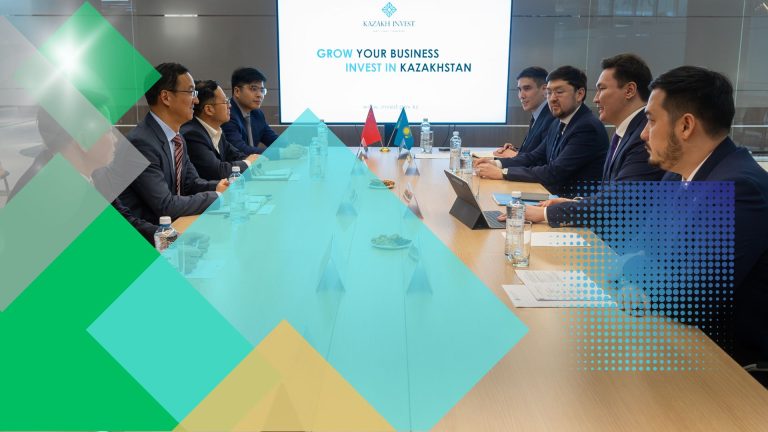
    East Hope Group, a leading Chinese company in non-ferrous metals production, has launched a major investment project in Kazakhstan. Chairman of the Board of JSC “NC” KAZAKH INVEST, Erzhan Elekeev, met with East Hope Group’s CEO Changjun Meng to discuss the prospects of collaboration in the production and advanced processing of non-ferrous metals.

    As part of this investment project, East Hope Group plans to build a large industrial park in Kazakhstan, introducing cutting-edge technologies in the field of non-ferrous metallurgy for deep processing and production of finished products. The project’s cost is expected to exceed $12 billion, with the company planning to supply products to the European Union, Central Asia, and China. The project aims to create up to 10,000 new jobs at various stages of implementation.

    Changjun Meng mentioned that the company has registered a subsidiary in Kazakhstan, which will serve as the main operational center for the project, coordinating further steps for its implementation. Preliminary geodetic and hydrogeological surveys of land plots in several regions have already been conducted, and the company plans to start more detailed studies soon. Erzhan Elekeev emphasized the project’s importance for the development of Kazakhstan’s processing industry and highlighted that its implementation would be a significant step in strengthening economic ties with international partners. “Attracting major strategic investors like East Hope Group opens new perspectives for Kazakhstan. We view this project not only in terms of investment volumes but also in the context of introducing advanced technologies, creating new jobs, and localizing production. The project’s implementation will allow Kazakhstan to occupy a key position in the global non-ferrous metals supply chain and significantly expand the export of finished products.

    We are ready to provide comprehensive support and create favorable conditions for the successful implementation of investments,” stressed Erzhan Elekeev. The parties also discussed the prospect of signing an investment agreement, which would outline the main conditions of cooperation and secure the parties’ commitments. In particular, East Hope Group expressed its readiness to sign a tripartite framework agreement with the Ministry of Foreign Affairs and the Ministry of Industry and Construction of Kazakhstan, marking an important milestone in the project’s development. Following the meeting, Erzhan Elekeev and Changjun Meng expressed confidence in the successful implementation of the initiative and noted Kazakhstan’s high potential as an industrial hub for non-ferrous metals production and deep processing.

    Background Information

    East Hope Group is one of the world’s largest producers in the field of metallurgy and technological innovations. The company has invested approximately $10 billion in the construction of low-carbon industrial complexes in China and continues to expand its international presence. As of 2022, East Hope Group ranked 39th among China’s top 500 private enterprises and 24th in the ranking of China’s top 500 private manufacturing enterprises. The group comprises over 300 subsidiaries. Its main assets are concentrated in mainland China (mainly in Shanghai, Beijing, Xinjiang, Ningxia, Inner Mongolia, Jiangsu, and Hubei), with subsidiaries operating in Vietnam, Cambodia, Singapore, Indonesia, the UAE, and other countries. East Hope Group’s commercial and residential real estate projects are located in Shanghai and Chengdu. Its alumina processing facilities are in Henan province, aluminum production facilities in Baotou and Xinjiang, silicon production facilities in Fukang, and feed and additive production facilities in Xinjiang, Jiangsu, Hubei, Shanghai, and Beijing. —

  • Ivanhoe Mines Expands Kazakhstani Footprint with Exploration for Sediment-Hosted Copper

    Ivanhoe Mines Expands Kazakhstani Footprint with Exploration for Sediment-Hosted Copper

    On 12 February 2025 Ivanhoe Mines announced the commencement of exploration activities for sediment-hosted copper in Central Kazakhstan. The company has formed a joint venture with UK-based Pallas Resources to explore the Chu-Sarysu Copper Basin, which is the world’s third-largest sedimentary copper district.

    The exploration license covers an extensive area of up to 16,000 square kilometers, making it the largest land-holding position in the region. Ivanhoe Mines has committed an initial investment of C$18.7 million ($13 million) for exploration activities over the next two years. The company has the option to increase its stake in the joint venture up to 80% over time.

    Ivanhoe Mines aims to leverage its expertise in discovering Tier-One sediment-hosted copper deposits, similar to its successful projects in the Democratic Republic of Congo. The Chu-Sarysu Basin is estimated to contain 27 million tonnes of known copper resources, with an additional 25 million tonnes of undiscovered copper.

    Robert Friedland, Ivanhoe Mines’ Executive Co-Chairman, expressed excitement about the project, stating, “We look forward to unlocking the significant geological potential of the Chu-Sarysu Basin and contributing to the global copper supply.” This strategic partnership marks a significant step for Ivanhoe Mines in expanding its global footprint and advancing its copper exploration portfolio.


    Who is Robert Friedland? 

    Robert Martin Friedland (August 18, 1950)[1] is an American-Canadian billionaire financier in the mining industry. Since the early 1980s, he has specialised in securing funding for the exploration and development of mineral and energy resources and technology ventures. He is the founder and chairman of his private, family-owned firm, Ivanhoe Capital Corporation, which is active in capital markets, focused on emerging markets. He is the founder and co-chairman of Ivanhoe Mines, a Canadian public company listed on the Toronto and OTCQX exchanges.

    Friedland’s involvement in Kazakhstan dates back to the 1990s when his company, Indochina Goldfields, entered into agreements with the Kazakh government and major shareholders of Bakyrchik Gold. This partnership marked the beginning of Friedland’s significant presence in the Kazakh mining sector. The Bakyrchik gold mine, located in northeastern Kazakhstan, was a key asset, providing gold-bearing flux to copper smelters since 1956.

    Another major project was the Vasilkovskoye mine in northern Kazakhstan, considered one of the world’s largest gold mines. Despite initial setbacks with the Kazakh government, Friedland’s companies maintained their holdings in the region, navigating the complex political and economic landscape.

    By 2010, Kazakhstan’s economy was booming due to massive oilfield discoveries, making it a strategic player in the global energy market. In addition to oil, Kazakhstan had substantial uranium reserves, further solidifying its importance in the energy sector.

    Friedland’s Ivanhoe Mines, in partnership with Altynalmas Gold, consolidated their interests in the Kyzyl Gold Project, which included the Bakyrchik and Bolshevik deposits. With an established infrastructure and promising gold recovery rates, the project was poised to become one of Central Asia’s leading gold producers.

    Friedland’s vision and strategic investments in Kazakhstan’s mining sector not only highlighted the nation’s mineral wealth but also positioned it as a key player in the global energy and mining industries.

    Read further

  • Quarmet инвестирует $1,48 млрд в проекты по железной руде и углю к 2025 году

    Quarmet инвестирует $1,48 млрд в проекты по железной руде и углю к 2025 году

    В ближайшие годы компания собирается потратить $1,48 млрд на проекты железорудного и угольного департаментов. Из этой суммы $500 млн будет выделено на развитие железорудного подразделения, и $978 млн — на угольное. Об этом стало известно после визита президента Касыма-Жомарта Токаева на металлургический комбинат.

    На официальном сайте главы республики сообщается, что руководство предприятия уже внедрило ряд преобразований в производстве и поделилось планами на будущее. С момента перехода комбината к новому инвестору был реализован ряд крупных проектов общей стоимостью свыше $3,5 млрд.

    Программа реновации завода на 2024 год включает более сотни объектов и замену 50 тыс. квадратных метров кровли. Кроме того, будут отремонтированы санитарно-бытовые объекты.

    Касым-Жомарту Токаеву продемонстрировали работу конверторного цеха №2 и машин непрерывного литья заготовок. В дальнейшем Qarmet планирует модернизировать системы управления и гидравлики на этом участке.

    Компания запустила программу «5-9-5»: 5 млн тонн стали, 9 млн тонн угля и 5 млн тонн железорудного концентрата ежегодно. Таким образом, к 2025 году мощности металлургического завода вырастут на 66% по сравнению с прошлым годом.

    В 2023 году добыча угля велась только на трёх шахтах; сейчас Qarmet управляет восемью шахтами в Казахстане. В следующем году все объекты будут оснащены системами позиционирования.

    Президент Токаев резюмировал, что власти приняли «правильное решение», пригласив казахстанского инвестора управлять компанией. Он поручил «возродить былую славу» металлургического комбината.

  • АО «Алтыналмас» начинает новый проект по добыче золота на месторождении Бактай в Казахстане

    АО «Алтыналмас» начинает новый проект по добыче золота на месторождении Бактай в Казахстане

    Золотодобывающая компания АО «Алтыналмас» представила план горных работ на месторождении Бактай, расположенном в Актогайском районе Карагандинской области Казахстана. План был опубликован на Едином экологическом портале Казахстана. Согласно проектной документации, месторождение Бактай ранее не разрабатывалось, однако геологоразведка на этом участке велась еще с прошлого века. В период с 2018 по 2021 годы компания пробурила 52 скважины и взяла 30 тыс. проб.

    Месторождение Бактай находится в пределах 100 км от одного из основных активов компании «Алтыналмас» — ГОК «Пустынное», где будет перерабатываться золотосодержащая руда с нового месторождения. Добыча руды планируется открытым способом. Минеральные ресурсы оценены в соответствии с кодексом KAZRC и поставлены на баланс в 2021 году. Выявленные запасы составляют 1,23 млн тонн руды (содержат 2328 кг золота, среднее содержание — 1,89 г/т), предполагаемые запасы — 577 тыс. тонн (содержат 698 кг золота, среднее содержание — 1,21 г/т).

    Компания планирует отрабатывать месторождение в течение двух лет с производительностью 940 тыс. тонн руды в год. После завершения добычи компания займется дальнейшими эксплуатационно-разведочными работами на Бактайском рудном поле.

    Кстати, недавно компания получила сертификат ICMI от Международного института по обращению с цианидами на месторождение Пустынное.


  • New Nickel-Cobalt Deposit in Aktobe Region to Begin Development in 2025

    New Nickel-Cobalt Deposit in Aktobe Region to Begin Development in 2025

    A mining company plans to start extracting silicate-nickel ores from the Jusalinskoye deposit in 2025. The licensed area is located in the Aktobe region, and the project documentation has been published on Kazakhstan’s Unified Environmental Portal.

    The company plans to mine metals for 20 years. The reserves of the Jusalinskoye deposit were put on the state balance sheet in 2015 and amount to 44.2 thousand tons of nickel and 2.57 thousand tons of cobalt. Development will be carried out using open-pit mining due to the shallow occurrence of the components.

    By the fourth year, it is planned to achieve maximum annual productivity of the quarry, with over 63 thousand tons of ore expected to be sent for processing annually.

    The company “KazMetallGroup” previously announced a similar project and owns another nickel-cobalt deposit, Novo-Buranovskoye, in the same region. It is expected that the ore from both sites will be processed at a single mining and processing plant.

  • The Ministry of Industry and Construction announced the imminent completion of the deal between the government and ArcelorMittal

    The Ministry of Industry and Construction announced the imminent completion of the deal between the government and ArcelorMittal

    The Ministry of Industry and Construction announced the imminent completion of the deal between the government and ArcelorMittal

    – We inform you that the deal between the Government of the Republic of Kazakhstan and ArcelorMittal is approaching its final stage. In light of the significance of this event, we will organize a briefing immediately after the completion of the transaction. At this meeting we will present all the necessary information and answer all questions,” announced the press service of the Ministry of Industry and Construction.

    Let us remind you that as part of the deal, ArcelorMittal will transfer its Kazakh assets to an investor chosen by the government, who will be ready to invest at least three billion dollars in the next three years. This deal was adopted due to frequent fatal accidents at ArcelorMittal Temirtau mines.

    The government officially announced that a preliminary agreement had been reached on the transfer of the ArcelorMittal Temirtau enterprise on October 28 against the backdrop of the accident at the mine named after. Kostenko, in which 44 miners died. On November 6, ArcelorMittal Temirtau and the Ministry of Industry made a joint statement regarding negotiations on the transfer of property


  • The government is not considering the involvement of foreign investors in AMT after nationalization

    The government is not considering the involvement of foreign investors in AMT after nationalization

    Minister of Industry and Construction Kanat Sharlapayev responded to queries from journalists regarding potential ownership of the coal plant following its transfer from Lakshmi Mittal’s ArcelorMittal.

    He clarified the government is not contemplating any foreign investors after rights transfer to the Republic of Kazakhstan. Additionally, all existing conditions such as union agreements, wages and staffing levels will remain unchanged during transition.

    When asked if businessman Serik Akhmetov could become the new investor, the Minister stated no specific investor has been discussed as they do not plan to attract foreign ownership. ArcelorMittal Temirtau retains operational capability as an ongoing concern generating over $3 million revenue in 2022.

    Sharlapayev explained it would be incorrect to assume budgetary funding is needed as the enterprise sustains itself financially. Negotiations with ArcelorMittal had been ongoing for some time, with preliminary sale documents signed October 22nd preceding the mine tragedy. Therefore, characterising the deal as hastily conducted would be erroneous.

    Legal measures are being taken to safeguard Kazakhstan from further litigation once this investor exits. The plant name may change owing to loss of ArcelorMittal branding rights. Staff opinion will factor in any new name decision.

    Disclosure of acquisition conditions was declined due to the seller’s public listing, though budget funds will not be utilised for the asset purchase. Legally binding contracts remain pending signature with the listed company.

  • In Kazakhstan, there is a proposal to allow the development of mining waste within populated areas.

    In Kazakhstan, there is a proposal to allow the development of mining waste within populated areas.

    The proposal to allow the extraction of technogenic mineral formations (TMF) located within populated areas and within 1 km of them is stated in an advisory document on regulatory policy for the draft law of the Republic of Kazakhstan “On Amendments and Additions to Some Legislative Acts of the Republic of Kazakhstan on Subsoil Use to Improve the Investment Climate.”

    In Kazakhstan, there is a proposal to allow the development of mining waste within populated areas.”The prohibition established by Article 25 (Subsoil Code, which prohibits subsoil use operations on lands within populated areas and within 1 km of them – italicized) prevents obtaining subsoil use rights for TMF located in populated areas. At the same time, underground extraction of TMF is not possible as the objects are located on the surface of the land. In turn, granting the right to extract solid minerals (TPM) from TMF within populated areas will free up land, improve the environmental situation (through the removal of ore or tailings), and create jobs,” the published document states.

    Developers note that a significant portion of TMF resulting from mining activities is currently located within populated areas or within a 1 km protective zone: terricones in the East Kazakhstan region, Balhash, Kentau tailing ponds, and so on. According to established practice, subsoil users have had to buy land and houses from local residents, compensating for their relocation to other populated areas. Now, this practice is effectively being proposed to be discontinued.

    However, developers believe that the extraction of minerals from such TMF should be aimed at exporting the TPM from the extraction site without processing them on-site, as such activities would exacerbate the environmental situation. Therefore, the document emphasizes that when signing agreements to support the local population and coordinating environmental impact assessments (EIA), requirements for preserving the environmental situation will take precedence.

    In addition, the document proposes to ease the conditions for artisanal miners. According to the code, applicants for an artisanal miner’s license must own a cargo truck with a capacity of no more than 10 tons, drilling equipment, as well as an excavator or bulldozer with a total bucket volume of no more than half a cubic meter. However, for artisanal miners, acquiring an excavator and bulldozer for stripping and reclamation work is costly and impractical expenditure, so the use of equipment on a rental basis is proposed to solve this problem.

    The developers also suggest regulating, following the example of foreign legislation, the amounts to be paid by subsoil users for using land plots for geological exploration within the framework of private or public servitude (limited right to use someone else’s land). When establishing private servitude, a fee for servitude and compensation for damages are provided. However, because the parties cannot reach an agreement on this matter, the subsoil user cannot start geological exploration. The document notes that the absence of regulation on the amount often leads to unjustified overestimation of expectations regarding the amounts from landowners’ side.

  • New Procedure for Applying for Mining Licenses in Kazakhstan

    New Procedure for Applying for Mining Licenses in Kazakhstan

    This innovative system, available on the unified platform for subsoil users, “Minerals.gov.kz,” aims to streamline and enhance the efficiency of the application process. The ministry’s press service, as reported by inbusiness.kz, has confirmed this development.

    Through Ministerial Order No. 517, issued on July 14, 2023, significant amendments have been introduced to the Rules for the Submission and Review of Applications for the issuance of licenses for the extraction of solid minerals. The effective date for the implementation of these amendments is September 20, 2023.

    Consequently, commencing from August 20, 2023, the acceptance of documents for acquiring licenses related to the extraction of solid minerals will be exclusively conducted in electronic format. This transition to electronic submission is expected to enhance the convenience, speed, and effectiveness of the licensing process.

  • In the realm of the United Kingdom, the suspension of the liquidation process for Ganberg and Gexior companies has transpired

    In the realm of the United Kingdom, the suspension of the liquidation process for Ganberg and Gexior companies has transpired

    In terms of the project’s ownership, the state has consistently retained its stake as a “stable entity,” with a controlling interest of 51% held by “Kazatomprom.” However, the remaining portion of the company, SGHK, has experienced a change in ownership.

    The establishment of TOO “SP Budenovskoye” in 2015 marked its primary objective of exploring and extracting uranium from sections 6 and 7 of the Budenovskoye deposit, which currently resides in the Turkestan region. This partnership was officially registered in 2016, with two initial owners: 51% attributed to the national company “Kazatomprom” and 49% under the ownership of TOO “Stepnogorsk Mining and Chemical Plant” (SGHK).

    During the year 2016, SGHK found itself under the ownership of Singaporean enterprise Rosdale PTE Ltd, originating from the British Virgin Islands.

    In May of 2017, the government of Kazakhstan granted permission to Rosdale PTE Ltd to divest SGHK to two other legal entities. Ganberg UK Ltd acquired a majority share of 60%, while Gexior UK Ltd secured a minority share of 40%. Both of these structures were hastily formed just prior to the planned transaction on March 1, 2017, and were registered within the same jurisdiction, namely the United Kingdom. Notably, they shared a common parent structure by the name of Degevol UK Ltd, which was established a mere day before its subsidiaries, on February 28, 2017. Consequently, Vasily Anisimov and Yakov Klebanov emerged as the newfound co-owners of the uranium deposits.

    In the month of December 2022, yet another shift in ownership occurred for SGHK. This particular transaction stirred up a scandal within Kazakhstan’s information sphere, as SGHK was transferred to AO “Uranium One Group” and AO “YATC Logistic Center.” Both of these joint-stock companies are integral components of the state corporation known as “Rosatom.”

    It is worth mentioning that certain structures within “Rosatom,” such as “Rusatom Overseas,” which is responsible for promoting “Rosatom” projects beyond national borders, have been subjected to stringent Western sanctions. Furthermore, Alexey Likhachev, the head of “Rosatom,” finds himself under the weight of these sanctions as well. Given the vulnerable position of the Russian corporation, concerns have arisen within Kazakhstan.

    Currently, “Kazatomprom” holds the lion’s share in uranium extraction within Kazakhstan, accounting for 55%, while “Rosatom” holds a 21% stake as of the conclusion of 2022. With the commencement of production at SP “Budenovskoye,” it is anticipated that “Rosatom’s” share in the nation’s total production will increase by at least 10%, as stated by Abzal Narymbetov, the author of the Energy Analytics Telegram channel.

    Narymbetov further highlights that if “Rosatom” becomes the target of anti-Russian sanctions, it may prove challenging for “Kazatomprom” to market its own product. This, in Narymbetov’s view, constitutes the “main and most significant” risk arising from the change in ownership of the Budenovskoye deposit.

    Looking ahead, six months subsequent to the sale of SGHK, in June 2023, all three aforementioned companies – Ganberg UK Ltd, Gexior UK Ltd, and Degevol UK Ltd – initiated the process of deregistration, effectively dissolving themselves. However, in August, the liquidation proceedings were halted by the UK’s Companies House in response to a lodged protest.

    In an attempt to shed light on the initiator of the suspension and the rationale behind it, “Kursiv” reached out to Companies House. Regrettably, the registrar’s press service declined to provide any commentary on matters pertaining to specific companies, deeming such information to be confidential.

    The editorial team of “Kursiv” also made inquiries to Vasily Anisimov and Yakov Klebanov (via their respective companies based in Russian and Kazakhstani jurisdictions) regarding the fate of Ganberg UK Ltd, Gexior UK Ltd, and Degevol UK Ltd. However, no responses were received at the time of reporting.

    According to the information available on the Companies House website, there exists a multitude of reasons for filing objections, although an exhaustive list of these grounds is not provided.

    Oleg Degtyarev, the director of the esteemed British law firm Law Firm Ltd., elucidated on the matter, stating that “Examples of reasons for objecting to the removal of a company from the register include not being notified of the company’s decision, believing that the information in the company’s application is inaccurate, and intending to take legal action against the company. You must have evidence supporting your objection, such as invoices or bills showing that the company owes you money.”

    In the month of December 2022, yet another shift in ownership occurred for SGHK. This particular transaction stirred up a scandal within Kazakhstan’s information sphere, as SGHK was transferred to AO “Uranium One Group” and AO “YATC Logistic Center.” Both of these joint-stock companies are integral components of the state corporation known as “Rosatom.”

    It is worth mentioning that certain structures within “Rosatom,” such as “Rusatom Overseas,” which is responsible for promoting “Rosatom” projects beyond national borders, have been subjected to stringent Western sanctions. Furthermore, Alexey Likhachev, the head of “Rosatom,” finds himself under the weight of these sanctions as well. Given the vulnerable position of the Russian corporation, concerns have arisen within Kazakhstan.

    Currently, “Kazatomprom” holds the lion’s share in uranium extraction within Kazakhstan, accounting for 55%, while “Rosatom” holds a 21% stake as of the conclusion of 2022. With the commencement of production at SP “Budenovskoye,” it is anticipated that “Rosatom’s” share in the nation’s total production will increase by at least 10%, as stated by Abzal Narymbetov, the author of the Energy Analytics Telegram channel.

    Narymbetov further highlights that if “Rosatom” becomes the target of anti-Russian sanctions, it may prove challenging for “Kazatomprom” to market its own product. This, in Narymbetov’s view, constitutes the “main and most significant” risk arising from the change in ownership of the Budenovskoye deposit.

    Looking ahead, six months subsequent to the sale of SGHK, in June 2023, all three aforementioned companies – Ganberg UK Ltd, Gexior UK Ltd, and Degevol UK Ltd – initiated the process of deregistration, effectively dissolving themselves. However, in August, the liquidation proceedings were halted by the UK’s Companies House in response to a lodged protest.

    In an attempt to shed light on the initiator of the suspension and the rationale behind it, “Kursiv” reached out to Companies House. Regrettably, the registrar’s press service declined to provide any commentary on matters pertaining to specific companies, deeming such information to be confidential.

    The editorial team of “Kursiv” also made inquiries to Vasily Anisimov and Yakov Klebanov (via their respective companies based in Russian and Kazakhstani jurisdictions) regarding the fate of Ganberg UK Ltd, Gexior UK Ltd, and Degevol UK Ltd. However, no responses were received at the time of reporting.

    According to the information available on the Companies House website, there exists a multitude of reasons for filing objections, although an exhaustive list of these grounds is not provided.

    Oleg Degtyarev, the director of the esteemed British law firm Law Firm Ltd., elucidated on the matter, stating that “Examples of reasons for objecting to the removal of a company from the register include not being notified of the company’s decision, believing that the information in the company’s application is inaccurate, and intending to take legal action against the company. You must have evidence supporting your objection, such as invoices or bills showing that the company owes you money.”

    He noted that initiators of objections can be founders and employees of the company, as well as creditors. “This can also include British government agencies, such as HMRC (tax authority),” explained Degtyarev.

    When asked whether the suspension could be related to the sanctions status of certain structures and the head of “Rosatom,” my database does not provide specific information regarding the liquidation suspension of Ganberg and Gexior companies in the United Kingdom or their ownership of the Budenovskoye uranium deposit. It is advisable to consult reliable news sources or official statements for the latest information on this topic.

    Now that the liquidation process of the companies has been suspended, they must take steps to resolve the disputed issues before the deregistration process can resume.

    “This may involve negotiations with the objecting party, settling outstanding debts, or providing additional information to the registrar,” says Oleg Degtyarev.

    The party that raised objections also needs to be proactive. “They must confirm their actions or provide acceptable evidence of progress in resolving the unresolved issues,” the lawyer enumerates. “This evidence should be obtained at least two weeks before the expiration of the objection period.”

    The objection period has a lifespan of six months. It needs to be renewed, or else it will automatically expire.