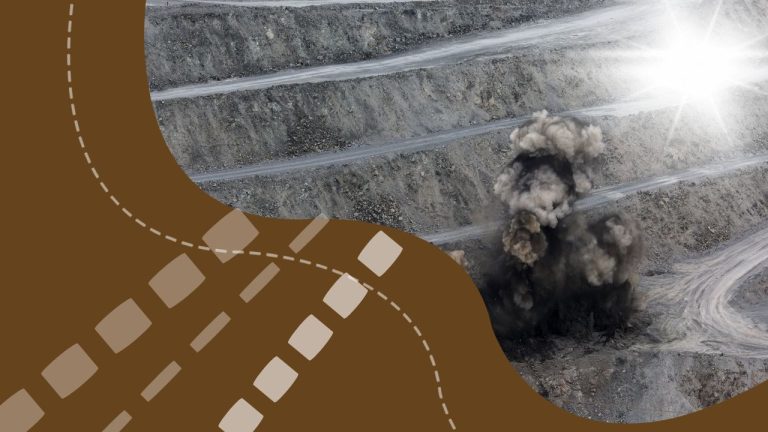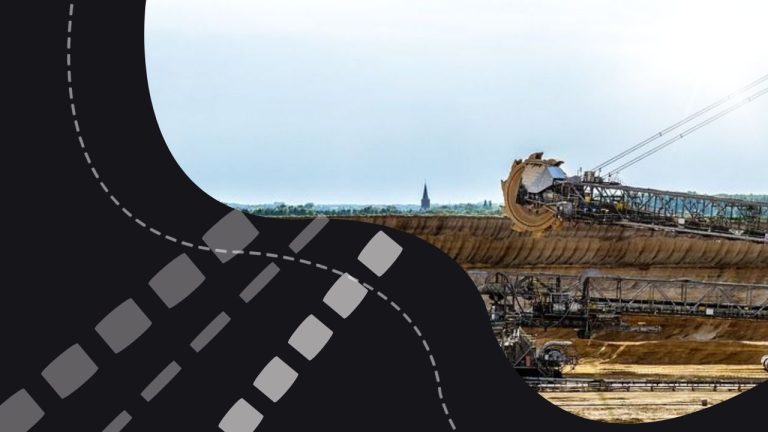
The Czech Republic will shut its final black coal shaft at the end of January, marking the end of more than 250 years of deep coal mining that once underpinned the rise of heavy industry in Central Europe. The last coal is now being extracted from kilometre-deep shafts at the CSM mine in Stonava near the Polish border, as low global coal prices and Europe’s industrial and environmental transition erode demand.
State-owned miner OKD had planned to close the operation three years earlier, but Russia’s full-scale invasion of Ukraine in 2022 temporarily boosted energy markets and extended the mine’s life. According to OKD director Roman Sikora, increasing mining depth has driven costs higher, making the operation uncompetitive amid weak prices.
Coal mining in the Ostrava region began in the late 18th century, transforming the area into an industrial hub supported by railways, steelworks and large-scale infrastructure. Employment peaked in the 1980s with more than 100,000 miners and annual output of up to 25 million tonnes. Following the collapse of communist-era heavy industry after 1989, mines closed gradually and employment fell sharply. By October last year, OKD’s output had dropped to 1.1 million tonnes, with its workforce reduced to 2,300 and a further 1,550 jobs set to be cut.
The region has since diversified its economy, supported by retraining programmes, foreign investment and EU funding. It is set to receive 19 billion Czech crowns from the EU’s Just Transition Fund to support post-coal redevelopment. OKD plans to remain active above ground through coal trading and new projects, including a battery park, data centre and a small methane-powered plant using gas from former shafts.
Poland’s coal heartland of Silesia is confronting the end of an industry that has shaped its economy and identity for centuries, as regional authorities, economists and labor unions work to manage a gradual transition away from coal. The region remains the European Union’s largest coal-mining area, but mine closures are accelerating as climate targets tighten and alternative energy sources expand.
At the center of the transition effort is a long-term plan designed to phase out coal while cushioning the social and economic impact on workers and communities. Developed over the past five years by economists, trade unions and government officials, the strategy sets 2049 as the final deadline for coal operations in Poland, significantly later than in many other EU states. The plan includes retraining programs, severance payments and early retirement options aimed at preventing mass unemployment and social collapse in mining towns.
The stakes are particularly high in cities such as Bytom, where coal remains deeply embedded in the local economy and poverty and depopulation have intensified as mines close. By contrast, Katowice, the regional capital, has attracted new industries in manufacturing, technology and services, highlighting a widening economic divide within Silesia. Since 2005, the region has lost about 55,000 mining jobs, but gained roughly 160,000 positions in other sectors, underscoring the uneven nature of the transformation.
Poland’s cautious approach reflects both historical experience and energy security concerns. Reliance on coal has long been seen as a buffer against dependence on foreign fuel supplies, particularly from Russia. However, rising electricity demand, EU emissions rules and the rapid growth of renewables, nuclear and alternative heating technologies are making the coal phaseout unavoidable.
Regional planners argue that slowing the transition allows the broader economy to absorb displaced workers and generate new employment. Proposals under discussion include deeper integration of Silesia’s cities into a single metropolitan area to reduce inequality and attract investment, rather than allowing struggling towns to hollow out.
While resistance remains among miners and local communities, many acknowledge that the debate has shifted from whether coal will end to how the region can exit the industry with the least social damage. Silesia’s transition is now being closely watched as a potential model for other coal-dependent regions in Central and Eastern Europe.
Poland’s government has approved a new bill to accelerate the country’s transition away from coal, aiming to make mine closures easier, provide financial support to affected workers, and promote the redevelopment of mining regions.
“This is a specific response to the challenges of the energy transition and provides real support for thousands of miners,” said Energy Minister Miłosz Motyka. “We want the process of change to be carried out responsibly, with respect for local communities.”
Under the proposed legislation, which still requires approval from parliament and President Karol Nawrocki, mining companies would be allowed to decommission mines independently with state financial assistance. They could also transfer decommissioned assets to local authorities or state entities to be repurposed for investment, revitalization, or infrastructure projects.
The bill introduces a severance package of 170,000 zloty (€40,000) for miners losing their jobs, along with measures to ensure that state subsidies for reducing production are not misused to cover operational expenses.
Minister Motyka described the initiative as paving “the way for a just transition in mining regions,” fostering investment, job creation, and economic renewal. The government maintains a parliamentary majority, but the bill could face a presidential veto — President Nawrocki, who previously called coal Poland’s “black gold,” has pledged to preserve domestic coal production.
Poland remains Europe’s most coal-dependent country, with coal accounting for 57% of its electricity generation in 2024. The mining sector, however, is under growing economic strain: domestic coal extraction is among the most expensive in the world, and its high emissions increase costs under the EU Emissions Trading System (ETS).
Recent data from Eurostat show that Polish households pay the third-highest electricity prices in the EU when adjusted for purchasing power. Meanwhile, state subsidies to the coal sector are expected to total 9 billion zloty this year and 5.5 billion zloty in 2026, highlighting the industry’s dependence on government support.
According to the energy ministry’s impact assessment, the total cost of closing hard coal mines over the next decade will reach 11.3 billion zloty (€2.6 billion).
Financial pressures are already mounting for major producers. Jastrzębska Spółka Węglowa (JSW), the EU’s largest coking coal producer, reported a 2 billion zloty loss in the first half of 2025 following a record 7.3 billion zloty loss in 2024, raising questions about its long-term viability and potential need for further state aid.
Some state-owned utilities are also accelerating the shift away from coal. Last week, a subsidiary of PGE, Poland’s largest electricity provider, reached an agreement with trade unions to close one of its coal-fired power plants, offering a €59 million compensation package to affected workers.
As grids shift from relying on coal-fired generation to more diverse energy mixes, including an increasing proportion of renewable energy, important lessons can be learned on how to maintain flexibility and reliability. The Powering Past Coal Alliance’s recent webinar, “Transitioning Power Grids from Coal to Clean – Solutions from the UK and US,” brought together industry experts from National Grid, California System Operator (CAISO), Pembina Institute, and the German government to discuss how to integrate more renewables and diverse energy sources. The webinar also shed light on unique subnational contexts and common challenges faced by each jurisdiction before affirming that, with the right technical, policy, and planning solutions, these many obstacles can be overcome.
Similar Challenges, Unique Jurisdictional Contexts
The latest IPCC report makes it clear that utilities and governments worldwide must prioritise the phase out of coal-fired power plants by 2030 in OECD countries and by 2040 in the rest of the world. In California, the UK and Germany, grid operators have a common objective of maintaining grid flexibility and reliability as they reduce their reliance on large, centralized coal-fired generation, but the nature of the challenges changes depending on energy systems as well as geography and weather patterns.
Germany
In Germany, coal consumption has halved in 30 years. The country’s coal phase-out date was set for 2038, however the government now aims towards an earlier coal phase-out by 2030.
As well as a strengthened economic structure in its affected coal regions, Friederike Wenderoth emphasised a need for an integrated strategy across all sectors, citing increased interaction between different areas of the energy system and sectors. To tackle this, the German Ministry of Economic Affairs and Climate Protection is developing a cross-sectoral mission statement and a robust energy strategy for the transformation of the energy system.
Elsewhere, the German government is also considering other high-priority challenges, including system stability in terms of voltage, frequency, and resonance stability, the organization of ancillary services, and market design. The transition towards a coal-free and climate-neutral electricity system requires a smart orchestration of the infrastructure, the market, and the technology.
“Germany is a is a member of the PPCA and we support PPCA activities as it supports different jurisdictions in transitioning towards clean energy. Its mission is also to foster the dialogue on the technological economical political and social implications of this transition, and this fully corresponds to the mission of the German energy agency.”
Friederike Wenderoth, Team Leader for Energy Infrastructure at the German Energy Agency (dena)
National Grid
In the UK, a series of market signals and interventions dating back to 2000 including electricity trading & transmission agreements, feed-in tariffs, and electricity market reforms were instrumental in driving the transition and boosting renewables capacity.
In the northern hemisphere, the unpredictable weather makes it challenging to forecast energy generation accurately. Additionally, British utility companies face difficulties in distributing energy generated in Scotland to the southern regions where electricity demand tends to be higher.
National Grid also highlighted the challenges they face with regards to frequency response, grid stability, voltage regulation, thermal constraints, restoration, and energy balancing. These issues are critical to ensuring the reliability and stability of the evolving grid. The integration of renewable energy sources, particularly offshore wind, and the adoption of a holistic network design have been essential strategies in leveraging clean energy capacity.
Finally, the utility also showcased its success in reducing coal generation, from one-third of the generation mix to near-zero levels. The grid also achieved its first coal-free 24 hours in 2017 and ran for 68 consecutive days without coal generation in 2020 –achieved by several important steps across two decades.
“The energy landscape is changing. So as a business we are very keen to share the lessons learned network operators and network owners’ perspectives during National Grid’s journey to decarbonize our power system. We believe that international collaboration is key in order to reach net zero.”
Amir Alikhanzadeh, International Grid Decarbonisation Manager, National Grid
CAISO
California Independent System Operator has made impressive strides into its energy transition. In May 2022, the operator achieved peak generation from renewables, surpassing 100% of electricity demand, with a surplus of 3% exported elsewhere. It has also made significant progress in battery capacity deployment, installing more capacity than anywhere else in the US and learning valuable lessons in leveraging batteries for grid reliability.
But the California operator’s transition to a cleaner grid has faced several key challenges. First, it required implementing and sustaining legislation aimed at reducing the state’s carbon footprint, including setting renewable energy goals and achieving decarbonization targets. In 2002, the state implemented its Renewable Portfolio Standards (RPS), which set California’s renewable electricity procurement goals at 33% by 2020 and 50% by 2030 with the aim of reducing greenhouse gases to 40% below 1990 levels by 2030 and 80% below 1990 levels by 2050.
Effectively integrating renewable energy sources such as solar and wind into the grid was then crucial to meet the state’s renewable portfolio standards while ensuring a reliable and stable energy supply. By incentivising utilities to produce more renewable energy, California’s three largest investor-owned utilities collectively served 36% of the electricity sales with renewable power by 2017. One year later, California introduced Senate Bill 100, which set the ambitious goal of achieving a decarbonized power system by 2045. This groundbreaking policy requires that 100 percent of electrical sales to end-use customers come from renewable energy and zero-carbon resources by 2045, paving the way for a sustainable and cleaner energy future.
“To reach our ultimate goal of 100% renewables by 2045 requires continued investment in clean energy technologies and innovation solutions to ensure good reliability. With the right policies and actions in place, we can create a sustainable future for generations to come.”
Shawn Grant, Operations Policy Manager, California Independent System Operator
Policy and Planning for a Sustainable Transition
The panellists emphasized the need for comprehensive policy and planning to enable the deployment of technical measures. As power grids transition from coal to clean, flexibility becomes a key feature. This flexibility allows for effective management and utilisation of clean energy technologies being deployed, where system planning, cross-sectoral strategies, and infrastructure planning were highlighted as crucial elements in ensuring a successful and sustainable transition.
As a growing number of utilities and jurisdictions look to phase out coal and phase in renewables to within Paris-aligned timelines, discussing common challenges, solutions and lessons learned across different geographies becomes increasingly important. The discussions during the webinar underscored the importance of integrating technical solutions with supportive policies and comprehensive planning to facilitate a successful grid transition. Through knowledge sharing and collaborative efforts, we can expedite the global shift towards clean energy, forging a sustainable and resilient future for the energy sector.[/vc_column_text][distance desktop_type=”30″][/vc_column][/vc_row][/vc_section]