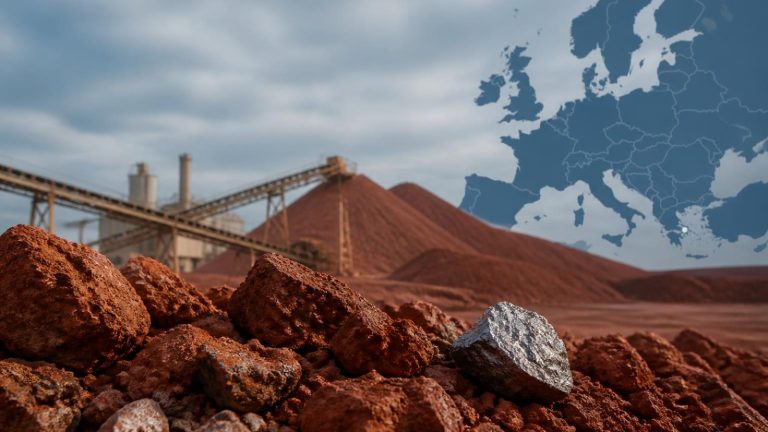
The Czech Republic will shut its final black coal shaft at the end of January, marking the end of more than 250 years of deep coal mining that once underpinned the rise of heavy industry in Central Europe. The last coal is now being extracted from kilometre-deep shafts at the CSM mine in Stonava near the Polish border, as low global coal prices and Europe’s industrial and environmental transition erode demand.
State-owned miner OKD had planned to close the operation three years earlier, but Russia’s full-scale invasion of Ukraine in 2022 temporarily boosted energy markets and extended the mine’s life. According to OKD director Roman Sikora, increasing mining depth has driven costs higher, making the operation uncompetitive amid weak prices.
Coal mining in the Ostrava region began in the late 18th century, transforming the area into an industrial hub supported by railways, steelworks and large-scale infrastructure. Employment peaked in the 1980s with more than 100,000 miners and annual output of up to 25 million tonnes. Following the collapse of communist-era heavy industry after 1989, mines closed gradually and employment fell sharply. By October last year, OKD’s output had dropped to 1.1 million tonnes, with its workforce reduced to 2,300 and a further 1,550 jobs set to be cut.
The region has since diversified its economy, supported by retraining programmes, foreign investment and EU funding. It is set to receive 19 billion Czech crowns from the EU’s Just Transition Fund to support post-coal redevelopment. OKD plans to remain active above ground through coal trading and new projects, including a battery park, data centre and a small methane-powered plant using gas from former shafts.