Tag: Jadar valley

  • Rio Tinto Pauses Serbia’s Jadar Lithium Project, but Opponents Warn the Fight Is Far From Over

    Rio Tinto Pauses Serbia’s Jadar Lithium Project, but Opponents Warn the Fight Is Far From Over

    Rio Tinto has placed its controversial $3.6 billion Jadar Valley lithium project into “care and maintenance,” pausing all development while retaining control of the land — a move that critics say is far from a full retreat. An internal company memo obtained by the ABC reveals that the mining giant will halt spending and suspend progress toward an underground lithium mine in Serbia’s Jadar region as it restructures operations under new CEO Simon Trott and continues to face major permitting hurdles.

    The memo underscores Rio Tinto’s view that Jadar remains a “tier one deposit” with the potential to play a major role in Serbia’s and Europe’s energy transition. But it also cites a lack of progress with government approvals as a key factor in the decision.

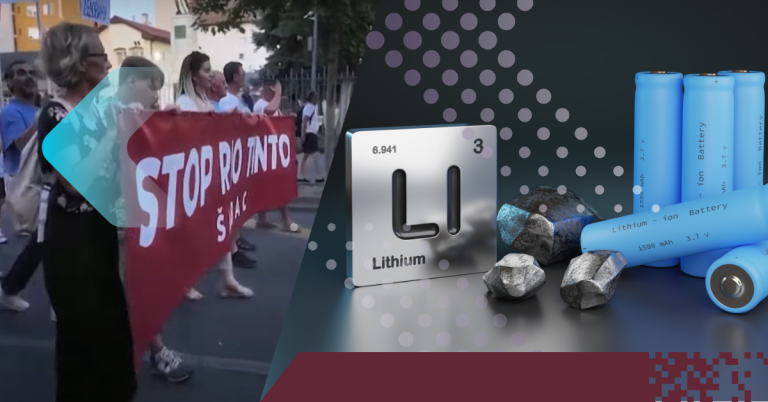
    The project has been the subject of intense public resistance. Tens of thousands of Serbian citizens have protested in recent years, warning that mining operations in the fertile Jadar Valley would cause irreversible environmental and agricultural damage. Activist groups, including Marš sa Drine and local residents who have refused to sell their land, say Rio Tinto’s pause is merely a “temporary retreat” and insist they will continue to fight until the company leaves Serbia entirely.

    “Care and maintenance is not the cancellation of a project,” said Serbian-Australian actor and activist Bojana Novaković, one of the leading figures in Marš sa Drine. She emphasized that Rio Tinto still maintains offices in the region and has shown no signs of abandoning the site. “Until they pack their bags, close their offices, and sell the land back to the locals, there’s no reason to think they’ve gone away.”

    Rio Tinto had planned to extract 2.3 million tonnes of lithium from what has been called Europe’s largest and highest-grade deposit — enough to supply batteries for one million electric vehicles annually for decades. When the ABC visited the site in late 2024, the company estimated the mine could operate for at least 40 years.

    The project’s recent history has been turbulent. After nationwide protests ahead of Serbia’s 2022 elections, the government initially halted the mine. But the Constitutional Court reversed that decision in July 2024, allowing the project to proceed subject to environmental and legal conditions. Days later, President Aleksandar Vučić, German Chancellor Olaf Scholz and EU Energy Commissioner Maroš Šefčovič signed a landmark agreement granting EU manufacturers access to Serbian lithium — a move Brussels hailed as a “historic day” for Europe’s energy transition.

    However, Serbia’s political climate has since deteriorated. Public anger erupted after the collapse of a Belgrade railway station canopy killed 15 people, sparking massive demonstrations and contributing to the resignation of Prime Minister Miloš Vučević in January. Activists now argue that the Jadar project’s fate is directly tied to political turmoil, and that approval could return once stability does.

    Gavin Mudd of the British Geological Survey noted lithium’s global importance — its market value having grown from hundreds of millions to several billions in just over a decade — but stressed that mining must be conducted responsibly. Opponents in Serbia remain unconvinced. They argue that the Jadar Valley’s fertile agricultural land and populated communities make it unsuitable for mining under any circumstances.

    “This would be the first-ever lithium mine built on fertile soil and populated land,” Novaković warned. “If we allowed it to happen, it would open the floodgates.”

    Rio Tinto declined to comment on the memo or the future of the project.

  • Rio Tinto’s Jadar Lithium Project in Serbia Gains EU Strategic Status Amid Fierce Environmental Opposition

    Rio Tinto’s Jadar Lithium Project in Serbia Gains EU Strategic Status Amid Fierce Environmental Opposition

    The controversial lithium and boron mining project in Serbia’s Jadar Valley, spearheaded by Anglo-Australian mining giant Rio Tinto, has been designated as one of 13 strategic projects outside the EU under the European Commission’s Critical Raw Materials Act (CRMA). The move aims to secure long-term access to critical raw materials vital for Europe’s green transition.

    Located in western Serbia, the Jadar Valley is believed to host Europe’s largest lithium reserves and one of the most significant global deposits. The lithium extracted from the site is considered crucial for manufacturing electric vehicle (EV) batteries, an industry central to the EU’s climate and industrial strategies.

    Despite its strategic importance, the Jadar project has sparked intense opposition within Serbia. Environmentalists have organized mass protests since 2021, arguing the mine threatens local ecosystems, water sources, and agriculture. Public pressure led the Serbian government to revoke Rio Tinto’s licenses in 2022—a decision later overturned by the Constitutional Court in 2023.

    The European Commission’s endorsement reflects growing concern over the EU’s dependence on Chinese-dominated supply chains for critical minerals. By supporting the Jadar project, Brussels aims to bolster domestic resilience and reduce geopolitical vulnerability.

    However, local opposition remains firm. Environmental groups warn of renewed protests and blockades if the mine proceeds, arguing that no economic benefit can outweigh the environmental cost.

    Rio Tinto has pledged to meet the EU’s environmental and human rights standards as part of the project’s strategic designation. “The project will undergo multiple stages of scrutiny and public consultation,” said Chad Blewitt, Managing Director of the Jadar project. “It positions Serbia at the forefront of the green and digital revolution.”

  • Serbia’s Planned Lithium Mine Sparks Divisions and Protests

    Serbia’s Planned Lithium Mine Sparks Divisions and Protests

    A proposed lithium mine in Serbia’s Jadar Valley has become the center of a fierce debate, with deep divisions between local communities, government leaders, and environmental groups. The mine, which sits on valuable lithium reserves essential for Europe’s electric vehicle industry, is seen by many in Serbia as a potential economic boon. However, it also threatens the region’s rich agricultural land and pristine waters. After widespread protests in 2022 led to the revocation of the mine’s license, the Serbian government has revived the project, citing economic growth and job creation. However, opposition remains strong, with critics accusing both the Serbian government and EU partners of prioritizing foreign interests over local livelihoods. Activists fear the environmental risks associated with the mine, including potential water contamination and soil damage, as well as the broader impact on local communities. Tensions continue to rise as protests, some violent, persist across the country, with many Serbs opposing the exploitation of their natural resources for foreign benefit, especially when they see little return for their own well-being.

  • Serbia Launches the Lithium-Turbo Project in Partnership with the EU

    Serbia Launches the Lithium-Turbo Project in Partnership with the EU

    Serbia has embarked on the Lithium-Turbo project, capitalizing on its rich lithium reserves. The initiative marks a significant step in Serbia’s growing economic ties with the European Union, facilitated by a new raw material agreement. This partnership aims to exploit the lithium deposits in the Serbian Jadar Valley, potentially making Serbia the first European country to manage the entire value chain from mining to electric vehicle production. Michael Harms, Managing Director at the Eastern Committee of German Business, highlighted the geopolitical importance of the deal, noting that it diminishes China’s role in the region. The EU stands to benefit from reduced dependence on Chinese lithium and shorter transport routes. However, the project is not without political complications, as Serbia continues to maintain complex relationships with Russia, China, and the EU. Additionally, domestic opposition persists, with Serbian environmental activists expressing concerns over potential impacts on arable land and groundwater.

  • Serbian President Vows Environmental Protection Amid Lithium Mining Dispute

    Serbian President Vows Environmental Protection Amid Lithium Mining Dispute

    Serbian President Aleksandar Vucic reassured citizens on Friday that protecting people and the environment would remain a top priority following the constitutional court’s decision to greenlight a disputed lithium mining project. On Thursday, Serbia’s top court ruled against the 2022 government decision that halted Rio Tinto’s multibillion-dollar project, aimed at exploiting some of Europe’s largest lithium deposits, a critical mineral for electric vehicle batteries.

    The court found that revoking Rio Tinto’s permits was “not in line with the constitution and the law”, though it emphasized that the government has the final say on the project’s continuation. Vucic affirmed that the government would respect the court’s ruling, stating, “I have no intention of agreeing with the project if it endangers people and the environment.”

    Despite the 2022 halt, many opponents of the mine believe Vucic supports its progression. In a June interview with the Financial Times, Vucic hinted that the lithium mine could start as early as 2028, contingent on new assurances from Rio Tinto. This statement reignited public concern and led to a new wave of protests.

    On Friday, Vucic pledged to consult with experts before making a final decision. “From an economic point of view, there isn’t any doubt, but before economic considerations, environmental ones must be considered,” he said.

    Rio Tinto welcomed the court’s decision, with project director Chad Blewitt stating the project could become a “world-class” asset developed safely according to both Serbian and EU standards. According to Rio Tinto, the Jadar mine could produce 58,000 tonnes of lithium annually, sufficient for 1.1 million electric vehicles.

    In 2022, following massive protests, the government invalidated the project’s permits, with activists arguing it threatened the Jadar valley’s environment, an agricultural region in western Serbia.