Tag: iron

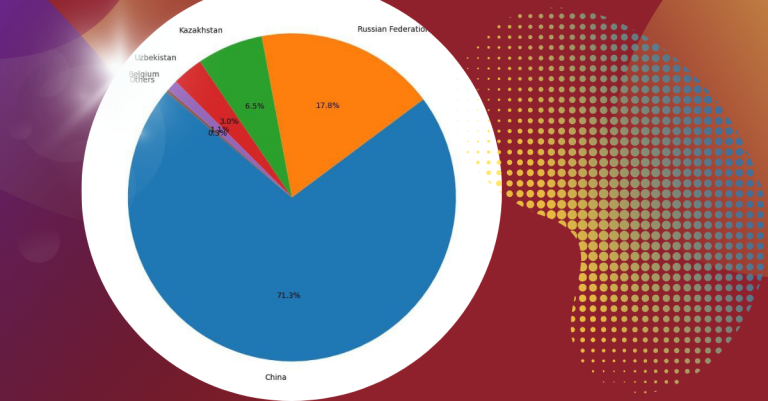
  • China Imports Up to 70% of Critical Metals from Central Asia

    China Imports Up to 70% of Critical Metals from Central Asia

    Despite the lack of official data on the export of rare earth metals by Central Asian countries, an analysis of ore, slag, and ash exports reveals interesting trends. These exports often include critical resources highly sought after by leading global powers, particularly metals such as molybdenum, titanium, and vanadium.

    According to Trademap.org data from 2019 to 2023, Central Asian countries exported a wide range of ores and concentrates, including copper, iron, precious metals, zinc, lead, molybdenum, chromium, and niche metals such as niobium and tantalum.

    In recent years, the market has also seen the introduction of products such as tin, tungsten, and titanium ores. For example, copper ore exports showed stable growth—from approximately $1.17 million in 2019 to around $3.15 million in 2023. Iron ore peaked at $1.6 million in 2021 before experiencing a decline in export volumes in subsequent years.

    One notable trend is the significant increase in molybdenum ore exports, which surged from about $4 million in 2019 to approximately $144 million in 2023. This is a clear reflection of increased global demand and investment.

    An analysis of trade with the European Union under the category “26 Ores, Slags, and Ash” shows that molybdenum stands out: its exports increased from around $11 million in 2021 to nearly $60 million in 2023. In this segment, Kazakhstan holds a dominant position, providing nearly the entire cumulative export value, while contributions from other Central Asian countries remain significantly lower.

    Central Asian countries’ export portfolios reveal a trend towards transitioning from traditional raw materials such as copper and iron to more valuable niche ores, especially molybdenum. This trend is evident both in the global market and in trade with the European Union, where Kazakhstan acts as a key supplier.

    Will the European Union be able to position itself as a key importer of critical metals from Central Asia? The future will tell.

  • Rio Tinto looking at possible lithium deals, Stausholm says

    Rio Tinto looking at possible lithium deals, Stausholm says

    Rio Tinto Group, the world’s biggest iron ore miner, is looking at a number of possible lithium acquisitions and would like to buy an asset to produce the key battery material in Canada, according to chief executive officer Jakob Stausholm.

    The London-based company was “looking at a number of opportunities” in lithium, Stausholm told media in Melbourne on Tuesday.

    “I wouldn’t mind having lithium production in Canada,” he said, but added lithium was “a pretty hot market” and he was “reluctant to come out with too big of a check.” Rio already produces aluminum, iron ore and diamonds in the nation.

    Demand for lithium, a core ingredient in electric vehicle batteries, is surging as carmakers around the world rush to build their EV manufacturing capacity. Production of the metal is dominated by smaller specialist producers, with most global diversified miners staying away.

    Rio is the exception. The world’s second-biggest miner is developing the Rincon lithium project in Argentina, and was planning to mine the battery metal in Serbia before the government there blocked the development.

    Stausholm’s comments came shortly before an announcement that Rio had signed a deal with UK-based exploration company Aterian Plc to explore for lithium in Rwanda. The agreement gives Rio the option to invest $7.5 million in the joint venture.

    Rio still sees opportunities for small-scale deals in metals that could be similar to its purchase of a majority stake in a Chilean exploration project this week, Stausholm said. Still, he stressed the need for organic growth, saying the hype around lithium and copper — another key material in the clean energy transition — wouldn’t influence the company’s thinking on deals in those sectors.

    The move into lithium is part of Rio’s strategy to expand beyond its Australian iron ore business, by far its biggest earner, Stausholm said.

    While Rio sees steel production in China as falling slightly this decade, the market currently looked to be “fairly stable,” he said. Stausholm added there would be growth in steel production in other markets, particularly India.

    (By James Fernyhough, with assistance from Mark Burton)

  • Ferrexpo profits fall as Ukraine war continues to impact

    Ferrexpo profits fall as Ukraine war continues to impact

    Iron ore pellet maker Ferrexpo reported a fall in half-year profits as its operations in Ukraine continued to be affected by the ongoing war.


    Revenues fell 64% to $334m due to lower production and realised prices, while profit after tax declined 67% to $27m.

    Pellet production fell 59% year on year to 1.967 million tonnes during the half due to the conflict in Ukraine and associated logistics constraints, but were up 57% compared to the previous six months as output and demand increased, Ferrexpo said on Wednesday.

    “Improvements in sales volumes and prices helped lift revenues 7% to $334m for the first half of 2023 compared to the last six months of 2022, although admittedly lower than the first half of 2022 during which operations were running at full capacity until the invasion of Ukraine and iron ore prices were correspondingly higher,” it added.

    “Our operations have changed too, adapting to become more nimble and responsive to different challenges as they develop. We are currently running two out of four pelletiser lines, which generate enough high-quality production to utilise the available logistics capacity to continue supplying our European customers.”

    The company also revealed that 27 of its staff had been killed fighting against Russian invasion forces and chairman Lucio Genovese said many were still serving, while other veterans had returned to work.

    “At the start of the war, a large part of our workforce moved away; but, at the same time, we have absorbed even more internally displaced people fleeing the conflict on the eastern border, providing them with accommodation, food and medical supplies, and wherever possible, employment too.”

  • Kokbulak iron ore deposit

    Kokbulak iron ore deposit

    [vc_row][vc_column][vc_column_text]Source: Kazakh Invest[/vc_column_text][vc_raw_html]JTNDZGl2JTIwY2xhc3MlM0QlMjJ0YWJsZV9pbl9kZXRhaWwlMjIlM0UlMEElMjAlMjAlMjAlMjAlMjAlMjAlMjAlMjAlM0N1bCUyMGNsYXNzJTNEJTIybWFwX3RhYmxlJTIyJTNFJTBBJTIwJTIwJTIwJTIwJTIwJTIwJTIwJTIwJTIwJTIwJTIwJTIwJTNDbGklM0UlMEElMjAlMjAlMjAlMjAlMjAlMjAlMjAlMjAlMjAlMjAlMjAlMjAlMjAlMjAlMjAlMjAlM0NzcGFuJTNFSW5kaWNhdG9yJTNDJTJGc3BhbiUzRSUwQSUyMCUyMCUyMCUyMCUyMCUyMCUyMCUyMCUyMCUyMCUyMCUyMCUyMCUyMCUyMCUyMCUzQ3NwYW4lM0VSZXN1bHRzJTNDJTJGc3BhbiUzRSUwQSUyMCUyMCUyMCUyMCUyMCUyMCUyMCUyMCUyMCUyMCUyMCUyMCUzQyUyRmxpJTNFJTBBJTIwJTIwJTIwJTIwJTIwJTIwJTIwJTIwJTIwJTIwJTIwJTIwJTNDbGklM0UlMEElMjAlMjAlMjAlMjAlMjAlMjAlMjAlMjAlMjAlMjAlMjAlMjAlMjAlMjAlMjAlMjAlM0NzcGFuJTNFSW52ZXN0bWVudCUyMGFtb3VudCUyQyUyMHRob3VzYW5kJTIwVVMlMjBkb2xsYXJzJTNDJTJGc3BhbiUzRSUwQSUyMCUyMCUyMCUyMCUyMCUyMCUyMCUyMCUyMCUyMCUyMCUyMCUyMCUyMCUyMCUyMCUzQ3NwYW4lM0U0MTglMjA5ODYlM0MlMkZzcGFuJTNFJTBBJTIwJTIwJTIwJTIwJTIwJTIwJTIwJTIwJTIwJTIwJTIwJTIwJTNDJTJGbGklM0UlMEElMjAlMjAlMjAlMjAlMjAlMjAlMjAlMjAlMjAlMjAlMjAlMjAlM0NsaSUzRSUwQSUyMCUyMCUyMCUyMCUyMCUyMCUyMCUyMCUyMCUyMCUyMCUyMCUyMCUyMCUyMCUyMCUzQ3NwYW4lM0VOUFYlMjBvZiUyMHRoZSUyMFByb2plY3QlMjB0aG91c2FuZCUyQyUyMFVTJTIwZG9sbGFycyUzQyUyRnNwYW4lM0UlMEElMjAlMjAlMjAlMjAlMjAlMjAlMjAlMjAlMjAlMjAlMjAlMjAlMjAlMjAlMjAlMjAlM0NzcGFuJTNFMzYlMjA2NjglM0MlMkZzcGFuJTNFJTBBJTIwJTIwJTIwJTIwJTIwJTIwJTIwJTIwJTIwJTIwJTIwJTIwJTNDJTJGbGklM0UlMEElMjAlMjAlMjAlMjAlMjAlMjAlMjAlMjAlMjAlMjAlMjAlMjAlM0NsaSUzRSUwQSUyMCUyMCUyMCUyMCUyMCUyMCUyMCUyMCUyMCUyMCUyMCUyMCUyMCUyMCUyMCUyMCUzQ3NwYW4lM0VJUlIlMkMlMjAlMjUlM0MlMkZzcGFuJTNFJTBBJTIwJTIwJTIwJTIwJTIwJTIwJTIwJTIwJTIwJTIwJTIwJTIwJTIwJTIwJTIwJTIwJTNDc3BhbiUzRTE0JTJDOSUyNSUzQyUyRnNwYW4lM0UlMEElMjAlMjAlMjAlMjAlMjAlMjAlMjAlMjAlMjAlMjAlMjAlMjAlM0MlMkZsaSUzRSUwQSUyMCUyMCUyMCUyMCUyMCUyMCUyMCUyMCUyMCUyMCUyMCUyMCUzQ2xpJTNFJTBBJTIwJTIwJTIwJTIwJTIwJTIwJTIwJTIwJTIwJTIwJTIwJTIwJTIwJTIwJTIwJTIwJTNDc3BhbiUzRUlCSVREQSUyMHlpZWxkJTJDJTIwJTI1JTNDJTJGc3BhbiUzRSUwQSUyMCUyMCUyMCUyMCUyMCUyMCUyMCUyMCUyMCUyMCUyMCUyMCUyMCUyMCUyMCUyMCUzQ3NwYW4lM0UyNCUyNSUzQyUyRnNwYW4lM0UlMEElMjAlMjAlMjAlMjAlMjAlMjAlMjAlMjAlMjAlMjAlMjAlMjAlM0MlMkZsaSUzRSUwQSUyMCUyMCUyMCUyMCUyMCUyMCUyMCUyMCUyMCUyMCUyMCUyMCUzQ2xpJTNFJTBBJTIwJTIwJTIwJTIwJTIwJTIwJTIwJTIwJTIwJTIwJTIwJTIwJTIwJTIwJTIwJTIwJTNDc3BhbiUzRVBheWJhY2slMjBwZXJpb2QlMkMlMjB5ZWFycyUzQyUyRnNwYW4lM0UlMEElMjAlMjAlMjAlMjAlMjAlMjAlMjAlMjAlMjAlMjAlMjAlMjAlMjAlMjAlMjAlMjAlM0NzcGFuJTNFOSUyQzQlM0MlMkZzcGFuJTNFJTBBJTIwJTIwJTIwJTIwJTIwJTIwJTIwJTIwJTIwJTIwJTIwJTIwJTNDJTJGbGklM0UlMEElMjAlMjAlMjAlMjAlMjAlMjAlMjAlMjAlMjAlMjAlMjAlMjAlM0NsaSUzRSUwQSUyMCUyMCUyMCUyMCUyMCUyMCUyMCUyMCUyMCUyMCUyMCUyMCUyMCUyMCUyMCUyMCUzQ3NwYW4lM0VEaXNjb3VudGVkJTIwcGF5YmFjayUyMHBlcmlvZCUyQyUyMHllYXJzJTIwLSUyMC0lM0MlMkZzcGFuJTNFJTBBJTIwJTIwJTIwJTIwJTIwJTIwJTIwJTIwJTIwJTIwJTIwJTIwJTIwJTIwJTIwJTIwJTNDc3BhbiUzRTE2JTJDMyUzQyUyRnNwYW4lM0UlMEElMjAlMjAlMjAlMjAlMjAlMjAlMjAlMjAlMjAlMjAlMjAlMjAlM0MlMkZsaSUzRSUwQSUyMCUyMCUyMCUyMCUyMCUyMCUyMCUyMCUzQyUyRnVsJTNFJTBBJTIwJTIwJTIwJTIwJTNDJTJGZGl2JTNF[/vc_raw_html][vc_column_text]Project description:

    Development of the Kokbulak iron ore deposit and construction of an iron ore concentrate processing plant

    Investment amount:

    418,986 thousand US dollars

    Power:

    8 million tons per year

    Product:

    concentrate with an iron content of at least 60% for the production of steel

    Implementation period:

    24 years, including the construction period

    Sales market:

    domestic market, export to Russia and China

    Market prerequisites:

    • Large iron ore reserves – Kazakhstan ranks 11th in the world in terms of iron ore reserves with a share of 2% of world reserves.
    • High demand – the demand for iron ore is primarily due to the demand for steel, which directly reflects the trends in the development of the world economy.
    • Export potential – due to the fact that the volumes of iron ore produced in the country fully meet the domestic demand for this product, the main share of pellets and concentrate produced in the republic is supplied abroad. At the same time, the key sales markets (90-99%) are Russia and China.

    Reserves of the Kokbulak field

    Class
    Reserves,
    million tons
    Fe, %
    P2O5 , %
    Sulfur, %
    Central zone
    B 163,1 41,3 1,67 0,06
    C1 198,1 37,8 1,48 0,09
    Total: 361,2 39,4 1,57 0,08
    Northern Zone
    C1 561,9 42,1 1,46 0,06
    C2 49,3 37,9 1,36 0,06
    Total: 611,2 38,1 1,39 0,06
    Southern Zone
    C2 295,9 35,2 1,38 0,09
    Total: 295,9 35,2 1,38 0,09
    Off-balance sheet resources
    C1 410,7 26,6 0,99 0,11
    C2 238,1 28,3 1,09 0,1
    Total: 648,8 27,2 1,03 0,11

    [/vc_column_text][/vc_column][/vc_row]