Tag: investment

  • Mkango Resources Completes Acquisition of Remloy Rare Earth Magnet Recycling Business

    Mkango Resources Completes Acquisition of Remloy Rare Earth Magnet Recycling Business

    Mkango Resources Ltd. has successfully completed its acquisition of the Remloy rare earth magnet recycling business from Heraeus Amloy Technologies GmbH for €8 million (approximately US$9.3 million). This strategic move, announced on 31 August 2026, marks a significant step in Mkango’s efforts to enhance its position within the rare earth supply chain in Europe. The transaction includes an initial payment of €5 million, with the remaining €3 million due on 28 August 2028.

    Remloy operates a fully commissioned recycling facility in Bitterfeld, Germany, which utilises a melting process to recycle end-of-life rare earth magnets into neodymium-iron-boron (NdFeB) alloy powders. This process complements Mkango’s existing recycling initiatives, including the short loop recycling process of HyProMag and the long loop recycling process of Mkango Rare Earths UK. With a target capacity of at least 500 tonnes per year, Remloy is poised to play a crucial role in the production of high-demand magnet materials.

    The acquisition comes at a time when the demand for rare earth materials is surging, driven by their critical applications in various high-tech industries. Mkango’s CEO, William Dawes, expressed optimism about the transaction, highlighting the potential for strengthening the rare earth supply chain and enhancing recycling capabilities in Germany and its neighbouring countries. He noted that Mkango is now uniquely positioned across the entire rare earth supply chain, with operations spanning recycling, magnet and alloy manufacturing in the UK, Germany, and the USA, as well as rare earth separation in Poland and mining activities in Malawi.

    David Bender, the newly appointed Managing Director of Remloy, emphasised the company’s readiness to scale up production and meet customer demands. He stated that the synergies within the Mkango Group would enhance their ability to provide a comprehensive range of products, thereby contributing to supply chain resilience and security of supply in the rare earth sector.

    As Mkango Resources continues to expand its operations, the integration of Remloy is expected to facilitate growth and innovation in rare earth magnet recycling, positioning the company as a key player in the European market. The strategic acquisition aligns with global trends towards sustainability and the circular economy, as industries increasingly seek to recycle and reuse materials to reduce environmental impact and ensure a stable supply of critical resources.

  • Critical Metals Corp Advances Acquisition of European Lithium Limited

    Critical Metals Corp Advances Acquisition of European Lithium Limited

    Critical Metals Corp (Nasdaq: CRML), a prominent player in the critical minerals sector, has provided an update regarding its proposed acquisition of European Lithium Limited (ASX: EUR, FRA: PF8, OTC: EULIF). The acquisition aims to secure 100% of the issued share capital of European Lithium, alongside its listed options, through court-approved schemes of arrangement under the Australian Corporations Act 2001. This strategic move is designed to enhance Critical Metals’ portfolio and strengthen its position in the critical minerals market.

    The process commenced with the lodgement of a draft explanatory statement, known as the Scheme Booklet, with the Australian Securities and Investments Commission (ASIC) on August 26, 2026. This document is crucial as it will provide European Lithium’s securityholders with essential information regarding the proposed schemes. The first court hearing is set for September 15, 2026, where European Lithium will seek orders from the Supreme Court of Western Australia to convene meetings for shareholders and optionholders to consider and vote on the schemes.

    If the court grants the necessary approvals, the Scheme Meetings are expected to take place in mid-October 2026, followed by a general meeting of shareholders to discuss resolutions related to the schemes. The implementation of these schemes is anticipated for early November 2026, contingent upon the satisfaction of all conditions, including approvals from shareholders and the court.

    Mike Hanson, a board director at Critical Metals Corp, expressed optimism regarding the progress of the acquisition, highlighting the importance of the Scheme Booklet’s lodgement as a significant step forward. He noted that both companies are making steady progress towards the completion of the transaction, which aims to integrate European Lithium and its assets into the Critical Metals group.

    Critical Metals Corp is focused on developing critical minerals essential for electrification and next-generation technologies. Its flagship project, Tanbreez, located in Southern Greenland, is one of the largest rare earth deposits globally, with advantageous shipping access. Additionally, the Wolfsberg Lithium Project in Austria is poised to become a major producer of lithium products, further solidifying Critical Metals’ role as a key supplier in the European market.

    This acquisition aligns with the growing demand for critical minerals, driven by the clean energy transition and advancements in technology. As the mining industry continues to evolve, Critical Metals Corp is strategically positioning itself to meet the needs of the Western world, ensuring a reliable and sustainable supply of essential resources.

  • Uzbekistan and China Set Ambitious $30 Billion Trade Target Amid Strengthening Economic Ties

    Uzbekistan and China Set Ambitious $30 Billion Trade Target Amid Strengthening Economic Ties

    Uzbekistan and China are moving to deepen cooperation across mining, mineral processing, and nuclear energy, as President Shavkat Mirziyoyev and Chinese President Xi Jinping discussed a broader economic partnership at the Shanghai Cooperation Organization summit in Bishkek. Alongside a shared ambition to raise bilateral trade from roughly $18 billion last year to $30 billion, the two leaders singled out mining and the extraction and processing of mineral resources as priority areas for expanded industrial cooperation.

    The resource-sector focus sits within a much larger investment relationship: an estimated $60 billion in ongoing joint investment projects and more than 6,000 joint ventures are already active in Uzbekistan. Metallurgy was named specifically among the priority industrial sectors, alongside energy, chemicals, and high technologies — a signal that Chinese capital and technical expertise are expected to flow further into Uzbekistan’s mining and metals value chain, from raw extraction through to processing and downstream materials.

    On the nuclear side, Uzbekistan reiterated its intent to attract Chinese companies into peaceful nuclear energy projects, positioning this alongside conventional and renewable power as part of a broader energy diversification strategy. This comes as Tashkent has been actively courting international partners for both large-scale and small modular reactor projects, and China’s inclusion in that mix points to growing competition among global nuclear vendors for a foothold in Central Asia’s emerging civil nuclear market.

    Supporting infrastructure for these ambitions is also advancing: the China-Kyrgyzstan-Uzbekistan railway, currently under construction, is expected to strengthen Eurasian transport connectivity under the Belt and Road Initiative — a corridor that would also serve as a logistics backbone for moving mined and processed materials to Chinese and regional markets.

    Taken together, the mining and nuclear commitments reflect a shift in the Uzbekistan-China relationship beyond trade volumes and consumer manufacturing (such as the BYD electric vehicle partnership) toward deeper integration in resource extraction, materials processing, and energy security — areas where China’s demand for critical minerals and Uzbekistan’s mineral wealth and nuclear ambitions increasingly align.


  • Kazakhstan Launches Northern Katpar Tungsten Project to Boost Local Economy

    Kazakhstan Launches Northern Katpar Tungsten Project to Boost Local Economy

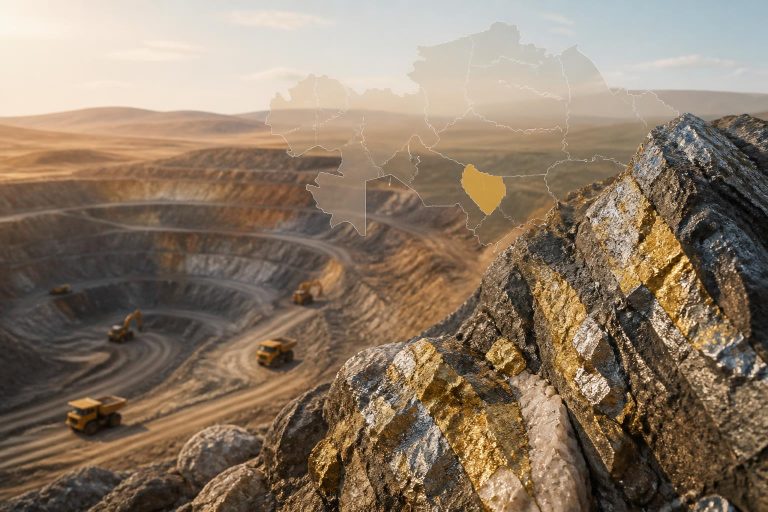
    Kazakhstan has officially commenced the practical implementation of the Northern Katpar tungsten project, located in the Karaganda Region, as announced by the regional akimat. This significant initiative is part of a broader strategy to develop one of the world’s largest tungsten deposits, alongside the Verkhne-Kairakty deposit. Preparatory work has been ongoing for the past two months, focusing on the establishment of production sites, access roads, and essential field infrastructure, complemented by geodetic surveys. A comprehensive feasibility study is currently in progress and is anticipated to be completed by the end of 2027.

    Deputy Akim of Karaganda Region, Shyngys Suyunbayev, highlighted the project’s importance, stating that it will not only attract foreign investment but also provide a substantial economic boost to the Shet District. The project is projected to create approximately 1,200 new jobs upon commissioning. Dominic Heaton, CEO of Cove Kaz Capital Group, emphasized that the investor’s vision extends beyond mere deposit development; it aims to establish a modern, internationally competitive tungsten mining and processing industry within Kazakhstan.

    The Northern Katpar project is set to foster domestic value addition through processing, alongside skills development and enhanced participation of Kazakh companies in the supply chain. Daniyar Idrisov, Chief Investment and Strategy Officer at Tau-Ken Samruk, noted that the partners are committed to creating a full production cycle, encompassing everything from ore extraction to metallurgical processing and the production of high-value tungsten products.

    Total investment in the development of both deposits and the necessary mining and processing infrastructure is estimated at around $1.1 billion. The project is expected to yield approximately 12,000 tons of tungsten products annually, which would account for about 15% of current global tungsten production, according to the regional akimat. The initiative not only focuses on ore extraction and beneficiation but also aims for deep processing within Kazakhstan, thereby establishing a new production chain in the critical minerals sector.

    According to the current timeline, major construction activities are projected to commence in 2028, with commissioning works slated for 2029. This ambitious project is poised to significantly enhance Kazakhstan’s position in the global tungsten market while providing economic opportunities for the local population.

  • Tajikistan and the US Strengthen Bilateral Cooperation in Energy and Mining Sectors

    Tajikistan and the US Strengthen Bilateral Cooperation in Energy and Mining Sectors

    In a significant diplomatic engagement, Tajikistan’s President Emomali Rahmon met with US Special Envoy for Central and South Asian Affairs, Sergio Gor, and US Senator Steve Daines in Bishkek to discuss the current state of bilateral cooperation. The meeting underscored the importance of the C5+1 mechanism, which facilitates regional dialogue and cooperation among Central Asian nations and the United States.

    During the discussions, President Rahmon highlighted Tajikistan’s commitment to enhancing trade and economic ties with the US, particularly in the energy, industrial, and mining sectors. The focus on these sectors reflects Tajikistan’s strategic intent to attract foreign investment, which is crucial for the country’s economic development and infrastructure improvement.

    The talks also addressed broader issues of security and stability in the region, with both sides recognising the need for political and diplomatic solutions to ongoing conflicts. This aspect of the dialogue illustrates the multifaceted nature of US-Tajik relations, which extend beyond economic interests to encompass regional security concerns.

    Additionally, the meeting provided a platform for both parties to exchange views on various mutual interests, reinforcing the collaborative spirit that characterises their bilateral relationship. As Tajikistan seeks to bolster its economic framework, the engagement with US officials signals a proactive approach to international partnerships, especially in sectors critical to its national development agenda.

  • EU Struggles to Compete with US in Securing Critical Minerals

    EU Struggles to Compete with US in Securing Critical Minerals

    The European Union is at risk of falling further behind the United States in the race to secure critical minerals essential for defence and green technologies, as warned by European officials and industry leaders. The US has made significant investments over the past two years to ensure access to rare earth metals and other materials where China currently dominates global production. Since 2022, Washington has announced approximately $40 billion in provisional funding for mineral projects and has taken equity stakes in various domestic mining companies. Additionally, the US government has actively lobbied for American firms to win mining tenders in countries such as the Democratic Republic of Congo and Kenya.

    In contrast, the EU has designated dozens of strategic mineral projects to benefit from expedited permitting rules, committing around €6 billion to these initiatives this year. However, industry representatives caution that the EU’s pace is too slow to effectively kick-start the sector. Bernd Schäfer, CEO of EIT RawMaterials, expressed admiration for the US approach, stating that while Americans act decisively, Europeans tend to hesitate and over-administrate, resulting in lost time.

    The US is also working to establish a coalition of countries to create supply chains that circumvent China, through a new initiative known as the Forum on Resource Geostrategic Engagement (Forge). However, this initiative has raised scepticism in Brussels, particularly due to the previous US administration’s unpredictable stance towards the EU. European officials assert that the EU must adopt a similar approach to the US by securing offtake agreements and utilising financial tools to develop its critical minerals supply chain ahead of a new strategy set to be unveiled this autumn.

    The EU’s current efforts have primarily focused on designating strategic projects in mining, processing, and recycling, which benefit from faster permitting but lack guaranteed public funding. In stark contrast, the Trump administration invested heavily in developing its supply chain, including acquiring stakes in rare earth producers both domestically and in Europe. For instance, the Pentagon made a $400 million equity investment in MP Materials, a US rare earths producer, and signed a long-term agreement to establish a minimum price for neodymium-praseodymium, a critical alloy used in technologies like electric vehicles and robotics.

    Concerns have been raised about the potential for the US to become a second China for Europe in terms of dependence on rare earth metals. Schäfer noted that regardless of the methods employed by the Trump administration, the US has secured more deals in 18 months than Europe has in the past decade. Furthermore, the US government’s investments in European critical minerals companies, such as USA Rare Earth’s acquisition of British firm Less Common Metals, have sparked worries among European stakeholders.

    The European Court of Auditors has also indicated that despite Brussels selecting 75 strategic projects for streamlined permitting and investment access, it is ‘unlikely’ that many will meet the bloc’s 2030 targets for developing domestic supplies. A mining executive involved in one of the projects described the EU’s efforts as ‘disappointing’ in terms of financial support, highlighting the complexity of obtaining permits. While being designated as a strategic project may serve as effective marketing, it does not significantly alter the operational landscape for these initiatives.

  • Sinopec Partners with Turkestan Region for Major Phosphate Processing Plant

    Sinopec Partners with Turkestan Region for Major Phosphate Processing Plant

    The Akim of Turkestan Region, Nuralhan Kushev, recently met with Zhang Zhanshin, Vice President of Sinopec, to discuss the current status and future plans for a modern phosphate ore processing plant in the Sayramsky district. This significant investment project, valued at 150 billion tenge, is being implemented by the company ‘Sayak Phosphate’. The initiative aims to establish a comprehensive production complex that effectively utilises local mineral resources, including the extraction, enrichment, and deep processing of phosphate ore.

    Upon completion, the plant is expected to enrich 2 million tonnes of phosphate ore annually, producing 1.6 million tonnes of sulphuric acid, 600,000 tonnes of phosphoric acid, 600,000 tonnes of DAP (Diammonium Phosphate), 600,000 tonnes of MAP (Monoammonium Phosphate), and 350,000 tonnes of synthetic ammonia. The products will cater to both domestic markets and exports to China, India, and neighbouring countries.

    Kushev emphasised the project’s importance not only for the region but also for the industrial development of the country as a whole. He stated, “The phosphate processing plant in the Sayramsky district is one of the strategically significant projects for the region and the industrial and economic development of the entire country. Once operational, it will create around 1,000 jobs, enhancing the welfare of the local population and boosting the region’s production capacity.”

    He further highlighted the need for high-quality construction that adheres to international standards, assuring that the government would provide comprehensive support throughout all stages of the project, including infrastructure development and coordination with state authorities.

    The project has been included in the Industrialisation Map, with an estimated phosphate ore reserve of approximately 1 billion tonnes and a phosphorus content of around 20-30%. An EPC contract has been signed with Sinopec Nanjing Engineering Co., Ltd. for the technological aspects of the project. Currently, specialists are conducting additional studies of the production site and ore deposits, selecting cores and ore samples, while verifying technological solutions.

    The technical and economic justification is expected to be completed by October this year, followed by the design phase, construction of engineering infrastructure, railway installation, and procurement of equipment. The plant is slated to commence operations in 2028, with projections indicating that it will contribute approximately 43.3 billion tenge in tax revenues to the budget over the next decade. Additionally, the project aims to establish a new production chain in the chemical industry with high added value, facilitating the production of mineral fertilisers and chemical products, ensuring import substitution, and increasing export potential.

    In related news, a paper processing plant is also set to be constructed in Turkestan Region with an investment of 1 billion tenge, as Chinese investors aim to create a construction hub in the area.


  • Azerbaijani Companies to Explore Gold and Rare Earth Deposits in Uzbekistan

    Azerbaijani Companies to Explore Gold and Rare Earth Deposits in Uzbekistan

    Azerbaijani companies are set to engage in the exploration and development of gold deposits in Uzbekistan, as reported by Gazeta.uz, citing the Uzbek Ministry of Investments, Industry and Trade. The initiative includes geological exploration, processing of silver-containing ores, and the extraction of rare earth metals. Notably, AzerGold is planning to participate in the development of the ‘Akba’ gold deposit located in the Kitab district of the Kashkadarya region. The company will also conduct geological surveys in promising areas of the Nuratin district in the Navoi region.

    In 2025, ‘Uzbekgeologorazvedka’ reported that over 13 tonnes of industrial gold reserves at the ‘Akba’ deposit had been accounted for and placed on the state balance. Further geological exploration in the area could potentially reveal an additional 50 tonnes of gold. This significant find underscores the potential for increased gold production in Uzbekistan, which is becoming an attractive destination for foreign investment in the mining sector.

    Another project involves the extraction of rare earth metals in the Navoi, Tashkent, and Jizzakh regions, with Neqsol Holding acting as the Azerbaijani partner. This collaboration highlights the growing interest in rare earth elements, which are critical for various high-tech applications and are increasingly in demand globally.

    Additionally, in the Namangan region, a partnership with Sur Gold and Silver Project aims to establish a processing plant for silver-containing ores. This project not only signifies the diversification of mining activities in Uzbekistan but also reflects the country’s commitment to enhancing its mining infrastructure and capabilities.

    Overall, these developments indicate a strengthening of economic ties between Azerbaijan and Uzbekistan, particularly in the mining sector, as both countries seek to leverage their natural resources for mutual benefit.


  • Tungsten West Secures £71 Million Investment to Revive Hemerdon Mine

    Tungsten West Secures £71 Million Investment to Revive Hemerdon Mine

    Tungsten West (AIM:TUN) has announced a significant investment of up to $97 million (£71 million) from the UK Government to restart production at the historic Hemerdon tungsten and tin mine located in Devon. This funding, which encompasses both equity and debt, is sourced from the National Wealth Fund (NWF) and is aimed at revitalising the mine to achieve full production capacity, thereby establishing a secure domestic supply of tungsten—a critical mineral vital for high-technology supply chains, aerospace, energy, and defence sectors.

    The Hemerdon mine has a storied history, having supplied essential tungsten for military and defence efforts during both World Wars. Mining activities persisted intermittently until 1944, when operations ceased. The recent government investment is seen as a strategic move to bolster the UK’s mineral supply chain, particularly in the context of national security and economic growth. Chancellor of the Exchequer, John Healey, emphasised that this initiative will not only provide crucial minerals to British industries but also safeguard well-paid jobs across the UK, aligning with the government’s commitment to stimulate growth in all regions.

    In conjunction with the investment, Tungsten West and the NWF have established a shareholder relationship agreement, allowing the NWF to nominate a non-executive director to Tungsten West’s board. This partnership is expected to facilitate the resumption of full production at Hemerdon, which is projected to create approximately 350 direct jobs.

    Production at the Hemerdon site is set to commence soon, with tungsten and tin concentrates already being produced in the past month as final tests are conducted. The company is also in discussions with a major downstream tungsten refiner to enhance its operational capabilities. Jeff Court, CEO of Tungsten West, remarked on the significance of the Hemerdon resource, describing it as a world-class, low-cost, and long-life tungsten and tin asset that will support the UK’s national interests in the long term.

    Despite previous challenges in restarting the mine, including cost overruns and fluctuating prices, the recent investment has invigorated Tungsten West’s stock, which surged by approximately 17% to 50.25 pence per share, valuing the company at around £627 million ($855 million) as of midday trading in London. This positive market response indicates strong investor confidence in the future of the Hemerdon mine and its role in the UK’s critical minerals landscape.


  • Kazatomprom Signals End of ‘Cheap’ Uranium Era Amid Rising Demand

    Kazatomprom Signals End of ‘Cheap’ Uranium Era Amid Rising Demand

    Kazatomprom’s CEO, Meirzhan Yusupov, announced during a financial results conference that the era of ‘cheap’ uranium is coming to an end, as global demand for nuclear energy accelerates. This shift is backed by a commitment from 38 countries, accounting for over 70% of the world’s GDP, to triple nuclear energy capacity by 2050. Yusupov noted that the demand surge is occurring within a disciplined commercial environment, with long-term uranium price indicators remaining stable and reaching an 18-year high. This creates a solid foundation for future long-term contracts, as market dynamics shift towards producers with confirmed large uranium reserves.

    Kazatomprom’s consolidated revenue for the first half of the year rose by 9% year-on-year to nearly 718 billion tenge (approximately $1.57 billion), reflecting financial discipline and a favourable uranium market. However, the industry faces rising production costs, and Yusupov acknowledged that the days of ‘cheap’ uranium are over. The fundamental need for reliable, low-carbon energy remains strong, and global energy companies are aware of this shift, ensuring robust long-term demand for uranium.

    In addition to its financial results, Kazatomprom announced agreements with China’s State Nuclear Uranium Resource Development Company Limited (SNURDC) for spot contracts for natural uranium concentrates, and with Uranium One Group JSC for the sale of uranium concentrates to the Siberian Chemical Combine in Russia. The details of these contracts are confidential but align with current market conditions.

    Recent amendments to Kazakhstan’s Subsoil Code, effective from September, will impact uranium mining licenses, requiring a minimum participation share for Kazatomprom in any organization receiving such licenses. Another amendment shifts the legal framework for uranium exploration from a licensing regime to a contractual one, allowing for a maximum combined term of 11 years for exploration agreements.

    Kazatomprom also reported a new processing plant with a capacity of 500 tonnes per year at the Zhalpak deposit, with plans to expand to 900 tonnes by 2027. However, the construction of a significant sulphuric acid plant is facing delays due to the discovery of potential paleontological finds at the site. Construction has been paused pending regulatory approval for excavation and analysis of the finds.

    The sulphuric acid plant is crucial for Kazatomprom’s uranium extraction operations, and uncertainties regarding its supply have impacted production plans. The total investment in the sulphuric acid plant project is estimated at approximately 113 billion tenge ($2.6 million). The expected commissioning date for the plant has been pushed back to between Q3 2027 and Q1 2028, a delay of 6-12 months, although Kazatomprom anticipates that this will not significantly affect its uranium production operations.