Tag: investment

  • Kazakhstan’s Gold Mining Industry Faces Challenges and Opportunities

    Kazakhstan’s Gold Mining Industry Faces Challenges and Opportunities

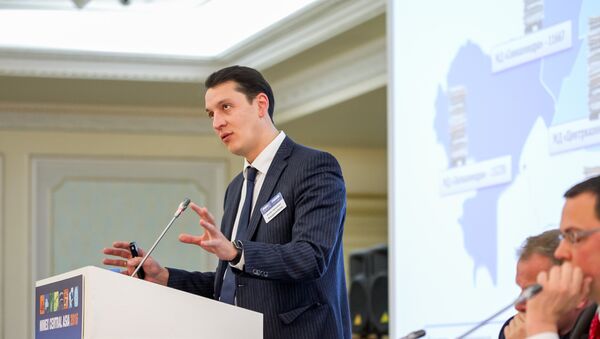
    At the recent V Forum of Gold Industry in Astana, Aida Alzhanova, Deputy General Director for Strategic Development of Polymetal Eurasia, discussed the current state of the industry and the company’s business growth plans.

    Aida addressed concerns about the depletion of the mineral resource base in the gold mining industry, despite experts’ optimism about Kazakhstan’s subsurface resources. The industry faces significant challenges, including the depletion of the mineral resource base, which is seen as a fundamental issue. Gold mining companies are increasing production rates annually, but the real growth in reserves is slow, with exploration and preparation of deposits taking seven to eight years on average. No major gold deposits have been discovered since independence, and many operations rely on Soviet-era discoveries. Some enterprises consider short-term extraction of off-balance ores, and some plants continuously seek external raw materials.

    Two primary reasons for these challenges are the low investment attractiveness of geological exploration, especially greenfield, and the bureaucratic process of obtaining permits for sample export for research. Investment incentives, such as real VAT exemptions for both subsoil users and service companies, are seen as effective tools. A significant issue for the entire mining sector is the non-return of payable VAT, which deters investors.

    Another major challenge is the low intensity of geological exploration. A bureaucratic process hampers the export of samples for analysis, with delays due to local accreditation requirements. The only internationally accredited laboratory, ALS Kazgeokhimia, is overloaded, with standard analyses taking 45 to 60 days, which is too long given the short field season in many regions. Accelerating exploration would benefit from the launch of a digital geological information database, which would facilitate AI implementation, expedite site selection, and increase the chances of discovering good deposits.

    To replenish the mineral resource base, Polymetal Eurasia actively collaborates with junior companies. The 2017 Subsoil Code simplified exploration rights acquisition, boosting domestic junior business and improving geological study quality. The company has about 20 exploration licenses and several for geological study, covering over 70,000 square kilometers. They are also developing digital solutions for managing large volumes of geoinformation and constructing an analytical laboratory with a capacity of 200,000 samples per year.

    Following the sale of Russian assets and the company’s rebranding to Solidcore Resources plc, Polymetal’s focus has shifted to prioritizing Kazakhstan. The strategy involves developing processing hubs in eastern and northern Kazakhstan and pursuing greenfield projects to establish new hubs. Long-term growth involves acquiring new deposits with assessed or ready-for-final-evaluation reserves, with domestic junior companies being key partners in this endeavor.

    Polymetal plans to invest approximately $1 billion, primarily in building a metallurgical plant in Pavlodar (Irtyshsky GOK) and expanding the company’s asset portfolio, including exploration and M&A activities.

  • Vulcan Energy Resources Secures €40m for Zero Carbon Lithium Project

    Vulcan Energy Resources Secures €40m for Zero Carbon Lithium Project

    Vulcan Energy Resources has successfully secured a total of €40m ($43m) through a private placement to support the construction work for its phase one integrated Zero Carbon Lithium Project in Germany. Under the terms of the private placement, Vulcan issued ten million shares to CIMIC Group for €25m, five million shares to Hancock Prospecting for €12.5m, and one million shares to Victor Smorgon Group for €2.5m.

    The new shares, priced at €2.50 each, were offered at a 9% discount to Vulcan’s 30-day volume-weighted average price and will rank equally with existing ordinary shares.

    These strategic investments are crucial for funding pre-execution activities during the final stage of project financing and for maintaining the deterministic execution schedule of the project. CIMIC’s €25m investment will establish the company as a substantial shareholder in Vulcan, holding a 6% stake in the outstanding share capital.

  • Kazakhstan to Welcome New Metallurgical Plant in Five Years

    Kazakhstan to Welcome New Metallurgical Plant in Five Years

    In a recent development, Kazakhstan is set to launch a new metallurgical plant in five years, with a capacity of 5 million tons, in Shymkent. The project will be carried out by the Chinese company Fujian Hengwang Investment Co., Ltd, with the necessary documents already signed in the city’s administration, as reported by kapital.kz.

  • Chaarat Gold Secures Major Funding for Tulkubash Mine in Kyrgyzstan

    Chaarat Gold Secures Major Funding for Tulkubash Mine in Kyrgyzstan

    Chaarat Gold Holdings Ltd announced on Friday significant progress in securing funding to initiate production at the Tulkubash gold mine in Kyrgyzstan. The company’s shares surged 43% to 4.00 pence each in London following the announcement.

    Chaarat Gold, a mining exploration and development company, has entered into a non-binding term sheet with Xiwang International Co Ltd (XWIC) for a USD 150 million funding package. This investment would grant XWIC a 60% economic interest in the Tulkubash project, while Chaarat would retain a 40% stake.

    XWIC, an investment company based in the British Virgin Islands and an affiliate of Touchstone Capital Partners, aims to build a substantial portfolio of mining assets globally. This agreement represents a key step in advancing discussions between the parties and sets a clear action plan for a successful transaction.

    The completion of this deal would provide full financing for the development and commencement of production at the Tulkubash gold project. It would also enable Chaarat to restructure its existing commitments and lay the groundwork for potential future joint ventures in the gold mining sector.

    Chaarat continues to engage with other potential funding sources and plans to enter discussions with convertible bondholders regarding outstanding bonds due for repayment at the end of July. The Tulkubash project has an initial mine life of six years, with significant development potential from additional prospects such as Karator and Ishakuldy. The company aims to extend the total mine life beyond 15 years.

  • ERG Exploration Granted Exploration Rights in Mughalzhar District

    ERG Exploration Granted Exploration Rights in Mughalzhar District

    ERG Exploration, a subsidiary of ERG, has been authorized to conduct geological exploration for solid minerals across 8.9 thousand hectares in the Mughalzhar district of Aktobe region. According to a decree by Darhan Yermagambetov, the district’s akim, a public easement will be established on land plots in the Kayyndy rural district without removing land users. The exploration rights are valid until May 6, 2030. The public discussion of the decree will continue until May 30, and it will be published on the district akimat’s website.

    The company received a license for solid mineral exploration, numbered 2633-EL, on May 6. Last October, ERG Exploration began geological work on 2.8 thousand hectares in the Aktogay district of Karaganda region, focusing on areas predominantly within the district’s land fund and two farming estates.

    ERG Exploration’s CEO, Azamat Shalabayev, revealed plans to digitize geological data and explore for various metals, including chromium, manganese, copper, and rare metals. The company recently secured the right to explore a copper site in North Pribalkhash, having paid over 420 million tenge. Initial studies, conducted during the Soviet era and later by Rio Tinto with Kazgeology, estimated the site contains up to 200 thousand tons of copper with low ore concentration. ERG plans to extend exploration to a depth of 700 meters to locate more minerals.

    ERG has acquired 43 licenses for mineral exploration, focusing on cobalt, lithium, and copper. ERG’s Board Chairman, Serik Shakhazhanov, emphasized the company’s dedication to exploring future-critical metals. ERG recently inaugurated the ERG GeoHub core storage in Rudny, and plans to invest around $6.5 billion in Kazakhstan over the next five years, significantly boosting production across various divisions.

    The ultimate owners of ERG include the Ministry of Finance with a 40% stake, Alexander Mashkevich and the Ibragimov family each holding 20.7%, and Patokh Shodiev with 18.6%. These stakeholders were the first Kazakh billionaires according to Forbes in 2005. Mashkevich and Shodiev have since changed their citizenships to Israeli and Belgian, respectively. Mashkevich ranked sixth among the wealthiest Israelis in Forbes 2022 with a net worth of $3.7 billion. The Ibragimov family’s net worth is currently estimated at $1.5 billion.

  • KazMunayGas Invests 68 Billion Tenge in Oilfield Rehabilitation Projects

    KazMunayGas Invests 68 Billion Tenge in Oilfield Rehabilitation Projects

    KazMunayGas, the national oil company of Kazakhstan, has allocated 68 billion tenge towards the rehabilitation of two valuable oil and gas fields, Uzenskoye and Karamanbas. This update was provided by the company’s press center. The project, which began last year, is being implemented by Ozenmunaigas, a major oil enterprise and subsidiary of KazMunayGas.

    This year, the company’s leadership has approved a detailed task list and budget for the ongoing project. Of the total investment, 17 billion tenge was allocated last year, with an additional 51 billion tenge being added this year. The rehabilitation plan includes the deployment of over 200 Electric Submersible Pumps (ESPs), drilling 31 new wells, and undertaking extensive capital repairs of existing wells. Additionally, new methods to enhance oil recovery will be introduced, and a diagnostic and repair hall for underground equipment will be upgraded.

    So far, 23 new wells have already been commissioned, and over 100 have been equipped with modern technology. The project aims to increase oil production by 136,000 tons by the end of the current year, with an overall goal of extracting nearly 19 million tons of additional oil by 2036.

  • Expansion Underway at Navoi Mining and Metallurgical Combine

    Expansion Underway at Navoi Mining and Metallurgical Combine

    Recent updates from the press office of NGMK reveal progress within their 2024 Investment Program, focusing on the implementation of a project titled “Ore Extraction at the Gold Deposits of Kokpatas and Daugyztau (Phase III)” at the Navoi Mining and Metallurgical Combine.

    Presently, construction is underway at Hydro-Metallurgical Plant No. 3, where two new milling units are being erected to process 2 million tons of gold-bearing ore annually. This initiative aims to augment the number of milling units to eight, with an annual ore processing capacity reaching 10 million tons.

    Oibek Ashurov, Chief Technologist of the Northern Ore Management, anticipates a significant boost in production volumes upon the commissioning of the new milling units. Expansion plans include enlarging flotation, bio-oxidation, filtration, drying, and roasting workshops, facilitating further augmentation of production capacities.

    Essential equipment and spare parts for the milling units are manufactured at the Navoi Machine-Building Plant and subsidiaries of the Northern Ore Management. Construction activities are supervised by the Zarafshan Construction Management.

  • Uzbekistan’s Ambitious Rare Earth Investment Plans

    Uzbekistan’s Ambitious Rare Earth Investment Plans

    Uzbekistan is set to make a bold move into the rare earth market with plans to invest $500 million in rare earth projects, aiming to position itself as a major producer in Central Asia. President Shavkat Mirziyoyev unveiled this ambitious endeavor, emphasizing the country’s commitment to developing existing deposits and exploring new ones.

    The mining industry in Uzbekistan has already demonstrated significant economic potential, reaching a production volume of nearly $11 billion last year, primarily driven by precious and non-ferrous metals. However, the focus now shifts towards tapping into the untapped potential of critical minerals, including rare earths. A 2018 study by the U.S. Geological Survey identified 87 deposits of rare earths and rare metals within the country, laying the foundation for Uzbekistan’s strategic investment in this sector.

    The European Union emerges as a potential key market for Uzbekistan’s rare earth exports, aiming to reduce its reliance on rare earth imports from China. Just over a month ago, Uzbekistan signed a memorandum of understanding with the EU on critical raw materials, signaling a promising avenue for future collaboration and trade partnerships.

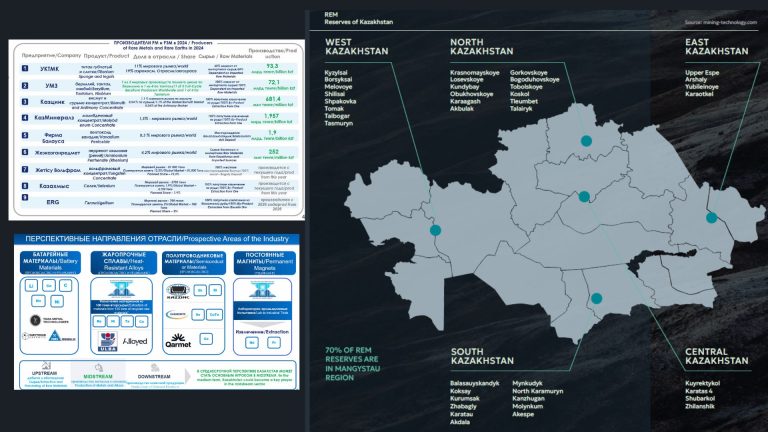
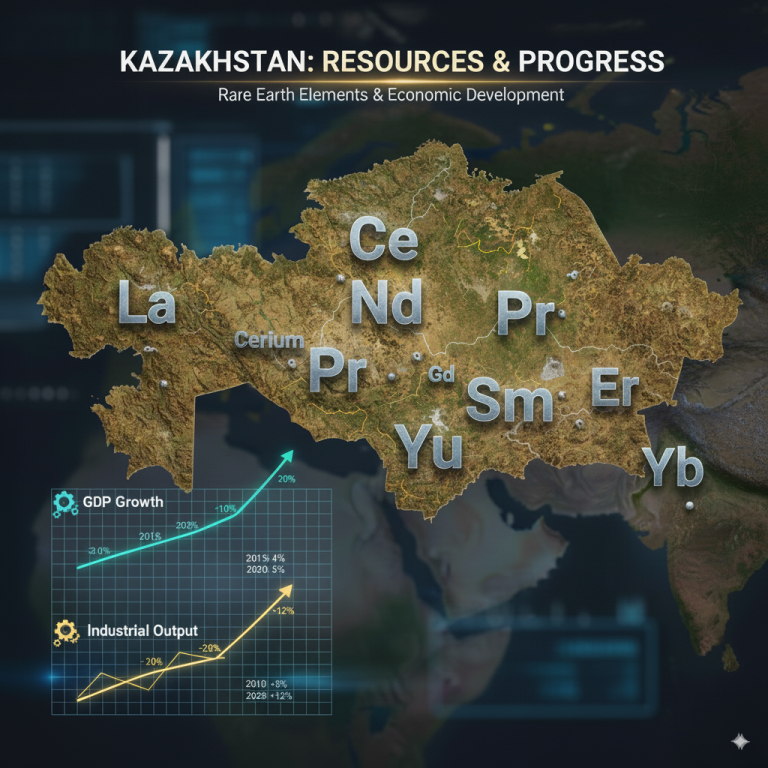
    Meanwhile, neighboring Kazakhstan, linked to the EU through its own raw materials agreement, has also announced a significant expansion of its rare earth industry. With 15 deposits of rare earth metals and 160 rare earth element-bearing mineral occurrences, Kazakhstan presents formidable competition in the regional rare earth market.

  • 14th MINEX Kazakhstan Forum in Astana: Sustainable Development in Mining Industry Takes Center Stage

    14th MINEX Kazakhstan Forum in Astana: Sustainable Development in Mining Industry Takes Center Stage

    Astana, Kazakhstan – The 14th Mountain Geological Forum, MINEX Kazakhstan, commenced its proceedings, focusing on the theme of “Sustainable Development of the Mining Industry for the Benefit of Society and the Environment.” Over 450 specialists from 235 companies and organizations spanning Kazakhstan and 32 countries across Europe, Central Asia, North and Latin America, Africa, Southeast Asia, the Middle East, and Australia are participating in the event.

    More than 50 Kazakhstani and international companies are showcasing cutting-edge technologies for prospecting, extraction, and processing of mineral resources at the forum’s exhibition. Attendance by approximately 1000 specialists from Kazakhstan and abroad is anticipated.

    Of notable significance this year is the record participation of foreign investors at the forum, demonstrating keen interest in exploring and developing deposits of precious metals, copper, coal, lithium, uranium, as well as rare and rare-earth metals.

    During the plenary session, the Executive Director of AGMP, Nikolai Radostovets, addressed the key directions for the development of the mining and metallurgical industry in Kazakhstan. He emphasized crucial tasks such as replenishing the mineral resource base, enhancing domestic value, and raw material processing.

    With the depletion of the mineral resource base and the decline in the content of useful components in ore, there is a pressing need to increase geological exploration activities and provide incentives for investments in geological exploration. In this regard, the association’s leader proposed revising the algorithm for accounting and taxing expenditures on geological exploration. Specifically, he suggested refining the Tax Code to allow deductions for all expenses on geological exploration regardless of the allocation of individual sites into new contracts, as well as establishing deductions for corporate income tax on expenditures for geological exploration of solid minerals through existing extraction contracts.

    To incentivize involvement in raw material processing, he proposed enshrining several provisions in legislation. These include exempting subsoil users’ non-extractive mineral resources from the mineral extraction tax (MET) and not levying fees for their re-placement after processing. Regarding non-state-owned mineral resources, extraction should proceed as per current regulations, with a reduced MET rate applied to stimulate their processing.

    Addressing tasks related to enhancing domestic value, Radostovets highlighted AGMP’s comprehensive approach aimed at satisfying the needs of domestic manufacturers and mitigating risks for subsoil users in procurement.

    “We plan to convene with domestic manufacturers at the NPP platform shortly and propose that for the products that Kazakhstani enterprises can produce, we will enter into off-take contracts,” he specified. “We are prepared to compile and approve a list containing the range of goods manufactured in Kazakhstan or those that can be produced in the medium term. For other types of products, we should have open procurement under standard conditions, possibly from a single source, as these are goods not produced in Kazakhstan.”

    The Executive Director of AGMP also underscored the development of raw material processing in Kazakhstan, recalling legislative amendments enacted for licensing metal exports. These amendments, effective from October of the current year, will only grant export licenses if metallurgical enterprises fulfill certain obligations and meet domestic market demands. He noted the association’s preference for stimulating enterprises to process natural resources within the country to foster the development of metal processing and the establishment of metallurgical clusters.

    “Investment agreements, processing agreements have not yet kicked off,” expressed R. Baimishev. “There hasn’t been a single agreement with an investment volume of $50 million. Yet, there are proposals to increase them by 10 times – up to $500 million. We believe these are premature steps. Furthermore, we believe it is necessary to stimulate the development of deeper horizons. Mine construction requires substantial investments and government support,” he observed.

    In turn, the Chairman of the Board of AO “National Mining Company “Tau-Ken Samruk” Bakyt Chirchikbayev provided an update on the completion of the transfer process of 100% of the shares of AO “NGC “Kazgeology” to “Tau-Ken Samruk” in September of the previous year. He outlined steps taken to optimize management processes, reduce costs, and eliminate duplicate functions, such as merging functions related to geological exploration and joint project implementation with foreign partners. Following the consolidation of these functions, their asset portfolio comprises 53 geological exploration projects, with collaboration involving more than 15 participants.

    “It can be noted that we have become a sort of unified window for investors in the geological exploration sector for developing joint projects, and we see ourselves as minority participants in the development of these projects to avoid burdening quasi-state companies with such requirements and to manage companies more flexibly,” he remarked.

    Chirchikbayev emphasized that the company’s geologists are currently exploring promising directions and have already identified several prospective sites. “Tau-Ken Samruk” is open to partners, including junior companies, for the development of these projects.

  • Ireland Strategic Investment Fund Backs Irish Minerals Fund with €30m Investment

    Ireland Strategic Investment Fund Backs Irish Minerals Fund with €30m Investment

    The Ireland Strategic Investment Fund (ISIF) has revealed a €30 million investment in an Irish fund dedicated to mining ventures. The recipient of ISIF’s investment is the Irish Minerals Fund, supported by Lionhead Resources, a private equity firm specializing in mining investments. The focus of the fund will be to pursue minority stakes in environmentally sustainable mining projects within the Republic of Ireland.

    The Irish Minerals Fund’s investment strategy will prioritize projects with established mineral deposits, particularly those centered around zinc extraction. Nick Ashmore, ISIF’s director, emphasized the significance of the investment in promoting responsible mineral extraction, highlighting its potential to bolster indigenous businesses and create skilled jobs, particularly in rural areas.

    Finance Minister Michael McGrath echoed these sentiments, noting the historical significance of the mining sector in Ireland and the potential for job creation in regional areas.

    Lionhead Resources, based in London and South Africa, specializes in investments that support the transition to a low-carbon economy and the needs of a rapidly urbanizing global population.

    The investment coincides with the European Union’s recent approval of the Critical Raw Materials Act (CRMA), aimed at reducing dependence on Chinese dominance in critical mineral supply chains, particularly for technologies essential to energy transition such as electric vehicles and renewable energy.