Tag: international collaboration

  • BGS Enhances International Collaboration with Icelandic Research Institutions

    BGS Enhances International Collaboration with Icelandic Research Institutions

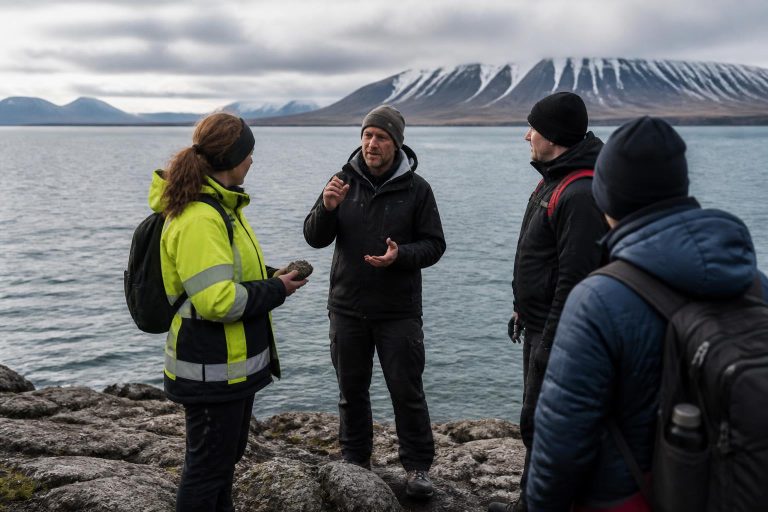
    Researchers from the British Geological Survey (BGS) recently embarked on a three-day visit to Iceland, aimed at fostering international partnerships and exploring future collaborative research opportunities under the Research and Innovation Scotland (RIS) initiative. The visit brought together experts from various fields, including marine geoscience, volcanology, geological hazards, geothermal energy, carbon storage, and offshore infrastructure, collaborating with prominent Icelandic organisations such as Iceland GeoSurvey (ÍSOR), the Icelandic Meteorological Office (IMO), and the University of Iceland.

    The initiative stemmed from discussions between BGS scientists at the Lyell Centre and Professor Eric Bréard from the University of Edinburgh, focusing on leveraging Iceland’s unique geological features and its renowned expertise in active volcanic and geothermal systems. A primary goal of the RIS-funded project was to strengthen connections between Scottish researchers and their Icelandic counterparts, facilitating knowledge exchange and the identification of future research collaborations.

    During the visit, participants engaged in workshops, field visits, and technical discussions, which provided a platform for developing new relationships and sharing insights. A workshop hosted by ÍSOR featured presentations on marine geophysical surveying, geological hazards, volcanology, and carbon storage, highlighting the potential for combining Icelandic marine geophysical capabilities with BGS’s expertise in geological interpretation and hazard assessment.

    Field trips to the Reykjanes Peninsula allowed researchers to observe recent volcanic activity and discuss how geological data can enhance understanding of hazards affecting local communities and infrastructure. Additionally, the delegation visited Carbfix facilities to learn about Iceland’s innovative carbon mineralisation technology, discussing future opportunities for collaboration in carbon storage and subsurface characterisation relevant to developments in Scotland and the UK.

    The visit culminated in the identification of several collaborative opportunities across various domains, including marine geoscience, offshore hazard mapping, and geological characterisation of the Icelandic shelf. This project was facilitated by BGS’s membership in the Scottish Alliance for Geoscience, Environment and Society (SAGES), which promotes collaboration across environmental sciences and supports the development of international partnerships.

    Overall, the visit underscored the importance of international collaboration, highlighting how Iceland’s strengths in geological sciences can complement BGS’s experience in offshore mapping and decision-support products to address shared scientific and societal challenges.


  • Kazakhstani National Geological Servey will receive assistance in avoiding mistakes

    Kazakhstani National Geological Servey will receive assistance in avoiding mistakes

    The British Geological Survey, with its extensive experience, will share its knowledge with its Kazakhstani counterparts. The collaboration between the British Geological Survey (BGS) and the National Geological Service (NGS) of Kazakhstan is set to be closely coordinated. During his visit to Astana, David Schofield, the director of BGS for international geological research, shed light on this international partnership.

    “The British Geological Survey is the world’s oldest organization of its kind. Our primary focus involves describing the geology of the United Kingdom, generating geological information, and disseminating it to stakeholders interested in natural resources. This includes data on water resources, construction-related information, as well as potential hazards like landslides. Consequently, we collaborate with various industries. Furthermore, we have a strong tradition of sending our geologists abroad to enhance geological services in other countries. The primary motivation behind our international efforts is global development and supporting the implementation of British trade and foreign policy,” shared the geologist.

    During their visit to Kazakhstan, BGS specialists engaged in fruitful discussions with their counterparts from the recently established National Geological Service of Kazakhstan.

    “The organization is relatively young and faces several challenges that need to be addressed. However, they have made a promising start. One area where we can offer assistance is in the digital transformation of a substantial amount of accumulated data. We can help bring this data into the digital realm and make it more accessible to a wider audience. We have accumulated considerable experience in this domain over the past 25 years, learning valuable lessons along the way. By sharing our experience, we hope that the NGS of Kazakhstan can avoid the mistakes we’ve unfortunately made. Additionally, we possess expertise in ore deposit analysis, hydrology, and other challenges, where our knowledge can be of value,” noted the specialist.

    Currently, the collaborating geological organizations are actively discussing potential areas of cooperation. Recognizing their shared objectives, BGS and NGS intend to establish a working plan for the next two to three years.

    According to the minerals.gov.kz website, the British Geological Survey plans to collaborate with “Kazakhstan Garish Sapary,” which operates a geological IT platform, as reported by inbusiness.kz.
    In the course of their conversation, the head of the National Geological Service (NGS) elucidated that this subsidiary of the geological committee acts as the national custodian of the state’s accumulated geological data. However, it does not possess any deposits, assets, or laboratories.

    Concerning the fees for the services provided by the National Geological Service, Erlan Galiev clarified that the pricing methodology is presently under discussion within the organization. He underscored that the calculation will now be based on the number of pages in the report, rather than solely on the report itself.

    “There are various approaches to assessing geological information. For instance, one could commence with historical expenses. Let’s say, back in the 1970s, an expedition was dispatched, wells were drilled, various operations were conducted, money was expended, and this report was created, subsequently submitted to the funds. Now, let’s assume we propose that 1% of the total cost of these activities should be the price of this report. It would not be just a million; considering the inflation that has transpired since then, it would be exorbitantly high, excessively expensive. We will not tread down that path, but merely for your comprehension, the value ascribed to geological information presently is abysmally low, simply catastrophic. The actual expenditure incurred far exceeds what a mining user pays for this report at present, rendering it a rather meager amount, allowing them to utilize the information freely. Therefore, we are currently contemplating and acknowledging that the provision of geological information should be streamlined, transparent, and expedited as much as possible. We are diligently working towards that goal,” expounded the esteemed NGS executive.