Tag: Infrastructure Development

  • Sibanye-Stillwater’s Keliber Lithium Project Achieves Key Operational Milestones in Finland

    Sibanye-Stillwater’s Keliber Lithium Project Achieves Key Operational Milestones in Finland

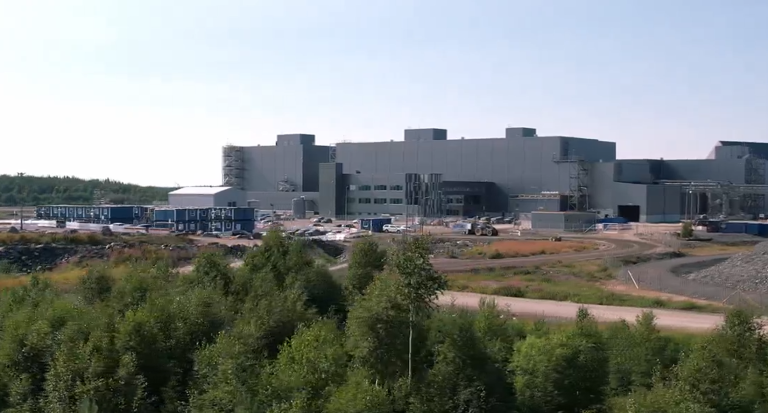
    Sibanye-Stillwater’s Keliber lithium project in Finland is making significant strides in its operational ramp-up, marking a pivotal moment in the company’s efforts to enhance lithium production. Following the successful commencement of the Syväjärvi open-pit mine earlier in 2026, the project has now seen the Päiväneva concentrator achieve an impressive 142 hours of continuous testing. This phase is crucial as it aims to safely scale up the production of high-quality spodumene concentrate, a key material in the lithium battery supply chain.

    The ongoing infrastructure development at the Kokkola Industrial Park lithium refinery is also noteworthy. The area has been recently asphalted, signalling progress as teams undertake essential preparatory work to initiate production. This development is expected to bolster the overall efficiency and output of the Keliber project, which is strategically positioned to meet the growing demand for lithium in electric vehicle batteries and other applications.

    Sibanye-Stillwater has made it a priority to keep stakeholders informed about the project’s progress. Interested parties can view the rapid advancements and layout of the facilities through the official project updates available on the Sibanye-Stillwater Keliber Video Gallery. Additionally, the construction timeline is accessible via the Keliber Project Progress Playlist on YouTube, providing a visual representation of the project’s evolution.


  • Uzbekistan’s NMMC Reports $7.23 Billion Gold Production in First Half of 2026

    Uzbekistan’s NMMC Reports $7.23 Billion Gold Production in First Half of 2026

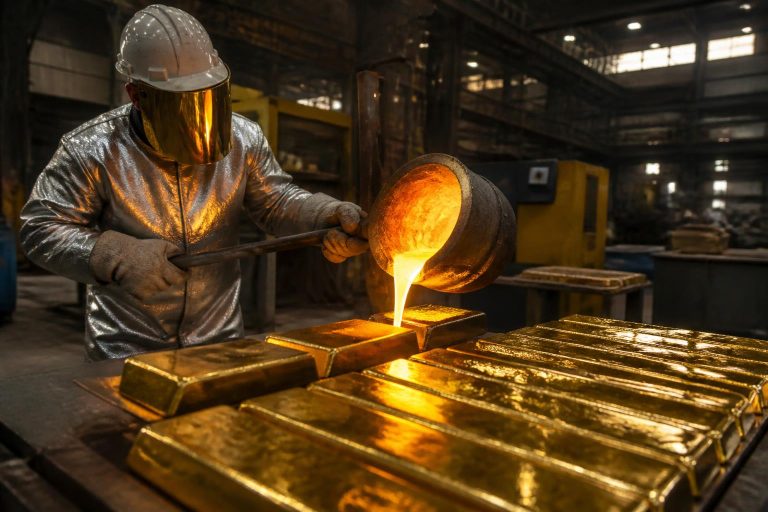
    In the first half of 2026, Uzbekistan’s Navoi Mining and Metallurgical Company (NMMC) achieved a remarkable production of 1.51 million troy ounces of gold, valued at approximately UZS 86.2 trillion (around $7.23 billion). This achievement is attributed to the company’s ongoing commitment to substantial investments in gold mining, ore processing, and infrastructure development. The operational results reflect a robust output, with NMMC producing 1,508.8 thousand troy ounces of gold during this period.

    The company has also made significant strides in local economic development, investing $236.8 million under Uzbekistan’s Investment Programme, which has resulted in the creation of 1,008 new jobs. As part of its localization programme, NMMC produced localized products worth UZS 808.7 billion (approximately $67.8 million). Furthermore, the company engaged in inter-industry cooperation by purchasing around UZS 4.2 trillion (about $352.2 million) worth of products from local producers, thereby bolstering the domestic economy.

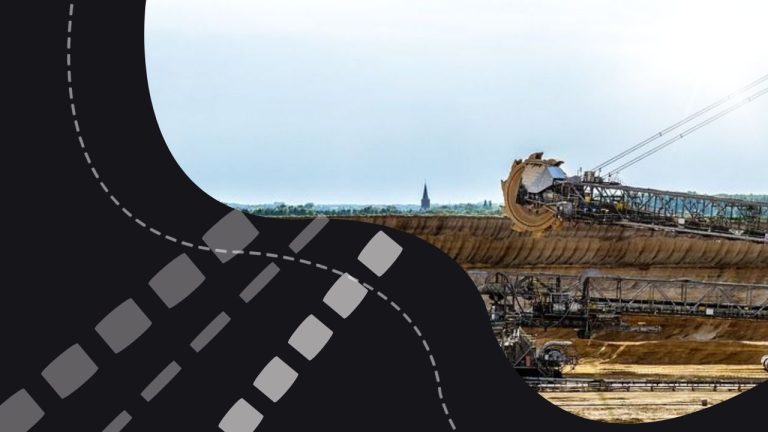
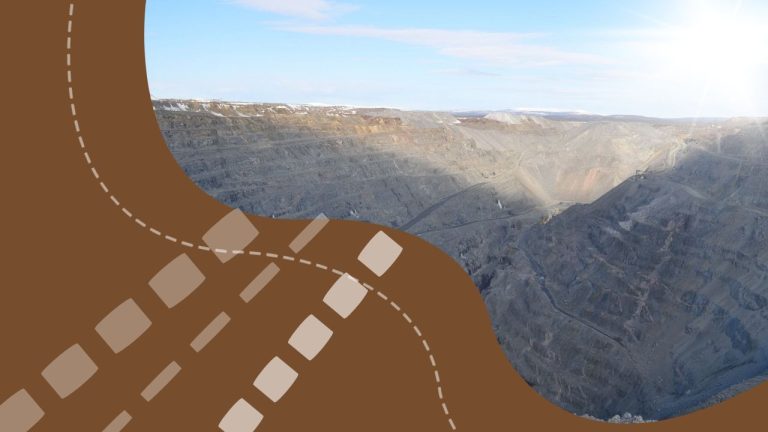
    NMMC is actively advancing its major investment projects, particularly the fifth stage of the second phase of the Muruntau mine development, a key asset for the company. Between January and July 2026, over 96 million cubic meters of rock were mined at this site. The company has also enhanced its operational capabilities by supplying new haul trucks and mining equipment to its Central Mining Administration’s transport division. Additionally, construction and installation of conveyor lines using cyclic-flow technology are underway at the mine, which is expected to improve efficiency.

    At the Kokpatas and Daugyztau gold deposits, construction and installation of the tailings storage facility for Hydrometallurgical Plant No. 3 are ongoing. The company has introduced new electric excavators, motor graders, and front-end loaders to enhance operations at the Daugyztau and Vostochny mines.

    Moreover, NMMC is expanding Hydrometallurgical Plant No. 7 to increase its processing capacity. While construction works for the ore preparation and screening sections have been completed, efforts continue on thickening and desorption facilities, as well as on the power-supply infrastructure. The modernization of Hydrometallurgical Plant No. 2, the company’s largest facility by production performance, is also in progress, with the launch of additional mill blocks bringing the total number of operating mills to 82.

    Lastly, NMMC is reconstructing the tailings facility serving Hydrometallurgical Plants No. 2 and No. 7, which includes the construction of new waste-storage cells, embankments, water-intake facilities, and a 21-kilometer slurry pipeline. These developments not only signify NMMC’s commitment to enhancing its operational efficiency but also reflect its dedication to sustainable mining practices in Uzbekistan.


  • Kazakhmys to Invest Over KZT 20 Billion in Ulytau Region Development

    Kazakhmys to Invest Over KZT 20 Billion in Ulytau Region Development

    Kazakhmys Corporation will invest more than 20 billion tenge in social and infrastructure projects in Kazakhstan’s Ulytau region under a newly signed memorandum of cooperation with the regional akimat.

    The agreement prioritises investments in healthcare, education, infrastructure modernisation and urban development.

    Among the flagship initiatives is the establishment of Ulytau University, as well as the launch of Zhezkazgan’s largest mosque, a trauma care centre in Satpayev and the Namys sports complex with a 150-bed boarding facility.

    Urban improvement projects in Zhezkazgan will include the redevelopment of Zhasar Park, the Gharishkerler Boulevard and the embankment of the Kengir Reservoir. Renovation of the S. Kozhamkulov Theatre is also planned.

    A separate focus of the programme will be the modernisation of water supply, heating and energy infrastructure systems across the region.

  • Kazakhstan Reviews 2025 Industrial Performance and Sets Ambitious Digital and Infrastructure Targets for 2026

    Kazakhstan Reviews 2025 Industrial Performance and Sets Ambitious Digital and Infrastructure Targets for 2026

    Kazakhstan’s Ministry of Industry and Construction has reviewed its 2025 performance and outlined strategic priorities for the coming years during a Board meeting chaired by First Deputy Prime Minister Roman Sklyar.

    Opening the session, Industry and Construction Minister Yersayin Nagaspayev said the sector had entered a new phase of development, supported by rising industrial output, record housing completions, major investment projects, and reforms in subsoil use.

    Manufacturing output grew by 6.4% in 2025, driven by gains in metallurgy, mechanical engineering, chemicals, construction materials, and rubber and plastics production. A total of 190 projects worth approximately 1.5 trillion tenge were commissioned, creating more than 22,000 permanent jobs. Three new special economic zones were established, and 13 major investment agreements were signed.

    The construction sector also delivered record results, with 20.1 million square metres of housing commissioned, exceeding the planned target. A new Construction Code was adopted to support long-term sector stability.

    In subsoil use, the updated Subsoil Code introduced legislative and institutional reforms to strengthen the country’s mineral resource base. Seventeen new deposits were registered, and detailed geological mapping at a 1:50,000 scale will cover 100,000 square kilometres this year.

    Digital transformation featured prominently in the review. The Unified Subsoil Use Platform now provides 22 online public services and has issued more than 700 licences. Approximately 4.6 million geological reports have been digitised. AI-based construction monitoring and a digital project management system for energy and utilities modernisation were also launched.

    Looking ahead to 2026–2027, the ministry plans large-scale digital reforms in construction, mandatory digital twins for industrial enterprises from 2027, expanded smart utility metering, and broader use of Big Data and AI in geological exploration. Around 200 industrial projects worth 1.7 trillion tenge are scheduled for launch in 2026, with nearly 19,400 new jobs expected.

    Concluding the meeting, Sklyar stressed the Ministry’s heightened accountability under Kazakhstan’s evolving constitutional framework and instructed officials to accelerate investment planning, expand geological exploration to 2.2 million square kilometres, strengthen rare earth and rare metal strategies, and advance nationwide digitalisation initiatives.

  • EU Long Steel Market Faces Challenges Amid Fluctuating Demand and Global Competition

    EU Long Steel Market Faces Challenges Amid Fluctuating Demand and Global Competition

    The EU long steel market has experienced several phases of development between 2010 and 2023. After the 2008 global financial crisis, production saw modest growth, hindered by weak demand in construction and infrastructuresectors. A key period of recovery from 2015 to 2018 boosted infrastructure projects, leading to a stable production volume of 54-57 million tons in the EU. Countries like Germany, Italy, and Spain increased production, though stricter environmental standards limited further growth.

    Consumption of long steel products closely followed the ups and downs of the construction sector, peaking between 2015 and 2019 due to rising investments in transport infrastructure and residential construction. However, the COVID-19 pandemic in 2020 led to a sharp decline in demand. In 2021-2022, the market rebounded with government support, though by 2023, consumption hit a decade-low of 46.3 million tons due to economic stagnation in the EU.

    In terms of exports, the EU long steel sector thrived in the Middle East and North Africa, but lost ground to Chineseand Turkish competitors offering cheaper products. The EU’s export share, once 18-21% between 2012 and 2016, dropped to 10-12% by 2023. Imports have remained significant, especially from China and Turkey, peaking at 7.9 million tons in 2018 and slightly falling to 5.5 million tons in 2023 due to weak demand.

    Looking forward, the outlook for the EU long steel market remains uncertain. While lower ECB rates and anticipated growth in construction may drive demand, high energy costs and global economic instability pose challenges. Government initiatives to support infrastructure development and stabilize electricity prices are crucial to the market’s future.

  • Construction of Geological Cluster in Ulytau Region Nearing Completion

    Construction of Geological Cluster in Ulytau Region Nearing Completion

    The construction of a geological cluster in the Ulytau Region is progressing steadily, with completion expected in the third quarter of 2024, according to the Ministry of Industry of Kazakhstan. The complex, valued at 7 billion tenge, is being built on the former site of the Zhezkazgangeology exploration company, covering an area of over 14,000 square meters.

    Currently, the majority of construction work has been completed. The site is now undergoing the installation of engineering networks, the construction of communal infrastructure, and the finishing of premises.

    The cluster will feature the first geophysical laboratory in the country, developed with assistance from specialists at the Colorado School of Mines. Additionally, the complex will house an ALS analytical laboratory, a geological museum, a training center, a repair and mechanical workshop, a library with specialized literature for geologists, an office building, and employee dormitories. Among the planned facilities is a core storage facility with a capacity of over 200,000 linear meters of samples.

    The new complex aims to attract specialists from across the country to the Ulytau Region, consolidating the mining sector’s human and technical resources. Once operational, it will create 150 jobs.

  • British Concrete Canvas Ltd. to Establish Concrete Production Plant in Kazakhstan

    British Concrete Canvas Ltd. to Establish Concrete Production Plant in Kazakhstan

    British company Concrete Canvas Ltd. has revealed plans to construct a concrete slab manufacturing plant in Kazakhstan, as reported by Kazakh Invest. Originally intending to build the facility in Russia, geopolitical circumstances led to the decision to opt for Kazakhstan. The envisioned project, according to British investors, is poised to address critical challenges in the construction and renovation of irrigation systems in the country. The initiative is expected to significantly enhance the operational reliability of irrigation systems, eliminate water loss within the country’s agro-industrial complex, and reduce budgetary expenditures on canal renovation programs, protective dams, and other civil infrastructure assets. Concrete Canvas, known for producing geosynthetic cement composite mats that prevent water loss during filtration while maintaining material durability, has already established a presence in Almaty. The company is currently assessing market needs, engaging in discussions with relevant ministries and local executive bodies. Concrete Canvas Ltd. was among the 21 companies relocating to Kazakhstan from Russia and Belarus, as announced by the government in late December 2022. Furthermore, in November 2023, during a working trip to the United Kingdom, Kyrgyzstan’s Prime Minister, Akylbek Zaparov, proposed that Concrete Canvas consider establishing a plant in the republic.

  • Ministry of Industry and Infrastructure Development to Auction Over 100 Mineral Deposits

    Ministry of Industry and Infrastructure Development to Auction Over 100 Mineral Deposits

    By the end of the first summer month, the Ministry of Industry and Infrastructure Development will showcase more than 100 mineral deposits at an auction, including 23 returned and 83 reserve sites. This announcement was made by the head of the Ministry’s Committee of Geology, Erlan Akbarov, during a briefing at the SCC. All auctions will enforce commitments to ensure production levels do not fall below the average national output. Prospective bidders are reminded of the obligation to allocate funding for the development of regional social infrastructure. In 2023, the Ministry organized two auctions, offering 74 potentially valuable sites, with total subscription bonuses amounting to around 3.5 billion tenge, as reported by the Ministry’s press center. Mr. Akbarov stated that nearly 10 billion tenge is allocated annually for state geological exploration of mineral resources. Over the past five years, approximately 52 billion tenge has been invested in this sector, equating to 8 per square kilometer. Notably ,mineral rights holders have spent significantly more on geological exploration activities over the five−year period, totaling 357 billion tenge.