Tag: Green Technology

  • EU Struggles to Compete with US in Securing Critical Minerals

    EU Struggles to Compete with US in Securing Critical Minerals

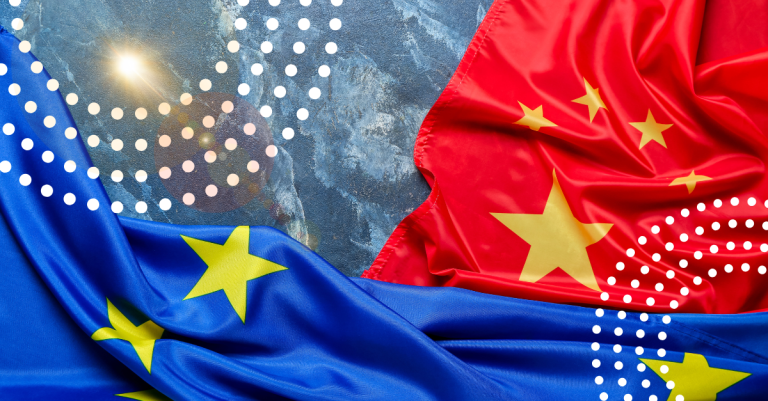
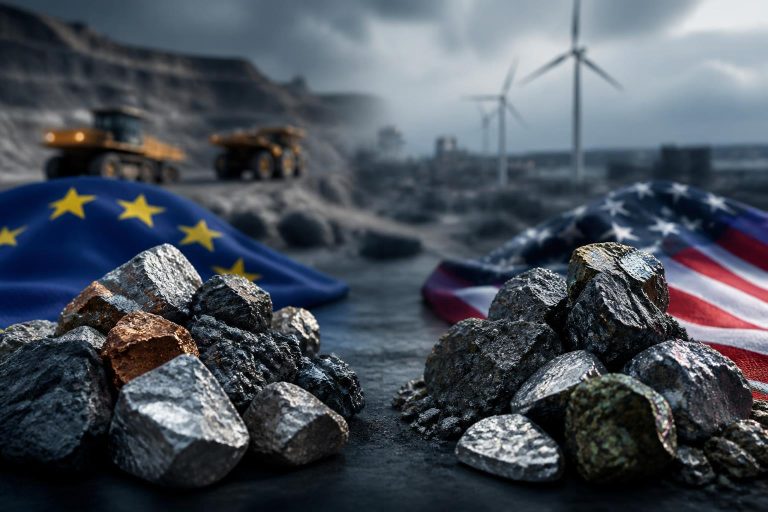
    The European Union is at risk of falling further behind the United States in the race to secure critical minerals essential for defence and green technologies, as warned by European officials and industry leaders. The US has made significant investments over the past two years to ensure access to rare earth metals and other materials where China currently dominates global production. Since 2022, Washington has announced approximately $40 billion in provisional funding for mineral projects and has taken equity stakes in various domestic mining companies. Additionally, the US government has actively lobbied for American firms to win mining tenders in countries such as the Democratic Republic of Congo and Kenya.

    In contrast, the EU has designated dozens of strategic mineral projects to benefit from expedited permitting rules, committing around €6 billion to these initiatives this year. However, industry representatives caution that the EU’s pace is too slow to effectively kick-start the sector. Bernd Schäfer, CEO of EIT RawMaterials, expressed admiration for the US approach, stating that while Americans act decisively, Europeans tend to hesitate and over-administrate, resulting in lost time.

    The US is also working to establish a coalition of countries to create supply chains that circumvent China, through a new initiative known as the Forum on Resource Geostrategic Engagement (Forge). However, this initiative has raised scepticism in Brussels, particularly due to the previous US administration’s unpredictable stance towards the EU. European officials assert that the EU must adopt a similar approach to the US by securing offtake agreements and utilising financial tools to develop its critical minerals supply chain ahead of a new strategy set to be unveiled this autumn.

    The EU’s current efforts have primarily focused on designating strategic projects in mining, processing, and recycling, which benefit from faster permitting but lack guaranteed public funding. In stark contrast, the Trump administration invested heavily in developing its supply chain, including acquiring stakes in rare earth producers both domestically and in Europe. For instance, the Pentagon made a $400 million equity investment in MP Materials, a US rare earths producer, and signed a long-term agreement to establish a minimum price for neodymium-praseodymium, a critical alloy used in technologies like electric vehicles and robotics.

    Concerns have been raised about the potential for the US to become a second China for Europe in terms of dependence on rare earth metals. Schäfer noted that regardless of the methods employed by the Trump administration, the US has secured more deals in 18 months than Europe has in the past decade. Furthermore, the US government’s investments in European critical minerals companies, such as USA Rare Earth’s acquisition of British firm Less Common Metals, have sparked worries among European stakeholders.

    The European Court of Auditors has also indicated that despite Brussels selecting 75 strategic projects for streamlined permitting and investment access, it is ‘unlikely’ that many will meet the bloc’s 2030 targets for developing domestic supplies. A mining executive involved in one of the projects described the EU’s efforts as ‘disappointing’ in terms of financial support, highlighting the complexity of obtaining permits. While being designated as a strategic project may serve as effective marketing, it does not significantly alter the operational landscape for these initiatives.

  • EU Risks Falling Behind US in Securing Critical Minerals for Defence and Green Technologies

    EU Risks Falling Behind US in Securing Critical Minerals for Defence and Green Technologies

    The European Union (EU) is facing significant challenges in its efforts to secure critical minerals essential for defence and green technologies, with concerns that it is lagging behind the United States in this crucial race. European officials and industry leaders have expressed alarm over the EU’s slow progress in developing a robust supply chain for rare earth metals and other vital materials, particularly as the US has ramped up its investments and strategic initiatives in recent years.

    Since 2022, the US has committed approximately $40 billion (€34.22 billion) to mineral projects, actively taking equity stakes in domestic mining companies and lobbying for American firms to secure mining tenders in resource-rich countries such as the Democratic Republic of Congo and Kenya. This aggressive approach has positioned the US as a formidable player in the global minerals market, particularly in areas where China currently holds a dominant position.

    In contrast, the EU has earmarked around €6 billion for minerals projects this year and has initiated several strategic projects aimed at expediting permitting processes. However, industry experts argue that these efforts are insufficient and too slow to make a meaningful impact. Bernd Schäfer, CEO of EIT RawMaterials, highlighted the need for the EU to adopt a more decisive and proactive stance, stating that while the US swiftly implements ideas, Europe tends to hesitate and over-regulate, resulting in lost time.

    The US is also working to establish a coalition of nations to create supply chains that circumvent reliance on China, through initiatives like the Forum on Resource Geostrategic Engagement (Forge). However, this has raised scepticism within Brussels, particularly given the historically antagonistic relationship between the US and the EU under the Trump administration. European officials stress the importance of not being misled by US negotiations and emphasise the need for the EU to adopt similar strategies to secure critical minerals, including swift financial investments and offtake agreements.

    Despite the EU’s focus on designating strategic projects in mining, processing, and recycling, these initiatives lack guaranteed public funding, which further complicates their viability. The Trump administration’s substantial investments in the US supply chain, including a notable $400 million equity investment in US rare earths producer MP Materials, have raised concerns that the EU could become overly dependent on the US for critical minerals, mirroring its current reliance on China.

    Experts have noted that the US has executed more deals in the past 18 months than Europe has in the last decade, raising alarms about the EU’s ability to meet its 2030 targets for domestic mineral supply development. The European Court of Auditors has warned that while 75 strategic projects have been identified, many are unlikely to deliver timely results. A mining executive involved in one of these projects described the EU’s financial support as disappointing and noted that the complexity of obtaining permits remains a significant barrier to progress.


  • Poland Eyes Kazakhstan Energy Transition Partnership as Green Technology Companies Seek Foothold in Central Asian Market

    Poland Eyes Kazakhstan Energy Transition Partnership as Green Technology Companies Seek Foothold in Central Asian Market

    Poland sees significant and growing potential for energy sector cooperation with Kazakhstan, with a particular focus on green technologies, renewable energy and environmental infrastructure, according to the head of the Polish Investment and Trade Agency’s foreign trade office in Astana.

    Julia Horodecka told Trend that the Poland-Kazakhstan Business Forum held in Astana on 9 April 2026 drew a large Polish business delegation that included winners of the Ministry of Climate and Environment’s GreenEvo Green Technology Accelerator programme — companies selected for their innovation in sustainable technologies. “This confirms the growing interest in cooperation in this area,” she said.

    Horodecka identified energy efficiency, energy storage and the modernisation of energy infrastructure as the areas attracting the strongest interest from Polish companies, alongside renewable energy projects in wind and solar power. She also highlighted green technology solutions in waste management and water management as rapidly expanding sectors that are becoming an increasingly important part of Kazakhstan’s environmental and energy transition agenda.

    The engagement forms part of a broader deepening of Polish-Kazakhstani economic ties. Poland and the United States signed a critical raw materials memorandum earlier this month, and Poland has been among the European countries most actively building bilateral frameworks with Central Asian nations as the region’s strategic importance in global supply chains and the energy transition grows.

  • EU Urged to Prioritise ESG in Central Asia’s Raw Materials Push

    EU Urged to Prioritise ESG in Central Asia’s Raw Materials Push

    The EU must prioritize Environmental, Social, and Governance (ESG) principles in its dealings with Central Asia to secure its access to crucial raw materials, commentators warn.

    The bloc arrived in Samarkand this April with a hefty €13.2 billion Global Gateway package, signaling a desire to move beyond merely buying raw materials from the region. A significant portion, €2.5 billion, is earmarked for new mining and processing projects in Kazakhstan, Uzbekistan, and beyond. This drive is born out of necessity: the EU still relies entirely on China for its heavy rare-earth imports and faces the growing risk of vulnerability.

    While geographically late to the game, Europe has a unique advantage: a reputation for robust ESG practices. Local executives cite European partners as “a sign of quality” due to their unwavering adherence to these standards, something often lacking in Chinese or Russian counterparts. However, this edge relies on Brussels consistently embedding ESG into every euro invested. This means robust monitoring and auditing of remediation plans, transparent royalty structures, and genuine upfront consultation with local communities.

    The EU’s Critical Raw Materials Act (CRMA) sets ambitious goals: attaining 10 percent mining, 40 percent processing, and 25 percent recycling of Europe’s annual CRM demand domestically or in trusted partner states by 2030.

    Realising these goals in Central Asia necessitates investment in sustainable technologies. This includes financing water-efficient processing plants, closed-loop waste systems, and solar-powered smelters, rather than simply opening more exploitative mines.

    The EU’s efforts are beginning to take shape, with the spotlight falling on graphite. Kazakhstan’s Sarytogan deposit has been placed on the EU Commission’s list of “strategic projects” eligible for expedited permits and loan guarantees under the CRMA. Meanwhile, the European Bank for Reconstruction and Development has taken a significant stake in the mine operator, marking a direct investment in the region’s CRM sector. The EU is now actively seeking downstream investors to refine indigenous graphite into anode-grade product, capturing added value that historically flowed to Chinese refiners.

    Lithium development is following a similar trajectory. A partnership between HMS Bergbau and Kazakhstan’s Creada Corporation aims to unlock the potential of Kazakh spodumene through extraction, processing, and refining into battery-ready lithium hydroxide. This would be a direct response to the EU’s new battery-passport regulations, which require materials of a certain purity.

    However, Europe faces a formidable competitor: China. The PRC Mineral Resources Law mandates environmental remediation planning before mining commences, setting a new baseline for responsible resource extraction. While welcomed, the application details remain vague, lacking guarantees on local community engagement and enforcement mechanisms, potentially creating loopholes for exploitation.

    Adding to the pressure, Chinese capital is expanding downstream. East Hope Group’s landmark $12 billion investment in Kazakh non-ferrous metals signifies a vertical integration approach—from mining and smelting to fabrication and renewable power generation. This $12 billion vertical integration project in Kazakhstan showcases China’s willingness to build a fully controllable supply chain.

    Europe must act strategically to counter these challenges.

    Firstly, financial aid should be contingent on stringent ESG benchmarks. EU financing must go hand-in-hand with clear, enforceable standards – ISO-compliant tailings dams, methane monitoring, gender-balanced workforce plans, and robust penalties for non-compliance.

    Secondly, the EU should focus on fostering value-adding industries beyond mining. This means investing in processing plants and recycling facilities, not just mines. By creating domestic processing hubs for cathode powders or rare-earth magnets, the CRMA’s 40 percent processing target can be achieved, generating jobs, technology transfer, and increased tax revenue for beneficiary countries.

    Finally, the EU must simplify visa requirements for Central Asian technical personnel. A targeted visa-facilitation agreement could allow them to train in Europe and return, strengthening the region’s skilled workforce.

    Securing a stable and sustainable supply of raw materials is a critical challenge for the EU. While China’s economic clout is undeniable, Europe has the opportunity to win this race by leveraging its commitment to ESG principles and building a truly sustainable, transparent, and trust-based partnership with Central Asia.

    Time is of the essence. The next 18 months, before China’s revised mining law takes full effect and East Hope’s megaproject begins construction, provide a crucial window for the EU to demonstrate its commitment to ESG beyond rhetoric. The stakes are high, as the fate of Europe’s essential raw materials supply hangs in the balance.

  • Mkango Resources Signs Revised Land Lease for Polish Rare Earths Plant

    Mkango Resources Signs Revised Land Lease for Polish Rare Earths Plant

    Mkango Resources Ltd has announced that its wholly owned subsidiary, Mkango Polska Sp. Z.o.o, has signed a revised exclusive land lease agreement with Grupa Azoty Pulawy for the development of a strategic rare earths separation plant in Poland. This agreement builds on their collaboration that began in 2021.

    The agreement covers an 8-hectare site adjacent to Grupa Azoty Pulawy’s fertilizer and chemicals complex in Pulawy, Poland. The location offers strong infrastructure, access to essential reagents and utilities, and significant expansion potential. Situated within a Polish Special Economic Zone, the site ensures direct access to European and global markets.

    The planned rare earths separation plant aims to enhance Europe’s supply chain security for critical materials used in electric vehicles, wind turbines, and green technologies. The project aligns with EU regulations on critical raw materials, supporting sustainable and diversified supply chains.

    Alexander Lemon, President of Mkango, expressed enthusiasm about the deal, emphasizing its role in facilitating the plant’s expansion and development. He highlighted Mkango’s strong partnership with Grupa Azoty and the upcoming definitive feasibility study leading to construction.

    Hubert Kamola, Vice-President of Grupa Azoty S.A, described the project as innovative, bringing job creation, technology transfer, and supply chain development for Europe and North America. He noted the synergies between both companies, including land availability, utilities, and chemical expertise.

    Mkango Resources continues its strategic expansion in the rare earths sector, leveraging its ownership in Maginito Limited to become a leader in rare earth magnet recycling and sustainable materials production. The company also holds an extensive exploration portfolio in Malawi and is progressing with the Songwe Hill rare earths project. Additionally, Mkango is pursuing a NASDAQ listing through a SPAC merger with Crown PropTech Acquisitions.

  • Decarbonizing Asia’s Steel Industry: A Long Road Ahead

    Decarbonizing Asia’s Steel Industry: A Long Road Ahead

    According to Reuters, it’s time to scrutinize the feasibility of decarbonizing Asia’s vast and expanding steel sector. Reducing carbon emissions is possible but requires a phased approach over a longer-than-ideal period and only if incentives are provided. The steel industry, the world’s largest industrial source of carbon dioxide emissions, accounts for about 8% of global emissions, making efforts to decarbonize this sector crucial for achieving net-zero carbon goals.

    This week, representatives from Asia’s iron ore and steel industries gathered in Singapore, revealing both encouraging and discouraging news about decarbonization efforts. The good news is that nearly every market player, from mining companies to steel mills, is taking the issue seriously, investing time, effort, and capital in finding solutions. The bad news is that achieving net-zero emissions by 2050 in Asia seems unattainable with current and foreseeable technologies.

    Another significant obstacle is the current steel pricing structure. There is no real premium for producing low-carbon steel in Asia, and little indication of this changing soon. As it stands, mining companies and steel mills are mainly undertaking decarbonization efforts under voluntary commitments to reduce carbon emissions, driven by shareholder pressure, some government directives, and public demand to mitigate the expected negative impact of climate change.

    While this is positive, it means that any costs incurred for decarbonization are effectively excluded from company profits since there is no financial reward for producing cleaner steel in Asia. The challenge is how to implement incentives for decarbonization, from relatively simple and low-cost initial steps to much more complex and capital-intensive ambitions for zero-emission steel production.

    One potential approach is a multi-tiered incentive system. For example, the base level of carbon emissions might be set at 2.1 metric tons per ton of steel produced using the current method of smelting iron ore fines in a blast furnace followed by a converter. If a steel plant could reduce emissions by one-third, it might be rewarded with a carbon credit or avoid paying a carbon tax of a set amount per ton of reduced emissions.

    Suppose this initial reduction costs $60 per ton, roughly the price of a carbon credit in the European Union. If a steel plant can cut emissions by another third through investments in new processes like using direct reduced iron (DRI) or its transportable equivalent, hot briquetted iron (HBI) in an electric arc furnace (EAF), this reduction could be rewarded with a higher carbon price, say $120 per ton.

    The final steps towards fully decarbonizing steel production using green hydrogen to produce HBI, clean electricity to run EAFs, and eco-friendly shipping fuels like methanol for transporting materials might attract even greater carbon credits to offset the substantial capital required to achieve this.

    STIMULI NECESSARY

    Presentations at this week’s Green Steel Forum in Singapore made it clear: without incentives, only the initial and relatively simple steps towards decarbonization will become a reality. These include maximizing the efficiency of basic oxygen furnaces, increasing the use of higher-quality iron ore and agglomerates like DRI and HBI, boosting the use of recycled steel in EAFs, and decarbonizing iron ore mining by limiting diesel power at remote mines and electrifying vehicles and trains.

    The problem is that these efforts are likely to reduce only about 20% of global steel emissions. Further steps include using natural gas to process low-grade iron ore into DRI and HBI for use in more advanced converters or even EAFs, then transitioning this process to green hydrogen. This is where costs become significant, and shareholders are likely to question the benefits.

    Ultimately, to push steel decarbonization beyond the low-hanging fruit, a pricing incentive is needed, and the market alone is unlikely to provide this, as costs will likely outweigh climate concerns for most consumers. This necessitates implementing policies like carbon taxes or carbon credits, ideally coordinated across many countries, particularly the largest iron ore exporters—Australia, Brazil, and South Africa—as well as China, which produces half of the world’s steel, and new major producers like India.

  • European Mine Owners Explore Green Future with Underground Energy Storage

    European Mine Owners Explore Green Future with Underground Energy Storage

    As mining operations wind down across Europe, mine owners are turning to innovative solutions for a sustainable future, eyeing underground energy storage as a pathway to a low-carbon economy.

    Active deep mine operators in Slovenia, Germany, The Czech Republic, and Finland are investigating the potential of underground gravity energy storage offered by Edinburgh-based firm Gravitricity, providing green opportunities to mining communities grappling with dwindling employment prospects.

    Gravitricity’s revolutionary energy storage system, dubbed GraviStore, utilizes heavy weights totaling up to 12,000 tons suspended in deep shafts by cables attached to winches. This presents a promising alternative for end-of-life mine shafts, mitigating the need for costly infilling and decommissioning processes.

    Teaming up with energy multinational ABB and lifting specialists Huisman, Gravitricity aims to commercialize the technology for mine operators, transforming recently decommissioned mines into potential sites for sustainable energy storage solutions.

    Projects are already underway, including installations at the Velenje mine in Slovenia, Pyhäsalmi Mine in Finland, Darkov Mine in the Czech Republic, and Grube Teutschenthal mine in Germany. At Velenje, feasibility assessments for installing systems in specific shafts are ongoing, with potential pilot projects on the horizon.

    Martin Wright, Founder, and Executive Chairman of Gravitricity, emphasized the transformative potential of gravity energy storage, presenting not only an alternative to decommissioning but also fostering economic and employment opportunities in declining mining communities.

    Gravitricity’s successful demonstration of the GraviStore technology with an above-ground 250 kW demonstrator underscores its viability, showcasing its ability to rapidly respond to demand fluctuations and its potential in frequency response and backup power markets.