Tag: France

  • How much gold does the UK own compared to other countries?

    How much gold does the UK own compared to other countries?

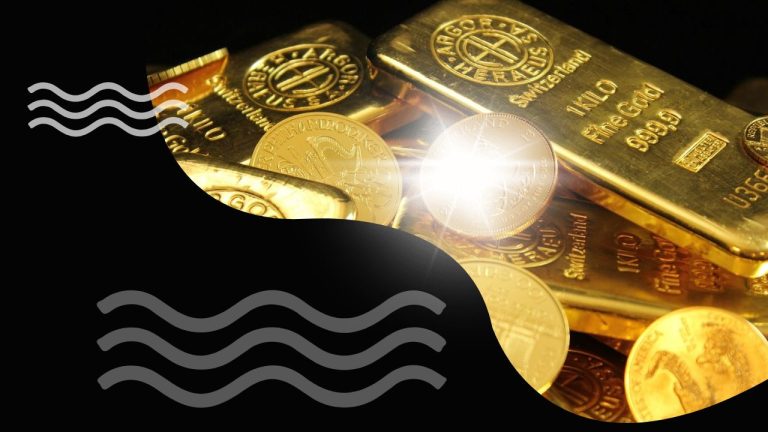
    Several countries around the world are stockpiling gold as a strategic reserve. Here’s a rundown of some of the key players and the amount of gold they hold:

    1. USA: The United States leads the pack with a massive 8,133.46 tonnes of gold bullion, stored in various depositories across the country, including the famous Fort Knox.

    2. Germany: Coming in second, Germany holds 3,352.65 tonnes of gold. Concerns during the Cold War led Germany to spread its gold reserves globally, with a significant portion repatriated in recent years.

    3. Italy: Italy holds slightly more gold than France, with 2,451.84 tonnes stored in vaults in Rome and abroad, managed by the Banca d’Italia.

    4. France: France has stockpiled 2,436.97 tonnes of gold, acquired largely during the 1950s and 1960s. Most of its reserves are held in vaults under the Banque de France in Paris.

    5. Russia: Russia has been aggressively increasing its gold reserves, currently holding 2,332.74 tonnes. This move is seen as a strategic effort to reduce reliance on the US dollar.

    6. China: China boasts 2,235.39 tonnes of gold, making it the world’s largest gold producer and a significant importer as well. The country’s reserves have been steadily increasing over the years.

    7. Switzerland: Switzerland holds 1,040 tonnes of gold, with the majority stored at home. The country’s reputation for financial stability has made it a preferred location for storing gold.

    These countries, among others, view gold as a valuable asset for diversifying their reserves and protecting against economic uncertainty.

  • France’s $1.6bn uranium deal with Mongolia faces delays

    France’s $1.6bn uranium deal with Mongolia faces delays

    A $1.6-billion uranium mining deal between France and Mongolia, aimed at diversifying supplies for France’s nuclear reactors, faces political obstacles that may delay its finalization until after the upcoming elections in June, sources familiar with the matter revealed. The agreement, concerning the development and operation of the Zuuvch-Ovoo mine, was initially outlined during a visit to Paris by Mongolia’s President, Khurelsukh Ukhnaa, in October, with expectations for a final investment agreement by the end of last year and production commencement in 2028.

    However, setbacks including the resignation of Mongolia’s chief negotiator and concerns over safeguarding strategic resources have led to delays and necessitated the redrafting of the deal. The potential postponement or cancellation of the project poses challenges for Orano, the French uranium producer, which views the plan as vital for expanding its supply sources amidst increasing global demand.

    While Mongolian government representatives were unavailable for immediate comment on the contract delays, Orano affirmed ongoing negotiations and expressed optimism regarding finalizing the agreement promptly. The context of the deal underscores France’s efforts to bolster Mongolia’s strategic sovereignty amid its positioning between influential neighbors Russia and China, with the aim of reducing dependency on external energy sources.

    However, geopolitical tensions and Russia’s assertive stance in the region, coupled with Mongolia’s energy vulnerabilities, have added complexities to the negotiation process. The situation underscores the broader geopolitical dynamics at play, including heightened competition for access to critical resources and influence in strategic regions.

  • France’s Strategic Pivot to Central Asia: Strengthening Ties with Uzbekistan and Shaping Regional Dynamics

    France’s Strategic Pivot to Central Asia: Strengthening Ties with Uzbekistan and Shaping Regional Dynamics

    In the wake of Uzbek President Shavkat Mirziyoyev’s visits to Paris in 2018 and 2022, French President Emmanuel Macron paid a two-day official visit to Uzbekistan on November 1 and 2. The visit holds profound symbolism, as it coincided with the 30th anniversary of the signing of the Treaty of Friendship and Cooperation between Paris and Tashkent. The visit’s importance resonated not only within Central Asia but also across Europe, given France’s substantial influence within the European Union (EU).

    The rationale behind France’s proactive efforts to bolster cooperation with Uzbekistan and the other Central Asian nations amid intense global power competition can be understood through several key factors.

    First and foremost, France is driven by its own ambition to adjust its status as a secondary actor in the strategically vital Central Asian region. The region is often viewed through a “great game” framework, with Russia striving to maintain its strong presence through organizations like the Collective Security Treaty Organization (CSTO) and the Eurasian Economic Union (EAEU), and China deeply embedding itself through the Shanghai Cooperation Organization (SCO) and the Belt and Road Initiative (BRI). France’s enhanced engagement with Central Asian countries serves as a counterbalance to ensure that no single power dominates the Eurasian region.

    Second, France is keen on intensifying cooperation with Central Asian countries, especially with Uzbekistan and Kazakhstan, to diversify its sources of energy. Recent disruptions in global energy markets, along with political tensions, have underscored the need for France to expand its energy import partners. Central Asia, with its untapped hydrocarbon reserves, offers a promising solution. Notably, Kazakhstan and Uzbekistan have significant uranium reserves, with Kazakhstan being the world’s largest producer and Uzbekistan the fifth largest. Given that approximately 70 percent of France’s electricity comes from nuclear power, deepening partnerships in the region could ensure a steady supply of uranium for French reactors.

    Third, France aims to enhance cooperation with Central Asian countries to reduce risks associated with the import of critical minerals, vital for the green energy transition. These minerals are essential in the production of a wide range of technologies, from smartphones and wind turbines to rechargeable batteries for electric vehicles. Despite being relatively underexplored, Uzbekistan and other Central Asian countries have the potential to assist France and other EU countries at large in reducing their heavy dependence on China for these essential minerals, thereby mitigating the risks associated with their technological advancement.

    At the same time, France’s deliberate efforts to step up cooperation with some Central Asian countries on a strategic level could open up various opportunities for Tashkent across political, economic, and environmental dimensions. Strengthened ties with France offer Uzbekistan a chance to diversify its international engagement and enhance its international standing, creating opportunities for collaborative diplomacy in light of recent global trends and geopolitical developments in Eurasia. Addressing crucial regional issues can foster stability not only in Central Asia but also in Afghanistan, promoting peace in the broader region. Furthermore, political cooperation with Paris can significantly support the Uzbek government’s “Uzbekistan – 2030” strategy, outlining the country’s vision for the next seven years. France’s expressed willingness to support Uzbekistan and Kazakhstan in their reform and modernization efforts aids in diversifying their international relations effectively.

    In addition to political collaboration, closer ties between Paris and Tashkent could facilitate greater economic and investment partnerships. The economic relationship between the two nations has flourished, marked by a tripling of joint ventures involving French companies in Uzbekistan. With an active project portfolio exceeding 10 billion euros, French businesses are poised to boost investments in Uzbekistan’s growing sectors. This collaboration not only promotes economic growth and job creation but also facilitates technology transfer. France’s expertise in technology, smart agriculture, and tourism can help Uzbekistan reduce its dependence on traditional industries, fostering economic diversification. Moreover, France, home to leading nuclear energy companies, can assist Uzbekistan in addressing the complexities of constructing a nuclear facility. This collaboration could promise a comprehensive and enduring partnership, contributing significantly to Uzbekistan’s energy sector.

    Beyond economic collaboration, Paris and Tashkent can join forces to tackle shared challenges related to water resources management. France’s expertise in sustainable water practices can assist Uzbekistan in efficient water use and conservation. Additionally, France can help mitigate the adverse effects of climate change by sharing green technologies and best practices. This support aids Uzbekistan in environmental conservation and sustainable development. Importantly, Paris can also mobilize public and private funding, particularly through guarantees and blending, to further increase investments for European initiatives like the Global Gateway on Water, Energy, and Climate.

    Despite all these positive rationales, there is a persistent challenge hindering enhanced cooperation between the two countries. This is the limited capacity of the Trans-Caspian Transport Route, also known as the “Middle Corridor.” which links China and Central Asia via the Caspian Sea to the Caucasus, Turkey, and Europe. In 2022, transit volumes through the Middle Corridor witnessed an impressive surge, nearly tripling compared to the previous year. This spike in trade activity has placed considerable strain on already overburdened borders, resulting in visible delays in cross-border transport operations.

    To address these challenges, France should collaborate closely with not only with Central Asian nations but also other EU countries to foster the development and prominence of the Middle Corridor. If achieved, it would reduce transit times from 38-53 days in the previous year to just 12-23 days. This would not only provide Europe with alternative optimal trade routes but also encourage the active participation of Central Asian nations in global connectivity and collaboration.

    In conclusion, France’s strategic moves in Central Asia, exemplified by Macron’s visit to Uzbekistan, are driven by a multifaceted approach, aiming to balance regional power dynamics, diversify energy sources, and ensure a stable supply of critical minerals for sustainable technological development. These efforts underscore France’s commitment to fostering cooperation and stability in the region, bearing broader implications for both Central Asia and Europe. At the same time, France’s deliberate efforts to strengthen cooperation with Uzbekistan can result in a multitude of opportunities for Tashkent. By focusing on political collaboration, economic growth, and environmental initiatives, both countries can foster mutual benefits, regional stability, and global partnerships.

    Looking ahead, the future prospects of the partnership between France and Uzbekistan are promising, offering mutual benefits in political, economic, and environmental dimensions. By leveraging each other’s strengths and addressing challenges collaboratively, both nations stand to gain significantly, contributing to regional stability, economic growth, and sustainable development in the years to come.

  • Why France’s Emmanuel Macron is courting Central Asia

    Why France’s Emmanuel Macron is courting Central Asia

    The trip is partly an attempt to drum up business and foster links with Kazakhstan and Uzbekistan, but the key to understanding the presidential visit dates back to last July.

    A military coup in the West African country of Niger raised the prospect that supplies to France’s vital nuclear industry might be in jeopardy.

    In reality, the fears were overblown. Last year, Niger was only the second supplier of uranium to France. The first was the Central Asian country of Kazakhstan.

    President Macron spent Wednesday in Kazakhstan, the world’s largest producer of uranium. On Thursday, he is in Uzbekistan, like its neighbour a key producer of the fuel. Both are led by authoritarian governments.

    During a press conference in Wednesday Kazakhstan President Kassym-Jomart Tokayev praised France as a “key and reliable partner”. Mr Macron returned the compliment, thanking Mr Tokayev for abiding by Western sanctions on Russia.

    With Russian oil exports to the EU having dropped precipitously since the invasion of Ukraine, Kazakhstan is now the EU’s third-largest petroleum supplier, after Norway and the US.

    But it is Central Asian uranium that is of particular interest to France, which relies on nuclear energy to generate more than 60% of its electricity, the highest share of any country. In return, Kazakhstan is seeking French knowhow as it seeks to develop its own engineers and domestic nuclear power industry.

    “The Kazakhs are very interested in our nuclear expertise,” said a member of the French delegation in Kazakhstan.

    France’s state-owned EDF is in the running to build Kazakhstan’s first nuclear power plant, while the government in Paris wants French universities to establish branches in Kazakhstan, the delegate said.

    France has traditionally imported a large share – though not most – of its uranium from mines operated by French companies in Niger. The future of that supply has been in doubt since a military coup brought an anti-French junta to power in July.

    At the time, Paris said the coup posed no immediate threat to its energy supply, claiming that it had enough uranium stocks to last around two years.

    But Mr Macron’s visit underlines the jitteriness felt in Paris about knock-in effects of political instability in such a vital supplier.

    The visit comes as Central Asia undergoes a profound shift in its relations with Russia, which dominated the region for over a century, says Dosym Satpayev, a political analyst based in Kazakhstan’s capital Astana.

    In the wake of the war in Ukraine, he said Russian influence there was diminishing.

    “There is less military co-operation, the perception of Russia since the war has worsened,” says Mr Satpayev. “Central Asian governments are not talking openly about it – but it is happening.”

    Accordingly, Russian Foreign Minister Sergei Lavrov last week denounced attempts to pull “neighbours, friends and allies” away from Moscow.

    But there are tensions in the budding relationship too.

    The EU and US have warned that Russia is bypassing sanctions by importing goods from the West via Central Asian countries. According to an investigation by the Organised Crime and Corruption Reporting Project (OCCRP), these include DJI drones and Western-built microchips, imported via Russian-owned subsidiaries in Kazakhstan.

    The goods and components are used to fuel Russia’s war effort, the OCCRP says.

    As Russia beds in for a long war and Ukraine frets about Western support eroding its ability to hold off Moscow’s forces, the issue of parallel imports could prove a stumbling block in the budding Central Asia-EU warming of relations.

    Just as significant a theme is countering China’s influence.

    While Beijing still has a relatively light military presence in the region, its economic footprint in Central Asia has increased significantly in recent years. The “Belt” section of China’s Belt and Road initiative (BRI) refers to overland routes from China to Europe via Central Asia.

    More than 100 BRI projects have been funded in Central Asia, so that new projects are colloquially described as “Chinese”, reports say.

    France and the EU can never hope to match that degree of financial clout in a region that directly borders China.

    But with his visit, Mr Macron hopes to exploit the strategic opportunity presented by the war in Ukraine to tempt some of Russia’s traditional partners to look West.

  • France is determined to gain access to Central Asia’s uranium – Azerbaijan’s key role in transit

    France is determined to gain access to Central Asia’s uranium – Azerbaijan’s key role in transit

    It is planned that the visit of French President Emmanuel Macron to Central Asia will bring concrete results in the mutual relations of this region with Europe. Macron has already arrived in Kazakhstan today. He is expected to leave for Uzbekistan tomorrow. In both cases, the main topic of discussion will be energy, especially nuclear energy, which is directly related to uranium mining, which is one of the main industries of these two Central Asian countries.

    The Elysee Palace has identified two main goals of the French leader’s visit to these countries. These goals include increasing the diversification of strategic and economic relations and strengthening the participation of these countries by signing agreements in areas such as energy, supply of mineral resources, transport and aviation. As reported, President Macron will be accompanied by ministers of industry and foreign trade, as well as about 15 heads of large corporations on his visit to Kazakhstan.

    France is particularly interested in participating in the construction of the first nuclear power plant in Kazakhstan (the question of the construction of the plant will be put to a referendum by the end of the year).

  • Macron announces French strategy for climate action, wants more EU funds

    Macron announces French strategy for climate action, wants more EU funds

    President Emmanuel Macron of France declared on Monday that the country will completely phase out coal by 2027. In addition, he emphasized the need for increased climate funding from Europe.

    Macron stressed the importance of European investment in the ecological transition, stating that mere regulation without substantial investment would not suffice for a genuine European decarbonization strategy.

    For months now, the French government has been diligently formulating its strategy in this realm. The objective is to achieve an annual reduction in greenhouse gas emissions of approximately 5% in order to meet the European target of reducing emissions by 55% by 2030 compared to 1990 levels.

    Macron called upon the European Commission to allocate more funding towards climate transition in order to attain these targets.

    France has already allocated €40 billion for climate action in 2024, which is €7 billion more than the previous year.

    This budget will be incorporated in the Finance Bill, which is slated to be presented to the Council of Ministers on Wednesday, followed by debates in the French Parliament.

    Macron also outlined several forthcoming significant measures, including the complete phase-out of coal in France “by January 1, 2027.”

    “This is the priority we have set for our nation, and it is one that we will advocate for in Europe and across the globe,” he asserted. Macron described it as a “French-style ecology” that does not entertain the idea of reopening coal-fired power plants, unlike Germany.

    In reality, France currently operates two coal-fired power plants, with one being reopened in 2022 as a response to the energy crisis.

    Furthermore, Macron revised his stance on phasing out gas-fired boilers, opting instead for a policy that encourages the installation of heat pumps. He expressed plans to produce one million heat pumps in France by 2027.

    In Germany, Great Britain, and the Netherlands, governments have also reconsidered their ban on gas-fired boilers, as they fear potential social unrest.

    Regarding transportation, Macron reiterated the goal of producing one million electric cars in France by 2027. To achieve this, he intends to initiate a comprehensive assessment of France’s mining resources.

    In terms of industry, Macron explained that in October, they will be able to announce electricity prices that are both competitive and conducive to maintaining the competitiveness of households and industrial customers.

    Macron expressed his reluctance to “wait” for the ongoing negotiations regarding the reform of the EU electricity market design in order to ensure that the French population does not have to pay exorbitant prices for electricity, thanks to the country’s reliance on nuclear power.

    The proposed timeline coincides with the upcoming EU Energy Council meeting on October 17, which holds significant importance for the future of the EU electricity market design.

    At present, France continues to advocate for the inclusion of existing nuclear assets within the market design framework, a point of contention with Germany and its allies.